Laos
Luang Prabang
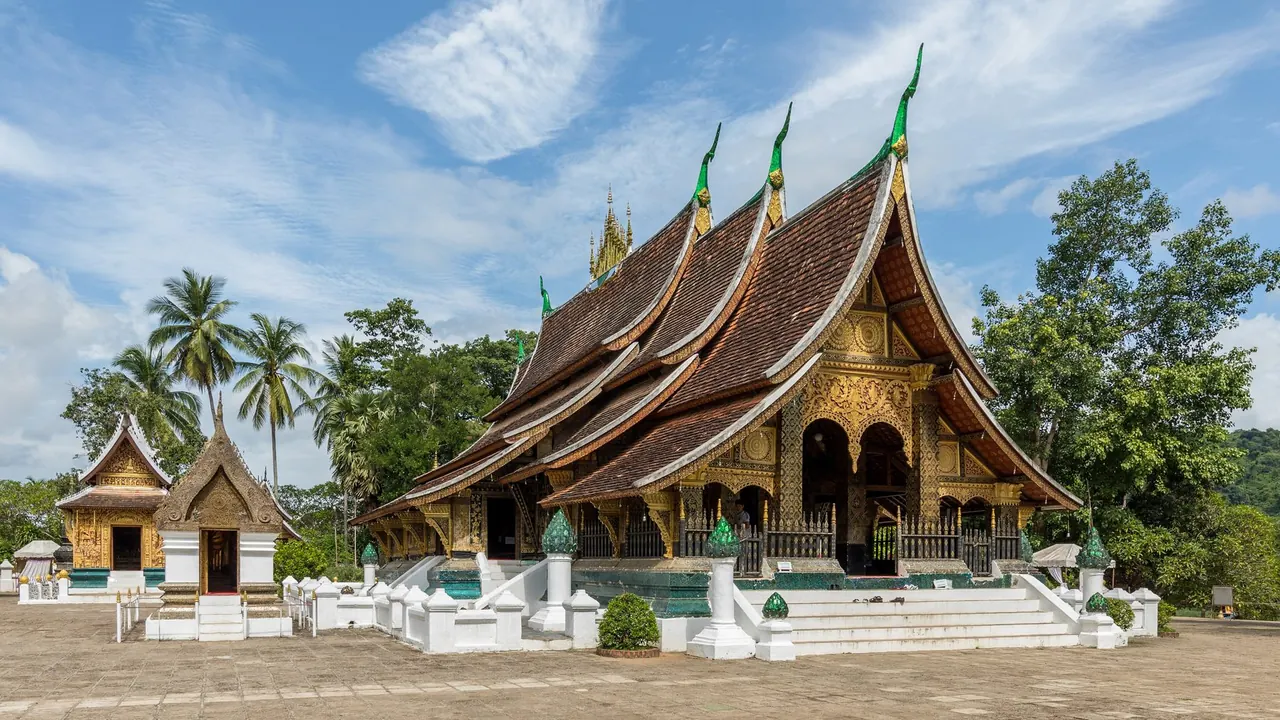
Wat Xieng Thong temple
- Affordable cities80
- Nature & outdoors68
- Culture & sights65
Photo: Basile Morin, CC BY-SA 4.0, cropped
Match
43
Every category weighted equally
- Beach & sun43
- Culture & arts44
- Food & nightlife38
- Family trip47
- Outdoors48
- Relax & unwind46
- Shopping & style42
- On a budget47
Luang Prabang in twelve categories
Our verdict on each, scored 0 to 100 against the same fixed benchmark cities, so a score means the same thing on every page.
Beaches & swimming. Scores 14 out of 100.
Food & drink. Scores 42 out of 100.
Culture & sights. Scores 65 out of 100.
Nightlife. Scores 8 out of 100.
Nature & outdoors. Scores 68 out of 100.
Day trips. Scores 35 out of 100.
Good for families. Scores 38 out of 100.
Getting around. Scores 50 out of 100.
Shopping & style. Scores 38 out of 100.
Affordability. Scores 80 out of 100.
Live music & performing arts. Scores 18 out of 100.
Wellness & relaxation. Scores 60 out of 100.
Luang Prabang category by category
Beaches & swimming
14Luang Prabang is far inland, and the Mekong and Nam Khan rivers run brown and fast. Nobody swims in them in town. The swimming visitors remember is in the turquoise limestone pools below the Kuang Si waterfall, about 45 minutes away by road, and at the smaller Tad Sae falls. Tad Sae is at its best in the wet season and later in the year. Both make a lovely half-day dip, but they are pools in the forest, not beaches. Beyond them, cooling off means a hotel or guesthouse pool.
Food & drink
42Eating here means Lao food, and the town has its own dishes. Try or lam, a peppery stew thickened with sakhan wood, and jeow bong, a sweet and smoky chilli paste. Kaipen is crisp sheets of Mekong river weed with sesame, eaten with Beerlao. The morning market sells sticky rice, herbs and river fish. In the evening, buffet stalls in a lane off the night market feed backpackers cheaply.
The French colonial years left baguettes, good bakeries and strong local coffee from the southern highlands. Riverside terraces along the Mekong and Nam Khan serve set Lao menus. The range is narrow, though, and after a few days the same menus come round again.
Culture & sights
65The old town sits on a narrow peninsula where the Nam Khan meets the Mekong, and the whole of it is a UNESCO World Heritage Site. More than thirty monasteries stand among two-storey French colonial shophouses and Lao wooden houses. The finest is Wat Xieng Thong, with its sweeping layered roofs and the glass-mosaic Tree of Life on its rear wall. The former Royal Palace is now a national museum, and Wat Mai, Wat Visoun and the gilded stupa on Mount Phousi are all a short walk apart.
This is a living religious town as much as a monument. Saffron-robed novices are part of the street scene, and before dawn monks walk the main street to collect sticky rice in the alms procession. That ritual deserves a quiet, respectful audience. The museums are small, and the pleasure lies in the townscape as a whole.
Nightlife
8Evenings are short and gentle. A few garden bars and riverside terraces fill with travellers over Beerlao and cocktails, but a town curfew closes them around midnight. After that there is next to nothing, and the streets are dark and silent. Choose the town for its calm, not for a night out.
Nature & outdoors
68The town is ringed by green, steep hills, with the Mekong sliding past below. The landscape starts at the edge of the peninsula. The obvious outing is Kuang Si, a tiered waterfall in the forest with a sanctuary for rescued Asiatic black bears at its foot. Slow boats run up the Mekong past limestone cliffs and riverside villages. Kayaking on the Nam Khan, mountain biking and one- or two-day treks to Hmong and Khmu hill villages are easy to arrange.
November to February is the clearest and most comfortable time to visit. Late in the dry season, smoke from field burning often hazes the views. The monsoon turns everything vivid green but makes trails muddy. The sunset climb up Mount Phousi gives the best view over the rivers and hills.
Day trips
35The classic day out is a boat trip up the Mekong to the Pak Ou caves. These two caves in a cliff face are filled with thousands of old Buddha images, and on the way the boats usually stop at a village that distils rice whisky. Closer to town, the weaving villages of Ban Phanom and Ban Xang Khong are known for silk and mulberry paper.
The Laos-China railway puts Vang Vieng, a karst-ringed river town, about an hour away. The capital Vientiane, with its golden That Luang stupa and riverside temples, is about two hours. Beyond these, what lies around Luang Prabang is countryside and villages rather than towns worth a day.
Good for families
38Children tend to love Kuang Si, with its bears and swimming pools, and the long-tail boat rides on the Mekong. The quiet streets are easy to walk and cycle together, and Lao people are warm with small children. Beyond that, little is aimed at families: no zoo, aquarium or play attractions, and the sights are mostly temples. Hot-season heat, unpaved village roads and limited medical care make it better suited to older children than toddlers.
Getting around
50Almost everything in the old town lies within a short walk on a flat peninsula. Traffic is light, and many visitors simply rent a bicycle. There is no bus or tram network, though. The waterfalls, villages and train station need a tuk-tuk, a shared minivan or a hired driver, and fares are agreed before setting off. Boats on the Mekong reach the caves and riverside villages. Midday heat in the hot season makes long walks hard work.
Shopping & style
38Shopping here means crafts. Every evening the main street turns into a long night market of red-roofed stalls. They sell hand-woven silk and cotton, Hmong embroidery, mulberry-paper lanterns, silver jewellery and carved wood, though some of it is mass-produced. For better work, visit the weaving studios and galleries around the old town and in the nearby villages. There you can watch natural dyeing and buy textiles of real quality. There is no fashion or mainstream retail to speak of.
Affordability
80For most visitors this is a very cheap place to stay. Market meals, street snacks, bicycle hire, massages and temple entry cost little. Simple guesthouses on the peninsula are inexpensive and comfortable. The town is still the costliest stop in Laos. Restored colonial boutique hotels, riverside restaurants with wine lists and private tours with drivers raise the bill considerably, and imported goods carry a premium.
Live music & performing arts
18The main performance is the Phralak Phralam, the Lao version of the Ramayana. It is danced in masks and costume to a traditional ensemble at the theatre in the Royal Palace grounds. A few small venues stage folk music and dance evenings, and temple drums at dusk add to the atmosphere. Beyond that there is no concert, theatre or live-music life to plan an evening around.
Wellness & relaxation
60Few towns in the region feel as unhurried. Days begin with the monks' alms round and end with the sunset over the Mekong, and in between there is little traffic, no high-rise and a habit of taking things slowly. Massage parlours line the main streets offering Lao massage, which is gentler than its neighbours' styles. Traditional herbal saunas, wooden steam rooms scented with lemongrass and local herbs, are the local bathing tradition.
Boutique hotels add garden spas, pools and yoga by the river. It is a place to read on a terrace and sleep early rather than to follow a spa programme, and it suits that kind of stay well.
When should you go?
Pick a month to see what it is like. The climate figures are measured averages, not a forecast.
Luang Prabang in July
Daytime high, °C
Rainfall in the month, mm
The whole year
Shaded against this city’s own year: the deepest cell is its best month for that figure and the palest its weakest.
Temperature and rainfall are climate normals, averaged over the years shown. Luang Prabang: 1991-2020 normals, Luang-Prabang (0.8 km from centre).
Before you go
| Measure | Luang Prabang |
|---|---|
| Official language | Lao |
| Currency | Lao Kip (LAK) |
| Sockets | ABCEF230 V, 50 Hz |
| Driving side | Right |
| Time zone | UTC+7 |
| Emergency number | Police 191, ambulance 195, fire 190 |
| Elevation | 305 m |
| Main airport | Luang Phabang International Airport (LPQ)4 km from centre7 non-stop destinations |
By the numbers
| Measure | Luang Prabang |
|---|---|
| City population | 53,792 |
| Museums within 10 km | 0 |
| UNESCO World Heritage sites within 50 km | 1 |
Compare Luang Prabang with
Every comparison with a written verdict behind it.