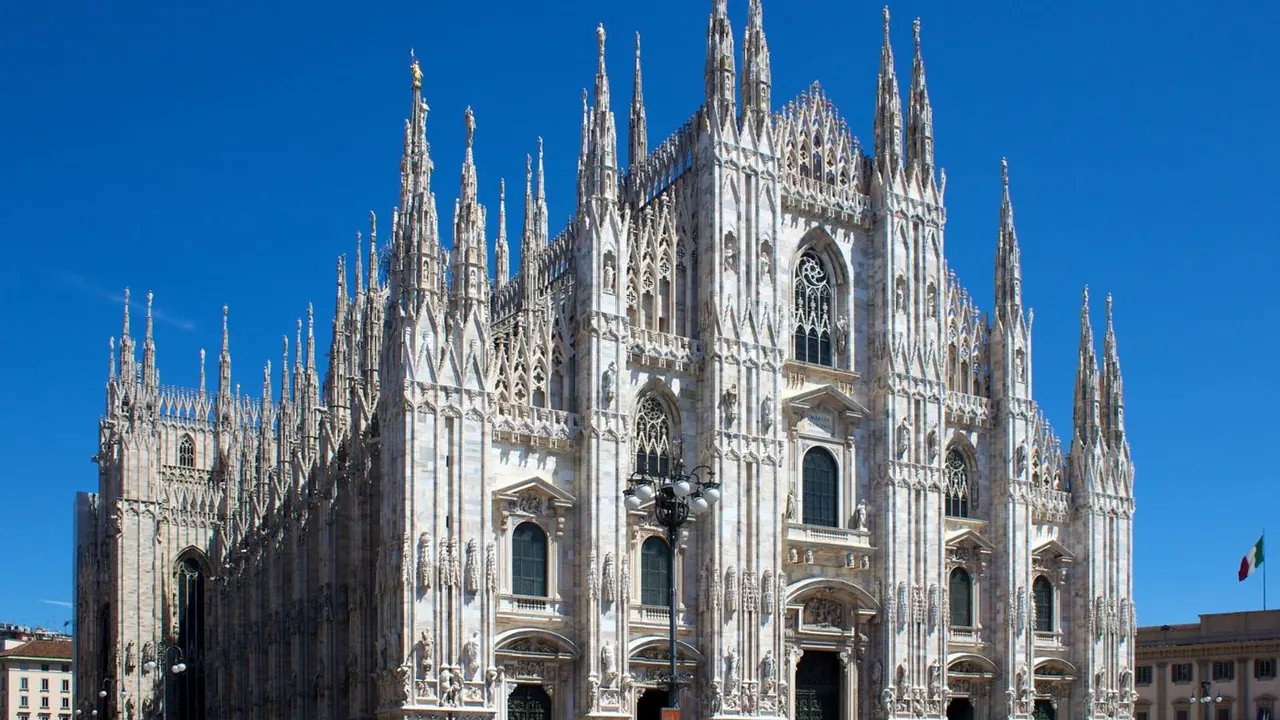
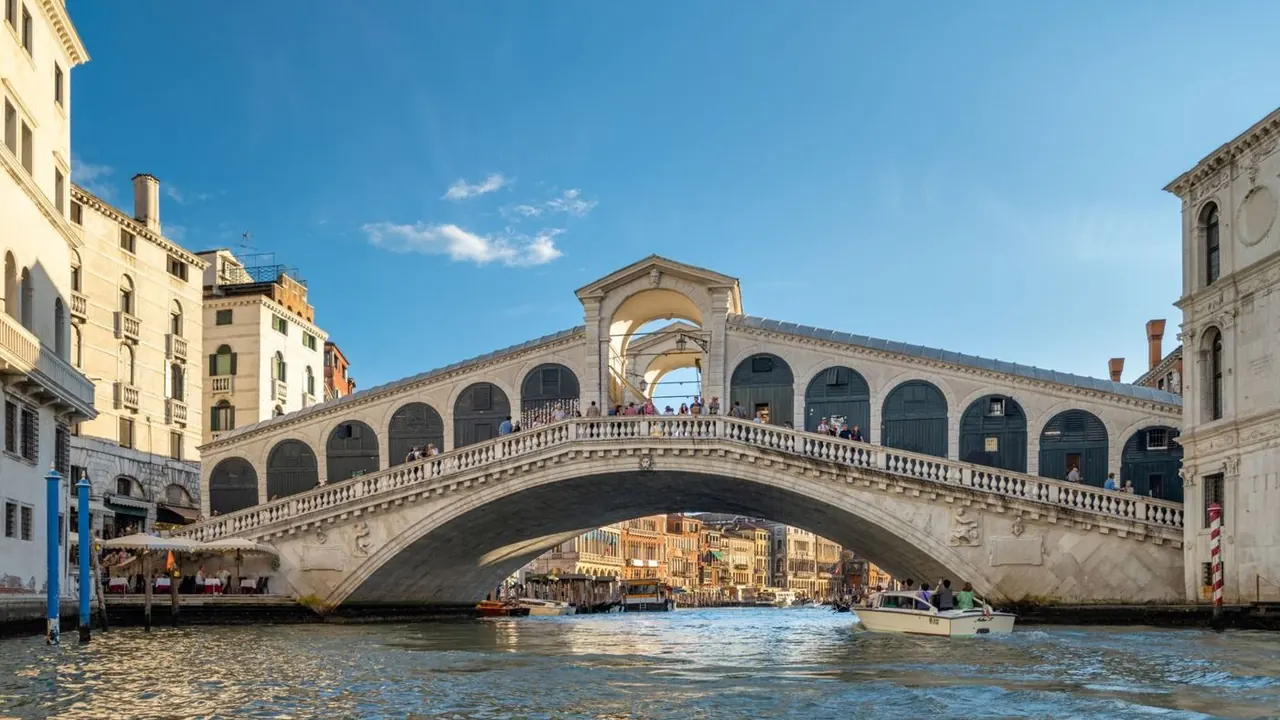
Photos: Milan by Jiuguang Wang, CC BY-SA 3.0, cropped; Venice by David Vives, Pexels License.
Milan or Venice?
Our verdict in twelve categories, each scored against the same fixed benchmark cities, and the climate month by month, so you can choose for your trip.
Choose Milan for
- nightlife
- shopping
- nature and the outdoors
Milan suits travellers who want a capable, stylish base with plenty to do after dark. It is the place for serious shopping and design, opera at La Scala, aperitivo evenings that carry on into bars and clubs, and cooking from every corner of Italy. Fast trains reach the lakes and the Prealps, the city is easy to get around, and it costs a little less than Venice, though it is still not cheap.
Choose Venice for
- beaches
- culture and sights
Choose Venice when the place itself is the reason for the trip. Its art and architecture go far deeper, from the Doge's Palace to Tintoretto at San Rocco, and a city without cars rewards slow walking and early mornings on empty canals. In return you get quiet nights, steps on every bridge and the bigger bills of the two, with a sandy Lido beach on hot afternoons.
Scoreboard
Twelve categories on one fixed scale from 0 to 100. The shaded stretch is the gap between the two.
Your match
Pick a travel style or drag the sliders, and both match scores follow your weighting.
Wins on nightlife and shopping with your weighting.
Wins on beaches and culture and sights with your weighting.
What matters to you?
Category by category
What the scores mean for a trip.
Beaches & swimming
Venice at least has sand. The Lido is a short vaporetto ride from San Marco, with kilometres of shallow, warm Adriatic water that suits children, though cabanas take up much of it and the sea is greenish rather than clear. Pellestrina, further along, is quieter.
Milan has nothing like it. Summer swimming means the Idroscalo basin, the city's open-air pools, or a train of about an hour to the pebbly lidos of Como or Maggiore. Neither city is a beach destination, but in Venice a swim fits into an afternoon, while from Milan it takes most of a day.
Food & drink
Milan eats better overall. Its own cooking is rich and buttery, built on saffron risotto, ossobuco and cotoletta, and because people move there from all over Italy you can also get properly made Neapolitan pizza or Sicilian pastry, as well as serious fine dining. Aperitivo in the Navigli, Brera and Isola comes with enough snacks to count as a light meal.
Venice is narrower but more distinctive: cicchetti on bacaro counters near the Rialto and in Cannaregio, and lagoon seafood such as cuttlefish risotto black with ink. The problem is the number of poor restaurants around San Marco, so a good meal takes some searching in the quieter sestieri, and there is little beyond Venetian and Italian cooking.
Culture & sights
Venice is the clear winner. The whole city is the sight, centuries of palazzi and churches on water with almost nothing modern in view, and its art goes very deep: the Accademia, Titian at the Frari, Tintoretto at San Rocco, the Guggenheim for modern work, and masterpieces tucked into small parish churches.
Milan's highlights are first-rate but fewer, and spread through a businesslike modern city: the marble Duomo and its rooftop, the Last Supper, the Brera gallery and Michelangelo's Rondanini Pietà at the Castello. You can cover Milan's essentials in two or three days, while Venice could fill a week.
Nightlife
Milan has a proper night out. Bars along the Navigli spill onto the towpaths, Brera is smarter and calmer, and Porta Venezia mixes a relaxed crowd with the city's gay scene. Later on, the clubs range from dressy Corso Como venues, where how you look matters at the door, to warehouse nights on the outskirts. It is stylish rather than wild, and it quietens in August.
Venice peaks at the hour when Milan is only getting started. Spritzes at the bacari around the Rialto and on the Fondamenta della Misericordia are the high point, and afterwards only the student bars on Campo Santa Margherita keep going. By the time Milan's clubs fill up, the Venetian canals are dark and empty. That suits a quiet stroll after dinner, but dancing means leaving the city for the mainland or, in summer, the Jesolo beach clubs.
Nature & outdoors
Milan gives you far more outdoors to choose from, though the city itself is flat and short on green space. About an hour by train brings you to the steep wooded shores of Como and Maggiore for sailing, windsurfing and lakeside paths, and to the Grigne ridges above Lecco for proper hiking and via ferrata. In winter, the ski resorts of the Valtellina and Aosta valleys are also within reach, but each one takes a full day.
Venice's nature is the lagoon: salt marshes around Torcello and Sant'Erasmo with herons, egrets and flamingos, which you can explore by kayak or on a lesson in standing rowing, plus cycling along the sea walls of the Lido and Pellestrina. Beyond that the walking is gentle, in the Euganean and Prosecco hills, and the Dolomites are more than two hours away.
Day trips
Both are excellent bases, and Verona is easy from either, but the days out differ in character. From Milan you head to the lakes and the mountains: Bergamo's upper town, Bellagio and Varenna, the Borromean Islands and Lugano across the Swiss border, with Turin's royal palaces about an hour away by fast train. Closer in are the Certosa di Pavia and Vigevano's Renaissance square. Mantua, Cremona and Parma make longer outings.
Venice looks towards the art towns of the Veneto: Padua and the Scrovegni Chapel about half an hour away, Vicenza's Palladio and the villas along the Brenta Canal. It also has days out that need no train at all, to the glass furnaces of Murano, the painted houses of Burano and the lonely cathedral of Torcello.
Good for families
Milan is the easier city with children. The science and technology museum, with its submarine and hands-on labs, saves a rainy day, Parco Sempione has playgrounds and room to run, and the flat centre and trams make getting about simple. Leolandia and Gardaland are within reach for older children.
Venice has more magic but more friction. Boats instead of buses, Murano glass-blowing and the shallow Lido beach delight children, yet stepped bridges make pushchairs a constant struggle and there are few parks or playgrounds. A short stay with older children works best there.
Getting around
Five colour-coded metro lines and a dense tram network, old orange cars included, do most of the work in Milan. You just tap a contactless card, and the Duomo, Brera and the Castello are a short walk apart anyway. Direct trains to the lakes leave from three city stations. The weak points are hot summer platforms and the long transfer from Malpensa.
In Venice your feet do the work. Everything lies within a forty-minute walk, but the alleys twist and end at canals, and the steps on the bridges punish anyone with heavy luggage. Vaporetti are slow and crowded on the main lines, though a ride down the Grand Canal is a sight in itself.
Shopping & style
Milan is one of the world's fashion capitals, and shopping can be the whole reason for a trip. The Quadrilatero around Via Montenapoleone holds the flagships of houses born in the city, the Galleria and La Rinascente sit by the Duomo, and Corso Buenos Aires, Brera's boutiques and the design showrooms widen the range.
Venice is about craft rather than fashion: Murano glass, Burano lace, papier-mâché masks, marbled paper and velvet furlane slippers, best bought from workshops in Dorsoduro and Castello. Cheap imports fill the main routes, and there are no department stores to speak of.
Affordability
Neither is a bargain, but Milan is the less painful of the two. Its hotels are steep and very hard to find during trade fairs and fashion weeks, yet public transport is fairly priced, office-worker lunch menus are good value, and an aperitivo spread can replace supper.
Venice costs more on almost every front: rooms in the historic centre, water transport priced for visitors, and entry charges at most sights and churches. Eating cicchetti standing at the counter, staying in Mestre or a quieter sestiere, and coming in late autumn or winter all bring the bill down.
Live music & performing arts
Milan has the deeper calendar. La Scala's season of opera, ballet and concerts is the draw, with gallery seats within reach of a determined visitor, and the Piccolo Teatro, the symphony orchestra at the Auditorium, jazz rooms and big summer concerts at San Siro fill out the year.
Venice has La Fenice, a great house where Verdi and Rossini premiered work, plus the Biennale's contemporary festivals. Most visitors, though, end up at Vivaldi concerts in churches and scuole, which vary from excellent to routine, and there is little jazz or rock.
Wellness & relaxation
Neither city is a natural place to unwind, and the difference is one of approach. Milan has a proper thermal spa complex inside the city and the 1930s open-air pools of the Bagni Misteriosi in summer, but real rest means taking the train to the lake villas.
Venice offers hotel spas in palazzi and on Giudecca, with the Roman-era thermal mud of Abano Terme about an hour away. Its real calm is free: hushed early mornings without traffic and the residential quiet of Castello and Cannaregio, away from the crowds at San Marco.
When should you go?
Pick your month. The climate figures are measured averages, not a forecast.
Milan in July
Venice in July
Daytime high, °C
Rainfall in the month, mm
Where the figures come from
Milan's sunshine is measured 41 km from the centre, at Novara / Cameri.
Temperature and rainfall are climate normals, averaged over the years shown. Milan: 1991-2020 (rainfall 1971-2000) normals, Milano / Linate (8 km from centre). Venice: 1991-2020 (sunshine 1971-2000, rainfall 1981-2010) normals, Venezia / Tessera (6.7 km from centre).
The two cities follow the same northern Italian pattern: cold, grey winters, mild springs and hot, humid summers, with July highs around 30°C in Milan and 29°C in Venice. Midsummer is heavy for long days of sightseeing in either, so May, June and September are the most comfortable months for walking. Autumn is wet in both, and wetter in Milan, where November rain reaches about 75mm.
Only Venice has a sea, and the Adriatic off the Lido is warm enough for swimming from June to September, at about 26°C in August. Venice also gets a little more winter sun, so a crisp January visit there tends to be brighter than the same month on Milan's hazy plain.
Which traveller are you?
On a culture and arts trip, Venice is the stronger choice. Palaces, churches and the great Venetian painters fill the whole city, not just a few clusters. Milan's answer is La Scala and the Last Supper, which appeal most to opera lovers.
For a shopping trip, Milan is the obvious pick, with the fashion flagships of the Quadrilatero, La Rinascente beside the Duomo and design showrooms across the city. Venice has glass, lace and handmade masks but almost no mainstream fashion district.
On a food and nightlife trip, Milan offers more: cooking from every Italian region, long aperitivo evenings on the Navigli and clubs after that. Going from bacaro to bacaro for cicchetti in Venice is a pleasure, but the city has gone quiet by midnight.
Before you go
| Measure | Milan | Venice |
|---|---|---|
| Official language | Italian | Italian |
| Currency | Euro (EUR) | Euro (EUR) |
| Sockets | CFL230 V, 50 Hz | CFL230 V, 50 Hz |
| Driving side | Right | Right |
| Time zone | UTC+1, UTC+2 in summer | UTC+1, UTC+2 in summer |
| Emergency number | 112 | 112 |
| Elevation | 138 m | 2 m |
| Main airport | Milan Malpensa International Airport (MXP)40 km from centre208 non-stop destinations | Venice Marco Polo Airport (VCE)7 km from centre103 non-stop destinations |
| Public holidays this year | 13 days | 13 days |
By the numbers
| Measure | Milan | Venice |
|---|---|---|
| City population | 1,354,196 | 250,369 |
| People per km² | 7,453 | 602 |
| Museums within 10 km | 88 | 52 |
| UNESCO World Heritage sites within 50 km | 4 | 5 |
| Swim season, months above 21 °C | - | 4 months |
Where else could you go?
Every comparison below shares a destination with this one, so you can follow Milan or Venice somewhere new.