Thailand
Chiang Rai
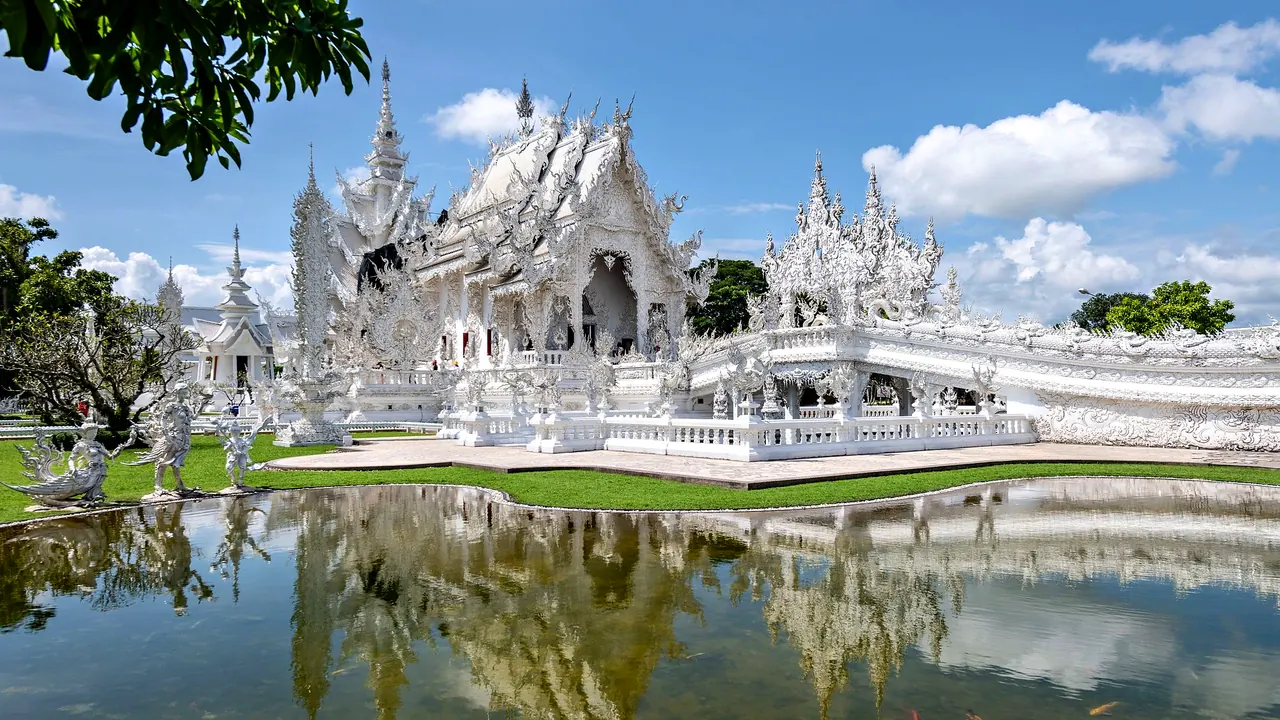
The White Temple reflected in a still pond
- Affordable cities92
- Nature & outdoors68
- Food & drink55
Photo: Kirandeep Singh Walia, Pexels License
Match
44
Every category weighted equally
- Beach & sun44
- Culture & arts45
- Food & nightlife41
- Family trip47
- Outdoors50
- Relax & unwind47
- Shopping & style43
- On a budget50
Chiang Rai in twelve categories
Our verdict on each, scored 0 to 100 against the same fixed benchmark cities, so a score means the same thing on every page.
Beaches & swimming. Scores 5 out of 100.
Food & drink. Scores 55 out of 100.
Culture & sights. Scores 55 out of 100.
Nightlife. Scores 25 out of 100.
Nature & outdoors. Scores 68 out of 100.
Day trips. Scores 50 out of 100.
Good for families. Scores 40 out of 100.
Getting around. Scores 35 out of 100.
Shopping & style. Scores 38 out of 100.
Affordability. Scores 92 out of 100.
Live music & performing arts. Scores 15 out of 100.
Wellness & relaxation. Scores 55 out of 100.
Chiang Rai category by category
Beaches & swimming
5Chiang Rai is deep in the northern hills, a long way from any coast, so a beach vacation is not possible here. Swimming means a hotel pool, a cool pool under a forest waterfall, or paddling at a reservoir on a hot afternoon. If you want sea and sand, plan a separate stretch of your trip in the south.
Food & drink
55Eating here means northern Thai food: khao soi curry noodles, sour-spicy nam ngiao, sai ua herb sausage, chilli dips eaten with sticky rice and raw vegetables, and grilled meats sold from roadside charcoal. The night bazaar food court and the weekend walking-street markets are the easiest places to try a lot of it cheaply, and morning markets sell the same dishes to locals.
The hills around the city grow coffee and oolong tea, so there are a great many cafés, plenty of them in gardens or on hillsides, roasting beans from nearby villages. Beyond that the range thins out. International cooking is limited and serious fine dining barely exists, so a food-focused trip will feel short after a few days.
Culture & sights
55Most visitors come for the city's modern temple art. Wat Rong Khun, the White Temple on the southern edge of town, is an ornate fantasy of white plaster and mirrored glass. Wat Rong Suea Ten, the Blue Temple, is a smaller sapphire-and-gold counterpart, and Baan Dam, the Black House, is an artist's dark compound of teak halls, horns and bones. Together they give Chiang Rai a contemporary character you will not see in most Thai cities.
Older heritage is quieter. Wat Phra Kaew is where the Emerald Buddha was found, and there are a handful of Lanna-era temples, the gilded clock tower and a small hill-tribe museum. The centre itself is low-rise and mostly modern, so two or three days covers it.
Nightlife
25Going out here is low-key. The main stretch is a short street near the clock tower lined with small bars, some playing reggae or acoustic covers, and a few open-fronted beer bars nearby. The night bazaar has a stage and beer tables where people linger after dinner. There are no real clubs worth seeking out and most of the town is asleep by midnight, so evenings work best as a long dinner and a couple of drinks.
Nature & outdoors
68The city sits in a green valley on the Kok River with forested ranges all round. Within an hour or so there are waterfalls such as Khun Korn, trekking routes through hill-tribe country, tea terraces on Doi Mae Salong and the gardens and viewpoints of Doi Tung. Further out, the ridge of Phu Chi Fa on the Lao border is famous for sunrises over a sea of cloud, and the Mekong carves a broad brown valley at the Golden Triangle. Elephant sanctuaries, river boat trips and cycling on quiet rural roads fill out the options.
The best months are the cool, clear ones after the rains, when mornings in the hills are misty and fresh. From late winter into spring, farmers burning fields fill the valleys with smoke haze for weeks, and the views and walks suffer badly.
Day trips
50There is a fair spread of outings here, but nothing of great fame. The usual day out heads north to Chiang Saen, about an hour away on the Mekong, an old Lanna walled town with ruined brick chedis among its streets. Just beyond it, the Golden Triangle viewpoint looks over to Myanmar and Laos and has a museum on the region's opium history. Mae Sai, the busy market town on the Burmese border, often goes into the same loop, along with the royal villa and gardens at Doi Tung.
Doi Mae Salong, about an hour and a half into the hills, was settled by Chinese soldiers after 1949 and still feels Yunnanese, with tea houses and a morning market. To the south, the lake town of Phayao makes a quiet half day. These are pleasant trips that fill two or three days, but none is a reason to come on its own, and Chiang Mai is too far for a comfortable return in a day.
Good for families
40This is a relaxed, friendly town where children are made welcome, but there is little made for them. Singha Park, a large estate of tea fields, lakes and grazing animals south of the city, is the main family outing, with cycling and open space. Ethical elephant sanctuaries and the colourful temples hold attention for a morning, and night-market snacks go down well. Distances to the sights mean a lot of time in vehicles, and the smoky months of late winter and spring are a poor time to bring young children.
Getting around
35The centre around the clock tower, the night bazaar and the bus station is small and flat enough to walk, although pavements are uneven and shade is scarce. The main sights lie outside it, so you will rely on tuk-tuks, songthaews, ride-hailing apps or a hired driver, and a local bus runs south to the White Temple. Regional buses from the old terminal reach Chiang Saen, Mae Sai and Phayao. To cover the hills properly, most visitors hire a car or scooter, or join tours.
Shopping & style
38Shopping here is mostly markets. The nightly bazaar near the bus station sells hill-tribe textiles, silver, carved wood and souvenirs, and the Saturday walking street on Thanalai Road is a longer, more local market of handicrafts, clothes and food stalls. Oolong from Doi Mae Salong and hill-grown coffee are the best things to take home. There are a couple of ordinary malls, but no boutique or design scene to speak of.
Affordability
92Chiang Rai is one of the cheapest places to travel in Thailand. Comfortable guesthouses and small hotels cost little, market and street meals are very cheap, and even the garden cafés are modest by Western standards. The temples charge foreigners small entry fees or nothing. The main expense is reaching the sights out of town, since hiring a driver, a car or joining tours costs more than anything else you will spend money on.
Live music & performing arts
15There is very little formal performance to attend. The night bazaar has a stage with Lanna dance and folk music in the evenings, khantoke dinners pair northern dishes with traditional dancing, and some bars put on acoustic sets. Temple festivals and Loy Krathong bring music and processions to the streets, but there is no theatre, concert or opera season to plan around.
Wellness & relaxation
55The pace is the main draw: a small, unhurried town where the days fit around temples, cafés and the cool evening hours. Traditional Thai massage shops are on almost every street, and a few resort spas sit on the river and in the hills. The Pong Phrabat hot springs north of town and the roadside springs at Mae Kachan on the way south let you soak in simple pools. Some meditation and yoga retreats work out of the surrounding countryside. The smoky season in late winter and spring is the one time the town feels far from restful.
When should you go?
Pick a month to see what it is like. The climate figures are measured averages, not a forecast.
Chiang Rai in July
Daytime high, °C
Rainfall in the month, mm
The whole year
Shaded against this city’s own year: the deepest cell is its best month for that figure and the palest its weakest.
Temperature and rainfall are climate normals, averaged over the years shown. Chiang Rai: 1991-2020 (sunshine 1961-1990) normals, Chiang Rai (1 km from centre).
Before you go
| Measure | Chiang Rai |
|---|---|
| Official language | Thai |
| Currency | Baht (THB) |
| Sockets | ABCF220 V, 50 Hz |
| Driving side | Left |
| Time zone | UTC+7 |
| Emergency number | Police 191, ambulance 1669, fire 199 |
| Elevation | 390 m |
| Main airport | Mae Fah Luang - Chiang Rai International Airport (CEI)8 km from centre4 non-stop destinations |
By the numbers
| Measure | Chiang Rai |
|---|---|
| City population | 70,610 |
| People per km² | 1,159 |
| Museums within 10 km | 4 |
| UNESCO World Heritage sites within 50 km | 0 |
Compare Chiang Rai with
Every comparison with a written verdict behind it.