United States
Austin
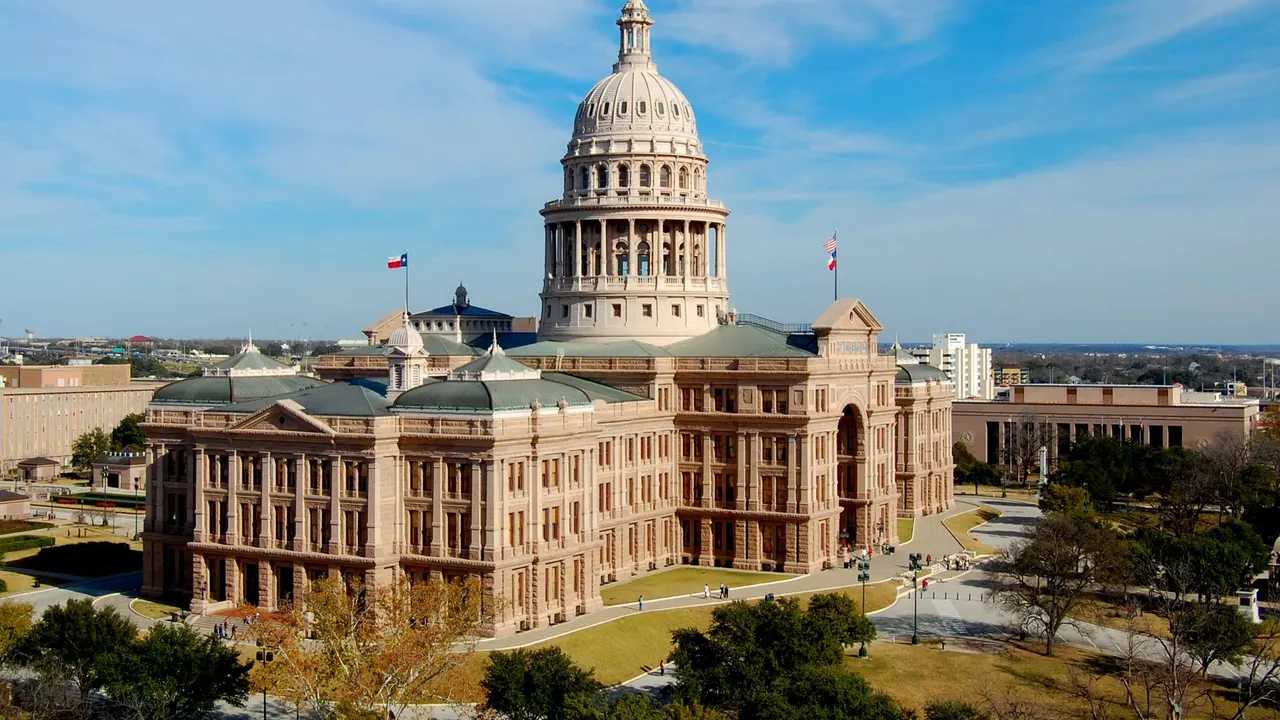
The Texas State Capitol under a blue sky
- Live music & the arts77
- Food & drink66
- Nightlife65
Photo: LoneStarMike, CC BY 3.0, cropped
Match
50
Every category weighted equally
- Beach & sun47
- Culture & arts51
- Food & nightlife53
- Family trip46
- Outdoors49
- Relax & unwind48
- Shopping & style50
- On a budget48
Austin in twelve categories
Our verdict on each, scored 0 to 100 against the same fixed benchmark cities, so a score means the same thing on every page.
Beaches & swimming. Scores 30 out of 100.
Food & drink. Scores 66 out of 100.
Culture & sights. Scores 40 out of 100.
Nightlife. Scores 65 out of 100.
Nature & outdoors. Scores 57 out of 100.
Day trips. Scores 58 out of 100.
Good for families. Scores 55 out of 100.
Getting around. Scores 30 out of 100.
Shopping & style. Scores 45 out of 100.
Affordability. Scores 33 out of 100.
Live music & performing arts. Scores 77 out of 100.
Wellness & relaxation. Scores 40 out of 100.
Austin category by category
Beaches & swimming
30Austin is a long way inland, and the Gulf coast is three hours or more by car, so a beach vacation is not on offer here. What the city has instead is a summer swimming culture built on spring water and lakes. Barton Springs Pool in Zilker Park is fed by springs that hold at about 20°C all year, cold enough to take your breath away in August, when it is the city's favourite place to lie on the grass. Deep Eddy, a spring-fed pool from the 1910s, is a gentler option.
Further out, Lake Travis has rocky shores, coves and boat days on water that warms to around 29°C in high summer, and the Greenbelt has swimming holes after rain. These are pleasant afternoons, not sand-and-sea days, and Lady Bird Lake in the centre is for paddling, not swimming.
Food & drink
66Austin eats around two things it does extremely well: Central Texas barbecue and Tex-Mex. Brisket smoked over post oak for half a day, sliced to order, sold by weight and served on butcher paper, is the dish people queue for at dawn. The barbecue towns of Lockhart and Luling are close enough to extend the pilgrimage. Breakfast tacos are the daily ritual, eaten from counters and trailers across the east and south sides, alongside queso, migas and frozen margaritas.
Food trucks parked in lots and beer gardens are a big part of how a visitor eats, and the craft beer scene is strong. East Austin and South Congress hold most of the more ambitious kitchens. Beyond the local specialities the range is narrower than in the largest food cities, and much of the best eating is casual.
Culture & sights
40Austin's sights are a short, respectable list rather than a reason to come. The Texas State Capitol, a pink granite building of the 1880s that stands taller than the Capitol in Washington, anchors the downtown grid and can be toured for free. Around the University of Texas campus sit the best museums: the Blanton Museum of Art, the Bullock Texas State History Museum, the LBJ Presidential Library and the Harry Ransom Center, whose collections include a Gutenberg Bible and one of the first photographs ever made.
The Umlauf Sculpture Garden and the Elisabet Ney studio add character. Historic architecture is thin, though, beyond a few Victorian streets and the old buildings of Congress Avenue, and two or three days covers it all.
Nightlife
65Going out is a central part of an Austin trip, helped by a large student population and warm nights for most of the year. Sixth Street downtown is the loud, crowded strip of shot bars and patios, closed to traffic on weekend nights. Rainey Street, a row of old bungalows turned into bars with big yards, draws a slightly older crowd, while East Sixth and the east side have the dive bars, mezcal bars and beer gardens locals prefer.
Nights run late by American standards but bars stop serving at 2am, and the club scene is small. The scene grows enormously during the big festival weeks of spring and autumn, when the whole centre becomes one long party.
Nature & outdoors
57Austin sits where the flat prairie meets the limestone Hill Country, and the outdoors starts in town. The Barton Creek Greenbelt runs for kilometres through a wooded canyon with trails, climbing walls and creek crossings, and the hike-and-bike trail loops around Lady Bird Lake, where kayaks and paddleboards are the usual way to spend a morning. Mount Bonnell gives the classic view over the Colorado River, and from spring to autumn a huge colony of bats pours out from under the Congress Avenue Bridge at dusk.
Within about two hours are the granite dome of Enchanted Rock, the cascades of Pedernales Falls and McKinney Falls, and wildflower drives in spring. There are no mountains, and from June to September the heat pushes activity to early mornings.
Day trips
58The best day out is San Antonio, about an hour and a half south, with the Alamo, the River Walk and a chain of 18th-century Spanish missions listed by UNESCO. West into the Hill Country, Fredericksburg is a town founded by German settlers with a long main street, peach orchards and dozens of wineries along the road there, and the old dance-hall village of Gruene and the river town of New Braunfels are easy stops.
Small towns such as Wimberley and Dripping Springs make relaxed outings, Lockhart is a short drive for barbecue, and Waco, about an hour and a half north, has a fossil site of mammoths. Almost all of this needs a car, and the list thins out quickly beyond the Hill Country.
Good for families
55Austin is a relaxed, casual city where children fit in easily, though it has few big attractions of its own. Zilker Park is the hub, with open lawns, a miniature train, a botanical garden and Barton Springs Pool. The Thinkery is a hands-on children's museum, the Bullock museum has an IMAX screen and plenty for older children, and the evening bat flight from the Congress Avenue Bridge is a reliable hit.
The larger theme parks and waterparks are in San Antonio and New Braunfels, about an hour or so away. Families need a car for almost everything, and from June to September the heat means planning days around water and air conditioning.
Getting around
30Austin is built for cars. Downtown, the Capitol area and Rainey Street are walkable, and South Congress and East Austin are close enough for a short ride, but sights, swimming spots and many of the best places to eat are spread out. Public transport is mostly buses plus a single commuter rail line, useful for some trips but rarely the easy option.
The hike-and-bike trail and rental bikes and scooters help in the centre. For the Hill Country, the lakes and any day trip a hire car is close to essential, and traffic on the main highway through town is heavy at peak hours.
Shopping & style
45Shopping in Austin is about character more than range. South Congress Avenue is the main stretch, with independent boutiques, vintage clothing, cowboy boots and hats, and quirky antique shops, and the east side adds more vintage and small design stores. Western wear, from boots to pearl-snap shirts, is the local speciality worth looking for.
Luxury brands and department stores are gathered in a large open-air mall on the northern edge of the city rather than downtown. Visitors who want serious fashion or big flagship streets will find little.
Affordability
33Austin is a fairly expensive city to visit. Hotel rooms downtown are priced like those of a major American city, and during the big music, film and motor racing weeks they climb sharply and sell out. Car hire and parking add to the cost, since most visitors need a car, and tips and sales tax push restaurant bills up.
The easier side is eating: breakfast tacos, food trucks and Tex-Mex keep daily meals reasonable, and many of the best things to do, from the Capitol to the Greenbelt trails and the bat flight, cost little or nothing.
Live music & performing arts
77Live music is the reason many people choose Austin, and it is there every night of the year. Small clubs along Red River Street and Sixth Street, bars on South Congress and the east side, and honky-tonks where couples two-step to country bands all put on several acts an evening, often with no cover. The range runs from blues, rock and indie to Texas country and conjunto, and the long-running Austin City Limits television series still records concerts in the city.
The festival weeks of spring and autumn bring hundreds of bands at once. The formal arts are smaller: the Long Center hosts the symphony, opera and ballet, and there is a decent theatre scene, but classical music lovers will find a modest season.
Wellness & relaxation
40Austin has no bathing tradition of its own, but it is an easy-going city with a strong yoga and fitness culture and a pace that suits unwinding. Day spas are spread across town, and a few destination spa resorts on the shores of Lake Austin and the Hill Country offer the most restorative stays, with lake views, treatment rooms and quiet grounds.
Outside the downtown bar streets and festival weeks, the city feels relaxed, with shaded patios and parkland. A visitor wanting a dedicated thermal bath or hammam experience will not find one here.
When should you go?
Pick a month to see what it is like. The climate figures are measured averages, not a forecast.
Austin in July
Daytime high, °C
Rainfall in the month, mm
The whole year
Shaded against this city’s own year: the deepest cell is its best month for that figure and the palest its weakest.
Temperature and rainfall are climate normals, averaged over the years shown. Austin: 1991-2020 normals, Camp Mabry/Austin City Asos (3.7 km from centre).
Before you go
| Measure | Austin |
|---|---|
| Currency | US Dollar (USD) |
| Sockets | AB120 V, 60 Hz |
| Driving side | Right |
| Time zone | UTC-6, UTC-5 in summer |
| Emergency number | 911 |
| Elevation | 149 m |
| Main airport | Austin Bergstrom International Airport (AUS)13 km from centre91 non-stop destinations |
| Public holidays this year | 13 days |
By the numbers
| Measure | Austin |
|---|---|
| City population | 961,855 |
| People per km² | 1,217 |
| Museums within 10 km | 21 |
| UNESCO World Heritage sites within 50 km | 0 |
Compare Austin with
Every comparison with a written verdict behind it.