Vietnam
Sapa
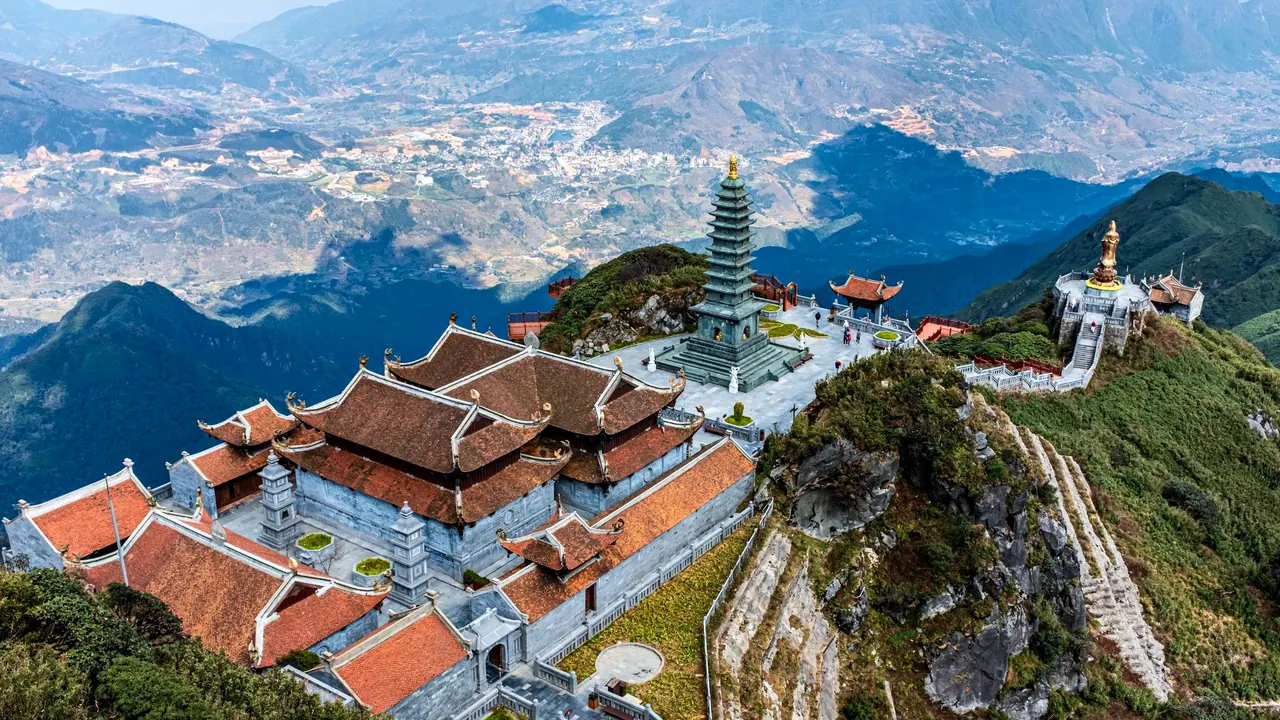
The pagoda complex on the summit of Fansipan
- Affordable cities90
- Nature & outdoors88
- Wellness & relaxation44
Photo: Kirandeep Singh Walia, Pexels License
Match
35
Every category weighted equally
- Beach & sun37
- Culture & arts32
- Food & nightlife29
- Family trip40
- Outdoors45
- Relax & unwind39
- Shopping & style32
- On a budget41
Sapa in twelve categories
Our verdict on each, scored 0 to 100 against the same fixed benchmark cities, so a score means the same thing on every page.
Beaches & swimming. Scores 3 out of 100.
Food & drink. Scores 34 out of 100.
Culture & sights. Scores 24 out of 100.
Nightlife. Scores 12 out of 100.
Nature & outdoors. Scores 88 out of 100.
Day trips. Scores 33 out of 100.
Good for families. Scores 30 out of 100.
Getting around. Scores 30 out of 100.
Shopping & style. Scores 27 out of 100.
Affordability. Scores 90 out of 100.
Live music & performing arts. Scores 10 out of 100.
Wellness & relaxation. Scores 44 out of 100.
Sapa category by category
Beaches & swimming
3Sapa is a high mountain town far from any coast, and there is nowhere to swim. Streams and waterfalls run through the valleys, but the water is cold and shallow and nobody comes for it. If you want sea time, you will need a separate stretch of your trip on the coast.
Food & drink
34Eating in Sapa is shaped by the cold and the mountains. Salmon and sturgeon farmed in the cold streams go into steaming hotpots, and in the evening charcoal grills along the streets near the lake cook skewers of pork, mushrooms, corn, eggs and sticky rice in bamboo tubes. Highland dishes such as thang co, a strong horse-meat stew of the Hmong, black chicken and small free-range pigs show up on local menus, with corn wine and apple-based spirits to drink.
Beyond that, the centre is mostly travellers' cafés and restaurants serving standard Vietnamese and Western dishes of mixed quality. It is satisfying after a day's trekking, but the range is narrow.
Culture & sights
24Sapa itself has few sights. The grey stone church on the main square dates from the French hill-station years, and a small museum introduces the ethnic groups of the region, but the town is largely modern hotels on steep streets.
The cultural interest lies in the people. Black Hmong, Red Dao, Tay and Giay communities live in the surrounding valleys, and walking through villages such as Cat Cat, Lao Chai, Ta Van and Ta Phin, past indigo dyeing, weaving and wooden houses, is how most visitors meet it. The villages closest to town are heavily visited and partly staged, while those further along the trails feel more like everyday life.
Nightlife
12Evenings in Sapa mean a hotpot, a few drinks by a fire and an early night before the next day's walk. There is a small cluster of travellers' bars with pool tables and loud music near the centre, and the grill stalls by the lake stay busy after dark, but late nights are rare and there is no club scene.
Nature & outdoors
88This is why people come. Sapa sits on a ridge at around 1,500m in the Hoang Lien Son range, looking across the Muong Hoa valley, whose rice terraces step down the slopes for kilometres. Trails lead straight out of town to villages and homestays, and walks of one to three days through terraces, bamboo forest and streams are easy to arrange. Fansipan, at 3,143m the highest peak in Indochina, can be climbed over one or two hard days, or reached by cable car. The Tram Ton Pass, Silver Waterfall and Love Waterfall are a short ride away.
The seasons change everything. The terraces are green from early summer and turn gold just before the harvest in September, while winter brings cold, fog and the occasional frost or snow. Heavy summer rain can make trails muddy and views come and go with the cloud.
Day trips
33The best outing is to Bac Ha, roughly two hours away, where the Sunday market draws Flower Hmong in their bright costume to trade buffalo, horses, textiles and food, and the town has an eccentric palace built for a local ruler in the early 20th century. Smaller weekly markets at Can Cau, Coc Ly and Muong Hum have a similar character with fewer visitors.
Lao Cai, about an hour down the mountain on the Chinese border, is a working frontier city rather than a destination. Beyond these, most excursions are into the mountains themselves, and the list of places to visit is short.
Good for families
30Sapa works best for families with older children who can walk. Short treks to nearby villages, buffalo in the paddies and the cable car ride up Fansipan give children plenty to look at, and homestays in the valleys can be a memorable experience.
It is harder with toddlers. The town is built on steep slopes with uneven pavements and heavy traffic, longer trails are muddy and slippery, winter is cold and damp in poorly heated rooms, and village vendors can be very persistent with small children in tow. Attractions made for children are almost absent.
Getting around
30The centre is small enough to walk, though the streets climb steeply and pavements are uneven. A short mountain tram runs from town down to the Fansipan cable car station. For everything else, including villages, waterfalls and the passes, visitors walk on trekking trails, hire a car with driver or ride on the back of a motorbike taxi, and there is no public transport worth relying on. Reaching Sapa from Hanoi takes around five to six hours by road, or an overnight train to Lao Cai followed by an hour's drive up the mountain.
Shopping & style
27Shopping here means handicrafts. Hmong and Dao women sell embroidered and indigo-dyed textiles, batik, brocade bags, silver jewellery and woven goods in the town market, along the streets and in the villages, and some of it is beautiful handwork, though machine-made copies are common and sellers can be insistent. Ethnic markets such as Bac Ha's are the best places to see the real thing. Beyond crafts there is little: outdoor gear shops stocking trekking basics and souvenir stalls.
Affordability
90Sapa is a very cheap place to stay by any international standard. Guesthouses, village homestays, street grills and local hotpot restaurants cost little, and guided treks with a local guide are inexpensive. Prices are a step above the Vietnamese lowlands in the most popular hotels and cafés of the centre, and the cable car up Fansipan is the one expense that stands out. Bargaining is normal at craft stalls and for motorbike rides.
Live music & performing arts
10There is no theatre or concert life in Sapa. What you can see are performances of Hmong and Dao music and dance, with pan pipes and costumes, staged in the town square on weekend evenings and in a few villages for visitors. They are pleasant to watch but short and simple.
Wellness & relaxation
44Sapa has one genuine bathing tradition: the Red Dao herbal bath, a hot soak in wooden tubs of water steeped with dozens of forest plants, long used by the Dao after childbirth and hard field work. It is offered in Ta Phin and other villages as well as in town, and after a day of walking it is a real pleasure. Foot and body massage is easy to find.
The pace in the valleys, in a homestay among the terraces, is genuinely calm. The town itself is a different matter, with traffic, building and persistent selling, so those looking to rest do best staying out in the countryside.
When should you go?
Pick a month to see what it is like. The climate figures are measured averages, not a forecast.
Sapa in July
Daytime high, °C
Rainfall in the month, mm
The whole year
Shaded against this city’s own year: the deepest cell is its best month for that figure and the palest its weakest.
Where the figures come from
Sapa has no weather station within reach, so its figures come from a gridded climate model rather than a measured record, and read a broad area rather than the city itself.
Temperature and rainfall are climate normals, averaged over the years shown. Sapa: 1991-2020 normals, TerraClimate 4 km grid at the town, no weather station within 90 km.
Before you go
| Measure | Sapa |
|---|---|
| Official language | Vietnamese |
| Currency | Dong (VND) |
| Sockets | ACFG220 V, 50 Hz |
| Driving side | Right |
| Time zone | UTC+7 |
| Emergency number | Police 113, ambulance 115, fire 114 |
| Elevation | 1,544 m |
| Main airport | Noi Bai International Airport (HAN)238 km from centre91 non-stop destinations |
By the numbers
| Measure | Sapa |
|---|---|
| City population | 70,663 |
| People per km² | 103 |
| Museums within 10 km | 0 |
| UNESCO World Heritage sites within 50 km | 0 |
Compare Sapa with
Every comparison with a written verdict behind it.