Austrian Alps or Tuscany?
Our verdict in twelve categories, each scored against the same fixed benchmark cities, and the climate month by month, so you can choose for your trip.
Choose Austrian Alps for
- nature and the outdoors
- nightlife
- families
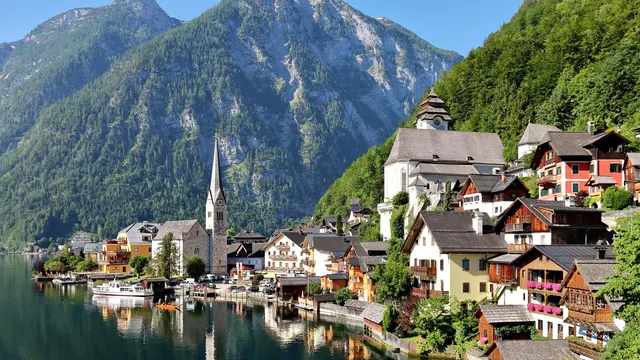
The Austrian Alps suit a trip built around mountains and time outdoors. Skiing runs from December to April, and in summer the same lifts open onto marked trails, staffed huts and lakes warm enough to swim in. It is the easier choice with children, thanks to ski schools, family hotels and safe, compact villages, and trains and Postbuses make a car optional within one valley. You give up depth at the table and a dense historic centre, because the sights are spread across Salzburg, Innsbruck and the Salzkammergut.
Choose Tuscany for
- food and drink
- culture and sights
- beaches
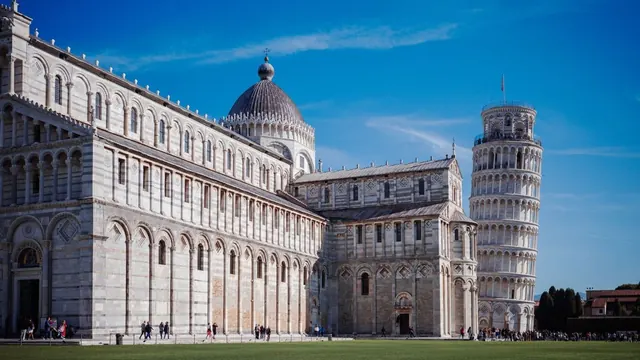
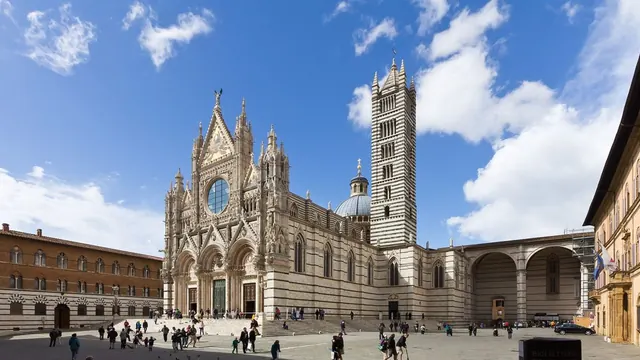
Travellers who come to look and to eat will be happier in Tuscany. Florence, Siena, Pisa and a string of walled hill towns hold more art and architecture than the Alps can offer, the cooking and wine go far deeper, and almost every base has a week of outings within reach. It also has a proper sea coast for summer. The costs are a car for the countryside, heavy crowds in Florence, and fewer late nights outside the coast in high summer.
Scoreboard
Twelve categories on one fixed scale from 0 to 100. The shaded stretch is the gap between the two.
Your match
Pick a travel style or drag the sliders, and both match scores follow your weighting.
Too close to call, 2 points apart
Wins on nature and the outdoors and nightlife with your weighting.
Wins on food and drink and culture and sights with your weighting.
What matters to you?
Category by category
What the scores mean for a trip.
Beaches & swimming
Tuscany has the sea, and that settles it for anyone after a beach vacation. Elba has clear water and sandy bays, the Maremma has pine-backed strands and the sheltered cove of Cala Violina, and Versilia runs for miles of fine sand with ordered rows of umbrellas.
The Austrian Alps offer lake bathing instead. Carinthia's Wörthersee and Millstätter See warm up well in high summer, and towns such as Velden organise the season around grassy lidos with piers and diving boards. It is a pleasant swim after a hike, but there is no sand and no salt water.
Food & drink
Tuscany is much the better place to eat. Its cooking runs from Florentine T-bone and pappardelle with wild boar to lampredotto from street carts, with market halls, Oltrarno trattorias and Chianti, Brunello and Vino Nobile tasted at the cellar door.
Alpine food is hearty and satisfying after a day outdoors, Kaiserschmarrn, Käsespätzle and Speck on a hut terrace, and Salzburg adds a café and cake tradition. Beyond the fine-dining kitchens of the Arlberg and Kitzbühel, though, menus repeat from village to village.
Culture & sights
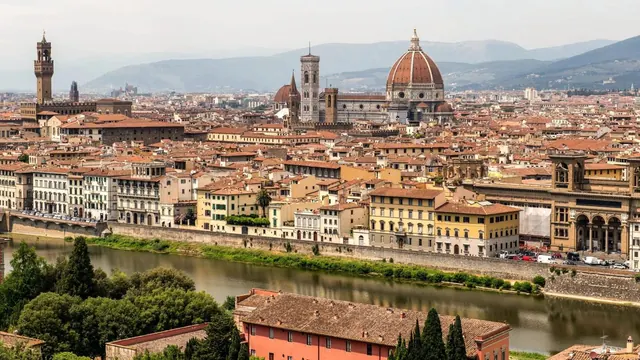
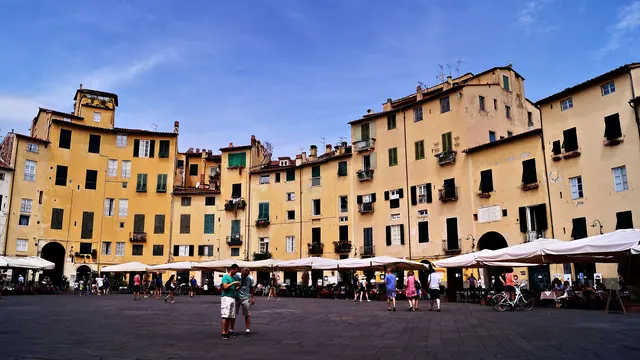
Tuscany wins clearly. Florence alone has Brunelleschi's dome, the Uffizi, the Accademia and the frescoed churches within a walkable centre, and Siena's Campo, Pisa's cathedral square, Lucca's walls and Pienza's planned streets add more on top.
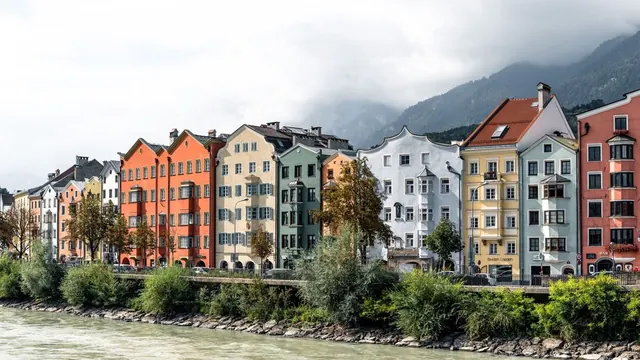
The Alps have strong but scattered highlights: baroque Salzburg under its fortress, Innsbruck's Golden Roof and Hofkirche, salt-mining Hallstatt and the Admont abbey library. A rewarding few days, but you travel between towns to see them, and the overall depth is smaller.
Nightlife
The Austrian Alps go out harder, but mostly in winter. Après-ski in Ischgl, St Anton, Saalbach and Mayrhofen starts in slopeside huts in the late afternoon and carries on in village bars and clubs until late, and Innsbruck's students keep bars busy all year.
Tuscan evenings are slower: long dinners, then a drink in the piazza or on the steps of Santo Spirito in Florence. The real late nights belong to the Versilia coast in summer, where the beach clubs and dance halls run until dawn, so the two regions party in opposite seasons.
Nature & outdoors
The Alps are in another league for the outdoors. The Grossglockner and its glaciers, the Krimml waterfalls, Tyrol's high valleys and vast ski areas give serious mountain terrain, and lifts, huts and marked trails make it easy to reach in summer and winter. The Salzkammergut and Carinthian lakes add sailing and paddling beneath the peaks.
Tuscany's landscape is gentler and mostly farmed: cypress lanes in the Val d'Orcia and Chianti, ideal for cycling between hill towns. Its wilder side lies in the Apuan Alps and the Casentino forests. What it has and the Alps lack is the sea, with cliff paths in the Maremma park and diving around Elba and the Tuscan Archipelago.
Day trips
Tuscany has more outings than a single stay can use. Siena, Lucca, Pisa, San Gimignano and Volterra are each a day from Florence or Chianti, the Montalcino and Pienza loop covers wine country, and Bologna, Umbria and the Cinque Terre lie just beyond.
The Alps give a good but narrower list. Salzburg leads to Hallstatt, Bad Ischl and Berchtesgaden, and Innsbruck to Hall in Tirol and Rattenberg, with Munich, Bavaria's royal castles and South Tyrol across the borders.
Good for families
The Alps are the more natural family choice. Resorts such as Serfaus-Fiss-Ladis and the Zillertal provide nursery slopes, children's ski schools and childcare as standard, and summer brings adventure trails, toboggan runs and shallow lake lidos, with Innsbruck's Alpine Zoo and the Hellbrunn trick fountains for rest days.
Tuscany works best split between a farmhouse with a pool and the sandy, shallow beaches of Versilia or Elba, and Italian restaurants welcome children late into the evening. The Pinocchio park and cycling on Lucca's walls help, but Florence's galleries and the July heat are hard on small children.
Getting around
The Alps are easier without a car. Trains run along the Inn valley, to Gastein and over the Arlberg, Postbuses climb the side valleys, and guest cards often cover local transport, so one valley can be done car-free. Moving between valleys is slower, and combining lakes and passes is easiest by car.
Tuscany splits in two. Florence is a walking city with good trains to Pisa, Lucca, Arezzo and Viareggio, but Chianti, the Val d'Orcia and the Maremma really need a car, old centres are closed to traffic, and the island ferries need planning.
Shopping & style
Tuscany has far more to buy. Florence's leather workshops around Santa Croce, the goldsmiths of the Ponte Vecchio, marbled paper in Oltrarno and the luxury houses on Via de' Tornabuoni lead the way, and towns add alabaster from Volterra, ceramics from Montelupo and marble from Pietrasanta.
In the Alps, shopping centres on dirndls, loden and felt hats along Salzburg's Getreidegasse and in Innsbruck, plus carved wood, Wattens crystal and mountain gear. December Christmas markets are the highlight, though the range stays small.
Affordability
Both are expensive in season, and the costs simply fall in different places. In the Alps, lift passes, ski hire and lessons pile up in winter, Arlberg and Kitzbühel are among the dearest addresses in the mountains, and Salzburg's hotels climb during the festival.
In Tuscany the main costs are central Florence hotels, Chianti villas, Versilia beach clubs and car hire. Each softens in its own way: farm stays, half-board and Carinthian summers in Austria, and trattorias, cellar-door wine and cheaper towns such as Lucca, Arezzo and the Maremma in Tuscany.
Live music & performing arts
The Alps have the stronger stage, especially in summer. The Salzburg Festival draws leading orchestras and singers for opera and the open-air Jedermann, Bregenz stages opera on its floating lake stage, and the Schubertiade and Erl add more. Salzburg's Mozart Week and Easter festival carry music through the rest of the year.
Tuscany's offer centres on opera too: the Maggio Musicale Fiorentino in Florence, Puccini recitals in Lucca and his operas staged outdoors by the lake at Torre del Lago. Lucca's summer pop and rock concerts give it a broader mix, but the headline events are fewer.
Wellness & relaxation
Both are excellent for rest, and the difference is in style. The Alps offer indoor and formal spa culture: Belle Époque Bad Gastein with its radon springs and healing gallery, the Aqua Dome's pools under the Ötztal peaks, and serious sauna worlds in hotels in almost every valley.
Tuscany's hot springs are often outdoors and informal, from the warm terraced pools at Saturnia to the steaming square of Bagno Vignoni and the white limestone pools of Bagni San Filippo. Add a farmhouse in the Val d'Orcia and long lunches, and idleness comes easily, away from Florence.
When should you go?
Pick your month. The climate figures are measured averages, not a forecast.
Austrian Alps in July
Tuscany in July
Daytime high, °C
Rainfall in the month, mm
Where the figures come from
Tuscany has no rain gauge within 25 km of the centre, so its rainfall comes from a gridded climate dataset read at the destination rather than from a gauge further away.
Tuscany's sunshine is measured 71 km from the centre, at Pisa / S. Giusto.
Temperature and rainfall are climate normals, averaged over the years shown. Austrian Alps: 1991-2020 normals, Innsbruck-Flughafen (4.1 km from centre). Tuscany: 1995-2020 (sunshine 1991-2020, rainfall 1991-2020) normals, Firenze / Peretola (5.6 km from centre).
The two are at their best at opposite ends of the year. In the Austrian Alps, measured in the valleys where most visitors stay, December and January are cold, with highs of about 4°C, and February is only a little milder. Skiing on the slopes above carries on until April, by which time the valleys have warmed into mild spring weather. Summer peaks near 26°C, which is warm enough for the Carinthian lakes and pleasant for hiking. June to August is also the wettest part of the Alpine year, though, and August brings about 144mm, often as afternoon storms. September, and to a lesser degree May, are the better months for long walks, still warm and noticeably drier than high summer.
Tuscany runs much hotter. July and August reach 33°C with plenty of sunshine, which is fine for the beach but hard going on Florence's streets. May, June and September are the best months for touring the towns and countryside. The rain arrives in October and November, the wettest months, and winter stays mild at about 11°C, which suits museums but is no time for swimming.
Which traveller are you?
For an outdoors trip, the Austrian Alps are the clear pick. Glaciers in the Hohe Tauern, some of Europe's largest ski areas, via ferratas and hut-to-hut trails give more serious terrain than Tuscany's farmland hills and the Apuan ridges.
On a culture and arts trip, choose Tuscany. Florence's Uffizi, David and the Duomo, then Siena, Pisa, San Gimignano and Lucca, give a density of Renaissance and medieval art that Salzburg and Innsbruck cannot match.
On a family trip with children, the Austrian Alps make life easier. Nursery slopes, children's ski schools, hotels built around kids' clubs and summer toboggan runs suit young legs better than Florence's queues and July heat.
Before you go
| Measure | Austrian Alps | Tuscany |
|---|---|---|
| Official language | German, Austrian Sign Language | Italian |
| Currency | Euro (EUR) | Euro (EUR) |
| Sockets | CF230 V, 50 Hz | CFL230 V, 50 Hz |
| Driving side | Right | Right |
| Time zone | UTC+1, UTC+2 in summer | UTC+1, UTC+2 in summer |
| Emergency number | 112 | 112 |
| Main airport | Innsbruck Airport (INN)40 non-stop destinations | Florence Airport, Peretola (FLR)46 non-stop destinations |
| Public holidays this year | 16 days | 13 days |
By the numbers
| Measure | Austrian Alps | Tuscany |
|---|---|---|
| Population | - | 3,729,641 |
Where else could you go?
Every comparison below shares a destination with this one, so you can follow Austrian Alps or Tuscany somewhere new.
- Bavariavs Austrian Alps
- Dolomitesvs Austrian Alps
- Umbriavs Tuscany
- Cinque Terrevs Tuscany
- Lake Gardavs Tuscany
- Lake Gardavs Austrian Alps