Bavaria or French Alps?
Our verdict in twelve categories, each scored against the same fixed benchmark cities, and the climate month by month, so you can choose for your trip.
Choose Bavaria for
- live music and the arts
- culture and sights
- getting around
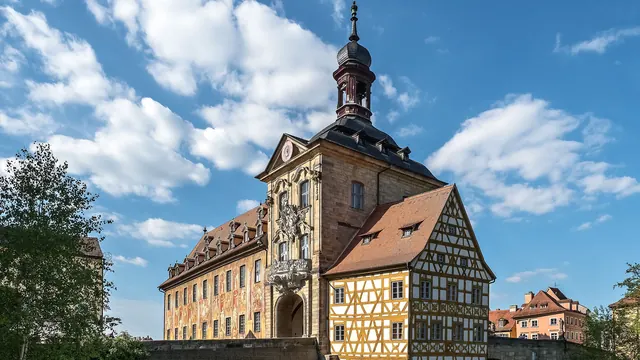
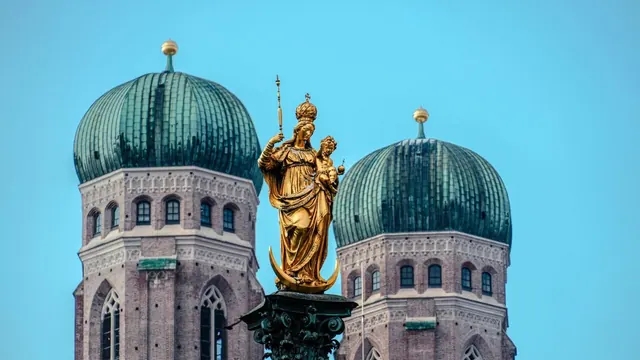
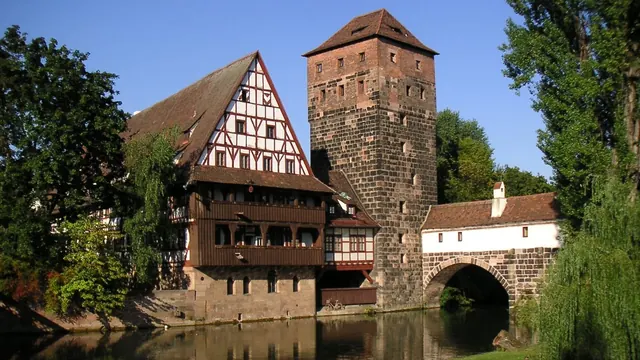
Bavaria suits the traveller who wants mountains as one part of a broader trip. Munich's galleries, opera house and orchestras, the medieval streets of Bamberg and Regensburg, Ludwig II's castles and a dense rail network let you mix culture, beer gardens, spa towns and a few Alpine days without a car. It is also the easier and somewhat cheaper choice for families and for anyone who likes moving between several bases.
Choose French Alps for
- beaches
- nature and the outdoors
- nightlife
The French Alps are for people who come for the mountains themselves. Mont Blanc above Chamonix, the Vanoise and Écrins parks and the vast linked ski areas of the Tarentaise go well beyond anything on Bavaria's southern edge, and Lake Annecy gives a better summer swim. In return you get thinner culture, little serious music or theatre, harder travel between valleys and high winter prices.
Scoreboard
Twelve categories on one fixed scale from 0 to 100. The shaded stretch is the gap between the two.
Your match
Pick a travel style or drag the sliders, and both match scores follow your weighting.
Wins on live music and the arts and culture and sights with your weighting.
Wins on beaches and nature and the outdoors with your weighting.
What matters to you?
Category by category
What the scores mean for a trip.
Beaches & swimming
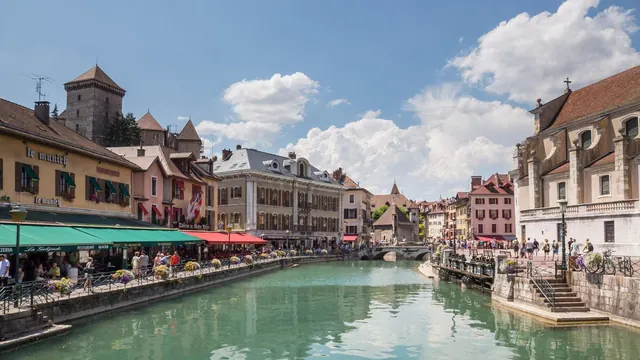
Neither region has a coast, and both swim in lakes from roughly June to early September. The French Alps have the better lake. Annecy's clear water and its grassy beaches at Sévrier, Talloires and Menthon make an attractive summer setting, and the lidos at Évian look across Lake Geneva.
Bavaria's swimming is more scattered: jetties and meadows on the Starnberger See, Chiemsee and Tegernsee, shallow lakes such as the Staffelsee for warmer water, and the gravel banks of the Isar in Munich. It is a pleasant extra, though not quite as good as a few days on Annecy's shore.
Food & drink
The two are evenly matched, but they eat and drink very differently. Bavaria is built around beer: beer gardens under chestnut trees, Franconian village breweries, Bamberg's smoked beer and Silvaner from Würzburg, with roast pork, sausages and pretzels on the plate.
The French Alps are about cheese and wine: fondue, raclette and tartiflette, Beaufort and Reblochon from the farm, Savoie whites and Chartreuse. Both have serious fine dining, Munich in the city and the French Alps around Annecy and the top resorts, and both menus get repetitive after a week.
Culture & sights
Bavaria is far richer here. Munich alone has the Alte Pinakothek, the Residenz and the Deutsches Museum. Beyond it are Nuremberg's castle, the UNESCO old towns of Bamberg and Regensburg, Tiepolo's fresco at Würzburg and the castles of Ludwig II, enough for a whole trip.
The French Alps offer shorter visits: Annecy's canals and the Palais de l'Isle, the dukes' château at Chambéry, Grenoble's fine-arts museum and Briançon's Vauban walls. They fill a rainy half day well, but they are rarely the reason to choose the region.
Nightlife
There is little to choose between them overall, but the timing differs. Bavaria's nights are year-round and city-based, with cocktail bars in Munich's Glockenbachviertel, student pubs in Bamberg and Regensburg, loud beer halls, and Oktoberfest as the one great excess.
The French Alps go out hardest in winter, with table-dancing après-ski and late clubs in Val Thorens, Val d'Isère and Méribel. Out of season they quieten down to Annecy's terraces and Grenoble's student bars.
Nature & outdoors
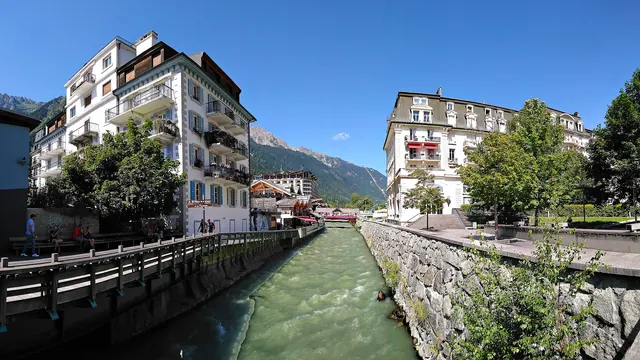
Both are fine mountain country, but the French Alps are on another scale. Mont Blanc, the glaciers seen from the Aiguille du Midi, the Tour du Mont Blanc and the wild Vanoise and Écrins parks are of world rank, and the Tarentaise's linked ski areas are some of the largest anywhere.
Bavaria's Alps are lower and gentler, with the Zugspitze, the Königssee in Berchtesgaden and hut-to-hut walking in the Allgäu. Its strength lies in variety: the wild Bavarian Forest, the climbing crags of Franconian Switzerland and long river cycle paths.
Day trips
Bavaria is easier for outings. Trains from Munich reach Augsburg, Nuremberg, Regensburg and Salzburg, and Franconia serves as a second hub for Bamberg, the Main wine villages and the Romantic Road towns.
The French Alps do well from Annecy or Lake Geneva, with Geneva, the ferry to Lausanne and Lavaux, and Yvoire all close by. From Chamonix, Italy is a short hop through the tunnel. In the deep Tarentaise valleys, though, most of a day trip goes on the road.
Good for families
Bavaria is the less tiring of the two with children. There are playgrounds in the beer gardens, the hands-on section of the Deutsches Museum, zoos in Munich and Nuremberg, Legoland at Günzburg and toboggan runs in summer, all within manageable distances.
The French Alps are excellent for teaching children to ski, with good ski schools and car-free resorts such as Avoriaz and Flaine. In summer there is the Mer de Glace railway and marmot spotting. The catch is the cold mornings, the altitude and the long transfer days, and there is little purely for entertainment.
Getting around
Bavaria is much easier without a car. Munich's U-Bahn and S-Bahn, regional trains to Garmisch, Füssen and Berchtesgaden and a day ticket covering much of the state reach most of the main sights. Only remote lake shores and villages need a car.
In the French Alps, getting around is simple once you are in a resort, because the lifts link whole valleys. Getting there is harder: a transfer from Geneva or Lyon, Saturday queues up the Tarentaise and snow chains in winter. In summer, a car is close to essential for reaching lakes, passes and trailheads.
Shopping & style
Bavaria has more range, with luxury houses on Munich's Maximilianstrasse, department stores around Marienplatz, and crafts such as Oberammergau woodcarving, Bavarian Forest glass and Nuremberg gingerbread. Its Christmas markets are a shopping trip in themselves.
The French Alps are specialist. Chamonix is among the best places in Europe to buy climbing and ski gear, and Courchevel and Megève serve the very rich. The best things to take home are cheeses, Génépi and Opinel knives.
Affordability
Neither is cheap, but Bavaria is gentler on the budget. Outside expensive Munich, Franconian towns, the Bavarian Forest and family guesthouses in Alpine villages are moderately priced, and inn meals and regional rail tickets keep daily costs down.
In the French Alps, winter is the costly season. Lift passes, ski hire and school-vacation chalets add up fast, and Courchevel and Val d'Isère are some of Europe's most expensive places to stay. Summer stays, low-season weeks and towns such as Grenoble or Chambéry bring costs down to ordinary French levels.
Live music & performing arts
The gap here is wide. Munich has the Bavarian State Opera, two orchestras of international rank and the rococo Cuvilliés Theatre, and Bayreuth's Wagner festival and Würzburg's Mozart festival draw music lovers from far away.
The French Alps have Grenoble's arts centre and chamber orchestra, chamber music at Évian, and summer concerts in mountain churches. In winter, evening entertainment means bands in après-ski bars, and for opera you would travel to Lyon or Geneva.
Wellness & relaxation
Both regions have long spa traditions, but Bavaria's goes deeper and covers more ground. There are the grand colonnades of Bad Kissingen, the brine cures of Bad Reichenhall, the Kneipp water cure from Bad Wörishofen, the huge thermal complex at Erding and the Müller'sches Volksbad in Munich.
The French Alps answer with Belle Époque Aix-les-Bains, Évian's lakeside promenades and the thermal baths at Saint-Gervais in a gorge below Mont Blanc. Hotel spas with hot tubs looking out over the snow are also part of the appeal, though a busy ski resort is rarely restful.
When should you go?
Pick your month. The climate figures are measured averages, not a forecast.
Bavaria in July
French Alps in July
Daytime high, °C
Rainfall in the month, mm
Where the figures come from
French Alps's temperatures are measured 35 km from the centre, at Bourg-St-Maurice.
French Alps's station stands 179 m below the place it is measured for, so that place is likely a little cooler than the figures say.
French Alps has no rain gauge within 25 km of the centre, so its rainfall comes from a gridded climate dataset read at the destination rather than from a gauge further away.
Temperature and rainfall are climate normals, averaged over the years shown. Bavaria: 1991-2020 normals, München (1.9 km from centre). French Alps: 1999-2020 (rainfall 1991-2020) normals, Bourg-St-Maurice (35.1 km from centre).
Bavaria's warm season runs from June to early September, with highs of about 25°C in July and August. That is warm enough for the lakes and long days in the mountains. Summer is also the wettest part of the year, with frequent showers and thunderstorms from May to August, though it is still the sunniest stretch. May, June and September are the most comfortable months for walking around towns. Winter is drier but cold and dim, with highs of around 4°C in January and the least sunshine in December and January. It suits Christmas markets and museums better than long days outdoors.
In the valleys where most visitors to the French Alps stay, summers are a little warmer, reaching about 27°C in July. The rainfall pattern is the reverse of Bavaria's. July and August are the least wet months, while the heaviest falls come from late autumn into winter, peaking at about 169mm in December. Higher up, much of that comes as snow for the ski season. May is also wet, so for a mix of town walks, lake days and trails the French Alps are at their best from late June to September.
Which traveller are you?
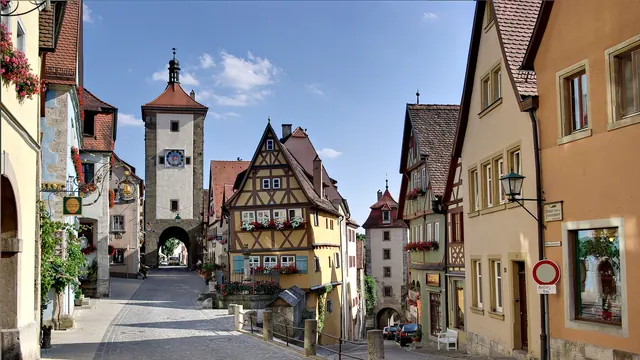
On a culture and arts trip, Bavaria is the clear choice. Munich's Pinakotheken, Residenz and opera house, the walled old towns of Bamberg, Regensburg and Rothenburg, and Bayreuth's Wagner festival give far more depth than the French Alps' pleasant towns and provincial stages.
For an outdoors trip, the French Alps go further. You can ride a cable car to the glaciers on the Aiguille du Midi, walk the Tour du Mont Blanc, ski the huge linked Tarentaise areas or cycle the great road passes. Bavaria's Alps are fine, but on a smaller scale.
On a beach and sun trip without a sea, the French Alps have the better water. Lake Annecy is clear, warm in high summer and lined with grassy beaches, and its slightly hotter summers help. Bavaria's lakes are pleasant, but the season is short and easily interrupted by rain.
Before you go
| Measure | Bavaria | French Alps |
|---|---|---|
| Official language | German | French |
| Currency | Euro (EUR) | Euro (EUR) |
| Sockets | CF230 V, 50 Hz | CE230 V, 50 Hz |
| Driving side | Right | Right |
| Time zone | UTC+1, UTC+2 in summer | UTC+1, UTC+2 in summer |
| Emergency number | 112 | 112 |
| Main airport | Munich Airport (MUC)211 non-stop destinations | Geneva International Airport (GVA)150 non-stop destinations |
| Public holidays this year | 12 days | 11 days |
By the numbers
| Measure | Bavaria | French Alps |
|---|---|---|
| Population | 13,038,724 | - |
Where else could you go?
Every comparison below shares a destination with this one, so you can follow Bavaria or French Alps somewhere new.
- Austrian Alpsvs Bavaria
- Swiss Alpsvs French Alps
- Dolomitesvs Bavaria
- Lake Comovs French Alps
- Black Forestvs French Alps
- French Rivieravs French Alps