Brazil
Rio de Janeiro
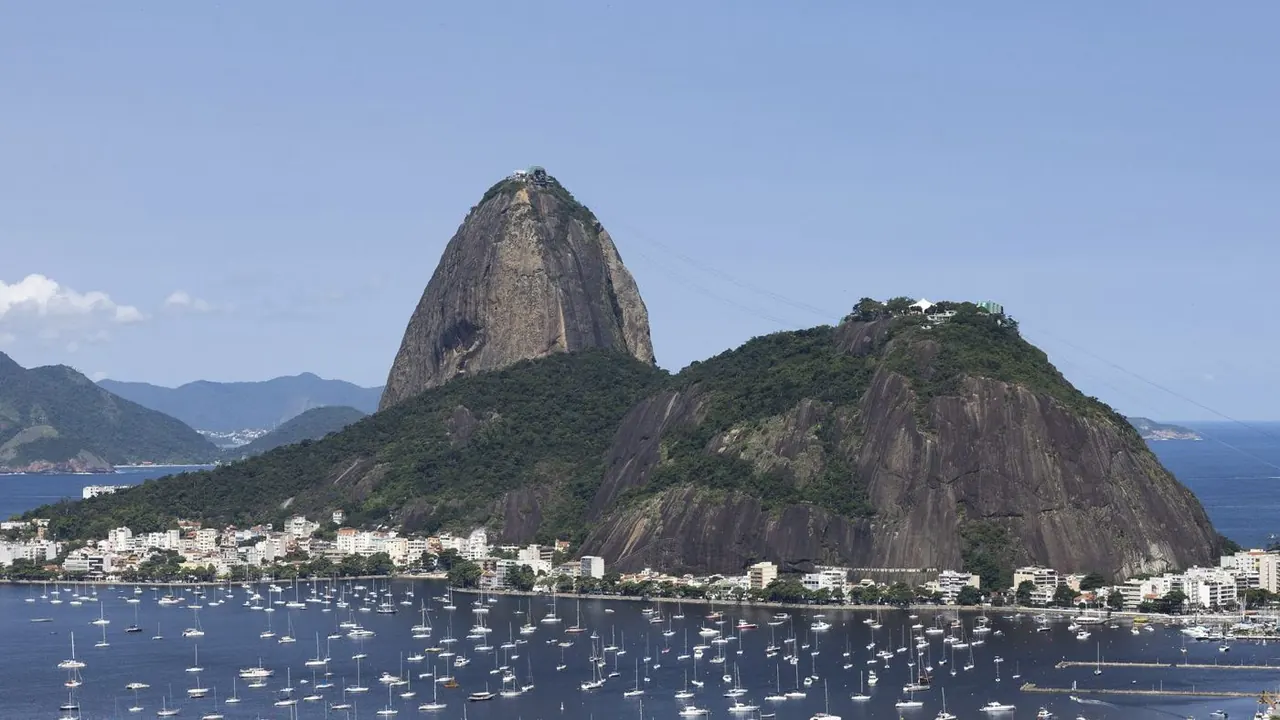
Sugarloaf Mountain above the boats in Botafogo Bay
- Beaches92
- Nature & outdoors90
- Nightlife80
Photo: Arne Müseler, CC BY-SA 3.0 DE, cropped
Match
62
Every category weighted equally
- Beach & sun64
- Culture & arts60
- Food & nightlife62
- Family trip62
- Outdoors64
- Relax & unwind61
- Shopping & style59
- On a budget62
Rio de Janeiro in twelve categories
Our verdict on each, scored 0 to 100 against the same fixed benchmark cities, so a score means the same thing on every page.
Beaches & swimming. Scores 92 out of 100.
Food & drink. Scores 62 out of 100.
Culture & sights. Scores 68 out of 100.
Nightlife. Scores 80 out of 100.
Nature & outdoors. Scores 90 out of 100.
Day trips. Scores 50 out of 100.
Good for families. Scores 50 out of 100.
Getting around. Scores 44 out of 100.
Shopping & style. Scores 50 out of 100.
Affordability. Scores 60 out of 100.
Live music & performing arts. Scores 66 out of 100.
Wellness & relaxation. Scores 30 out of 100.
Rio de Janeiro category by category
Beaches & swimming
92In Rio the beach is less an attraction than the city's main public square. Copacabana's long curve, Ipanema and Leblon beyond it, and the smaller coves of Leme and Arpoador all sit within walking distance of the main hotel districts. The Atlantic here is warm enough for comfortable swimming much of the year, at around 25°C in summer, and the sand fills from early morning with volleyball, footvolley, vendors walking the shore and families staying until sunset. Each stretch has its own crowd, and the numbered lifeguard posts double as meeting points.
Further west, Barra da Tijuca and the wilder beaches of Prainha and Grumari have cleaner water and fewer people, with surf rolling in under forested hills. The open ocean beaches can have strong waves and currents, so swim near the lifeguards and watch the flags. Water quality inside Guanabara Bay is poor, and the beaches facing the bay are for looking at rather than swimming. Keep valuables to a minimum on the sand.
Food & drink
62Eating in Rio is casual and social, and it happens mostly in botecos: neighbourhood bars with tiled walls, ice-cold draught chopp, and plates of pastéis, bolinhos de bacalhau and grilled meat to share. Saturday is for feijoada, the black-bean and pork stew served with farofa and orange. Juice bars on almost every corner of the Zona Sul blend tropical fruits and açaí, and on the beach vendors sell grilled cheese, coconut water and caipirinhas. Rodízio churrascarias carry skewers of grilled meat to your table, and kilo restaurants, where you pay by weight, are a cheap everyday lunch.
Leblon, Ipanema and Botafogo have the most interesting modern restaurants, and Botafogo also has many small independent bars. The historic Confeitaria Colombo in the centre is worth a visit for its belle époque room as much as for its pastries. Rio's food is pleasant rather than profound, though, and the range is narrower than in a great food city.
Culture & sights
68Rio's best-known sights are set in its landscape. Christ the Redeemer stands on Corcovado above the city and Sugarloaf rises over the bay, and both are reached by cog railway or cable car. The old centre is less known but rewarding: the Candelária church, the gilded São Bento monastery, the Paço Imperial, the ornate Theatro Municipal and the Real Gabinete Português de Leitura, one of the most beautiful reading rooms anywhere. Along the regenerated port, the Museu do Amanhã and the Museu de Arte do Rio face Praça Mauá.
Santa Teresa's hilltop streets of old mansions lead down to the Lapa Arches and the tiled Selarón steps, and Maracanã stadium is a pilgrimage for football fans. The museums are modest by world standards, and the historic buildings are spread among modern blocks, so the sights fill a few full days rather than a week.
Nightlife
80Going out in Rio starts late and happens largely on the street. On weekend nights Lapa fills with crowds under the white arches of the old aqueduct, drinking caipirinhas from street stalls, spilling out of cheap bars and moving on to clubs that stay open until dawn. In Botafogo and Humaitá small bars spread tables across the pavements and the evening drifts from one corner to the next, while Leblon and Ipanema have a smarter scene of cocktail bars and restaurants that keep serving well past midnight. Baile funk parties and big club nights in Barra and the centre add a louder, harder edge.
In the weeks before Carnival, the street blocos take over whole neighbourhoods by day and night, with crowds in costume following a truck or a band through the streets, and Carnival itself turns the city into one long party. After dark, take taxis or ride-hailing between districts rather than walking quiet streets.
Nature & outdoors
90Few cities are set into their landscape the way Rio is. Granite peaks rise straight from the sea, and the Tijuca National Park, one of the largest urban forests in the world, covers the mountains in the middle of the city. There are trails to Pico da Tijuca, waterfalls and viewpoints, and marmosets and toucans in the trees. Short, steep hikes up Dois Irmãos, Pedra da Gávea and Morro da Urca give views over the beaches and the bay, and climbers rope up on Sugarloaf itself. Hang-gliders launch from Pedra Bonita and land on the sand at São Conrado.
Surfing is good at Arpoador, Prainha and along the western beaches, and the lagoon of Rodrigo de Freitas has a cycle path and paddleboarding. Within about two hours, the Serra dos Órgãos rises inland in a wall of jagged peaks with serious multi-day hiking. Heat and humidity make summer hiking hard going, so start early. On the more isolated trails, go with a guide.
Day trips
50The classic day out is Petrópolis, the mountain town where the emperors spent their summers, about an hour and a half up the hills, with the Imperial Museum, a Gothic cathedral and cool air. Niterói is just a ferry ride across the bay, worth it for the Niemeyer art museum on its cliff and the views back towards Rio. Further into the hills, Teresópolis and the old coffee towns of the Paraíba valley make quieter outings.
Beyond that the list thins within easy reach. The colonial town of Paraty, the resort of Búzios and the island of Ilha Grande are all excellent, but each takes three hours or more, so they work far better as overnight stays than as day trips. Traffic leaving the city can add a lot of time, especially at weekends.
Good for families
50Brazilians love children, and families are welcome in restaurants and on the beach, which is Rio's main playground. The calmer water at Leme, Praia Vermelha and Barra suits younger swimmers better than the surf at Ipanema. The cable car to Sugarloaf and the cog railway up Corcovado thrill most children, and AquaRio by the port, the BioParque zoo in the Quinta da Boa Vista park, the cycle path around the lagoon and the forest trails of Tijuca round out a few days.
It is hard work in other ways. Summer heat is intense, traffic is heavy, pavements are uneven, and parents need to watch belongings and keep to busy areas. There is no major theme park nearby, so a family trip here is built around the beach.
Getting around
44Rio is long and squeezed between mountains and sea, so distances are bigger than they look on a map. The metro is clean and simple and runs along the most useful line for a visitor, linking the centre, Botafogo, Copacabana, Ipanema and Leblon, with a light rail through the downtown and port area. The beachfront districts themselves are flat and pleasant to walk, especially along the promenade.
Off that corridor things get harder. Santa Teresa, the Tijuca forest, the western beaches and many viewpoints are best reached by taxi or ride-hailing, which most visitors use widely, particularly at night. Buses are extensive but confusing, and traffic through the tunnels can be slow. A car is not needed and is more trouble than it is worth in the city.
Shopping & style
50Rio shops for the beach. Brazilian swimwear, flip-flops, linen and resort fashion are the things to buy, and the boutiques of Ipanema and Leblon do them well, alongside large air-conditioned malls in Botafogo, Leblon and Barra. The Sunday hippie fair in Ipanema's Praça General Osório sells crafts, leather, paintings and souvenirs, and downtown the crowded Saara market streets are full of cheap fabric, costumes and Carnival gear.
The Feira de São Cristóvão adds northeastern crafts and food. Beyond these, the choice is limited: international luxury brands are few and expensive, and there is no strong local craft tradition to seek out.
Affordability
60For visitors with foreign currency, everyday Rio is fairly cheap. Kilo lunches, boteco snacks, beers, juices, the metro and ride-hailing all cost little, and most of the best experiences, the beaches, the promenade, the forest trails, cost nothing at all. The main sights, the Corcovado train and the Sugarloaf cable car, are moderately priced.
Accommodation is where costs climb. Hotels close to the sand in Copacabana, Ipanema and Leblon are expensive for what they offer, and smart restaurants in Leblon charge close to European prices. Around Carnival and New Year room rates jump steeply and minimum stays are common, so a visit outside those weeks is much cheaper.
Live music & performing arts
66Rio's great performing art is samba, and a visitor can find it most nights. In Lapa, samba and choro bands play in old two-storey houses. Neighbourhood rodas de samba gather around a table of musicians in squares and bar courtyards. In the months before Carnival, the big samba schools open their rehearsals in their home districts, a loud and joyful introduction to the drumming and dancing that fills the Sambódromo parades. Bossa nova, born in Ipanema and Copacabana, still has small venues devoted to it.
The formal scene is smaller. The gilded Theatro Municipal stages opera, ballet and concerts, and the Brazilian Symphony Orchestra plays there and at the Cidade das Artes in Barra. Theatre is almost all in Portuguese, so for most visitors the music is the real draw.
Wellness & relaxation
30Rio has no bathing or spa tradition of its own. Relaxing here means the beach and the sea, not a bathhouse. The large hotels along Copacabana and Ipanema have good spas with massages and treatments, and yoga classes on the sand and in studios are easy to find, but there are no thermal baths or hammams to seek out.
The pace in the beach districts is unhurried, and an evening walk along the promenade or the lagoon is restful. The city as a whole is loud, hot and demanding, though. Those who want real calm head up into the cooler hills of Santa Teresa or out to the mountain towns inland.
When should you go?
Pick a month to see what it is like. The climate figures are measured averages, not a forecast.
Rio de Janeiro in July
Daytime high, °C
Rainfall in the month, mm
The whole year
Shaded against this city’s own year: the deepest cell is its best month for that figure and the palest its weakest.
Where the figures come from
Rio de Janeiro has no weather station within reach, so its figures come from a gridded climate model rather than a measured record, and read a broad area rather than the city itself.
Temperature and rainfall are climate normals, averaged over the years shown. Rio de Janeiro: 2001-2020 normals, NASA POWER reanalysis grid, no weather station within 90 km.
Before you go
| Measure | Rio de Janeiro |
|---|---|
| Official language | Portuguese |
| Currency | Brazilian Real (BRL) |
| Sockets | CN60 Hz |
| Driving side | Right |
| Time zone | UTC-3 |
| Emergency number | Police 190, ambulance 192, fire 193 |
| Elevation | 31 m |
| Main airport | Rio de Janeiro Galeão – Tom Jobim International Airport (GIG)12 km from centre54 non-stop destinations |
| Public holidays this year | 14 days |
By the numbers
| Measure | Rio de Janeiro |
|---|---|
| City population | 6,211,223 |
| People per km² | 4,930 |
| Museums within 10 km | 69 |
| UNESCO World Heritage sites within 50 km | 3 |
| Swim season, months above 21 °C | 12 months |
Compare Rio de Janeiro with
Every comparison with a written verdict behind it.