France
La Rosière
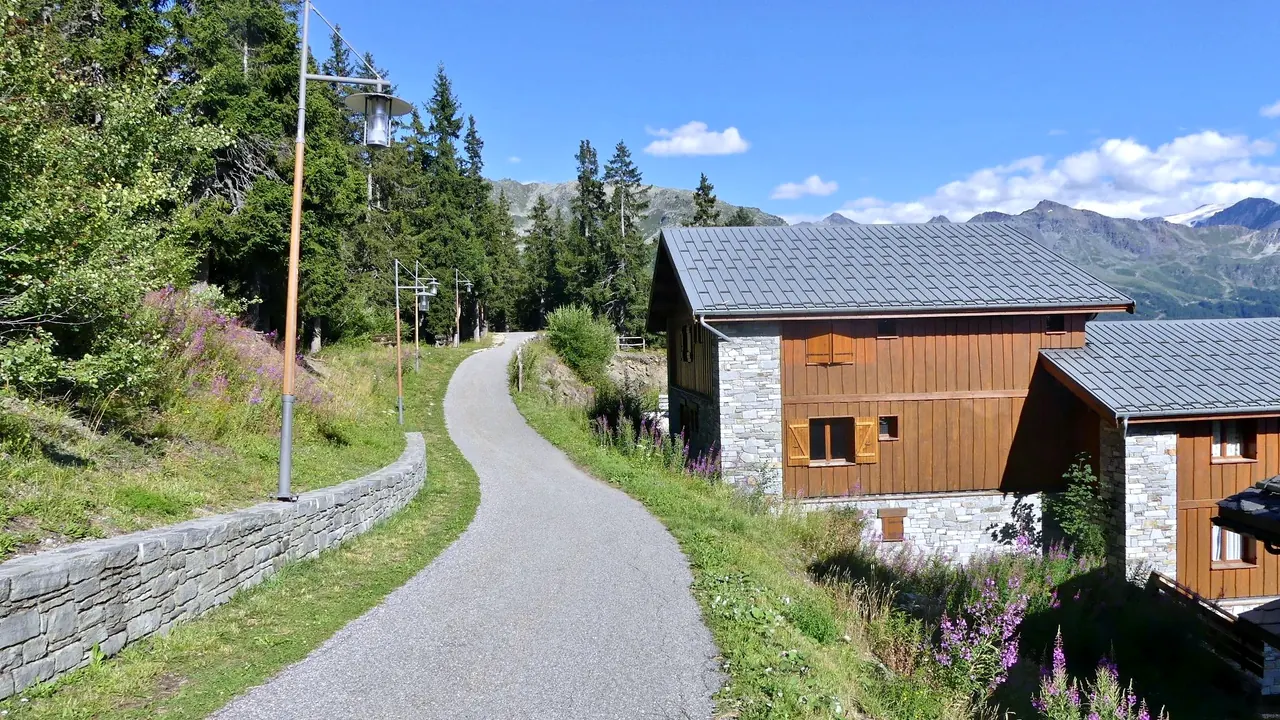
A chalet and fireweed on the footpath to Les Eucherts
- Nature & outdoors87
- Families55
- Getting around42
Photo: Florian Pépellin, CC BY-SA 4.0, cropped
La Rosière lies in French Alps, which has its own page.
Match
29
Every category weighted equally
- Beach & sun29
- Culture & arts24
- Food & nightlife21
- Family trip35
- Outdoors39
- Relax & unwind32
- Shopping & style24
- On a budget29
La Rosière in twelve categories
Our verdict on each, scored 0 to 100 against the same fixed benchmark cities, so a score means the same thing on every page.
Beaches & swimming. Scores 4 out of 100.
Food & drink. Scores 24 out of 100.
Culture & sights. Scores 7 out of 100.
Nightlife. Scores 10 out of 100.
Nature & outdoors. Scores 87 out of 100.
Day trips. Scores 38 out of 100.
Good for families. Scores 55 out of 100.
Getting around. Scores 42 out of 100.
Shopping & style. Scores 8 out of 100.
Affordability. Scores 28 out of 100.
Live music & performing arts. Scores 4 out of 100.
Wellness & relaxation. Scores 38 out of 100.
La Rosière category by category
Beaches & swimming
4This is a high mountain resort, far from any sea. Summer swimming means a hotel or chalet pool, or a brave dip in a cold Alpine lake further down the valley. Nobody comes here to swim.
Food & drink
24Eating here means Savoyard mountain food: tartiflette, raclette, fondue, Beaufort cheese and charcuterie, served in chalet restaurants in the resort and in huts on the slopes with long views. It is hearty and good after a day outside, but the choice is small and the menus repeat.
The best variety comes from skiing across the border, where the Italian side offers proper pasta, polenta and espresso at lunch. For anything beyond a few evenings of mountain cooking, the valley town of Bourg-Saint-Maurice below has more ordinary restaurants and a weekly market.
Culture & sights
7The resort is a modern ski station of wood and stone chalets with little history of its own. The baroque churches of the surrounding Tarentaise villages and, in summer, the Iron Age stone circle and old hospice on the Little St Bernard Pass are the nearest things to sights. Visitors come for the mountains.
Nightlife
10Evenings are gentle. A handful of bars fill up for après-ski as the lifts close, and a couple stay open later in peak weeks, but the resort is aimed at families and most people are back in their chalets after dinner. Anyone wanting big après or clubbing will find the livelier Tarentaise resorts more suited to it.
Nature & outdoors
87The resort sits on a sunny, south-facing balcony at about 1,850m, looking across the Tarentaise valley towards the glaciers of the Vanoise. In winter the ski area links over the Little St Bernard Pass to La Thuile in Italy, giving long, varied runs on both sides of the frontier, wide tree-lined pistes lower down, and big off-piste and heli-skiing from the Italian side. Snowshoeing and ski touring routes lead away from the lifts.
In summer the pass opens and the high pastures become hiking, mountain-biking and paragliding country, with marmots, ibex and wildflowers. The Vanoise and the big Tarentaise valleys are close, and the Mont Blanc massif rises just over the border.
Day trips
38In summer, when the Little St Bernard Pass is open, the Aosta valley in Italy is the best outing: the Roman walls, theatre and arch of Aosta, castles along the valley floor and the mountain town of Courmayeur. On the French side, Bourg-Saint-Maurice is a short drive down, and the Beaufortain villages, known for their cheese, are within reach.
In winter the pass road closes, and most trips beyond the valley become long drives. Annecy and Chambéry are around two hours away, so outings tend to be other ski resorts rather than towns.
Good for families
55This is one of the resorts families pick deliberately. The slopes face the sun, the nursery areas and children's ski schools are central, much of the accommodation is ski-in, ski-out, and the village is small and quiet enough to let older children roam. Sledging, snow play areas and dog-sled outings fill afternoons.
What it lacks is anything beyond the mountains. There are no theme parks, aquariums or museums, and on a bad-weather day there is little to do but the pool. In summer the hiking and lake picnics suit active families rather than those wanting organised attractions.
Getting around
42The resort is spread in several quarters along the hillside road, joined by pistes, lifts and a free shuttle, so in winter you rarely need a car once you arrive. Walking between the parts is possible but uphill and icy at times.
The nearest railway is at Bourg-Saint-Maurice, about half an hour down a winding road, with buses up to the resort. Anything beyond the slopes, from valley towns to Italy in summer, is far easier with a car.
Shopping & style
8Shopping is practical: ski hire and outdoor gear, small supermarkets, and a couple of shops selling local cheese, charcuterie and souvenirs. Bourg-Saint-Maurice in the valley has a little more, but nobody comes here to shop.
Affordability
28Like any Alpine ski resort, it is expensive in winter. Lift passes, equipment hire, ski school and slope-side meals add up quickly, and accommodation in school vacation weeks costs a good deal. It is noticeably less expensive than the glamorous resorts nearby, and self-catering apartments and chalets help keep costs down. Summer is far cheaper, with many lifts and hotels priced for walkers rather than skiers.
Live music & performing arts
4There is no theatre or concert life. Occasional live music in bars and seasonal resort events are the extent of it.
Wellness & relaxation
38Wellness here is mostly the pools, saunas and small spas in hotels and apartment residences, which are welcome after a day on the slopes. The resort itself is small and quiet, with chalets spread among the larches and evenings that wind down early, so the pace is restful. In summer the pass road brings a steady line of cars through, but the paths above the village stay peaceful.
The nearest real bathing culture is across the border in the Aosta valley, where the historic thermal baths of Pré-Saint-Didier sit just below La Thuile, an easy outing in summer over the pass.
When should you go?
Pick a month to see what it is like. The climate figures are measured averages, not a forecast.
La Rosière in July
Daytime high, °C
Rainfall in the month, mm
The whole year
Shaded against this destination’s own year: the deepest cell is its best month for that figure and the palest its weakest.
Where the figures come from
La Rosière has no weather station within reach, so its figures come from a gridded climate model rather than a measured record, and read a broad area rather than one spot.
Temperature and rainfall are climate normals, averaged over the years shown. La Rosière: 2001-2020 normals, NASA POWER reanalysis grid, no weather station within 90 km.
Before you go
| Measure | La Rosière |
|---|---|
| Official language | French |
| Currency | Euro (EUR) |
| Sockets | CE230 V, 50 Hz |
| Driving side | Right |
| Time zone | UTC+1, UTC+2 in summer |
| Emergency number | 112 |
| Elevation | 1,844 m |
| Main airport | Geneva International Airport (GVA)89 km from centre150 non-stop destinations |
| Public holidays this year | 11 days |
By the numbers
| Measure | La Rosière |
|---|---|
| Museums within 10 km | 0 |
| UNESCO World Heritage sites within 50 km | 0 |
Compare La Rosière with
Every comparison with a written verdict behind it.
- Adelboden
- Alpe d'Huez
- Andermatt
- Arosa
- Avoriaz
- Chamonix
- Châtel
- Courchevel
- Crans-Montana
- Davos
- Engelberg
- Flaine
- Grindelwald
- Gstaad
- Klosters
- La Clusaz
- La Plagne
- Laax
- Le Grand-Bornand
- Lenzerheide
- Les Arcs
- Les Deux Alpes
- Les Gets
- Les Menuires
- Leukerbad
- Megève
- Méribel
- Montgenèvre
- Morzine
- Mürren
- Saas-Fee
- Saint-Gervais-les-Bains
- Samnaun
- Samoëns
- Serre Chevalier
- St. Moritz
- Tignes
- Val Cenis
- Val d'Isère
- Val Thorens
- Verbier
- Wengen
- Zermatt