French Alps or Tuscany?
Our verdict in twelve categories, each scored against the same fixed benchmark cities, and the climate month by month, so you can choose for your trip.
Choose French Alps for
- nature and the outdoors
- nightlife
- families
Pick the French Alps when the mountains are the reason for the trip: glaciers seen at close range from the Aiguille du Midi, the Tour du Mont Blanc on foot, or a winter week in the huge linked ski areas of the Tarentaise. It also suits families who want ski schools and car-free resorts, and groups who want loud après-ski evenings. Expect high costs, and treat the towns as a pleasant extra rather than the main draw.
Choose Tuscany for
- culture and sights
- live music and the arts
- beaches
Tuscany wins on almost everything else. It has Renaissance Florence, Siena and a long run of hill towns, wine estates from Chianti to Montalcino, open-air hot springs and a real sea coast on Elba and in the Maremma. Travellers who like to eat well and see somewhere different each day will be happier here. It costs somewhat less than the Alps, though you will need a car once you leave the railway line.
Scoreboard
Twelve categories on one fixed scale from 0 to 100. The shaded stretch is the gap between the two.
Your match
Pick a travel style or drag the sliders, and both match scores follow your weighting.
Wins on nature and the outdoors and nightlife with your weighting.
Wins on culture and sights and live music and the arts with your weighting.
What matters to you?
Category by category
What the scores mean for a trip.
Beaches & swimming
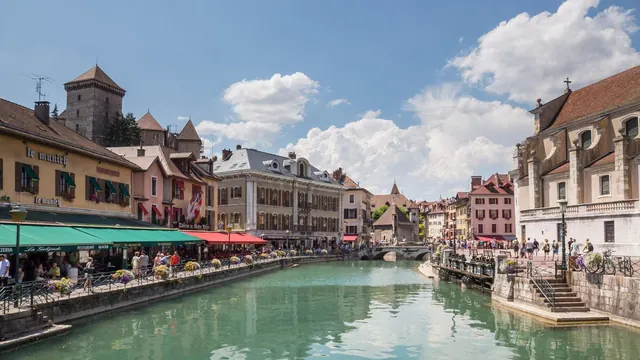
The French Alps have no sea, only lakes. Lake Annecy has clear water and grassy public beaches at Sévrier and Talloires, and the shore of Lake Geneva has pebbly lidos. It makes a pleasant swim during a summer stay, but the season is short and the beaches are small.
Tuscany has a proper coast. There are sandy bays on Elba, pine-backed strands in the Maremma, and long rows of beach clubs along Versilia. You can swim there from June to late September.
Food & drink
Savoyard cooking centres on melted cheese: fondue, raclette and tartiflette, with Beaufort and Reblochon bought at the farm and lake perch from Annecy. The top restaurants in Megève and Courchevel are superb, but ordinary resort menus soon start to repeat themselves.
Tuscany offers more to explore through the week. You can eat lampredotto from the street carts of Florence, Florentine steak and ribollita, then drive to wine country and taste Chianti Classico, Brunello and Vino Nobile at the cellars where they are made.
Culture & sights
These two are far apart. In the Alps, sightseeing fills a free afternoon between walks or ski days: the canals of Annecy's old town, the ducal château in Chambéry, Grenoble's fine-arts museum, and the Vauban walls at Briançon.
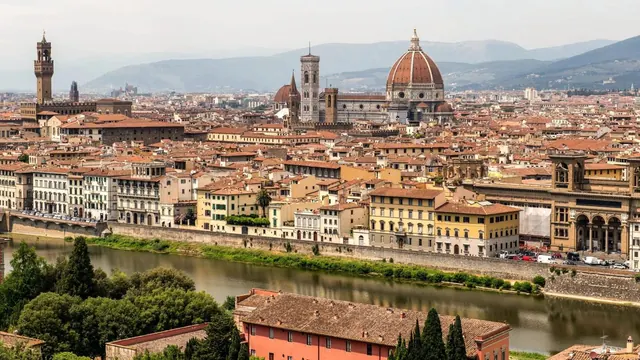
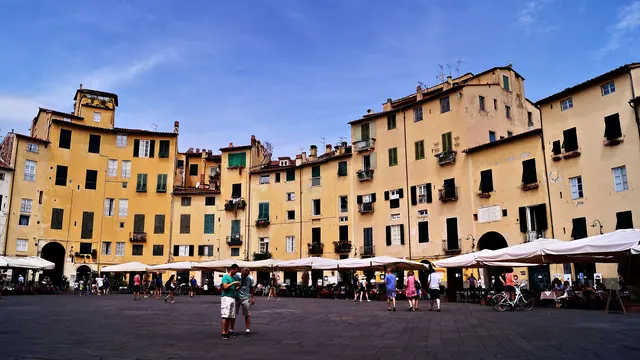
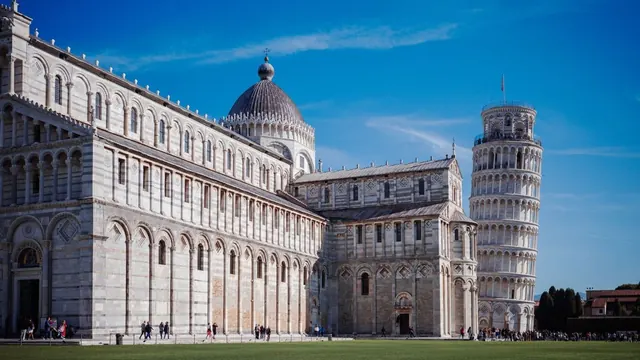
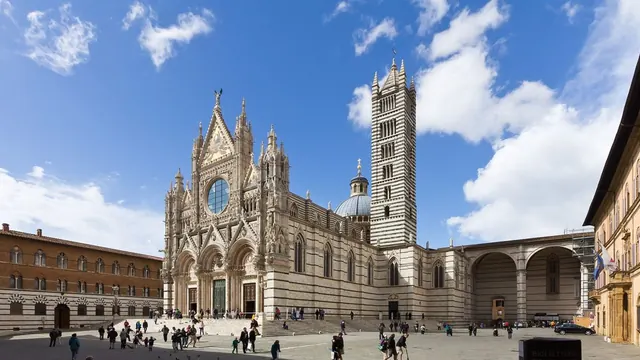
In Tuscany, sightseeing can fill the whole trip. Florence packs the Uffizi, David and the frescoed churches into one walkable centre. Siena's Campo, Pisa's cathedral square, San Gimignano's towers and Piero della Francesca's frescoes in Arezzo are all a short journey away.
Nightlife
The Alps are livelier, but only in winter. Après-ski starts in the afternoon at the slope-side restaurants, then moves to the bars and late clubs of Val Thorens, Val d'Isère and Méribel. In summer, things calm down to Annecy's lakeside terraces and student bars in Grenoble.
Tuscany's late nights come in the opposite season, at the beach clubs and dance halls of Versilia from June to August. For the rest of the year, an evening in Tuscany means a long dinner and a drink in the piazza, or a crowd on the steps of Santo Spirito in Florence.
Nature & outdoors
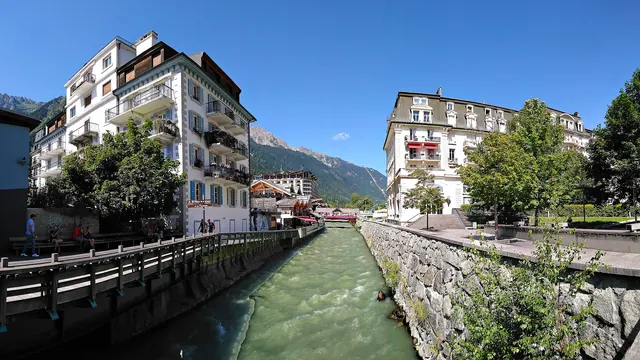
The Alps are in a class of their own. Mont Blanc rises above Chamonix, the Écrins and Vanoise have ibex and wild high passes, and the Tarentaise holds some of the largest ski areas in the world. Summer adds paragliding over Lake Annecy and via ferrata.
Tuscany's countryside is gentler and mostly farmed. It has cypress lanes in the Val d'Orcia and white gravel roads that are ideal for slow cycling. Its wilder corners are the Apuan Alps, the Casentino forests and the Maremma coast.
Day trips
From Annecy or Lake Geneva there are good outings: Geneva itself, ferries across to Lausanne and Lavaux, and Lyon by train. Chamonix gives quick access to Aosta in Italy. Deep in the Tarentaise valleys, though, most of a day trip is spent on the road.
Tuscany has more outings than any one trip can use. Siena, Lucca, Pisa, Volterra and the Montalcino and Pienza loop are all easy to reach. Bologna, Orvieto and the Cinque Terre lie just beyond the regional border.
Good for families
The Alps do slightly better for children, mainly because of how the resorts are built. Avoriaz, Flaine and Les Arcs are car-free resorts with ski schools set up for children. In summer, families can ride the rack railway to the Mer de Glace or take easy lift-served walks. The cold, the altitude and the transfer days do tire small children.
In Tuscany, families usually split the stay between an agriturismo with a pool and animals and a lifeguarded beach. Children enjoy the Pinocchio park at Collodi and cycling on Lucca's walls. The heat of July and August and the Florence galleries test their patience.
Getting around
Tuscany is easier without a car, at least along its main railway line. Florence is best on foot, and regular trains connect it to Pisa, Lucca, Arezzo and Viareggio. Chianti, the Val d'Orcia and the Maremma still need a car.
In the Alps, the lifts make it easy to move around once you arrive. Getting there is the hard part. It usually means a transfer from Geneva or Lyon, long Saturday queues up the Tarentaise in winter, snow chains on the approach roads and patchy buses to the higher villages.
Shopping & style
Shopping in the Alps is narrower and more practical. Chamonix is one of the best places in Europe to buy climbing and ski gear, Courchevel and Megève have luxury boutiques, and Opinel knives and Beaufort cheese make good things to take home.
Tuscany has far more craft shopping. In Florence you will find leather workshops around Santa Croce, goldsmiths on the Ponte Vecchio and paper binders in Oltrarno. Other towns have their own crafts, such as alabaster in Volterra and ceramics in Montelupo.
Affordability
Neither region is cheap, but the Alps cost more. A winter week adds up fast once you pay for lift passes, equipment hire, ski school and mountain lunches, and Courchevel and Val d'Isère are among the costliest places to stay in Europe. Grenoble, Chambéry and summer stays cost less.
Tuscany's big costs are central Florence, Chianti villas and car hire. Trattoria meals and wine bought at the cellar help keep the total down, and Lucca, Arezzo and the Maremma are cheaper bases.
Live music & performing arts
Tuscany has much more to see on stage. Florence has the Maggio Musicale with its own opera house and orchestra, Lucca holds Puccini recitals all year, and his operas are performed outdoors by the lake at Torre del Lago every summer.
In the Alps, the main year-round programme is at Grenoble's arts centre. Évian's chamber music gatherings and the summer festivals in the resorts are the high points. For opera, you need an evening in Lyon or Geneva.
Wellness & relaxation
Both regions have been spa country since Roman times. The Alpine version is the formal cure: the Belle Époque spa town of Aix-les-Bains, the lakeside promenades at Évian, and the thermal baths of Saint-Gervais in a gorge below Mont Blanc.
Tuscany relaxes more easily, partly because its hot springs are outdoors and in the landscape. Visitors bathe in the open at the Saturnia cascades, Bagno Vignoni's steaming medieval pool and the white pools of Bagni San Filippo. A quiet farmhouse in the Val d'Orcia is just as restful.
When should you go?
Pick your month. The climate figures are measured averages, not a forecast.
French Alps in July
Tuscany in July
Daytime high, °C
Rainfall in the month, mm
Where the figures come from
French Alps's temperatures are measured 35 km from the centre, at Bourg-St-Maurice.
French Alps's station stands 179 m below the place it is measured for, so that place is likely a little cooler than the figures say.
French Alps has no rain gauge within 25 km of the centre, so its rainfall comes from a gridded climate dataset read at the destination rather than from a gauge further away.
Tuscany has no rain gauge within 25 km of the centre, so its rainfall comes from a gridded climate dataset read at the destination rather than from a gauge further away.
Tuscany's sunshine is measured 71 km from the centre, at Pisa / S. Giusto.
Temperature and rainfall are climate normals, averaged over the years shown. French Alps: 1999-2020 (rainfall 1991-2020) normals, Bourg-St-Maurice (35.1 km from centre). Tuscany: 1995-2020 (sunshine 1991-2020, rainfall 1991-2020) normals, Firenze / Peretola (5.6 km from centre).
The French Alps have two seasons where Tuscany has one. Winter brings the ski season from December to April, and March and April still have skiing on the high slopes, with longer, milder days. Summer runs from late June to early September, when valley highs around Annecy reach about 27°C. That is warm enough for lake swimming and for walking on the high passes. The in-between times are May and early June, which are often wet, and October and November, which suit neither skiing nor swimming. Rain falls all year and is heaviest from November to January, at up to about 170mm a month.
Tuscany is warmer and drier for most of the year, with long sunny days through the summer. July and August reach about 33°C. That is fine for the beach but too hot for walking around Florence or Siena in the afternoon. May, June and September suit the towns and the countryside together best. Rain builds from October and peaks in November at about 124mm. Winters are mild but grey, and there is no winter season to match the Alpine one.
Which traveller are you?
For an outdoors trip, choose the French Alps. Mont Blanc, the Vanoise and Écrins national parks, and passes like the Galibier give you high mountain walking, climbing and cycling that Tuscany's gentle hills and the Apuan ridges cannot match. In winter, the skiing is in another league.
On a culture and arts trip, Tuscany is the clear choice. Florence alone has the Uffizi, the Accademia and Brunelleschi's dome, and Siena, Pisa, Lucca and Arezzo are all easy outings. The Alps offer pleasant half days in Annecy, Chambéry and Grenoble.
On a family trip with children, the French Alps have the edge. Ski schools take children from snow garden upwards, car-free resorts let you walk from apartment to slope, and summer brings marmots and lake beaches. Tuscany's farmhouses and sandy beaches work well, but its galleries tire young children.
Before you go
| Measure | French Alps | Tuscany |
|---|---|---|
| Official language | French | Italian |
| Currency | Euro (EUR) | Euro (EUR) |
| Sockets | CE230 V, 50 Hz | CFL230 V, 50 Hz |
| Driving side | Right | Right |
| Time zone | UTC+1, UTC+2 in summer | UTC+1, UTC+2 in summer |
| Emergency number | 112 | 112 |
| Main airport | Geneva International Airport (GVA)150 non-stop destinations | Florence Airport, Peretola (FLR)46 non-stop destinations |
| Public holidays this year | 11 days | 13 days |
By the numbers
| Measure | French Alps | Tuscany |
|---|---|---|
| Population | - | 3,729,641 |
Where else could you go?
Every comparison below shares a destination with this one, so you can follow French Alps or Tuscany somewhere new.
- Swiss Alpsvs French Alps
- Umbriavs Tuscany
- Cinque Terrevs Tuscany
- Lake Comovs French Alps
- Lake Gardavs Tuscany
- Black Forestvs French Alps