French Riviera or Swiss Alps?
Our verdict in twelve categories, each scored against the same fixed benchmark cities, and the climate month by month, so you can choose for your trip.
Choose French Riviera for
- beaches
- culture and sights
- shopping
The French Riviera is the better pick for a summer trip that mixes the sea with towns, art and evenings out. You can swim off sand at Cannes or Juan-les-Pins in the morning, see Matisse or Picasso in the afternoon and eat Niçois cooking in Nice's old town at night, all along one coastal railway. It also costs noticeably less than the Alps, though it is not cheap either.
Choose Swiss Alps for
- wellness
- nature and the outdoors
- getting around
Travellers who come for the mountains themselves should go to the Swiss Alps. The scenery around the Jungfrau, the Matterhorn and the Engadine is in a different league, and trails start straight from cable-car stations. The thermal baths at Leukerbad and Vals and the quiet car-free villages make it the place to rest. Families who like trains, lakes and ski schools do well here too. The trade-off is plain food, little culture or nightlife outside the ski season, and some of the highest prices in Europe.
Scoreboard
Twelve categories on one fixed scale from 0 to 100. The shaded stretch is the gap between the two.
Your match
Pick a travel style or drag the sliders, and both match scores follow your weighting.
Wins on beaches and culture and sights with your weighting.
Wins on wellness and nature and the outdoors with your weighting.
What matters to you?
Category by category
What the scores mean for a trip.
Beaches & swimming
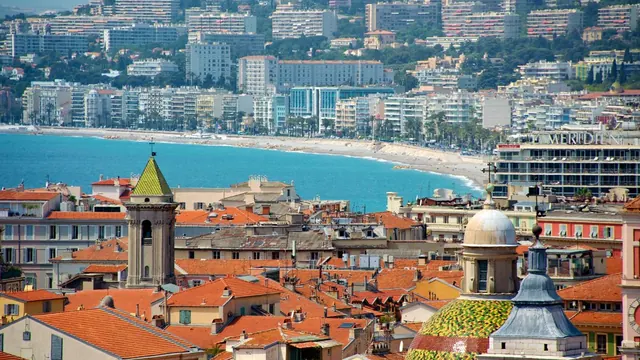
The French Riviera is a real seaside destination and the Swiss Alps are not. The Riviera has pebbles at Nice and Menton, sand along the Croisette, at Juan-les-Pins and at Pampelonne, and clear coves under the red Esterel rocks. You can swim from June into early October. The catch is that private concessions take up much of the sand, and the public beaches get very crowded in high summer.
In the Alps, swimming means lake lidos with jetties and lawns. The water is very clean but cool, around 20°C on Lake Thun or Lake Brienz in a warm August. Lake Lugano and Lake Maggiore in Ticino are a few degrees warmer. A swim there is a pleasant break from walking, not a reason to go.
Food & drink
The Riviera eats much better. Nice has its own cuisine of socca, pissaladière and stuffed vegetables, and the Cours Saleya market is full of olives, citrus and herbs. Serious restaurants line the stretch from Menton to Cannes. The thing to avoid is the tourist set menus on the seafront.
Alpine food is mostly hearty cheese dishes such as fondue, raclette and rösti, and it tastes best on a hut terrace at the top of a lift. The Valais wines are a real find, and Ticino's grotti add polenta and Merlot. Beyond that the choice is narrow, with no markets or street food, and in most villages you eat in hotel dining rooms.
Culture & sights
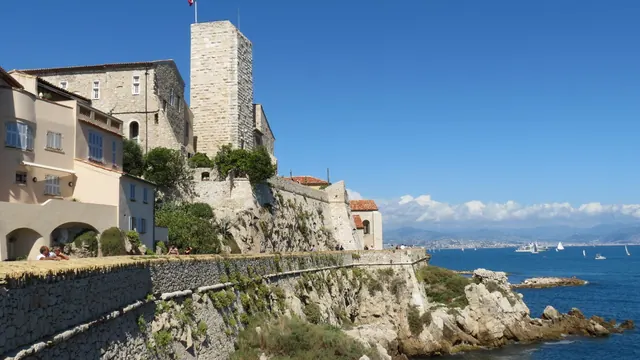
For sightseeing, the Riviera has far more to offer. It holds one of Europe's best modern art collections in museums and chapels where the artists actually worked: Matisse and Chagall in Nice, Picasso in Antibes, and the Fondation Maeght near Saint-Paul-de-Vence. Add Nice's baroque old town, Monaco's palace and the Roman trophy at La Turbie, and you can fill a week.
In the Alps, the heritage sits in the landscape. You will find sgraffito houses in Guarda, the World Heritage Bernina railway, the castles of Bellinzona and Sion, and the Carolingian frescoes at Müstair. These make good stops on a hiking trip, but they will not fill one on their own.
Nightlife
The two go out in opposite seasons. The Riviera is busiest in summer, with beach clubs in Saint-Tropez and Monaco and late bars in Juan-les-Pins. Nice's old town and port keep pubs and wine bars open all year, so there is more choice overall. In the Alps, evenings mean winter après-ski in a few resorts, mostly Verbier and Zermatt, and summer hiking villages are asleep by eleven.
Nature & outdoors
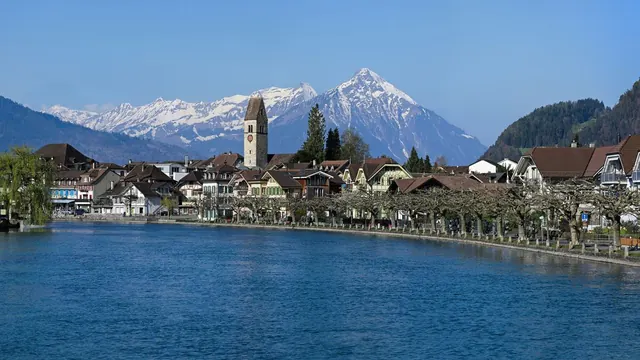
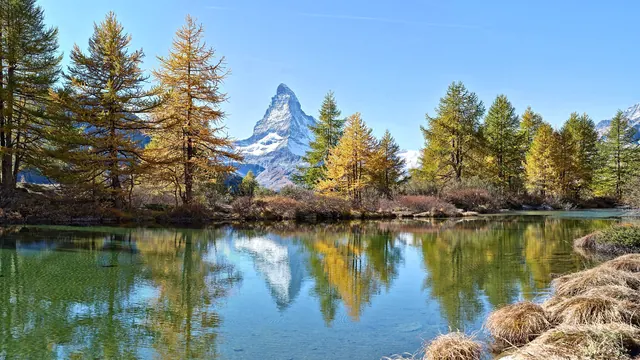
Both have mountains, but the Alps are on another scale. The Eiger and Jungfrau rise above the Lauterbrunnen valley, the Matterhorn stands over Zermatt and the Aletsch glacier stretches through Valais. Cable cars put you on high trails without a long climb. In winter, Zermatt, Verbier and St Moritz have some of the best skiing anywhere.
The Riviera's appeal is mountains meeting the sea. There are paths around Cap Ferrat and Cap d'Antibes, kayaking and diving off the Esterel, and the high Mercantour about one and a half hours inland. Walking is best in spring and autumn, because summer heat and wildfire closures shut some areas.
Day trips
Both regions offer plenty of easy outings. The difference is in what kind of place you visit and how far you travel. From Nice, the coastal train reaches Villefranche, Monaco and Menton in well under an hour. Hill villages like Eze and Saint-Paul-de-Vence and the Italian market at Ventimiglia are also close, although many days end up as variations on a pretty village.
The Alps' outings are towns and lakes reached by scenic train. From the Bernese Oberland you can visit Bern's arcades, Thun's castle, Lucerne over the Brünig Pass, or Gruyères and the Château de Chillon further west. Journeys are longer, but the train ride is part of the day.
Good for families
On the Riviera, a family trip centres on the sea. The gently shelving sand at Juan-les-Pins and Fréjus suits small children, and Monaco's aquarium is a rainy-day attraction the Alps cannot match. The practical side is harder going. July and August bring heat, traffic and expensive family rooms, and the hill villages are all steps and cobbles, so a pushchair is more trouble than help there.
The Alps are the easier choice with children. Grindelwald, Wengen and Saas-Fee have ski schools in winter, and in summer there are toboggan runs and playgrounds at the top of the lifts. A cogwheel train or a lake steamer is a treat in itself, and in the car-free villages children can walk about safely. With very young children, take some care with the altitude.
Getting around
The Alps have one of the best mountain transport networks anywhere. Trains, postbuses, steamers and cable cars run on linked timetables, and resorts such as Zermatt and Mürren ban cars altogether. The weakness is distance, since crossing from the Bernese Oberland to the Engadine takes a long day.
The Riviera works well along its railway from Cannes to Menton, with Nice's tram and walkable centre at its heart. Away from the line it gets harder. Buses to the hill villages are slow, and the road to Saint-Tropez jams in summer, so a car helps inland even though parking is scarce.
Shopping & style
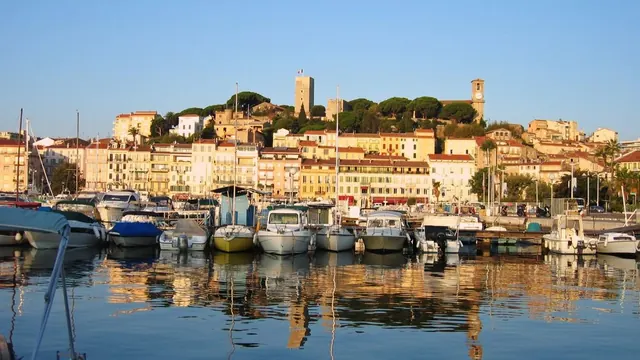
The Riviera offers far more for shoppers. Cannes has boutiques on the Croisette and Monte-Carlo has them around the casino, and Nice has the region's department stores. Local crafts give the shopping its character: perfume in Grasse, bubbled glass in Biot, pottery in Vallauris, and Provençal markets with a Monday flea market on the Cours Saleya.
In the Alps, shopping is limited to a few luxury streets in St Moritz and Gstaad, plus watch and mountain-gear shops in Zermatt and Interlaken. The best things to bring home are alpine cheese, Valais wine and Brienz woodcarving.
Affordability
Neither is a budget trip, but the Riviera is clearly easier on the wallet. Nice has a wide range of apartments and simple places serving socca and pizza. Regional trains are cheap, beaches and coastal paths are free, and travelling in May, June or September eases hotel prices.
The Alps cost more at almost every step. Hotels in Zermatt or St Moritz are expensive, so are hut meals, and cable-car tickets can cost more than the room. Self-catering, supermarket picnics, travel passes and quieter valleys like Goms or the Ticino side help, but only so much.
Live music & performing arts
The Riviera has a resident arts scene. The gilded Monte-Carlo opera house and the Ballets de Monte-Carlo perform through the winter, and Nice has its own opera and orchestra. In summer, jazz festivals fill the pine grove at Juan-les-Pins and Place Masséna.
The Alps have only summer festivals, but some are excellent. The Verbier Festival and the Menuhin Festival around Gstaad bring top classical performers to tents and village churches. The rest of the year there is little beyond brass bands and alphorn evenings, with no opera or theatre.
Wellness & relaxation
The Alps are much the better place to rest. Leukerbad is a whole spa village with outdoor pools open in the snow, Vals has its stone thermal bath in the hillside, and Bad Ragaz and Scuol have centuries-old springs. Quiet car-free villages add to the calm.
On the Riviera, wellness means thalassotherapy in Monaco and on the capes, or spas at the grand hotels on Cap Ferrat. It is calmest in spring and autumn. In July and August the coast is loud, and the inland villages are the quieter option.
When should you go?
Pick your month. The climate figures are measured averages, not a forecast.
French Riviera in July
Swiss Alps in July
Daytime high, °C
Rainfall in the month, mm
Where the figures come from
Swiss Alps has no rain gauge within 25 km of the centre, so its rainfall comes from a gridded climate dataset read at the destination rather than from a gauge further away.
Swiss Alps's sunshine is measured 66 km from the centre, at Sion.
Temperature and rainfall are climate normals, averaged over the years shown. French Riviera: 1991-2020 normals, Nice (9.8 km from centre). Swiss Alps: 2005-2020 (sunshine 1961-1990, rainfall 1991-2020) normals, Meiringen / Unterbach (19.5 km from centre).
The Riviera is at its best for the beach from June to August, when days reach about 28°C and are dry and very sunny. The sea is warm enough to swim from June into early October and reaches 25°C in August. The rains come back in September and grow heavier through October and November, which bring up to 138mm a month. Midsummer afternoons are hot for climbing the hill villages, so April, May and late September suit walking better. Winters are mild enough for sightseeing in the towns but too cool for a swim.
The Alps work in two quite separate seasons. At the point where the figures are measured, summer peaks at around 24°C, which is good weather for hiking. July is also the sunniest month, but May to August is the wettest stretch of the year, so expect frequent showers. In winter, highs there stay near 3°C and the days are short and grey, and it is colder again higher up, which is what the ski resorts need. The two regions fit together well: the Riviera for sea and sun in midsummer, the Alps for summer walking or winter snow.
Which traveller are you?
On a beach and sun trip, the French Riviera is the obvious choice. It has warm sea, the sandy beaches of Cannes, Juan-les-Pins and Pampelonne, and coves in the Esterel. The Alps can only offer cool lake lidos, which are best fitted in between hikes.
For a culture and arts trip, the Riviera wins clearly. Matisse, Chagall, Picasso and the Fondation Maeght are all within easy reach, along with opera in Monaco and Nice and the summer jazz festivals. The Alps have castles and painted villages, but no great museum.
On a relaxing and wellness trip, choose the Swiss Alps. You can soak in the thermal pools of Leukerbad, Vals or Bad Ragaz, then sleep in quiet car-free villages. On the Riviera, rest means expensive hotel spas, and in July and August the resorts are loud.
Before you go
| Measure | French Riviera | Swiss Alps |
|---|---|---|
| Official language | French | French, German, Italian, Romansh |
| Currency | Euro (EUR) | Swiss Franc (CHF) |
| Sockets | CE230 V, 50 Hz | CJ230 V, 50 Hz |
| Driving side | Right | Right |
| Time zone | UTC+1, UTC+2 in summer | UTC+1, UTC+2 in summer |
| Emergency number | 112 | 112 |
| Main airport | Nice-Côte d'Azur Airport (NCE)130 non-stop destinations | Zürich Airport (ZRH)226 non-stop destinations |
| Public holidays this year | 11 days | 10 days |
By the numbers
| Measure | French Riviera | Swiss Alps |
|---|---|---|
| Swim season, months above 21 °C | 4 months | - |
Where else could you go?
Every comparison below shares a destination with this one, so you can follow French Riviera or Swiss Alps somewhere new.
- French Alpsvs Swiss Alps
- Lake Comovs Swiss Alps
- Black Forestvs Swiss Alps
- Provencevs French Riviera
- Cinque Terrevs French Riviera
- Corsicavs French Riviera