Greece
Kalambaka
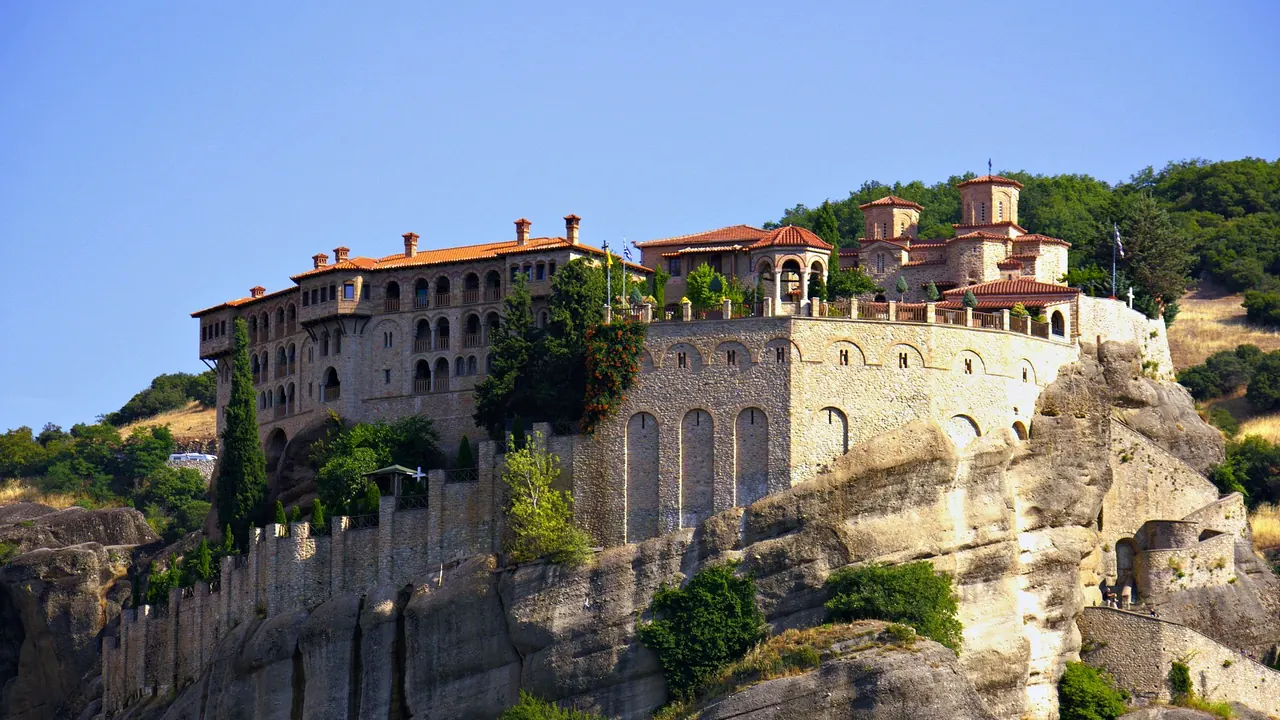
Varlaam monastery on its rock at Meteora
- Nature & outdoors80
- Affordable cities66
- Culture & sights58
Photo: José Barbosa, Pexels License
Match
35
Every category weighted equally
- Beach & sun34
- Culture & arts36
- Food & nightlife28
- Family trip40
- Outdoors45
- Relax & unwind36
- Shopping & style30
- On a budget38
Kalambaka in twelve categories
Our verdict on each, scored 0 to 100 against the same fixed benchmark cities, so a score means the same thing on every page.
Beaches & swimming. Scores 5 out of 100.
Food & drink. Scores 30 out of 100.
Culture & sights. Scores 58 out of 100.
Nightlife. Scores 8 out of 100.
Nature & outdoors. Scores 80 out of 100.
Day trips. Scores 55 out of 100.
Good for families. Scores 32 out of 100.
Getting around. Scores 40 out of 100.
Shopping & style. Scores 12 out of 100.
Affordability. Scores 66 out of 100.
Live music & performing arts. Scores 5 out of 100.
Wellness & relaxation. Scores 28 out of 100.
Kalambaka category by category
Beaches & swimming
5Kalambaka is deep inland, on the western edge of the Thessalian plain, and the nearest sea beaches are well over two hours away by car. Swimming here means a hotel pool or, on a hot day, a cold dip in a mountain river in the Pindos. Anyone who wants sea and sand should treat this as an inland stop on a longer trip and save the beach days for the coast.
Food & drink
30Eating in Kalambaka means family tavernas and grill houses, many of them along the main streets and in neighbouring Kastraki under the rocks. The cooking is the hearty food of central Greece: lamb and pork from the grill, slow-baked meat dishes, thick bean soups, mountain greens, local feta and flaky pies, washed down with house wine or small bottles of tsipouro served with meze.
It is good, plain and generous, and tables with a view of the Meteora pillars at sunset make up for a menu that varies little from place to place. There is no fine dining to speak of, little international food and no market or café scene worth planning around. A meal in nearby Trikala adds a little more variety.
Culture & sights
58Kalambaka exists for one reason that is reason enough: the monasteries of Meteora, built from the 14th century onwards on top of sheer sandstone pillars that rise straight behind the town. Six are still active and open to visitors, among them the Great Meteoron, Varlaam, Roussanou perched on its narrow rock, and the nunnery of Agios Stefanos. Inside are frescoed churches, old refectories, ossuaries and small museums of icons and manuscripts, reached by rock-cut steps and bridges. Modest dress is expected, with skirts for women.
In the town itself, the Byzantine church of the Dormition holds layered frescoes and an unusual marble pulpit. Beyond that, the town is plain and modern, so two days covers the sights well.
Nightlife
8Evenings in Kalambaka are about a long dinner and perhaps a drink afterwards at one of the café-bars around the central square, where locals sit outside on summer nights. There are no clubs and nothing that runs late. Visitors who want a proper night out go to Trikala, a half-hour drive away, which has a student population and a busier bar street.
Nature & outdoors
80The landscape is the point of Kalambaka. The grey pillars of Meteora, some rising around 400m above the plain, start at the town's back streets, and old monks' footpaths climb through oak woods and ravines between them, so a visitor can walk from the hotel to the clifftops. The rocks are one of Europe's best-known conglomerate climbing areas, with long bolted routes and local guides, and sunset from the viewpoints over the plain is a nightly ritual.
West of town the Pindos mountains begin: fir forests around Pertouli, the Aspropotamos valley with rafting and hiking, and the Katara Pass towards Metsovo, which has small ski slopes in winter. Spring and autumn are the best seasons; high summer is hot on the exposed trails.
Day trips
55Trikala, about half an hour away, is a relaxed river town with an Ottoman mosque, a Byzantine castle and the old Varousi quarter; in December its Mill of Elves Christmas park draws families from all over Greece. Westward over the Pindos, Metsovo, about an hour by road, is a stone mountain village known for its smoked cheeses, wine and folk-art museum.
Ioannina, roughly an hour and a half away, adds a castle quarter on a lake and a small island village reached by boat, and the stone villages of Zagori lie at the edge of an easy day. Larissa and the plain towns are close but of modest interest. A car makes all of this far easier than the sparse buses.
Good for families
32Kalambaka is safe, small and easy, and the giant rocks themselves can thrill children old enough to walk the trails or try a beginners' climbing session. But the main sights are monasteries reached by long flights of steps, with hushed interiors and dress rules that test small children's patience, and there is little else made for young visitors beyond hotel pools and the town playgrounds. Families tend to do best with one or two nights here as part of a wider trip, ideally in spring or autumn when the climbs are not too hot.
Getting around
40The town is small and flat enough to cross on foot in a quarter of an hour, and it sits at the end of a rail branch with connections to the Athens to Thessaloniki line, plus long-distance buses. The difficulty is the monasteries: they are spread along a winding road several kilometres above town, and the local bus up is infrequent. Fit walkers can hike up on the old footpaths in about an hour, but most visitors use a hire car, taxis or a guided tour, and a car is close to essential for exploring the wider region.
Shopping & style
12Shopping in Kalambaka is a street of souvenir shops selling painted icons, small carvings and Meteora postcards, along with local honey, herbs, wine and tsipouro. The monasteries sell their own icons and religious items. Beyond that there is everyday Greek retail for residents, and nothing a visitor would plan a day around.
Affordability
66Kalambaka is good value by Western European standards. Family-run guesthouses and simple hotels are reasonably priced, taverna meals are generous and fairly cheap, and the monasteries charge only small entry fees. Prices are higher at the hotels with direct views of the rocks, and over Orthodox Easter and the long weekends around national feast days, when domestic visitors fill the town. Guided tours and car hire also add up. Even so, a stay here costs noticeably less than one in the big cities or on the islands.
Live music & performing arts
5There is essentially no performing arts scene in Kalambaka. Summer may bring an open-air concert or a local festival with traditional music and dance, and some tavernas have a musician on busy nights. Visitors who attend an Orthodox service in one of the monasteries hear Byzantine chant in its proper setting, but that is worship rather than a performance, and should be treated as such.
Wellness & relaxation
28There is no thermal bath or hammam tradition here, and spa facilities are limited to a few hotels with pools, saunas and massage rooms. What Kalambaka does offer is quiet: a small town that sleeps early, and dawn and evening light over the rocks that invites slow mornings and unhurried walks. It is calming for a couple of nights, but it is not a place to come for treatments or bathing.
When should you go?
Pick a month to see what it is like. The climate figures are measured averages, not a forecast.
Kalambaka in July
Daytime high, °C
Rainfall in the month, mm
The whole year
Shaded against this city’s own year: the deepest cell is its best month for that figure and the palest its weakest.
Where the figures come from
Kalambaka's temperatures are measured 68 km from the centre, at Larissa Airport.
Kalambaka's station stands 164 m below the city centre, so the centre is likely a little cooler than the figures say.
Kalambaka has no rain gauge within 25 km of the centre, so its rainfall comes from a gridded climate dataset read at the city rather than from a gauge further away.
Temperature and rainfall are climate normals, averaged over the years shown. Kalambaka: 1991-2020 normals, Larissa Airport (68.1 km from centre).
Before you go
| Measure | Kalambaka |
|---|---|
| Official language | Greek |
| Currency | Euro (EUR) |
| Sockets | CF230 V, 50 Hz |
| Driving side | Right |
| Time zone | UTC+2, UTC+3 in summer |
| Emergency number | 112 |
| Elevation | 237 m |
| Main airport | Thessaloniki Macedonia International Airport (SKG)146 km from centre90 non-stop destinations |
| Public holidays this year | 15 days |
By the numbers
| Measure | Kalambaka |
|---|---|
| City population | 8,372 |
| People per km² | 4,925 |
| Museums within 10 km | 0 |
| UNESCO World Heritage sites within 50 km | 1 |
Compare Kalambaka with
Every comparison with a written verdict behind it.