Jordan
Amman
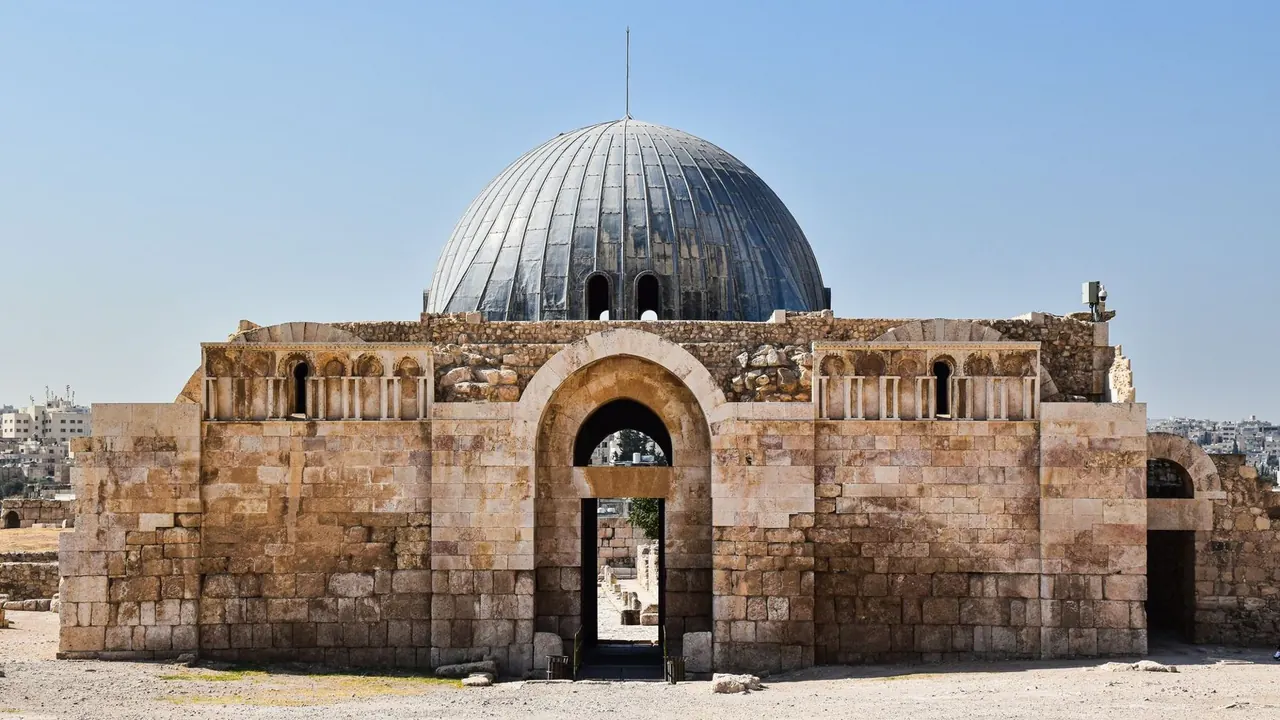
The Umayyad Palace on the Amman Citadel
- Day trips80
- Food & drink62
- Affordable cities58
Photo: AXP Photography, Pexels License
Match
45
Every category weighted equally
- Beach & sun45
- Culture & arts47
- Food & nightlife44
- Family trip46
- Outdoors50
- Relax & unwind47
- Shopping & style45
- On a budget47
Amman in twelve categories
Our verdict on each, scored 0 to 100 against the same fixed benchmark cities, so a score means the same thing on every page.
Beaches & swimming. Scores 22 out of 100.
Food & drink. Scores 62 out of 100.
Culture & sights. Scores 54 out of 100.
Nightlife. Scores 32 out of 100.
Nature & outdoors. Scores 45 out of 100.
Day trips. Scores 80 out of 100.
Good for families. Scores 38 out of 100.
Getting around. Scores 30 out of 100.
Shopping & style. Scores 42 out of 100.
Affordability. Scores 58 out of 100.
Live music & performing arts. Scores 27 out of 100.
Wellness & relaxation. Scores 55 out of 100.
Amman category by category
Beaches & swimming
22Amman is a hill city in the desert, so there is no beach life to speak of. The nearest shore is the Dead Sea, about an hour's drive down into the Jordan Valley. Resort hotels and a few public beach clubs there have sand, showers and sunbeds. The water is warm, but it is so salty that you float on it rather than swim, and you keep it away from your eyes. Most visitors spend an afternoon there for the experience and smear on the mud. For real sea swimming and coral you have to go to Aqaba on the Red Sea, about four hours south. That is a separate trip, not something you do from Amman.
Food & drink
62Eating in Amman means Levantine food done simply and well. Downtown, cheap places pack in diners for falafel, hummus and fuul at breakfast. Bakeries turn out manakish with za'atar, and sweet shops serve hot knafeh, the cheese pastry soaked in syrup, to queues of locals. Mansaf, lamb cooked in fermented yoghurt and served over rice, is the national dish and is best eaten at a family-style restaurant. Shawarma stands keep going late.
Uphill, Jabal Amman, Jabal al-Weibdeh and the western districts have the cafés, rooftop terraces and modern Arab restaurants. Coffee with cardamom and sweet tea come with everything. Wine and beer are available, including Jordanian wine, but drinking is a minor part of the scene. The upmarket and international restaurants are adequate rather than deep.
Culture & sights
54Amman's sights cluster around the old downtown valley. The Citadel hill holds the columns of the Temple of Hercules and the Umayyad Palace, with wide views over the city on its seven hills. Below it is the Roman Theatre, cut into the hillside, which still seats thousands, alongside the smaller Odeon and the Nymphaeum. The Jordan Museum is the best introduction to the country, with some of the Dead Sea Scrolls and very early human statues from 'Ain Ghazal. The blue-domed King Abdullah I Mosque welcomes visitors, and Jabal al-Weibdeh has old stone villas and small galleries.
Beyond these, the city is mostly modern limestone sprawl. Two or three days cover it, and the country's great heritage lies outside town.
Nightlife
32Evenings in Amman are social more than wild. Families and friends stay out late in cafés over shisha and tea, and Rainbow Street and the lanes of Jabal Amman stay busy well after dark. Drinking is legal but low-key. It happens in a cluster of bars and rooftop lounges in Jabal Amman and Weibdeh, in the western districts around Abdoun and Sweifieh, and in the big hotels. There are a few dance nights and DJ bars, mostly at weekends. During Ramadan the mood changes: nights are about iftar and late suhoor gatherings, and alcohol largely disappears. Come for the café culture, not to party.
Nature & outdoors
45The landscape around Amman is dry hill country that drops steeply west to the Dead Sea, which lies about 400 metres below sea level. That descent is the most dramatic scenery within easy reach. The Wadi Mujib reserve on the Dead Sea shore has river canyon hikes where you wade and scramble up a narrow sandstone gorge. These run in the warmer months only, because flash floods close them in winter. To the north, the Ajloun Forest Reserve has oak and pine woodland with marked trails, and it is green and pleasant in spring.
In the city itself there is little green space. Summers are hot and the hillsides are bare. Jordan's best outdoor country, the Dana reserve and the Wadi Rum desert, needs an overnight stay.
Day trips
80Amman makes an excellent base for heritage outings. Jerash, under an hour north, is one of the best-preserved Roman provincial cities anywhere, with a colonnaded street, an oval plaza, temples and theatres. Ajloun's Crusader-era Islamic castle and the hilltop ruins of Umm Qais, looking over the Sea of Galilee, can be added on the same side of the country. Salt, a short drive west, is an Ottoman-era town of honey-coloured stone.
To the south, Madaba has its Byzantine mosaic map of the Holy Land, and Mount Nebo and the Baptism Site at Bethany beyond the Jordan are nearby. East of the city are the desert castles, including the frescoed bathhouse of Qasr Amra. Kerak's great castle is about two hours away. Petra is too far for a comfortable day trip.
Good for families
38Jordanians are openly fond of children, and families feature in public life. Parents will find the city relaxed and safe, and restaurants and cafés will happily seat children late into the evening. What is lacking is attractions made for them. There is a hands-on children's museum in King Hussein Park, plus malls with play areas and a few amusement parks, but nothing that would drive a trip. The ruins at the Citadel and Jerash can interest older children, and floating in the Dead Sea is a memorable day out. Steep streets, broken pavements and busy roads make pushchairs impractical, and the summer heat is tiring.
Getting around
30Amman is built across steep hills and deep valleys, so the city rarely joins up on foot. Downtown and the stepped lanes up to Jabal Amman and Weibdeh can be walked, slowly, and the stone stairways between them are part of the city's charm. Beyond that, distances are long and pavements are patchy or missing. There is no metro. A bus rapid transit line and shared service taxis exist, but they are confusing for a visitor. In practice people use yellow taxis and ride-hailing apps, which are cheap and easy, although traffic is heavy at rush hour. For day trips, most visitors hire a driver or a car.
Shopping & style
42Shopping in Amman splits between the old downtown and the malls of the west. Downtown, the souks sell spices, dried fruit, coffee, household goods and cheap clothing, and the gold souk lines several streets with jewellers. Uphill, small shops around Rainbow Street and Jabal Amman sell embroidered Palestinian textiles, Hebron glass, Dead Sea cosmetics, Bedouin rugs and olive-oil soap. Several sell work from women's craft cooperatives, which is the best buying in the city. On summer Fridays, Souk Jara fills a lane off Rainbow Street with craft and food stalls. Modern shopping means big malls and the Abdali Boulevard, which are well stocked but not distinctive.
Affordability
58Amman is cheaper than most of Europe, but it is not a budget city. The cheap end is very cheap: falafel and hummus breakfasts, street shawarma, coffee and taxi rides cost little. Comfortable mid-range hotels and sit-down restaurants in the western districts cost about what they would in Southern Europe. Alcohol is expensive wherever you drink it. City sights have modest entrance fees, but the country's headline sites charge foreigners a lot, and so do private drivers for day trips. Travellers who eat locally and use taxis will find daily costs low. Those who stay in international hotels and drink with dinner will not.
Live music & performing arts
27Amman's performing arts are modest. The Royal Cultural Centre hosts occasional concerts, Arabic theatre and visiting ensembles. A few small independent stages and cultural spaces downtown and in Weibdeh put on oud recitals, Arab indie bands and experimental theatre, but programming is irregular and mostly in Arabic. The biggest event of the year is the Jerash Festival of Culture and Arts, held each summer in the ancient theatres of Jerash, with Arab singers, folk troupes and dance. For the rest of the year, a visitor may well leave without having seen a performance.
Wellness & relaxation
55Most of Amman's wellness lies down the hill. At the Dead Sea, about an hour away, large resort spas are built around the salt water and mineral mud, which people have sought out for their skin since ancient times. A day pass makes an easy half-day of floating, mud wraps and pools. Nearby, the Ma'in hot springs pour from waterfalls in a desert canyon.
In the city itself there are a handful of Turkish-style hammams with steam rooms, scrubs and massage, and hotel spas. Amman is not a calming place, with its traffic, hills and car horns. The slow moments come instead from long evenings over tea in a café terrace.
When should you go?
Pick a month to see what it is like. The climate figures are measured averages, not a forecast.
Amman in July
Daytime high, °C
Rainfall in the month, mm
The whole year
Shaded against this city’s own year: the deepest cell is its best month for that figure and the palest its weakest.
Where the figures come from
Amman has no rain gauge within 25 km of the centre, so its rainfall comes from a gridded climate dataset read at the city rather than from a gauge further away.
Amman's sunshine is measured 55 km from the centre, at Mafraq.
Temperature and rainfall are climate normals, averaged over the years shown. Amman: 1994-2020 (sunshine 1991-2020, rainfall 1991-2020) normals, Amman Airport (6 km from centre).
Before you go
| Measure | Amman |
|---|---|
| Official language | Arabic |
| Currency | Jordanian Dinar (JOD) |
| Sockets | BCFGJ230 V, 50 Hz |
| Driving side | Right |
| Time zone | UTC+3 |
| Emergency number | 911 |
| Elevation | 776 m |
| Main airport | Queen Alia International Airport (AMM)26 km from centre98 non-stop destinations |
By the numbers
| Measure | Amman |
|---|---|
| City population | 4,007,526 |
| People per km² | 2,385 |
| Museums within 10 km | 8 |
| UNESCO World Heritage sites within 50 km | 3 |
Compare Amman with
Every comparison with a written verdict behind it.