Jordan
Aqaba
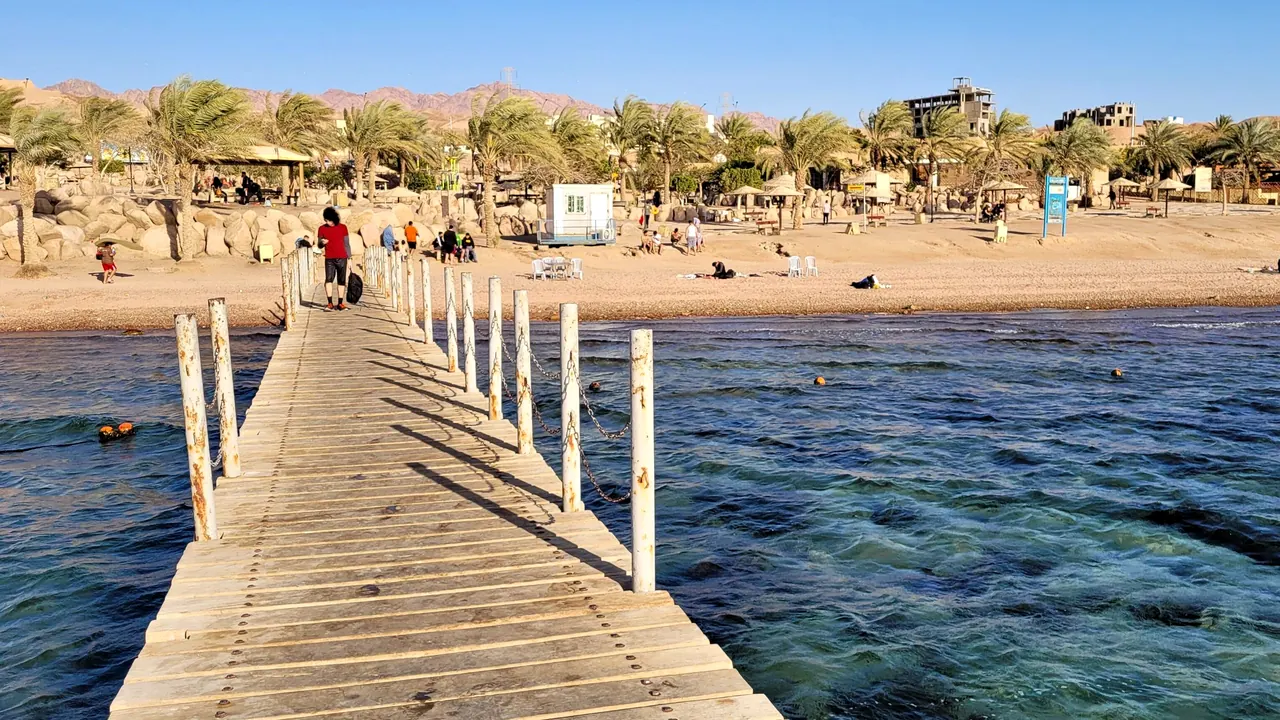
A wooden pier on the South Beach
- Nature & outdoors80
- Beaches70
- Day trips55
Photo: عباد ديرانية, CC BY-SA 4.0, cropped
Match
42
Every category weighted equally
- Beach & sun49
- Culture & arts34
- Food & nightlife34
- Family trip49
- Outdoors52
- Relax & unwind48
- Shopping & style36
- On a budget43
Aqaba in twelve categories
Our verdict on each, scored 0 to 100 against the same fixed benchmark cities, so a score means the same thing on every page.
Beaches & swimming. Scores 70 out of 100.
Food & drink. Scores 40 out of 100.
Culture & sights. Scores 22 out of 100.
Nightlife. Scores 18 out of 100.
Nature & outdoors. Scores 80 out of 100.
Day trips. Scores 55 out of 100.
Good for families. Scores 48 out of 100.
Getting around. Scores 35 out of 100.
Shopping & style. Scores 28 out of 100.
Affordability. Scores 55 out of 100.
Live music & performing arts. Scores 8 out of 100.
Wellness & relaxation. Scores 45 out of 100.
Aqaba category by category
Beaches & swimming
70Swimming in Aqaba means the Gulf of Aqaba, a narrow arm of the Red Sea that stays warm all year, from about 21°C in winter to 27°C or more in late summer. The water is very clear and calm, and coral reefs begin a few metres from the shore along the South Beach strip, so a mask and snorkel turn an ordinary swim into the best part of the day.
The beaches themselves are modest. The free public beaches by the town centre are narrow, coarse and busy with local families, and dress there is conservative. Most visitors use the resort and beach-club stretches south of town and at Tala Bay, which have loungers, shade and a more relaxed dress code. It works best as a warm-water, reef-swimming base rather than a long sandy shoreline.
Food & drink
40Eating in Aqaba is simple and pleasant rather than a reason to come. The local dish is sayadieh, fish cooked with spiced rice and caramelised onion, and the fish restaurants near the old town let you pick the catch by weight. Beyond that the town runs on Jordanian staples: falafel and hummus breakfasts, shawarma counters, grilled meats, sweet mint tea and cardamom coffee.
The resort hotels add international buffets and a few more polished restaurants, but there is little fine dining and not much variety. Alcohol is available in hotels and some restaurants, and it costs less here than elsewhere in Jordan thanks to the town's tax-free status.
Culture & sights
22Aqaba has a long history as a Red Sea port but little of it is on show. The main sights are the Mamluk-era Aqaba Fort by the waterfront, the low excavated walls of Ayla, an early Islamic town beside the corniche, and a small archaeological museum. The remains of what is thought to be one of the oldest purpose-built churches anywhere sit in a fenced plot in the town. Together they fill a morning. The town is otherwise modern and low-rise, and visitors interested in heritage spend their time on trips out to Petra.
Nightlife
18Evenings in Aqaba are quiet. Local life after dark is a family affair: walking the corniche, sitting in shisha cafés and eating late. Drinking happens mostly in resort bars, a few pubs aimed at divers and expats, and beach clubs along the south coast that sometimes host DJ nights in the cooler months. There is no club scene to speak of, and most visitors are in bed early ahead of a dive or a desert trip.
Nature & outdoors
80Aqaba's outdoors happens in two directions. Under the water, the reefs south of town are some of the most accessible in the Red Sea, with shore dives at the Japanese Garden, corals at a depth for snorkellers, and sunken wrecks including a cargo ship and a decommissioned tank laid down as artificial reefs. Glass-bottomed boats, kayaks and dive schools line the shore.
Inland, Wadi Rum is about an hour away by road: red sandstone mountains, natural arches and sand valleys made famous by T. E. Lawrence, explored by jeep, camel, on foot or by rock climbing, with nights spent in Bedouin camps under very dark skies. The granite mountains behind the town give short hikes. Summer is fierce, so spring, autumn and winter are the seasons for all of it.
Day trips
55One trip dominates: Petra, the rose-red Nabataean city cut into the cliffs, is about two hours by road and is worth the early start. Little Petra, a smaller carved canyon nearby, is usually added on the same day, and the town of Wadi Musa serves as the gateway.
Beyond that the list is short. Eilat is just across the border and Egypt's Sinai coast a ferry away, but the border formalities make them awkward outings. Most visitors pair Aqaba with Petra and a desert stay and leave the rest of Jordan, such as the Dead Sea and Amman, for a longer route north.
Good for families
48Aqaba works as a straightforward resort vacation for families. The sea is calm and shallow at the edges, glass-bottomed boats show children the reef without getting wet, and many resorts have pools, kids' clubs and shaded beach areas. Families are at the heart of Jordanian social life and children are welcomed everywhere, including in restaurants late into the evening.
There is little else made for children, though: no theme parks or major aquarium, and the sights in town are ruins. Summer temperatures above 40°C make midday outings hard, so the cooler months are much easier. A night in a Wadi Rum desert camp is often the highlight for older children.
Getting around
35The town centre, with the corniche, fort and markets, is small enough to walk, though the heat makes daytime walking hard for much of the year. The resorts, dive sites and beaches are spread along the coast road to the south and at Tala Bay, so visitors rely on taxis, hotel shuttles or a hire car. Local minibuses exist but are not set up for visitors. Petra and Wadi Rum are reached by tour, private driver or rental car, and roads are good and easy to drive.
Shopping & style
28Shopping in Aqaba is small-scale. The old market streets around the town centre sell spices, dates, Bedouin textiles, sand bottles layered into desert scenes and Dead Sea mud and salts. Because the town is a special economic zone, electronics, perfume, tobacco and alcohol are cheaper than elsewhere in Jordan, and a few malls serve residents. There is no fashion or design shopping. The craft offer is thin too: much of what fills the market stalls is mass-produced souvenirs, and handwoven rugs, embroidery or fine mosaic work are hard to find. Most visitors buy a few spices and some Dead Sea products and leave it there.
Affordability
55Aqaba is priced in two layers. Local life is inexpensive: falafel and shawarma, fish meals in the town restaurants, taxis and simple hotels in the centre all cost little. The resort strip south of town, beach-club day passes, dive courses, desert tours and the entrance to Petra cost far more, and a comfortable beach stay ends up priced closer to a Mediterranean resort than a budget destination. Tax-free status makes drinks noticeably cheaper than in the rest of the country.
Live music & performing arts
8There is essentially no performing arts scene. Live music means a band or singer in a hotel lounge, and the most memorable performance most visitors see is traditional Bedouin music around the fire at a Wadi Rum camp. For theatre or concerts, Amman is the place in Jordan.
Wellness & relaxation
45Aqaba is a place to slow down rather than a spa destination. Several traditional Turkish baths in the town offer steam, scrub and massage in a simple, local setting, and the resort hotels on the south coast have full spas that make heavy use of Dead Sea mud and salt. The pace is unhurried, especially in winter, when warm, dry days draw visitors escaping colder climates. Those looking for a true bathing cure tend to head north to the Dead Sea and the hot springs of Ma'in.
When should you go?
Pick a month to see what it is like. The climate figures are measured averages, not a forecast.
Aqaba in July
Daytime high, °C
Rainfall in the month, mm
The whole year
Shaded against this city’s own year: the deepest cell is its best month for that figure and the palest its weakest.
Temperature and rainfall are climate normals, averaged over the years shown. Aqaba: 1991-2020 normals, Eilat (5.8 km from centre).
Before you go
| Measure | Aqaba |
|---|---|
| Official language | Arabic |
| Currency | Jordanian Dinar (JOD) |
| Sockets | BCFGJ230 V, 50 Hz |
| Driving side | Right |
| Time zone | UTC+3 |
| Emergency number | 911 |
| Elevation | 6 m |
| Main airport | King Hussein International Airport (AQJ)9 km from centre5 non-stop destinations |
By the numbers
| Measure | Aqaba |
|---|---|
| City population | 140,000 |
| People per km² | 3,733 |
| Museums within 10 km | 5 |
| UNESCO World Heritage sites within 50 km | 2 |
| Swim season, months above 21 °C | 12 months |
Compare Aqaba with
Every comparison with a written verdict behind it.