Provence or Tuscany?
Our verdict in twelve categories, each scored against the same fixed benchmark cities, and the climate month by month, so you can choose for your trip.
Choose Provence for
- nightlife
- nature and the outdoors
- beaches
Provence suits travellers who want landscape and the outdoors at the centre of the trip. Think of the Verdon gorges, the calanques and the Camargue, with a coast that offers more kinds of swimming, from the shallows of Porquerolles to rocky inlets near Cassis. Marseille gives it a real city for evenings out. Plan on driving, though, because the villages and abbeys are hard to reach without a car.
Choose Tuscany for
- wellness
- culture and sights
- getting around
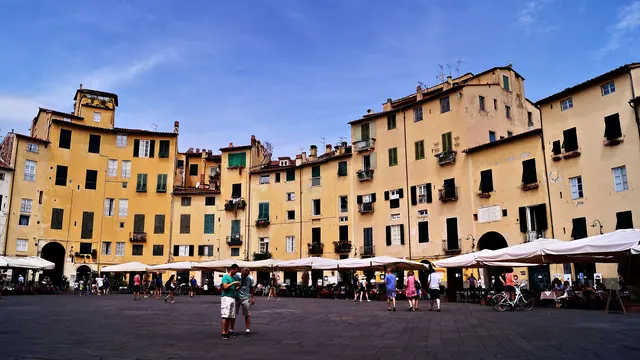
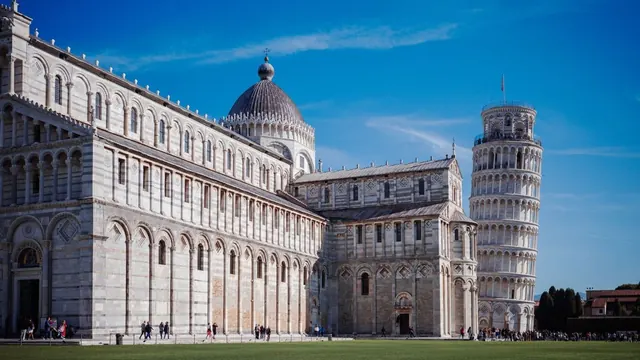
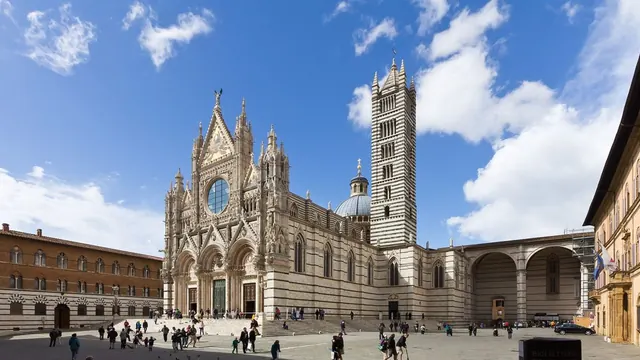
For art, architecture and history, Tuscany is the stronger choice. Florence, Siena, Pisa and Lucca would each anchor a trip on their own. It is also the more restful of the two, with hot springs at Saturnia and Bagno Vignoni. Trains run from Florence to Pisa and Lucca, so part of a visit works without a car.
Scoreboard
Twelve categories on one fixed scale from 0 to 100. The shaded stretch is the gap between the two.
Your match
Pick a travel style or drag the sliders, and both match scores follow your weighting.
Wins on nightlife and nature and the outdoors with your weighting.
Wins on wellness and culture and sights with your weighting.
What matters to you?
Category by category
What the scores mean for a trip.
Beaches & swimming
Both coasts need choosing carefully, and in both you can swim from June into early autumn. Provence gives more range within a short stretch: the deep turquoise calanques near Marseille, the near-tropical shallows of Porquerolles and the long sand of Pampelonne.
Tuscany's clearest water is offshore on Elba, with sandy bays and pebble coves. On the mainland you choose between the wild, pine-backed strands of the Maremma and Versilia's long sand lined with beach-club umbrellas. In either region, an inland base turns the sea into a long drive.
Food & drink
These are two great country kitchens, close in quality and with the same weakness: little choice beyond the local cooking. Provence leans on the sea and the market, with bouillabaisse, aïoli and tapenade, while Marseille's North African couscous and pastries are its one real break from French food.
Tuscany cooks more meat, bread and beans, from the Florentine T-bone to lampredotto sold from street carts. Its wine touring through the Chianti Classico, Brunello and Vino Nobile country is more of a trip in itself, although Provence answers with summer rosé, Bandol reds and Châteauneuf-du-Pape near Avignon.
Culture & sights
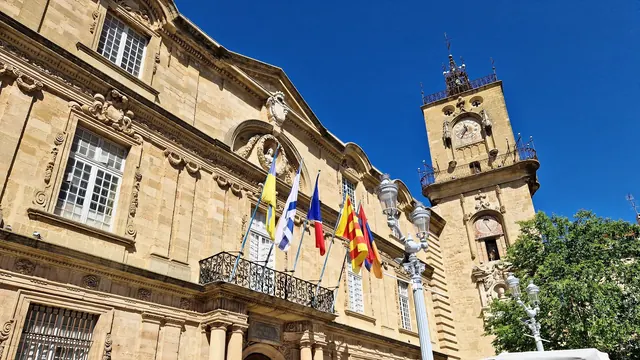
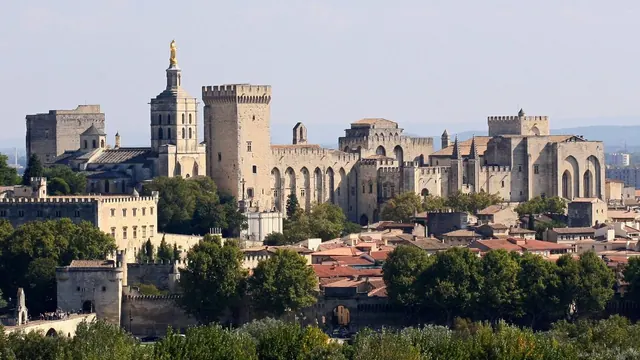
Provence has impressive Roman and medieval sites, including the papal palace in Avignon, the theatres at Orange and Arles, and the Cistercian abbeys. They are spread across several towns, though, and no single place carries a trip.
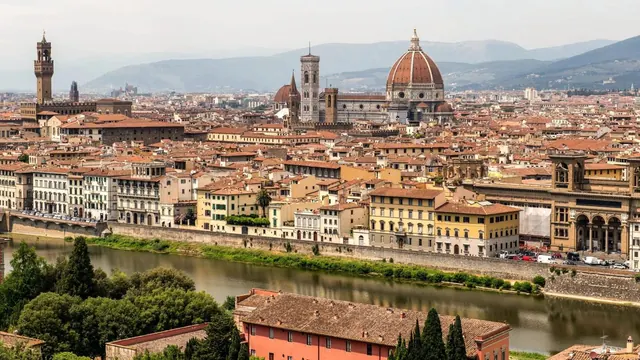
Tuscany is in another league for art. Florence fits the Uffizi, Michelangelo's David and the Duomo into a centre you can cross on foot, and Siena, Pisa, San Gimignano and Lucca would each be the highlight of a trip almost anywhere else. If paintings, frescoes and architecture are the point, Tuscany wins comfortably.
Nightlife
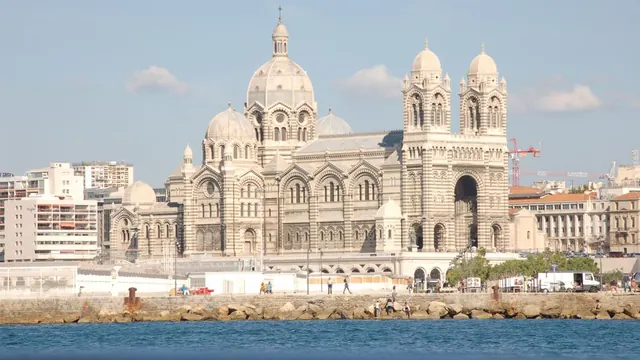
Both regions mostly mean long dinners and a last drink in the square, but Provence has better options for going out. Marseille is a real city, with late bars and clubs around Cours Julien and La Plaine, and Saint-Tropez adds its famous summer beach-club scene.
In Tuscany, evenings out are mostly in Florence: crowds on the steps of Santo Spirito and wine bars in Oltrarno, with only a few clubs open late. Its real summer party scene is on the Versilia coast, where beach clubs and dance halls stay busy until dawn.
Nature & outdoors
Provence's landscapes are wilder and more varied. There is the Verdon canyon for kayaking and climbing, the white cliffs of the calanques, the bare summit of Mont Ventoux and the flamingo lagoons of the Camargue. The drawback is summer fire closures in the hills and calanques.
Tuscany's best-known landscape is farmland: cypress lanes, vineyards and the rolling fields of the Val d'Orcia, ideal for gentle cycling and walking between towns. Its wilder country, the Apuan Alps and the Casentino forests, lies in the north, away from where most visitors stay.
Day trips
Both regions reward a base with a car and time to spare. Provence's outings are mostly about villages and scenery: Gordes, Roussillon, Les Baux, and the Pont du Gard just across the Rhône.
Tuscany comes out ahead because its day trips are to major towns such as Siena, Lucca and Pisa, and because more lies just over its borders: Bologna by fast train, Assisi and Orvieto in Umbria, and the Cinque Terre from Pisa. Several of these work by train, which few Provençal outings do.
Good for families
Neither region is built around attractions for children, and both work best from a rented house with a pool. Tuscany has a little more made for children, such as the Pinocchio park at Collodi, cycling on Lucca's walls and climbing the leaning tower, and its agriturismi often keep animals.
Provence offers canoeing on the Sorgue, horse riding in the Camargue and shallow beaches around Hyères, but its perched villages are hard going with a pushchair. In both, the July heat is the main thing to plan around.
Getting around
Tuscany is easier without a car, though only along one line. Trains link Florence, itself best on foot, with Pisa, Lucca, Arezzo and Viareggio. Chianti and the Val d'Orcia still need a car.
In Provence, trains connect Marseille, Aix, Avignon and Arles, but most of what makes the countryside worth seeing, the villages, the abbeys and the Verdon, is out of reach of the sparse buses. In summer the ferry across the gulf beats the jammed road into Saint-Tropez.
Shopping & style
Tuscany offers more serious shopping, centred on Florence's working crafts: leather around Santa Croce, goldsmiths on the Ponte Vecchio and marbled paper in Oltrarno. It also has luxury houses on Via de' Tornabuoni and large designer outlets nearby.
Provence is better for markets and things for the home: printed fabrics, olive wood, Marseille soap, Moustiers faience and the antiques dealers of L'Isle-sur-la-Sorgue. Apart from Aix, it has few proper shopping streets.
Affordability
Both are expensive in summer, for the same reasons: villas, boutique stays and famous resorts, Saint-Tropez in one and Forte dei Marmi in the other. You save money the same way in both, with market food, set lunches and wine bought at the cellar door.
The cheaper bases differ. In Provence, look at Marseille, Arles and the quieter villages of the Var and Haute-Provence. In Tuscany, look at Lucca, Arezzo and the Maremma. Allow for a hire car in either if you want to see the countryside.
Live music & performing arts
Both are summer festival regions with quiet off-seasons, but their festivals differ. Provence's high point is July theatre: the Avignon festival in the courtyard of the Palais des Papes, with a fringe that fills the town, plus opera in Aix and in the Roman theatre at Orange.
Tuscany leans towards opera and chamber music: the Maggio Musicale in Florence, Puccini by the lake at Torre del Lago and the Chigiana concerts in Siena, with pop and rock in Lucca's squares. Outside the festival season, Marseille's rap and world-music scene is the livelier choice.
Wellness & relaxation
Tuscany is the clear choice for taking the waters. There are warm sulphur cascades at Saturnia, the steaming medieval bath at Bagno Vignoni, the white woodland pools of Bagni San Filippo and the grand pump rooms of Montecatini, some of them open to anyone in the countryside.
Provence is restful more for its slow pace than for bathing. It has spa hotels, a thermal spa in Aix and the old spa towns of Gréoux and Digne, but no hot-spring culture to match Tuscany's.
When should you go?
Pick your month. The climate figures are measured averages, not a forecast.
Provence in July
Tuscany in July
Daytime high, °C
Rainfall in the month, mm
Where the figures come from
Provence has no rain gauge within 25 km of the centre, so its rainfall comes from a gridded climate dataset read at the destination rather than from a gauge further away.
Provence's sunshine is measured 53 km from the centre, at Nimes / Courbessac.
Tuscany has no rain gauge within 25 km of the centre, so its rainfall comes from a gridded climate dataset read at the destination rather than from a gauge further away.
Tuscany's sunshine is measured 71 km from the centre, at Pisa / S. Giusto.
Temperature and rainfall are climate normals, averaged over the years shown. Provence: 2005-2020 (sunshine 1981-2010, rainfall 1991-2020) normals, Avignon / Morières-lès-Avignon (11.9 km from centre). Tuscany: 1995-2020 (sunshine 1991-2020, rainfall 1991-2020) normals, Firenze / Peretola (5.6 km from centre).
The two regions share almost the same calendar. Both warm up through May, reach about 32°C in July and August, and cool again through October. June to September is beach weather in both. Spring and early autumn are better for walking hill towns, galleries and trails, because high-summer heat makes the middle of the day hard work in either region.
The differences are in sun and rain. Provence is the sunnier region, with around 348 hours of sunshine in July and noticeably brighter winters, while Tuscany's winters are greyer. Both turn wet in autumn, but at different times. Provence's wettest month is October, at about 102mm. In Tuscany the rain builds later and peaks in November, at about 124mm. Winter days in both are mild but cool, around 11°C.
Which traveller are you?
For an outdoors trip, Provence is the better choice if you bring a car and come in spring or autumn. Its country is rougher and more varied, built for real effort, while Tuscany's farmland suits gentle rides between villages more than hard days out.
On a culture and arts trip, you will spend much of each day in Provence driving between scattered towns. Tuscany repays the opposite approach. A week based in Florence, with a few train trips out, still leaves major galleries unseen.
For a relaxing and wellness trip, Provence gives you an easy village pace, but its coast is far from calm in summer. Tuscany suits better, because you can plan your days around soaking in outdoor thermal pools and go back to a quiet farmhouse afterwards.
Before you go
| Measure | Provence | Tuscany |
|---|---|---|
| Official language | French | Italian |
| Currency | Euro (EUR) | Euro (EUR) |
| Sockets | CE230 V, 50 Hz | CFL230 V, 50 Hz |
| Driving side | Right | Right |
| Time zone | UTC+1, UTC+2 in summer | UTC+1, UTC+2 in summer |
| Emergency number | 112 | 112 |
| Main airport | Marseille Provence Airport (MRS)126 non-stop destinations | Florence Airport, Peretola (FLR)46 non-stop destinations |
| Public holidays this year | 11 days | 13 days |
By the numbers
| Measure | Provence | Tuscany |
|---|---|---|
| Population | - | 3,729,641 |
Where else could you go?
Every comparison below shares a destination with this one, so you can follow Provence or Tuscany somewhere new.
- Umbriavs Tuscany
- Cinque Terrevs Tuscany
- French Rivieravs Provence
- Lake Gardavs Tuscany
- French Alpsvs Provence
- Corsicavs Tuscany