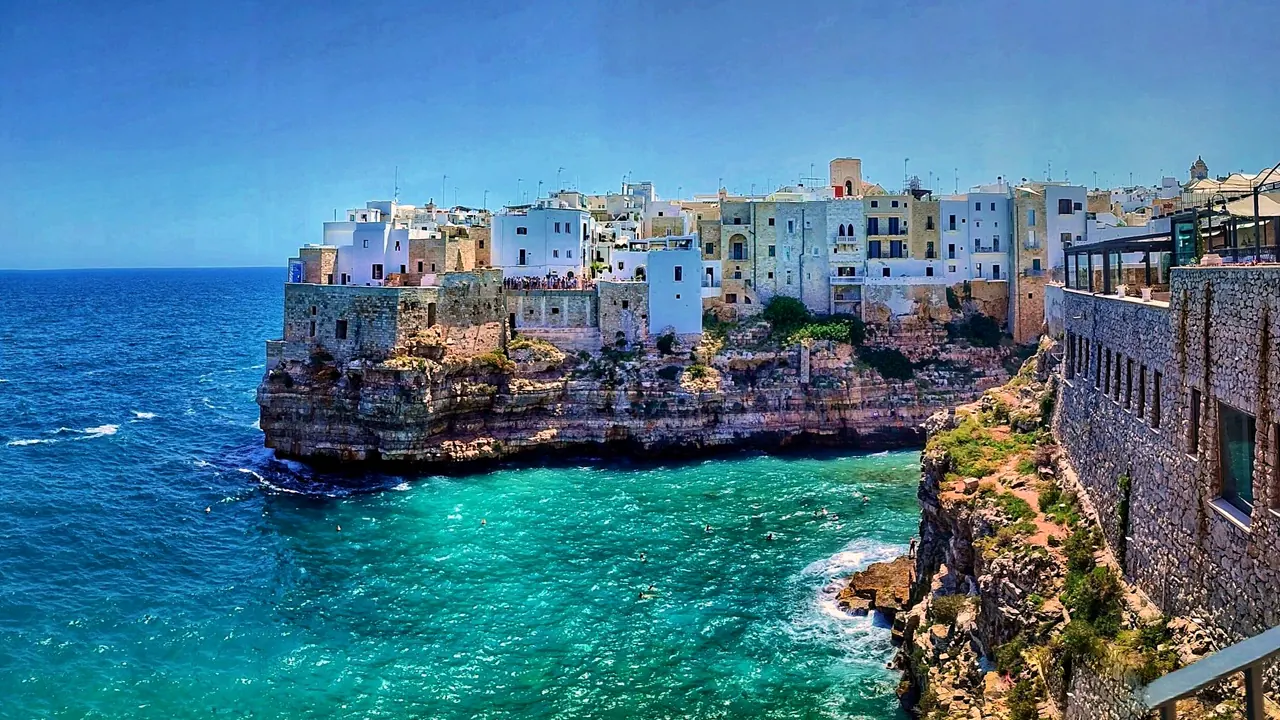
Photos: Puglia by Acquario51, CC BY-SA 4.0, cropped.
Puglia or Tuscany?
Our verdict in twelve categories, each scored against the same fixed benchmark cities, and the climate month by month, so you can choose for your trip.
Choose Puglia for
- prices
- beaches
- nightlife
Puglia is the choice for a summer built around the sea. Its coast is warmer and more varied, with sandy Ionian shallows in the Salento and limestone coves on the Adriatic, and it adds cheaper meals and livelier summer nights in Gallipoli and Lecce. It suits travellers who are happy to drive between whitewashed towns and trulli, and who would rather swim than queue for a gallery.
Choose Tuscany for
- shopping
- wellness
- culture and sights
For art, landscape and thermal water, Tuscany pulls clearly ahead. Florence alone holds more great painting and architecture than all of Puglia. Siena, Lucca and the Val d'Orcia are within easy reach, and hot springs at Saturnia and Bagno Vignoni round off the day. Expect to pay more, and treat the coast as an extra rather than the centre of the trip.
Scoreboard
Twelve categories on one fixed scale from 0 to 100. The shaded stretch is the gap between the two.
Your match
Pick a travel style or drag the sliders, and both match scores follow your weighting.
Wins on prices and beaches with your weighting.
Wins on shopping and wellness with your weighting.
What matters to you?
Category by category
What the scores mean for a trip.
Beaches & swimming
Puglia's coast is the bigger draw, and its sea is slightly warmer. On the Ionian side of the Salento, around Porto Cesareo and Pescoluse, the beaches are long and sandy with shallow turquoise water. The Adriatic side adds limestone coves at Polignano and sea stacks at Torre dell'Orso, and both shores can be reached from a single base.
Tuscany's best swimming is more scattered: Elba's bays, Cala Violina and the pine-backed strands of the Maremma. Versilia is mostly ordered rows of umbrellas at private beach clubs. From Florence or the hill towns the sea is a long drive, so it usually becomes a side trip.
Food & drink
Both regions cook simply from local produce, but Tuscany's table has more depth, largely because wine runs through it. You can taste Chianti Classico, Brunello and Vino Nobile at the cellars, and Florence adds its market halls and lampredotto carts.
Puglia answers with burrata, orecchiette, raw sea urchins on the Bari waterfront and meat grilled to order in the Valle d'Itria, and its Primitivo and Negroamaro are good value. Of the two, it is the more rustic and the more seafood-led, but not the more varied.
Culture & sights
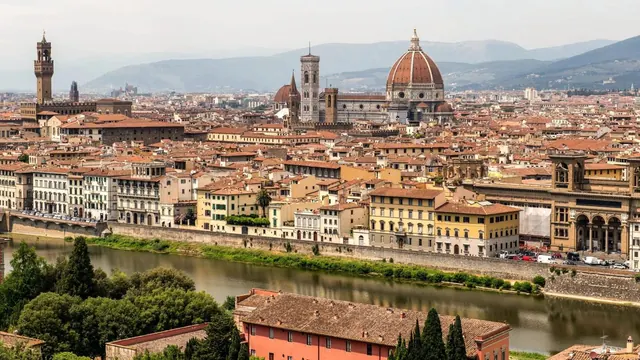
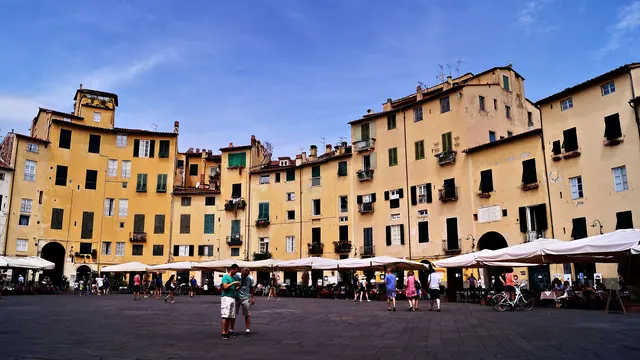
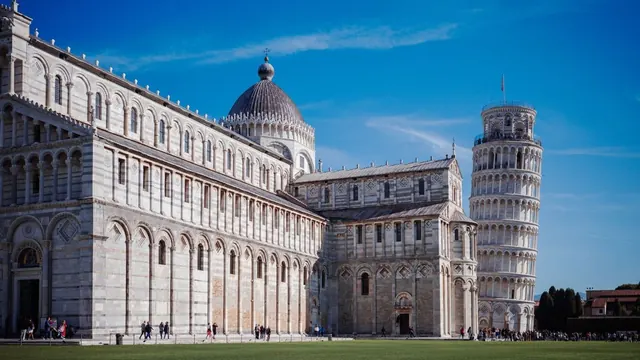
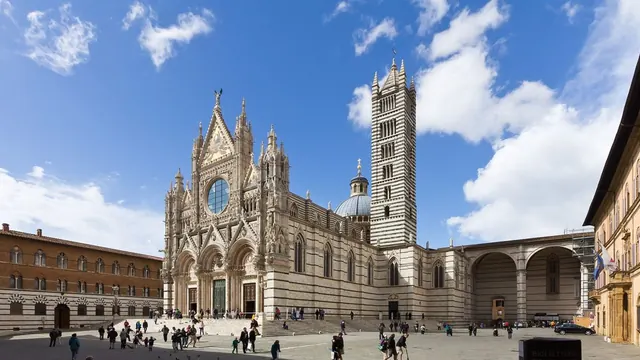
This is where the two differ most. Tuscany has Florence, with the Uffizi, Michelangelo's David and Brunelleschi's dome in one walkable centre, and then Siena's Campo, Pisa's cathedral square, San Gimignano and the walls of Lucca on top.
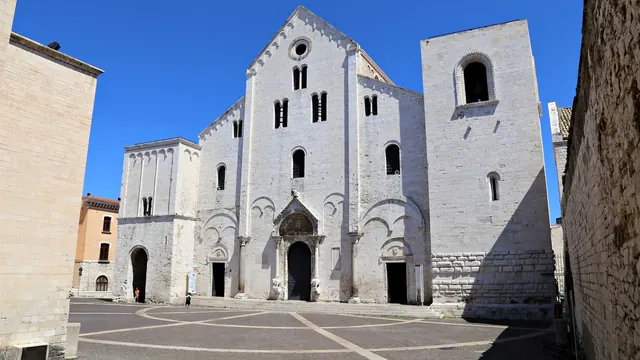
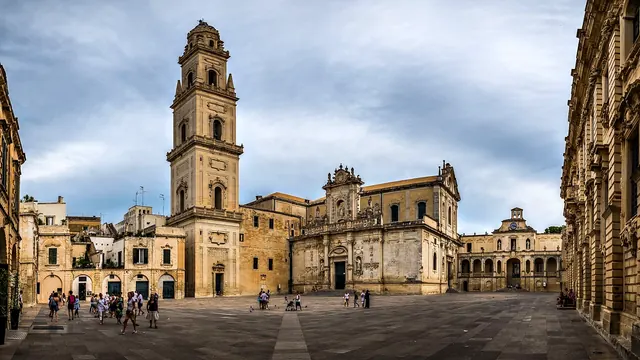
Puglia's sights are fewer and spread out, though they are its own. It has Lecce's honey-coloured baroque, the trulli of Alberobello, Castel del Monte and Romanesque cathedrals at the sea's edge in Trani. Its museums are modest, and seeing the sights means driving between towns.
Nightlife
Puglia has the livelier summer nights. In July and August Gallipoli becomes a party town, with beach clubs running into the small hours. Lecce's squares stay full late, and Bari keeps its old-town bars going all year.
Evenings in Tuscany are quieter and mostly mean dinner and a drink in the piazza, with Florence's student crowd on the steps of Santo Spirito as the main exception. Its summer clubbing is on the Versilia coast, which has a long dance-hall tradition, but the hill towns go quiet soon after dinner.
Nature & outdoors
Tuscany has the more varied outdoors. Away from the cypress lanes of the Val d'Orcia and Chianti, which are good for walking and cycling between hill towns, it has proper mountains in the Apuan Alps, the beech forests of the Casentino and the wild Maremma park on the coast.
Puglia is mostly flat olive country. It is lovely by bike through the Valle d'Itria, but gentle. Its drama is in the Gargano in the far north, with the Foresta Umbra and its sea caves, and on the Salento cliff paths near Otranto.
Day trips
Both are regions you move around in, but Tuscany offers more first-rate outings from one base. From Florence or Chianti, Siena, Lucca, Pisa and San Gimignano are all close. Bologna is under an hour by fast train, and Umbria and the Cinque Terre are just beyond the border.
Puglia's outings are mostly small towns close together: Ostuni, Locorotondo and Polignano from the Valle d'Itria, and Otranto and Gallipoli from Lecce. Its standout trip is Matera, just over the border in Basilicata and about an hour from Bari.
Good for families
Both work well for families, with the Italian warmth towards children and pool stays in the countryside. The difference is the balance of the trip. Puglia is a beach vacation first, with the shallow Salento sands, the trulli and the safari park at Fasano. Tuscany splits its time between farm stays and the coast and adds the Pinocchio park at Collodi and cycling on Lucca's walls, though Florence's galleries are hard going for young children.
Getting around
Tuscany is the easier of the two without a car. Florence is walkable, and regional trains link it to Pisa, Lucca, Arezzo and Viareggio, although Chianti and the Val d'Orcia still need one.
Puglia relies on driving more. Main-line trains run through Bari, Polignano, Monopoli and Lecce, but buses to inland towns are slow and infrequent. The region is also so long that seeing both the Gargano and the Salento takes two bases.
Shopping & style
Tuscany is much the stronger place to shop. Florence has leather workshops around Santa Croce, goldsmiths on the Ponte Vecchio, paper and bookbinding studios in Oltrarno and a luxury street in Via de' Tornabuoni. Elsewhere, Volterra sells alabaster and Pietrasanta marble.
In Puglia, shopping means crafts and food: ceramics at Grottaglie, papier-mache figures in Lecce, linen in the Valle d'Itria, and olive oil and Primitivo to take home. Bari covers the usual chains, and there is no luxury scene.
Affordability
Puglia is the cheaper trip. Eating out is good value in both regions, but Puglia's trattorias and street snacks cost less again. Staying inland or travelling in June or September keeps rooms reasonable, even though August beachfront stays and lidos do not come cheap.
Tuscany is expensive in season, from central Florence hotels to Chianti villas and Forte dei Marmi. Lucca, Arezzo and the Maremma lighten the bill, and car hire adds to the cost in both regions.
Live music & performing arts
Tuscany has more formal music, centred on opera. Florence has the Maggio Musicale Fiorentino and Lucca has Puccini recitals, while his operas are staged by the lake at Torre del Lago and Siena holds summer chamber concerts.
Puglia's formal side rests on Bari's Teatro Petruzzelli and the summer opera festival at Martina Franca. What it has that Tuscany lacks is a living folk tradition, the pizzica of the Salento, which fills village festivals and the huge open-air Notte della Taranta at Melpignano each August.
Wellness & relaxation
Tuscany sits on hot springs, and the gap shows. Saturnia's warm terraced pools, the steaming medieval bath at Bagno Vignoni, the white pools of Bagni San Filippo and the old spa town of Montecatini make bathing a reason to go in its own right.
Puglia relaxes you in a different way, through masserie among the olive groves and slow afternoons in the Valle d'Itria. Its spas at Santa Cesarea Terme and Torre Canne are small, pleasant as an extra but not something to plan around.
When should you go?
Pick your month. The climate figures are measured averages, not a forecast.
Puglia in July
Tuscany in July
Daytime high, °C
Rainfall in the month, mm
Where the figures come from
Puglia's temperatures are measured 64 km from the centre, at Brindisi.
Puglia has no rain gauge within 25 km of the centre, so its rainfall comes from a gridded climate dataset read at the destination rather than from a gauge further away.
Tuscany has no rain gauge within 25 km of the centre, so its rainfall comes from a gridded climate dataset read at the destination rather than from a gauge further away.
Tuscany's sunshine is measured 71 km from the centre, at Pisa / S. Giusto.
Temperature and rainfall are climate normals, averaged over the years shown. Puglia: 1991-2020 (sunshine 1981-2010) normals, Brindisi (64.4 km from centre). Tuscany: 1995-2020 (sunshine 1991-2020, rainfall 1991-2020) normals, Firenze / Peretola (5.6 km from centre).
Both regions are at their best for walking around towns in late spring and early autumn. Both get hot in high summer, Tuscany more so: inland highs reach 33°C in August, which makes a full day in Florence or Siena tiring. Puglia peaks around 30°C and has the drier, sunnier summer. Its sea is pleasant for swimming from June to September, reaching about 26°C in August and staying mild through September.
Rain sets in for both from September. It is heavier in Tuscany, where November brings around 124mm, and Tuscan spring is damp as well, while Puglia's April and May stay fairly dry. Winters are mild in both regions. From November to April neither works for the beach, but both are fine for quiet sightseeing.
Which traveller are you?
On a beach and sun trip, Puglia is the better pick. The Salento has long sandy Ionian beaches with shallow, clear water and rocky Adriatic coves, all within reach of one base. In Tuscany the best sea is a separate trip, away from the art towns.
For a culture and arts trip, Tuscany wins easily. The Uffizi, the Accademia and Brunelleschi's dome share one walkable centre in Florence. Siena, Pisa and San Gimignano are close by, and Puccini's operas are staged in Lucca and at Torre del Lago.
On a relaxing and wellness trip, Tuscany has what Puglia lacks, a real hot-spring culture, from the pump rooms of Montecatini to the open terraced pools at Saturnia. Puglia's masserie are restful, but its few spas are not a reason to go.
Before you go
| Measure | Puglia | Tuscany |
|---|---|---|
| Official language | Italian | Italian |
| Currency | Euro (EUR) | Euro (EUR) |
| Sockets | CFL230 V, 50 Hz | CFL230 V, 50 Hz |
| Driving side | Right | Right |
| Time zone | UTC+1, UTC+2 in summer | UTC+1, UTC+2 in summer |
| Emergency number | 112 | 112 |
| Main airport | Bari Karol Wojtyła International Airport (BRI)104 non-stop destinations | Florence Airport, Peretola (FLR)46 non-stop destinations |
| Public holidays this year | 13 days | 13 days |
By the numbers
| Measure | Puglia | Tuscany |
|---|---|---|
| Population | 3,866,174 | 3,729,641 |
| People per km² | 198 | - |
| Swim season, months above 21 °C | 4 months | - |
Where else could you go?
Every comparison below shares a destination with this one, so you can follow Puglia or Tuscany somewhere new.
- Umbriavs Tuscany
- Cinque Terrevs Tuscany
- Lake Gardavs Tuscany
- Korčulavs Puglia
- Amalfi Coastvs Puglia
- Hvarvs Puglia