Sweden
Gothenburg
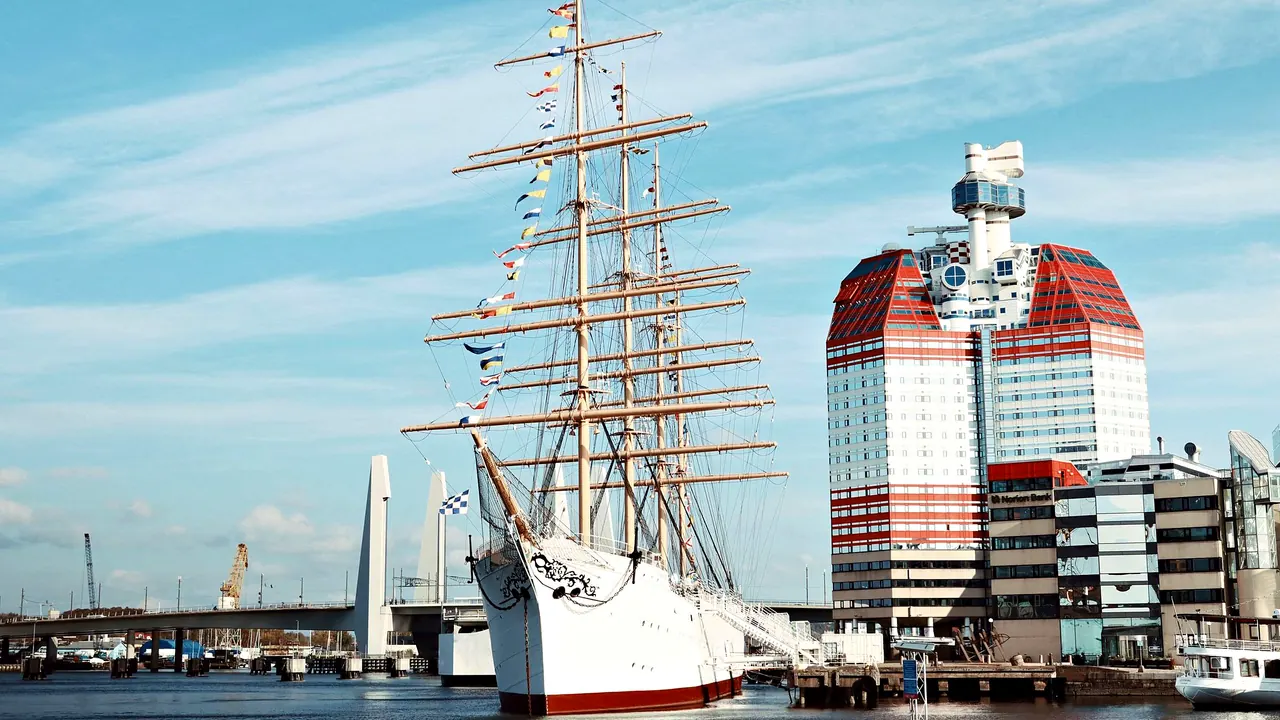
The barque Viking at Lilla Bommen beside the Lipstick tower
- Families80
- Getting around78
- Nature & outdoors65
Photo: Efrem Efre, Pexels License
Match
55
Every category weighted equally
- Beach & sun52
- Culture & arts56
- Food & nightlife54
- Family trip57
- Outdoors56
- Relax & unwind53
- Shopping & style56
- On a budget53
Gothenburg in twelve categories
Our verdict on each, scored 0 to 100 against the same fixed benchmark cities, so a score means the same thing on every page.
Beaches & swimming. Scores 35 out of 100.
Food & drink. Scores 62 out of 100.
Culture & sights. Scores 44 out of 100.
Nightlife. Scores 45 out of 100.
Nature & outdoors. Scores 65 out of 100.
Day trips. Scores 58 out of 100.
Good for families. Scores 80 out of 100.
Getting around. Scores 78 out of 100.
Shopping & style. Scores 52 out of 100.
Affordability. Scores 35 out of 100.
Live music & performing arts. Scores 58 out of 100.
Wellness & relaxation. Scores 45 out of 100.
Gothenburg category by category
Beaches & swimming
35Swimming in Gothenburg means smooth granite rocks and small sandy coves rather than long beaches. The locals' favourites are along the southern shore at Askim, Hovås and Saltholmen, and out on the car-free southern archipelago islands such as Styrsö, Vrångö and Brännö. You get there by tram and then a short ferry, and the water is clean and clear.
The catch is the climate. The Kattegat reaches about 18-20°C in a good July and August and is cold the rest of the year, so the season is short and depends on the weather. A sunny afternoon on the rocks is a lovely part of a summer stay, but you don't book Gothenburg for a beach vacation.
Food & drink
62Gothenburg is a seafood city. Shrimp, langoustines, oysters, mussels and the autumn lobster catch come straight off the Bohuslän coast. Feskekôrka, the fish market hall built like a church, and Stora Saluhallen, the iron-and-glass food hall on Kungstorget, are the places to see what is in season. The open shrimp sandwich is the local standard. There is also a fine-dining tier built on the same coastal produce, and it is impressive for a city this size.
In between, there is a strong fika culture of cardamom and cinnamon buns in the cafés of Haga and Linnéstaden, plus good craft breweries and natural-wine bars. Everyday eating is less varied than in a big capital, and eating out is expensive. Lunch set menus are the sensible way to eat well.
Culture & sights
44Gothenburg is a trading city founded in 1621 and laid out by Dutch engineers, which explains the canals and the orderly grid of the centre. The sights are pleasant rather than famous. The Gothenburg Museum of Art has a fine Nordic collection and looks over Götaplatsen and its Poseidon statue. The City Museum fills the old East India Company building, and the Röhsska Museum covers design and crafts.
The historic texture is in the wooden houses of Haga, the Skansen Kronan redoubt above it, the island fortress of Nya Älvsborg at the harbour mouth, and the brick-and-timber tenements typical of the city. A couple of days covers the essentials.
Nightlife
45Going out in Gothenburg is friendly and sociable, and it doesn't stay up very late. Kungsportsavenyn, the main boulevard, has the larger bars and mainstream clubs. The evenings with more character are around Järntorget, Linnégatan and Andra Långgatan, where student pubs, cocktail bars and dive bars stand close together. Two big universities keep things busy in term time, and summer evenings spill out onto terraces.
The club scene is small, most places close in the early hours, and drinks are expensive. Weekends are lively and weeknights are quiet. You'll have a good night out here, but it isn't a reason to come.
Nature & outdoors
65The city's best outdoor asset is the sea. The southern archipelago is a chain of bare granite islands with heather, coastal paths and small harbours, a tram-and-ferry ride from the centre. It is easy to explore on foot, by bike or by sea kayak, and sailing is a big part of local life. Further north, the Bohuslän coast is a rocky shoreline cut by inlets and dotted with islets.
Inland, the Delsjön lakes and forest on the city's eastern edge give you woodland walking and canoeing. The long-distance Bohusleden trail starts nearby, and Slottsskogen is a large wooded park in town. There are no mountains, and from late autumn to spring the weather is dark, wet and windy.
Day trips
58Most day trips head up or down the coast. Marstrand, an island town of wooden villas under the Carlsten fortress, is about an hour away and is the classic choice. The ruined Bohus fortress at Kungälv is closer still. To the south, Varberg has a seaside fortress and an old cold-bath house about an hour away by train. Inland, Trollhättan's canal locks and falls make an easy half day.
Further north, Bohuslän's fishing villages, such as Smögen and Fjällbacka, and the UNESCO-listed Bronze Age rock carvings at Tanum are around one and a half to two hours away. They are much easier with a car. Läckö Castle on Lake Vänern is at the outer edge of a day out. Copenhagen and Oslo are too far for a comfortable return trip.
Good for families
80Gothenburg is easy with children. Liseberg, Scandinavia's largest amusement park, sits a short walk from the centre and runs proper rides alongside gentler ones for small children. Next door, Universeum combines a science centre, an aquarium and an indoor rainforest, which helps on rainy days. Slottsskogen has a free animal park with Nordic species, seals and penguins, and playgrounds that local families use every day.
The ship museum in the harbour lets children climb through a destroyer and a submarine. Swedish culture treats children as a matter of course: buggies board trams easily, restaurants expect families, and the streets feel safe. In summer, the ferries to the car-free islands make a cheap adventure.
Getting around
78The centre is compact and mostly flat, and you can walk between the canals, Haga, Linnéstaden and Avenyn in minutes. Beyond that, Scandinavia's largest tram network covers almost everywhere a visitor goes. The same ticket also covers buses, the little river ferries across the Göta älv and the boats out to the southern archipelago.
There is no metro, and trams get slow where the lines converge in the centre, but you never need a car in town. You only really need one for the more remote fishing villages up the coast.
Shopping & style
52Shopping is Scandinavian high street rather than luxury. Kungsgatan and the streets around it form a long pedestrian run of Swedish and Nordic fashion labels. The Nordstan mall by the station handles the big chains, and the stretch of Avenyn below Götaplatsen has a few upmarket stores.
The more rewarding browsing is in Haga, with small craft and interior shops, and in Linnéstaden, Majorna and around Andra Långgatan. These areas have independent boutiques, vintage and second-hand stores and record shops. There is no luxury depth, and souvenirs tend towards design objects and knitwear rather than traditional crafts.
Affordability
35Gothenburg is expensive by European standards, but it is not among the most punishing cities. Hotel rooms and dinners out cost noticeably more than in Southern Europe, and alcohol in bars is especially dear. Your money goes further on archipelago trips and at many of the museums.
The usual Swedish strategies work well here. Make the weekday set lunch your main meal, use the public transport ticket (it includes the island ferries), and picnic on the rocks or in the parks. Weekends and the Swedish summer vacation season can bring better hotel rates, because business travel drops away.
Live music & performing arts
58The cornerstone of the city's music is the Gothenburg Symphony Orchestra, Sweden's national orchestra, which plays in the fine 1930s Konserthuset on Götaplatsen. GöteborgsOperan, a harbour-side opera house, stages opera, musicals and work by a contemporary dance company with a strong name in Europe. The City Theatre and the more popular Folkteatern cover drama, mostly in Swedish.
The city also has a long pop, indie and metal tradition, and you can hear it in club stages and mid-sized venues around Järntorget and Andra Långgatan. In August, the Way Out West festival fills Slottsskogen with major international acts. The programme is solid all year without being a reason to travel on its own.
Wellness & relaxation
45Wellness in Gothenburg is low-key and Nordic. Locals take a sauna and then plunge into the sea from bathing jetties and rocks, and some keep it up through winter. Valhallabadet, the large public bath near Liseberg, has pools and saunas in the plain Swedish municipal style, and several hotels add spas.
The city's pace helps too. Fika is a proper pause in the day, the parks are large and quiet, and a ferry out to the islands slows everything down. There are no thermal springs or grand bathhouses, though, so come for calm rather than a spa vacation.
When should you go?
Pick a month to see what it is like. The climate figures are measured averages, not a forecast.
Gothenburg in July
Daytime high, °C
Rainfall in the month, mm
The whole year
Shaded against this city’s own year: the deepest cell is its best month for that figure and the palest its weakest.
Temperature and rainfall are climate normals, averaged over the years shown. Gothenburg: 1991-2020 normals, Goteborg Save Airport (9.8 km from centre).
Before you go
| Measure | Gothenburg |
|---|---|
| Official language | Swedish |
| Currency | Swedish Krona (SEK) |
| Sockets | CF230 V, 50 Hz |
| Driving side | Right |
| Time zone | UTC+1, UTC+2 in summer |
| Emergency number | 112 |
| Elevation | 12 m |
| Main airport | Göteborg Landvetter Airport (GOT)19 km from centre79 non-stop destinations |
| Public holidays this year | 16 days |
By the numbers
| Measure | Gothenburg |
|---|---|
| City population | 674,529 |
| People per km² | 2,484 |
| Museums within 10 km | 39 |
| UNESCO World Heritage sites within 50 km | 0 |
| Swim season, months above 21 °C | None |
Compare Gothenburg with
Every comparison with a written verdict behind it.