Switzerland
Samnaun
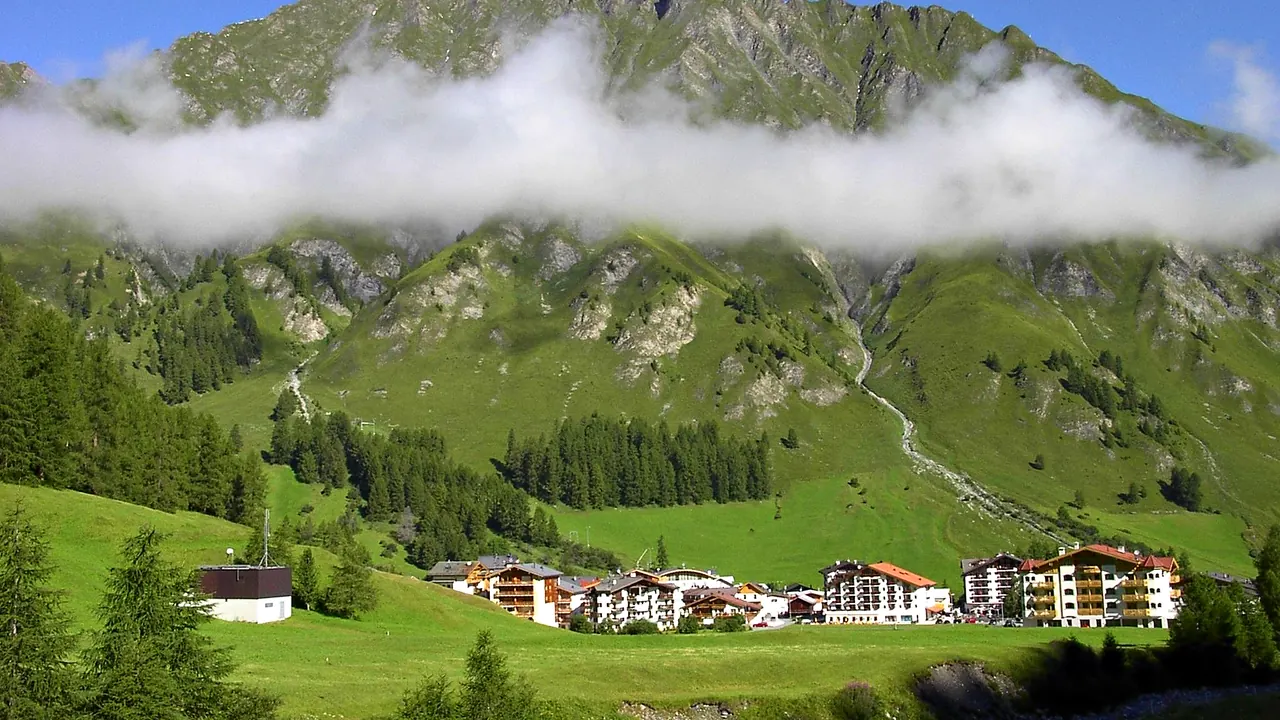
Samnaun-Dorf below green slopes and drifting cloud
- Nature & outdoors84
- Getting around50
- Wellness & relaxation50
Photo: Rene Nueesch, CC BY 3.0, cropped
Samnaun lies in Swiss Alps, which has its own page.
Match
32
Every category weighted equally
- Beach & sun31
- Culture & arts28
- Food & nightlife26
- Family trip35
- Outdoors40
- Relax & unwind35
- Shopping & style31
- On a budget30
Samnaun in twelve categories
Our verdict on each, scored 0 to 100 against the same fixed benchmark cities, so a score means the same thing on every page.
Beaches & swimming. Scores 4 out of 100.
Food & drink. Scores 24 out of 100.
Culture & sights. Scores 7 out of 100.
Nightlife. Scores 18 out of 100.
Nature & outdoors. Scores 84 out of 100.
Day trips. Scores 42 out of 100.
Good for families. Scores 42 out of 100.
Getting around. Scores 50 out of 100.
Shopping & style. Scores 42 out of 100.
Affordability. Scores 14 out of 100.
Live music & performing arts. Scores 6 out of 100.
Wellness & relaxation. Scores 50 out of 100.
Samnaun category by category
Beaches & swimming
4Samnaun is a high mountain valley, and there are no beaches here. The streams and small Alpine lakes are too cold for anything more than a quick dip on a hot August day. If you want to swim, you will be in the village's indoor leisure pool or a hotel pool.
Food & drink
24Most eating happens in hotel dining rooms, many on half board, and in the mountain huts across the ski area. Hearty Alpine cooking is the norm: capuns, pizokel, rösti, game in autumn and Tyrolean dishes that come over the nearby border. One or two hotel kitchens aim higher, but there is nothing that adds up to a food scene.
What stands out is drink. The valley sits outside the Swiss customs area, so the shops stock a very wide range of spirits and wines, and a bottle bought here is often the most memorable thing you take home. Anyone who travels to eat should treat meals as fuel for the slopes.
Culture & sights
7There is little to see here in the usual sense. The hamlets of Samnaun Dorf, Laret, Compatsch, Plan and Ravaisch have modest parish churches and chapels, and some old timber farmhouses survive among the hotels. The most interesting story is historical. The valley was so cut off from the rest of Switzerland that it was left outside the customs area in 1892, which is why it became a duty-free enclave. You come for the mountains and do your sightseeing elsewhere.
Nightlife
18Evenings in winter start early, with après-ski at the bottom of the slopes, and most of the valley has gone quiet by late evening. A few hotel bars and a small club or two keep things going on peak-season weekends. In summer, going out mostly means a drink after dinner.
On the far side of the ski area lies one of the Alps' most famous party resorts. You can ski over to it by day, but once the lifts close it is a long road trip through Austria, so it is not a realistic place for a night out from here.
Nature & outdoors
84The valley sits at about 1,800m and opens straight onto one of the largest ski areas in the Alps, a cross-border network linked to the Paznaun valley in Austria. It has long, high runs above the treeline, reliable snow from late autumn into spring and a famous double-decker cable car rising from Ravaisch. Ski touring and winter walking routes reach the quieter side valleys.
In summer the same slopes turn into high pasture. Marked trails lead to cols and summits along the Swiss-Austrian border, and there are mountain-bike routes through the valleys and into the Tyrol. The Swiss National Park and the wilder Lower Engadine are within about an hour's drive. It is a remote place, and that is part of the appeal: few crowds outside the ski season and wide, open mountain views.
Day trips
42The places worth a day out are small towns and villages rather than cities. In the Lower Engadine, Scuol, Sent, Guarda and Ftan have painted sgraffito houses, and Tarasp Castle stands on its rock above the Inn. These are under an hour by car.
Across the Reschen Pass there are more. The walled medieval town of Glurns, the Benedictine abbey of Marienberg and the Carolingian convent at Müstair, a UNESCO site, are all within about an hour and a half. Landeck is close on the Austrian side, while Innsbruck, Merano and St Moritz are at the outer limit of a day. You need a car, because public buses make most of these slow.
Good for families
42For a ski week with children, Samnaun works well. The ski schools and gentle nursery slopes sit close to the village, the valley is safe and quiet, and many hotels are used to families, with half board that keeps mealtimes simple. On bad-weather afternoons the village leisure pool with its slides is the obvious refuge, and in summer there are walks up to alpine pastures, playgrounds and easy trails suited to small legs.
Beyond that, little is made for children: no zoo, no children's museums and no theme attractions within easy reach. The long, winding road in can be hard on young travellers prone to car sickness, and at this altitude evenings turn cold quickly, so this is a vacation shaped by the weather and the slopes.
Getting around
50Within the valley, getting around is simple. The hamlets are strung along a single road, local buses connect them and the lift stations, and in winter you can mostly get around on skis. Samnaun Dorf and Compatsch are compact enough to walk.
Getting here and getting out are the hard parts. The valley is a cul-de-sac reached by road from the Austrian side, with no railway. The postbus from the Engadine rail line at Scuol takes over an hour. Anyone planning day trips or arriving with a lot of luggage will find a car much easier.
Shopping & style
42Shopping is the one thing Samnaun is known for besides skiing. As a duty-free enclave, the village has a dense run of shops along its main street selling perfume and cosmetics, Swiss watches and jewellery, spirits, tobacco, chocolate and ski and outdoor clothing, often below normal Swiss and Austrian prices. Coaches of day shoppers come over from the Tyrol, and many visitors fill up the car with fuel before leaving.
What you won't find is variety. It is international brands in shop windows, not independent boutiques, design studios, markets or local crafts, and there is little that feels specific to the valley.
Affordability
14This is an expensive place to stay. Hotels, ski passes, ski hire and restaurant meals follow Swiss mountain-resort price levels, and the peak winter weeks are the costliest. Half-board deals help, and room rates are generally gentler than in the most fashionable Swiss resorts. Fuel, alcohol, tobacco and perfume are noticeably cheaper because of the duty-free status, but that eases the bill rather than changing it.
Live music & performing arts
6There is no theatre, concert hall or regular music venue. Live music means the odd brass band, a performer at an après-ski bar, and the big open-air concerts held on the slopes at the start and end of the winter season in the shared ski area. If that matters to you, plan around those dates, and otherwise expect quiet evenings.
Wellness & relaxation
50The valley is a calm place. Outside the main ski weeks the pace is slow, the air is clear and evenings are quiet. Most of the bigger hotels have their own saunas and small spas, and the village's public pool has a sauna area. After a day on the slopes, that is how most people unwind.
There is no thermal water or bathing tradition in Samnaun itself. The mineral springs and spa baths of Scuol, under an hour away in the Lower Engadine, are where to go for that. It suits people who want rest after exercise more than those planning a spa vacation.
When should you go?
Pick a month to see what it is like. The climate figures are measured averages, not a forecast.
Samnaun in July
Daytime high, °C
Rainfall in the month, mm
The whole year
Shaded against this destination’s own year: the deepest cell is its best month for that figure and the palest its weakest.
Where the figures come from
Samnaun has no rain gauge within 25 km of the centre, so its rainfall comes from a gridded climate dataset read at the destination rather than from a gauge further away.
Temperature and rainfall are climate normals, averaged over the years shown. Samnaun: 1991-2020 normals, Passo Resia / Resia Pass (16.3 km from centre).
Before you go
| Measure | Samnaun |
|---|---|
| Official language | French, German, Italian, Romansh |
| Currency | Swiss Franc (CHF) |
| Sockets | CJ230 V, 50 Hz |
| Driving side | Right |
| Time zone | UTC+1, UTC+2 in summer |
| Emergency number | 112 |
| Elevation | 1,846 m |
| Main airport | Innsbruck Airport (INN)82 km from centre40 non-stop destinations |
| Public holidays this year | 9 days |
By the numbers
| Measure | Samnaun |
|---|---|
| Population | 773 |
| People per km² | 14 |
| Museums within 10 km | 1 |
| UNESCO World Heritage sites within 50 km | 1 |
Compare Samnaun with
Every comparison with a written verdict behind it.
- Adelboden
- Alpe d'Huez
- Andermatt
- Arosa
- Avoriaz
- Chamonix
- Châtel
- Courchevel
- Crans-Montana
- Davos
- Engelberg
- Flaine
- Grindelwald
- Gstaad
- Klosters
- La Clusaz
- La Plagne
- La Rosière
- Laax
- Le Grand-Bornand
- Lenzerheide
- Les Arcs
- Les Deux Alpes
- Les Gets
- Les Menuires
- Leukerbad
- Megève
- Méribel
- Montgenèvre
- Morzine
- Mürren
- Saas-Fee
- Saint-Gervais-les-Bains
- Samoëns
- Serre Chevalier
- St. Moritz
- Tignes
- Val Cenis
- Val d'Isère
- Val Thorens
- Verbier
- Wengen
- Zermatt