United States
San Francisco
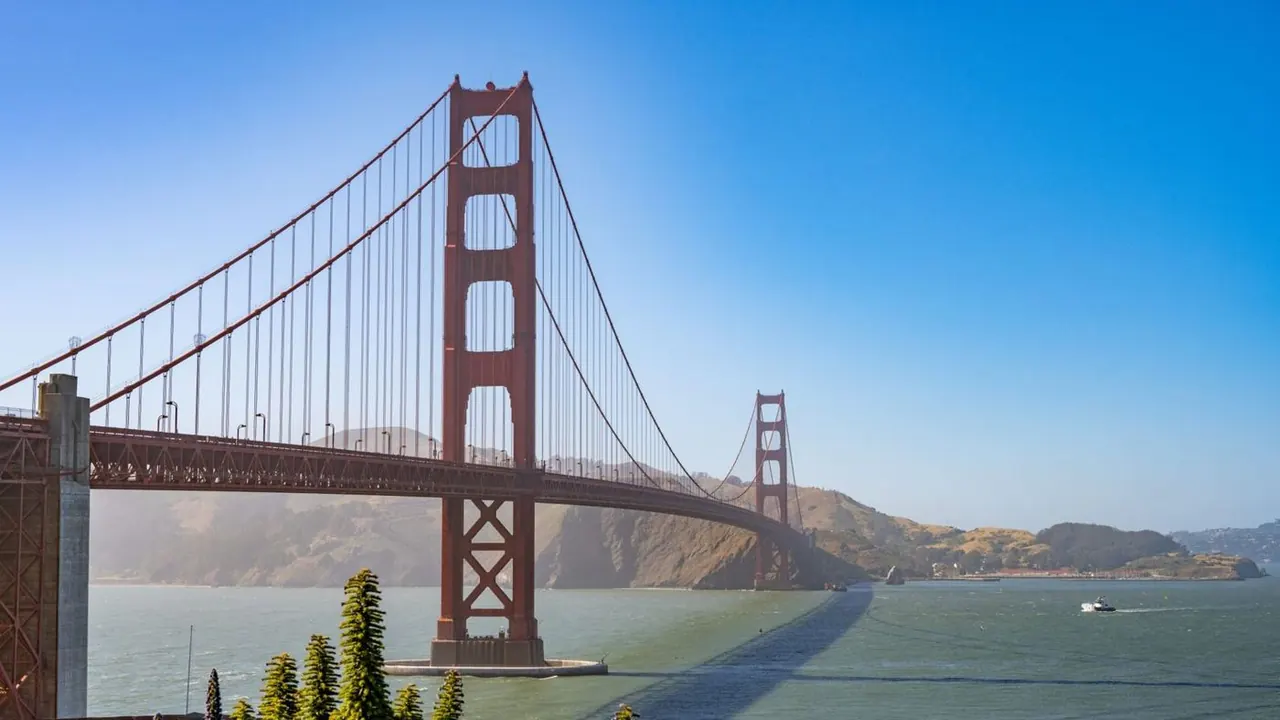
The Golden Gate Bridge
- Food & drink82
- Nature & outdoors80
- Live music & the arts76
Photo: Elijah Cobb, Pexels License
Match
59
Every category weighted equally
- Beach & sun53
- Culture & arts64
- Food & nightlife62
- Family trip57
- Outdoors60
- Relax & unwind56
- Shopping & style63
- On a budget54
San Francisco in twelve categories
Our verdict on each, scored 0 to 100 against the same fixed benchmark cities, so a score means the same thing on every page.
Beaches & swimming. Scores 25 out of 100.
Food & drink. Scores 82 out of 100.
Culture & sights. Scores 68 out of 100.
Nightlife. Scores 58 out of 100.
Nature & outdoors. Scores 80 out of 100.
Day trips. Scores 72 out of 100.
Good for families. Scores 66 out of 100.
Getting around. Scores 70 out of 100.
Shopping & style. Scores 58 out of 100.
Affordability. Scores 14 out of 100.
Live music & performing arts. Scores 76 out of 100.
Wellness & relaxation. Scores 42 out of 100.
San Francisco category by category
Beaches & swimming
25San Francisco has beaches, and some of them are beautiful, but they are for walking, not swimming. Ocean Beach runs for miles along the western edge of the city, Baker Beach looks straight at the Golden Gate Bridge, and China Beach is a small sheltered cove below the Sea Cliff houses. The Pacific here stays around 13-15°C even in late summer, fog rolls in on many afternoons, and strong rip currents make Ocean Beach dangerous to enter.
Locals use the shore for dog walks, bonfires and sunsets rather than sunbathing. A few hardy swimmers take to Aquatic Park inside the bay, usually in wetsuits. If warm-water swimming matters, it means a hotel pool; this is not a beach vacation.
Food & drink
82Eating is one of the best reasons to come. The city's strength is produce: Northern California farms, bay seafood and nearby wine country feed everything from taquerias to tasting menus. Local signatures are real and specific, the oversized Mission burrito, tangy sourdough bread, cioppino and Dungeness crab in season, and the Ferry Building market hall with its farmers' market on the waterfront is a fine morning out.
Range is wide. Chinatown and the Richmond and Sunset districts are deep in Cantonese, dim sum and other Asian cooking, North Beach keeps its Italian cafés and bakeries, and the Mission is the place for Mexican and Central American food. On top sits one of the strongest fine-dining tiers in the country, alongside serious coffee roasting and easy access to Napa and Sonoma wines on every list.
Culture & sights
68San Francisco's sights are a mix of famous landmarks and good museums rather than deep historic layers. The Golden Gate Bridge, Alcatraz in the middle of the bay, the cable cars climbing Nob Hill and the painted Victorian houses around Alamo Square are images known worldwide, and Coit Tower and the Palace of Fine Arts add to the list. Much of the older city was lost in the earthquake and fire of 1906, so the architecture is mostly early twentieth century.
The museums are strong: SFMOMA for modern and contemporary art, the de Young and the Legion of Honor for broader collections, and the Asian Art Museum. Chinatown, the Mission's mural-covered alleys and the Castro's history give neighbourhoods their own interest. A visitor sees the essentials in three or four days.
Nightlife
58Going out in San Francisco is good rather than legendary. The Mission is the liveliest area, with dive bars, mezcal and cocktail bars along Valencia and Mission streets; North Beach keeps old saloons and a slightly raffish late strip near Broadway; the Castro is one of the world's best-known gay neighbourhoods, with bars full most nights. SoMa holds the warehouse clubs and the city's dance music scene.
Cocktail culture is serious and creative. The limits are hours and scale: bars stop serving at 2am, many neighbourhoods are quiet on weeknights, and the night is spread across districts rather than concentrated in one dense quarter.
Nature & outdoors
80Few American cities sit in such dramatic surroundings. Inside the city, Golden Gate Park stretches for miles to the ocean, the Presidio is a large wooded former army post, and the Lands End trail follows cliffs above crashing surf with views to the bridge. Twin Peaks and Bernal Heights give hilltop panoramas across the bay.
Across the Golden Gate, the Marin Headlands offer coastal hiking within half an hour, Muir Woods shelters old-growth redwoods, and Mount Tamalpais has trails and mountain-biking routes looking down on the Pacific. Point Reyes, with elk, elephant seals and wild headlands, makes a full day. Cycling across the bridge, sailing and kayaking on the bay and whale watching are all popular. Summer fog and wind are constant companions; autumn is often clearest.
Day trips
72The great day out is wine country. Napa Valley and Sonoma are around an hour or so north, with hundreds of wineries, small towns such as Healdsburg, Sonoma and St Helena, and the Spanish mission in Sonoma's plaza. Closer in, ferries cross the bay to Sausalito's waterfront and to Tiburon, and Berkeley's university campus and Oakland are a short train ride away.
South along the coast, Half Moon Bay and Santa Cruz with its seaside boardwalk make easy outings, and Monterey and Carmel, at about two hours, combine the old Cannery Row waterfront, the aquarium and the Carmel mission. Silicon Valley and Stanford are an hour south. What the region lacks is old towns and major heritage sites in depth.
Good for families
66Children do well here when the plan centres on its science museums and parks. The Exploratorium on the waterfront is a hands-on science museum that can fill a whole day, and the California Academy of Sciences in Golden Gate Park puts an aquarium, a planetarium and a living rainforest under one roof. The zoo sits by the ocean, sea lions lounge on the docks at Fisherman's Wharf, and a cable car ride is a treat in itself.
Golden Gate Park has playgrounds, a carousel and lakes with paddle boats. The downsides are real: the steep hills are hard work with a pushchair, the sea is too cold for much paddling, and some downtown streets show street poverty that parents may prefer to avoid on foot. Families who want big rides should look elsewhere, as the region has no major theme-park resort.
Getting around
70San Francisco is small, about 11km across, and most visitors manage without a car. Muni buses, streetcars and light rail cover the city, BART runs underground through downtown and the Mission and out to the airport, and the historic F-line streetcars and cable cars serve the waterfront and Nob Hill. One Clipper card works across them, and ferries cross the bay.
Walking is rewarding in neighbourhoods such as North Beach, Chinatown, Hayes Valley and the Mission, but the hills are genuinely steep and a short distance on the map can mean a hard climb. Buses can be slow, and parking is difficult enough that a car is more burden than help. Hire one only for wine country or the coast.
Shopping & style
58Union Square is the main shopping district, ringed by department stores and luxury and flagship brands. The more characterful shopping is in the neighbourhoods: Hayes Valley for small fashion and design boutiques, Valencia Street in the Mission for bookshops, vintage and independent labels, Fillmore Street for upmarket clothing, and Haight-Ashbury for vintage and its countercultural heritage.
The Ferry Building's food stalls make for good edible souvenirs, and Chinatown's shops along Grant Avenue sell tea, ceramics and trinkets. It is a pleasant city to browse, but nobody chooses it for shopping alone.
Affordability
14San Francisco is one of the most expensive cities in the United States to visit. Hotel rooms are costly across the centre and climb further during big conferences, and eating out adds sales tax, service charges and tipping on top of high menu prices. Cocktails and wine in sit-down places are steep.
There are ways to soften it. Taquerias in the Mission and noodle and dim sum places in Chinatown and the Richmond are good value, public transport is reasonably priced, many of the best experiences, such as the parks, walking the bridge and the coastal trails, cost nothing, and several museums have free days. Still, budget travellers will find it hard going.
Live music & performing arts
76The performing arts are a genuine strength. The Civic Center holds the War Memorial Opera House, home to San Francisco Opera and San Francisco Ballet, the oldest professional ballet company in the country, and Davies Symphony Hall, where the San Francisco Symphony plays a full season. The American Conservatory Theater stages serious drama, and touring Broadway musicals come to the downtown theatres.
Live music runs deep too. The SFJAZZ Center gives jazz a dedicated home in Hayes Valley, the Fillmore is a storied rock hall from the psychedelic era, and smaller clubs across the Mission and SoMa host indie and electronic acts. Free summer concerts in Stern Grove are a long-standing local tradition.
Wellness & relaxation
42San Francisco has no bathing culture to speak of, but it offers a few ways to slow down. Japantown has a long-established Japanese-style communal bathhouse, and the city has many day spas and yoga studios. For proper hot springs, Calistoga at the top of Napa Valley, about two hours away, is known for its mud baths and mineral pools.
The city's pace is driven by work and the tech economy, and the centre can feel hectic. Quieter hours come in the Japanese Tea Garden in Golden Gate Park or in the cafés of the outer neighbourhoods, where the fog keeps things cool and unhurried.
When should you go?
Pick a month to see what it is like. The climate figures are measured averages, not a forecast.
San Francisco in July
Daytime high, °C
Rainfall in the month, mm
The whole year
Shaded against this city’s own year: the deepest cell is its best month for that figure and the palest its weakest.
Temperature and rainfall are climate normals, averaged over the years shown. San Francisco: 1981-2010 normals, Alameda Naval Air Station (9.1 km from centre).
Before you go
| Measure | San Francisco |
|---|---|
| Currency | US Dollar (USD) |
| Sockets | AB120 V, 60 Hz |
| Driving side | Right |
| Time zone | UTC-8, UTC-7 in summer |
| Emergency number | 911 |
| Elevation | 16 m |
| Main airport | San Francisco International Airport (SFO)18 km from centre142 non-stop destinations |
| Public holidays this year | 13 days |
By the numbers
| Measure | San Francisco |
|---|---|
| City population | 873,965 |
| People per km² | 1,455 |
| Museums within 10 km | 51 |
| UNESCO World Heritage sites within 50 km | 0 |
| Swim season, months above 21 °C | None |
Compare San Francisco with
Every comparison with a written verdict behind it.