United States
St. Louis
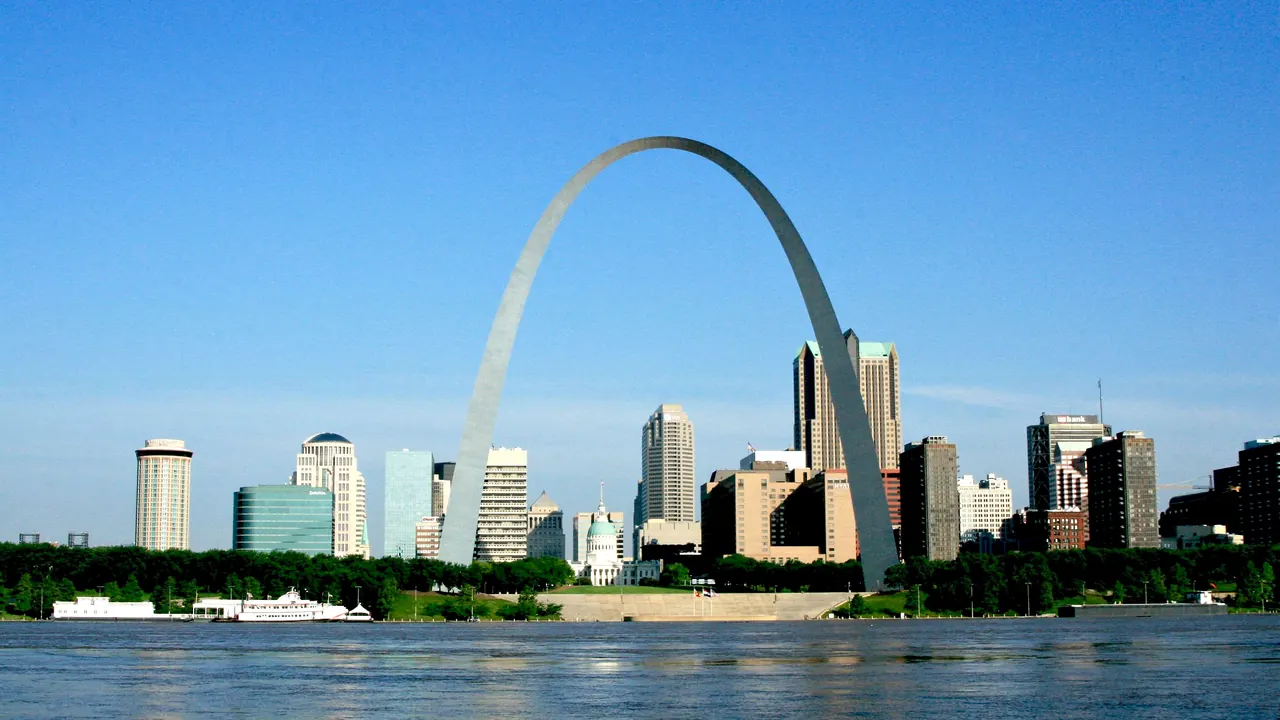
The Gateway Arch and the skyline across the Mississippi
- Families70
- Live music & the arts63
- Culture & sights58
Photo: Holly Cheng, CC BY 2.0, cropped
Match
44
Every category weighted equally
- Beach & sun38
- Culture & arts48
- Food & nightlife44
- Family trip45
- Outdoors45
- Relax & unwind39
- Shopping & style44
- On a budget44
St. Louis in twelve categories
Our verdict on each, scored 0 to 100 against the same fixed benchmark cities, so a score means the same thing on every page.
Beaches & swimming. Scores 5 out of 100.
Food & drink. Scores 56 out of 100.
Culture & sights. Scores 58 out of 100.
Nightlife. Scores 40 out of 100.
Nature & outdoors. Scores 48 out of 100.
Day trips. Scores 55 out of 100.
Good for families. Scores 70 out of 100.
Getting around. Scores 33 out of 100.
Shopping & style. Scores 34 out of 100.
Affordability. Scores 45 out of 100.
Live music & performing arts. Scores 63 out of 100.
Wellness & relaxation. Scores 20 out of 100.
St. Louis category by category
Beaches & swimming
5St. Louis is a river city in the middle of the continent, hundreds of kilometres from any coast. The Mississippi and Missouri are working rivers with strong currents and are not for swimming. In the hot, humid summer, cooling off means a hotel pool, a public pool or a long drive to a reservoir lake in the Ozarks. Nobody should plan a beach vacation here.
Food & drink
56St. Louis has a food culture all its own, even if it is a modest one. Locals are loyal to toasted ravioli, thin, cracker-crust pizza topped with Provel cheese, sticky gooey butter cake and frozen custard from roadside stands on the old Route 66. Barbecue here means ribs, and the city's smoked-meat joints are taken seriously. The Hill, the old Italian neighbourhood of brick bungalows, still has family trattorias and delis. In Bevo Mill and along South Grand, Bosnian bakeries and grills sit next to Vietnamese, Ethiopian and Thai restaurants.
Beer runs deep. The historic Anheuser-Busch brewery in Soulard is a red-brick landmark, and the city has many craft breweries and taprooms. The Saturday Soulard Market is one of the oldest public markets west of the Mississippi. Fine dining is small but solid, mostly in the Central West End and Clayton. It is a good place to eat well for little, but most people don't come for the food.
Culture & sights
58The Gateway Arch is the obvious first stop. At 192 metres it is the tallest monument in the country, and a small tram-pod lift climbs to the top. Under it, a museum tells the story of westward expansion. Nearby, the domed Old Courthouse is where the Dred Scott case began. The other major collections sit in Forest Park and are free: the Saint Louis Art Museum, in a Beaux-Arts building from the 1904 World's Fair, and the Missouri History Museum.
The Cathedral Basilica has one of the largest collections of mosaics in the world. Downtown, the Wainwright Building is a founding work of the skyscraper, and the old Union Station is a grand Romanesque terminal. Soulard, Lafayette Square and the Central West End keep whole streets of red-brick and Victorian housing. Two or three full days covers it.
Nightlife
40Going out in St. Louis happens in several separate pockets, not one central quarter. Soulard has old corner taverns and blues bars and fills up on game nights and around Mardi Gras. Washington Avenue downtown has the bigger dance bars, the Grove on Manchester Avenue is the main LGBTQ+ and late-night strip, and the Delmar Loop draws a student crowd. Riverboat-style casinos stay open late. Most of the scene is local and friendly rather than a draw in itself, and you will often need a taxi between areas. Outside baseball season and weekends, many streets are quiet early.
Nature & outdoors
48Inside the city, Forest Park is the big green space. It is larger than many famous city parks, with lakes, woods and paths for running and cycling. Beyond the city, the land rises into the wooded foothills of the Ozarks. Castlewood and Meramec state parks have river bluffs, caves and hiking trails within an hour, and the boulder fields of Elephant Rocks and the rocky pools of Johnson's Shut-Ins are further south. Just north, the Mississippi and Missouri rivers meet among wetlands. The Katy Trail, a long rail-trail popular with cyclists, starts nearby in St. Charles. In winter, bald eagles gather along the river bluffs near Alton and Grafton.
The landscape is pleasant and rolling rather than dramatic. Summers are humid, and spring and autumn are the best seasons to be outdoors.
Day trips
55The standout trip is Cahokia Mounds, about twenty minutes across the river in Illinois. It is the UNESCO-listed remains of the largest pre-Columbian city north of Mexico, and you can climb the huge earthen Monks Mound. Just west of St. Louis, St. Charles has a cobbled riverfront main street from the early 1800s. About an hour south, Ste. Genevieve keeps rare French colonial houses from the eighteenth century.
The Missouri River wine towns of Augusta and Hermann were settled by Germans, and they make a gentle day of tastings and brick streets about an hour or so west. Further out, Hannibal is Mark Twain's boyhood town, about two hours north, and Springfield, Illinois, has Lincoln's home and tomb about an hour and a half away. You'll need a car for nearly all of them.
Good for families
70St. Louis is better for children than many larger cities. The City Museum, in an old shoe warehouse, is a giant climbable maze of tunnels, slides, caves and rooftop structures. Adults tend to enjoy it as much as the children. In Forest Park, the Saint Louis Zoo and the Science Center, with its planetarium, are both free. The Magic House in Kirkwood is a large hands-on children's museum. A big theme park lies about forty minutes west, and the tram pods to the top of the Gateway Arch make a memorable ride.
Family life here is relaxed and suburban, prices are moderate, and baseball at Busch Stadium is an easy family evening. The drawbacks are that attractions are spread out, most trips need a car, and summer afternoons are hot and humid.
Getting around
33St. Louis is built for the car. The MetroLink light rail is useful for a few key routes: it runs from the airport through the Central West End and Forest Park to downtown and the stadium, with a branch to Clayton. Beyond that, buses are slow and infrequent. Downtown, the Central West End and the Loop are walkable on their own, but the distances between them are long. Neighbourhoods like Soulard, the Hill and South Grand, the day trips and the parks beyond the city all need a car or a taxi. Parking is usually easy and the roads uncongested, so driving is painless.
Shopping & style
34Shopping is modest and mostly local. The best browsing is on Cherokee Street, an old antiques row with vintage, record and Latin American shops. The Delmar Loop has independent shops with a student feel, and the Central West End has boutiques and galleries along leafy streets. The Soulard Market sells produce, spices and odds and ends. Luxury and big-name fashion are found in suburban malls in Frontenac and Richmond Heights, not in a city-centre shopping street. If you care about shopping, you'll find a pleasant afternoon here, not a reason to come.
Affordability
45St. Louis is one of the cheaper big cities in the United States, but it is not a budget destination. Hotel rooms, even downtown and in the Central West End, cost noticeably less than in the big coastal cities. Several of the main attractions are free: the zoo, the art museum, the history museum and the science centre in Forest Park.
The rest of a stay costs what it does elsewhere in the country. Eating out is cheap for an American city, especially barbecue and the Bosnian grills of South Grand, but tipping and sales tax add to every bill. Because public transport covers so little, most visitors also pay for a hire car and fuel, or for taxis between neighbourhoods.
Live music & performing arts
63Music and theatre are among the city's real strengths. The Saint Louis Symphony, founded in 1880, is one of the oldest orchestras in the country and is widely admired. It plays in Powell Hall, an ornate former movie palace. The Fabulous Fox Theatre, a lavish 1929 movie palace in Grand Center, hosts touring Broadway shows. In summer, the Muny stages musicals under the stars in Forest Park, in the largest outdoor theatre of its kind in the country. The Opera Theatre of Saint Louis runs an acclaimed early-summer festival season.
The city has a real place in the story of the blues. Chuck Berry was born and raised here. W.C. Handy wrote "St. Louis Blues" about his time in the city, and Miles Davis grew up just across the river in East St. Louis. The National Blues Museum is downtown, and blues and jazz bars there and in Soulard keep live music going through the week.
Wellness & relaxation
20St. Louis has no bathing or spa tradition. Wellness here means day spas, hotel spas and yoga studios in Clayton and the Central West End, and none of them gives a reason to come. The city's pace is unhurried, crowds are rarely a problem, and a slow morning in Forest Park or the Missouri Botanical Garden, with its Japanese garden, is restful. Anyone planning a restorative vacation will find more elsewhere.
When should you go?
Pick a month to see what it is like. The climate figures are measured averages, not a forecast.
St. Louis in July
Daytime high, °C
Rainfall in the month, mm
The whole year
Shaded against this city’s own year: the deepest cell is its best month for that figure and the palest its weakest.
Temperature and rainfall are climate normals, averaged over the years shown. St. Louis: 2006-2020 (sunshine 1981-2010, rainfall 1991-2020) normals, Cahokia / Maplewood Park (7.2 km from centre).
Before you go
| Measure | St. Louis |
|---|---|
| Currency | US Dollar (USD) |
| Sockets | AB120 V, 60 Hz |
| Driving side | Right |
| Time zone | UTC-6, UTC-5 in summer |
| Emergency number | 911 |
| Elevation | 149 m |
| Main airport | St. Louis Lambert International Airport (STL)20 km from centre64 non-stop destinations |
| Public holidays this year | 14 days |
By the numbers
| Measure | St. Louis |
|---|---|
| City population | 301,578 |
| People per km² | 1,764 |
| Museums within 10 km | 18 |
| UNESCO World Heritage sites within 50 km | 1 |
Compare St. Louis with
Every comparison with a written verdict behind it.
- Asheville
- Atlanta
- Austin
- Baltimore
- Branson
- Charleston
- Chattanooga
- Chicago
- Dallas
- Destin
- Detroit
- Galveston
- Gatlinburg
- Gulf Shores
- Houston
- Kansas City
- Louisville
- Memphis
- Milwaukee
- Minneapolis
- Myrtle Beach
- Nashville
- New Orleans
- Orange Beach
- Panama City Beach
- Pensacola
- Pigeon Forge
- Pittsburgh
- Savannah
- Washington DC
- Williamsburg, Virginia
- Wisconsin Dells