Bavaria or Swiss Alps?
Our verdict in twelve categories, each scored against the same fixed benchmark cities, and the climate month by month, so you can choose for your trip.
Choose Bavaria for
- live music and the arts
- culture and sights
- prices
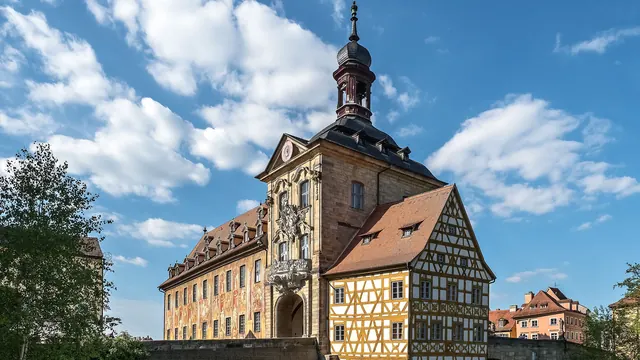
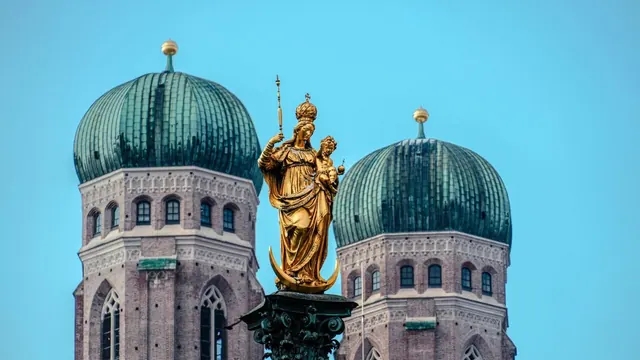
Bavaria suits travellers who want towns as much as mountains: Munich's galleries and opera, the medieval streets of Bamberg and Regensburg, Ludwig II's castles, and beer gardens in between. It is the better pick for a varied trip with children or on a moderate budget, since prices drop once you leave Munich and good day trips come easily from almost any base.
Choose Swiss Alps for
- nature and the outdoors
- getting around
- wellness
Choose the Swiss Alps when the mountains are the whole point. Cable cars and cogwheel trains take you up to the Jungfrau, the Matterhorn and the Aletsch glacier, the trails start at the top stations, and the car-free villages are quiet at night. You pay heavily for it, and there is little culture, shopping or nightlife, so it rewards hikers, skiers and anyone who wants to slow right down.
Scoreboard
Twelve categories on one fixed scale from 0 to 100. The shaded stretch is the gap between the two.
Your match
Pick a travel style or drag the sliders, and both match scores follow your weighting.
Wins on live music and the arts and culture and sights with your weighting.
Wins on nature and the outdoors and getting around with your weighting.
What matters to you?
Category by category
What the scores mean for a trip.
Beaches & swimming
Neither has a sea, and both offer lake swimming for a short summer season rather than a beach vacation. In Bavaria the shallow lakes such as the Staffelsee warm up best, the larger lakes south of Munich have meadows and grassy bathing spots, and in Munich itself people swim from the Isar's gravel banks.
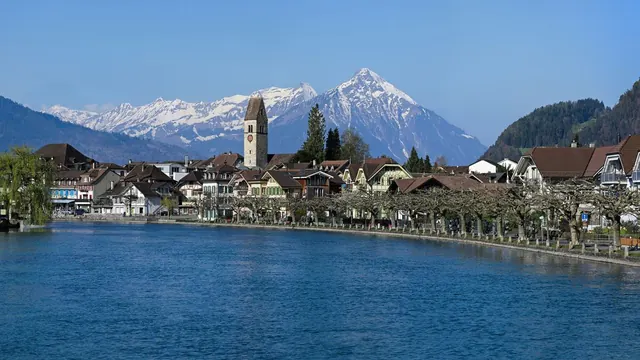
The Swiss lakes are clearer and cooler, with lidos and diving boards on Lake Thun and Lake Brienz and a far more dramatic backdrop. For water as warm as Bavaria's best you have to go south to Lake Lugano or Lake Maggiore in Ticino.
Food & drink
Bavaria eats and drinks better, mainly because of what it pours: Munich's beer gardens and beer halls, Bamberg's smoked beer and the village breweries of Upper Franconia, and Silvaner in Würzburg's wine taverns. Munich also has fine dining and the Viktualienmarkt, and nothing in the Alps matches them.
The Swiss Alps offer fondue and Valais raclette on terraces at the top of the lifts, along with Valais wines that are rarely sold abroad. Outside Zermatt, St Moritz and Gstaad, though, the choice is usually a few hotel dining rooms, and there is no market culture to browse.
Culture & sights
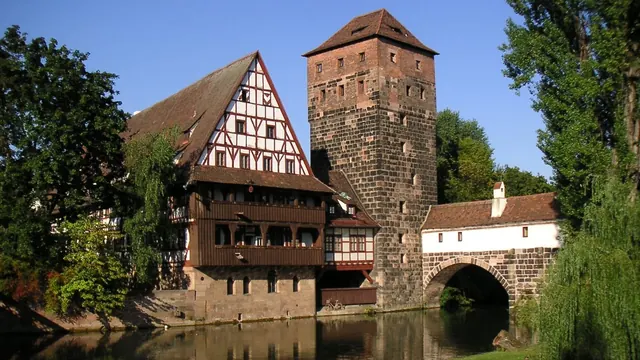
Munich alone has more great art and science than the whole Alpine region, with Old Masters at the Alte Pinakothek, the Blue Rider painters at the Lenbachhaus and the Deutsches Museum. Beyond the city are Nuremberg's imperial castle, the UNESCO-listed old towns of Bamberg and Regensburg, Tiepolo's ceiling in Würzburg and Ludwig II's castles in the south. To see the best of it, plan on moving between several bases.
In the Swiss Alps the heritage is part of the landscape: sgraffito houses in the Engadine, the Albula and Bernina railway lines, Bellinzona's castles and the Carolingian frescoes at Müstair. They make pleasant stops between hikes, but none of them is worth the journey for culture alone.
Nightlife
Bavaria's evenings are more reliable because they do not depend on the season. Munich has cocktail bars in Glockenbachviertel, a fair club scene and noisy beer halls all year, the university towns have their pub streets, and Oktoberfest fills the tents in late September.
In the Swiss Alps a night out means après-ski in winter at Verbier or Zermatt, or glossy hotel bars in St Moritz. In summer most villages are asleep by eleven.
Nature & outdoors
Bavaria's high mountains run along its southern edge: the Zugspitze above Garmisch, the Königssee at Berchtesgaden and hut-to-hut trails in the Allgäu. Further north are wild forest, limestone crags and river cycle paths. It is fine walking country.
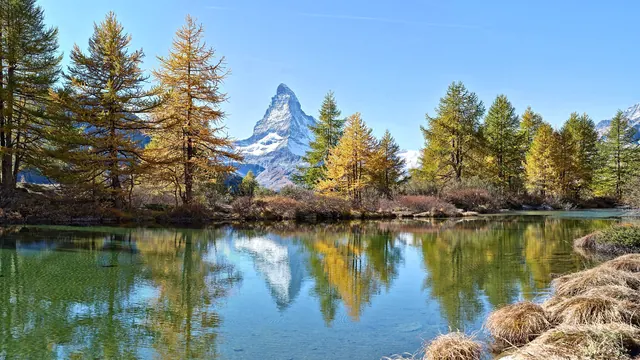
The Swiss Alps are on another scale. The Eiger, the Matterhorn and the Aletsch glacier rise above trails that begin at cable-car stations, and ibex are easy to spot in the Swiss National Park. The ski areas around Zermatt and Verbier are among the best anywhere, while Bavaria's skiing is merely solid.
Day trips
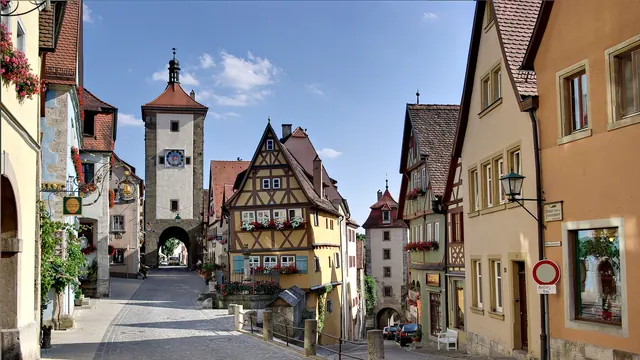
Bavaria has more good outings to choose from. Augsburg, Regensburg, Salzburg and the lakes are all close to Munich, and Franconia works as a second base for Bamberg, the wine villages on the Main and the Romantic Road towns of Rothenburg and Dinkelsbühl.
From the Bernese Oberland, the Swiss Alps reach Bern, Thun and Lucerne, with Gruyères and the Lavaux terraces further west. The trains make every trip simple, but the places are less celebrated and the journeys longer.
Good for families
Bavaria gives children bigger and more varied days out. There is Legoland at Günzburg, there are zoos in Munich and Nuremberg and a hands-on children's section at the Deutsches Museum, and beer gardens have playgrounds where parents can sit. Grassy lake shores in summer and Christmas markets in winter cover the rest of the year.
In the Swiss Alps much of the fun is in getting about, on cogwheel trains, lake steamers and summer toboggan runs. In car-free Zermatt and Wengen children can wander freely. There is no large theme park or zoo, though, and very young children need some care at altitude.
Getting around
The Swiss network is the smoother of the two. Trains, postbuses, lake steamers and lifts run to connected timetables, almost every village can be reached, and several resorts ban cars. Its weak point is the distance between regions, and crossing from one to another can take a whole day.
Bavaria works well by rail from Munich to Nuremberg, Garmisch and Berchtesgaden, and one regional day ticket covers much of the state. Away from the lines, buses are infrequent and trains are often late, so a car is often easier, though summer weekends bring long jams towards the Alps.
Shopping & style
Bavaria is far ahead, and Munich is the reason. It has the luxury houses of Maximilianstrasse, the department stores between Marienplatz and Karlsplatz and independent shops in Glockenbach. Woodcarving from Oberammergau, Nuremberg gingerbread and the December markets add regional crafts.
The Swiss Alps have short luxury streets in St Moritz and Gstaad and watch and mountain-gear shops in Zermatt and Interlaken. Beyond those, the best things to take home are cheese from the dairy and Valais wine.
Affordability
Neither is cheap, but Bavaria is much easier on the budget. Munich is expensive, especially during Oktoberfest and the big trade fairs. Franconian towns, the Bavarian Forest and Alpine guesthouses are moderate, though, and beer gardens let you bring your own food.
The Swiss Alps are among the most expensive places in the world for a vacation. Resort hotels, mountain meals and above all the lifts and mountain railways add up fast. Self-catering and travel passes help, and Goms or the Ticino side cost a little less, but there is no cheap way to do it.
Live music & performing arts
Bavaria has a full season that the Alps cannot offer. The Bavarian State Opera plays most nights, Munich has two orchestras of international rank and the rococo Cuvilliés Theatre, and Bayreuth stages Wagner every summer.
Music in the Swiss Alps comes in summer festivals, notably Verbier in July and the Menuhin Festival in the churches around Gstaad, both excellent if your dates fit. The rest of the year there is no resident opera or theatre, only brass bands and alphorn evenings.
Wellness & relaxation
Both have old spa traditions, and the difference is the setting. Bavaria's cure is taken in its Bad towns, from the colonnades of Bad Kissingen and the brine of Bad Reichenhall to the thermal resort of Bad Füssing and Kneipp's water cure, with the huge sauna complex at Erding close to Munich.
The Swiss Alps put their baths among the mountains, with Leukerbad's open-air pools beneath sheer cliffs and the stone bath at Vals. Car-free villages and wide views make the quiet even deeper.
When should you go?
Pick your month. The climate figures are measured averages, not a forecast.
Bavaria in July
Swiss Alps in July
Daytime high, °C
Rainfall in the month, mm
Where the figures come from
Swiss Alps has no rain gauge within 25 km of the centre, so its rainfall comes from a gridded climate dataset read at the destination rather than from a gauge further away.
Swiss Alps's sunshine is measured 66 km from the centre, at Sion.
Temperature and rainfall are climate normals, averaged over the years shown. Bavaria: 1991-2020 normals, München (1.9 km from centre). Swiss Alps: 2005-2020 (sunshine 1961-1990, rainfall 1991-2020) normals, Meiringen / Unterbach (19.5 km from centre).
The two follow the same pattern through the year: the warm months are also the wettest, with roughly 120mm of rain a month from June to August in both. July and August are the months for lake swimming. Bavaria, measured in its lowland, is a degree or so warmer at around 25°C. The Swiss Alps have more sunshine late in the season, so September and October are brighter there and good for hiking. The high passes open only once the snow has cleared in early summer.
Winter is cold in both, with daytime highs of only 3°C to 5°C, which suits skiing better than walking the streets. The Swiss figures show much more precipitation from October to March, and much of it falls as snow higher up. Bavaria's winters are drier, which makes them better for sightseeing in town and a December round of Christmas markets.
Which traveller are you?
On a culture and arts trip, Bavaria is the clear choice. The Pinakothek galleries in Munich, the State Opera, Bayreuth's Wagner festival and the medieval towns of Bamberg and Regensburg outweigh the Alps' painted villages and summer-only concerts.
For an outdoors trip, go to the Swiss Alps. Trails start at cable-car stations beneath the Jungfrau and the Matterhorn, glaciers and ibex are easy to reach, and the ski areas are a step above Bavaria's strip of southern peaks.
On a tight budget, Bavaria makes far more sense. Outside Munich, Franconian towns and Alpine guesthouses charge moderate prices and day tickets keep train travel cheap. In the Swiss Alps even simple mountain meals and the lifts quickly strain a careful budget.
Before you go
| Measure | Bavaria | Swiss Alps |
|---|---|---|
| Official language | German | French, German, Italian, Romansh |
| Currency | Euro (EUR) | Swiss Franc (CHF) |
| Sockets | CF230 V, 50 Hz | CJ230 V, 50 Hz |
| Driving side | Right | Right |
| Time zone | UTC+1, UTC+2 in summer | UTC+1, UTC+2 in summer |
| Emergency number | 112 | 112 |
| Main airport | Munich Airport (MUC)211 non-stop destinations | Zürich Airport (ZRH)226 non-stop destinations |
| Public holidays this year | 12 days | 10 days |
By the numbers
| Measure | Bavaria | Swiss Alps |
|---|---|---|
| Population | 13,038,724 | - |
Where else could you go?
Every comparison below shares a destination with this one, so you can follow Bavaria or Swiss Alps somewhere new.
- Austrian Alpsvs Bavaria
- French Alpsvs Swiss Alps
- Lake Comovs Swiss Alps
- Black Forestvs Swiss Alps
- Dolomitesvs Bavaria
- Lake Gardavs Swiss Alps