Cuba
Havana
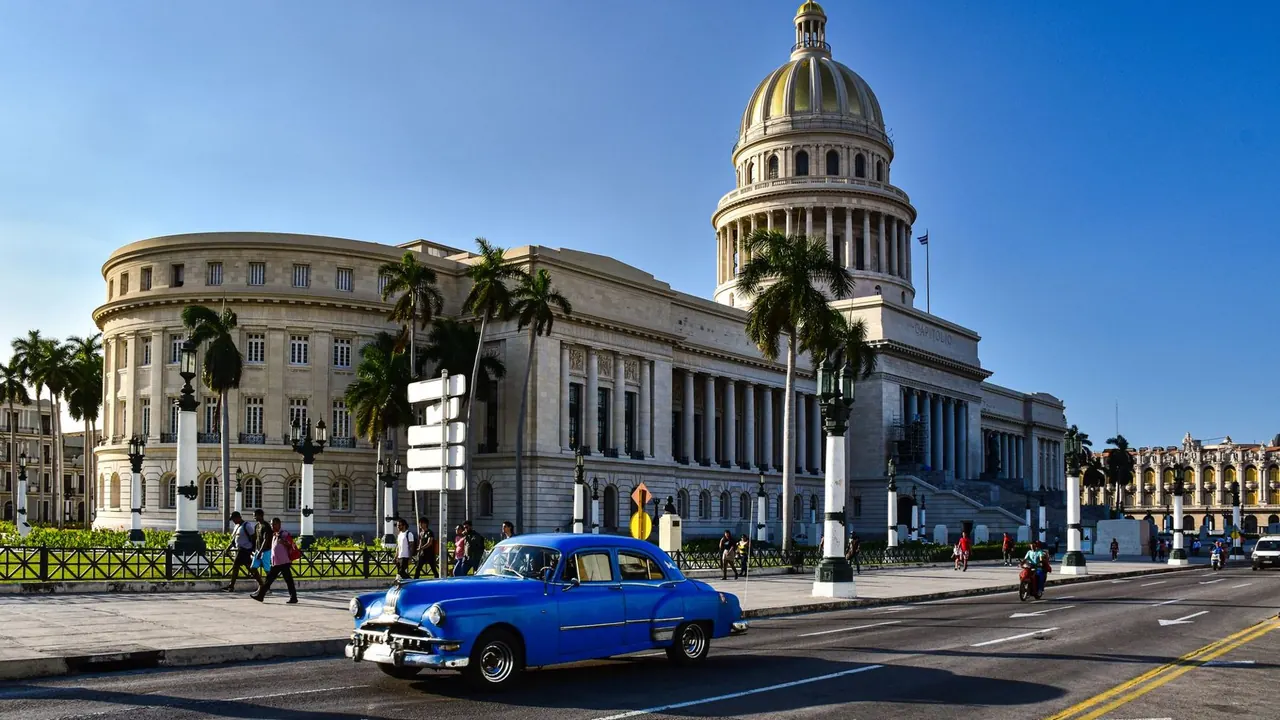
A classic car in front of the Capitolio
- Culture & sights77
- Live music & the arts74
- Beaches64
Photo: AXP Photography, Pexels License
Match
47
Every category weighted equally
- Beach & sun46
- Culture & arts52
- Food & nightlife50
- Family trip45
- Outdoors44
- Relax & unwind44
- Shopping & style46
- On a budget49
Havana in twelve categories
Our verdict on each, scored 0 to 100 against the same fixed benchmark cities, so a score means the same thing on every page.
Beaches & swimming. Scores 64 out of 100.
Food & drink. Scores 40 out of 100.
Culture & sights. Scores 77 out of 100.
Nightlife. Scores 60 out of 100.
Nature & outdoors. Scores 34 out of 100.
Day trips. Scores 38 out of 100.
Good for families. Scores 34 out of 100.
Getting around. Scores 38 out of 100.
Shopping & style. Scores 30 out of 100.
Affordability. Scores 58 out of 100.
Live music & performing arts. Scores 74 out of 100.
Wellness & relaxation. Scores 22 out of 100.
Havana category by category
Beaches & swimming
64Havana sits on the sea but does not swim from its centre: the Malecón meets the water with rock and sea wall, not sand. The beaches are the Playas del Este, a string of white-sand strands such as Santa María del Mar and Guanabo about half an hour east, where the water is warm, clear and around 28°C in summer. Weekends there are local and lively, with families, music and rum; weekdays are quieter.
Facilities are basic, with simple shade and food stalls rather than beach clubs, and getting there means a taxi or a hired car. A visitor treats the sea as a refreshing day off from the city rather than the reason for coming.
Food & drink
40Eating in Havana comes down to a handful of dishes done simply: ropa vieja, rice and black beans, roast pork, fried plantain, and fresh fish or lobster near the coast. The best meals are in paladares, privately run restaurants in old mansions, on rooftops and in family apartments in Vedado, Miramar and Habana Vieja, and some of them are inventive. State-run places and hotel dining are often dull, and menus depend on what the kitchen has managed to get hold of.
Havana shines in the glass. The daiquiri and the mojito are Cuban classics that the city's old bars made famous, aged rum is everywhere, and strong, sweet Cuban coffee punctuates the day. Street food and market eating are limited, so a traveller who cares about food will find the bar more rewarding than the table.
Culture & sights
77Havana's great sight is the city itself. Habana Vieja, a UNESCO site with its fortifications, is a grid of colonial squares, Plaza de Armas, Plaza Vieja, Plaza de San Francisco and the cathedral square, lined with baroque churches and arcaded mansions. Across the harbour mouth the Morro and La Cabaña fortresses guard the entrance, and the domed Capitolio and Gran Teatro mark the edge of the old town.
Beyond it, Centro Habana and Vedado hold a remarkable stock of art deco and mid-century buildings, the Malecón seafront and the Plaza de la Revolución. The Museo Nacional de Bellas Artes has an excellent Cuban collection and the Museo de la Revolución tells the national story. Much of the fabric is beautifully restored, much is crumbling, and both are part of what a visitor sees.
Nightlife
60A night out in Havana revolves around dancing and the street. Old town bars spill rum and cocktails until late, salsa clubs in Vedado and Miramar fill with locals who dance seriously, and on warm evenings the Malecón becomes a long open-air gathering place for talking, drinking and watching the sea. Arts centres that mix galleries, DJs and bars draw a younger crowd.
The scene is spread out, so evenings involve taxis between neighbourhoods, and it is less polished than in big Western cities. Clubs proper are few, but anyone who likes to dance will find nights go late.
Nature & outdoors
34Havana is a flat coastal city, and its outdoor life is mostly the sea wall: walking or cycling the Malecón as waves break over it, sunset over the Straits of Florida and the harbour views from the fortresses. Inside the city, the wooded Almendares river park offers some shade.
The nearest real landscape is the Sierra del Rosario, where the Las Terrazas reserve, about an hour west, has forest trails, waterfalls and river pools. The limestone valley of Viñales is further, around three hours, and fishing and diving trips leave from the coast. For serious hiking a visitor needs to travel beyond Havana.
Day trips
38The easy outings from Havana are modest. Hemingway's house, Finca Vigía, and the fishing village of Cojímar sit on the city's outskirts, and the port city of Matanzas, with its bridges, theatre and rumba tradition, is about an hour and a half east. Varadero's resort strip is roughly two hours away.
Cuba's finest destinations, Viñales, Trinidad and Cienfuegos, lie three hours or more away and are better done as overnight stays. Public transport is limited, so day trips usually mean a hired car with driver or an organised tour.
Good for families
34Cubans are openly fond of children, and families travelling with them meet warmth everywhere. The National Aquarium in Miramar, horse-drawn and classic-car rides, the fortresses with their cannons and a beach day at the Playas del Este are the main treats.
Beyond that, little is designed for children. Pavements are broken, the summer heat is heavy, and familiar comforts such as baby supplies, medicines and predictable meals can be hard to find, so families should bring what they need. It suits older children with an interest in music and history better than toddlers.
Getting around
38Habana Vieja is compact and best walked, and a stroll along the Malecón links it to Centro and Vedado in under an hour. Beyond that, distances grow and the city bus network is crowded and hard for a visitor to use.
Most travellers rely on taxis of every kind: classic American cars, shared fixed-route almendrones, small coco-taxis and bicycle rickshaws in the old town. Fares are agreed before setting off. Pavements are uneven and streets poorly lit in places, so watch your step after dark. A car is not needed in the city, though it helps for trips beyond it.
Shopping & style
30Havana is not a shopping city. What visitors buy are the things Cuba makes: cigars from the state shops, aged rum, coffee, and paintings and prints from the many artists' studios and galleries in Habana Vieja and Vedado, which are the most rewarding purchases. The large craft market by the harbour sells woodwork, leather, guayabera shirts and souvenirs.
Fashion, luxury brands and department stores are essentially absent, and shop shelves can be sparse.
Affordability
58Havana mixes cheap and expensive in ways that surprise visitors. Rooms in casas particulares, private homes letting rooms, are good value and often include a hearty breakfast, and live music, local snacks, shared taxis and museum entry cost little. State hotels, by contrast, charge international rates for dated rooms, the better paladares price for foreigners, and anything imported is dear.
Travellers who stay in private homes and eat simply find it a fairly inexpensive city; those who expect hotel comfort and restaurant dining every night will spend much as they would in Southern Europe. Bring plenty of cash, since card payments are unreliable.
Live music & performing arts
74Music is Havana's great draw. Son, salsa, bolero and Afro-Cuban rumba play live in old town bars, hotel courtyards and on street corners from midday onwards, and the standard is high even in the humblest venue. Dedicated jazz clubs in Vedado host some of the island's best players, and the annual Jazz Plaza festival brings international names.
For formal performance, the Gran Teatro de La Habana is home to the Ballet Nacional de Cuba, one of the world's respected classical companies, and the National Symphony plays at the Teatro Amadeo Roldán. Weekend rumba in the Callejón de Hamel and cabaret shows at the old Tropicana add a more popular side.
Wellness & relaxation
22Havana has no bathing culture and few spas beyond a handful in the larger hotels. What it offers instead is pace: long afternoons on a shaded balcony, rocking chairs in the courtyard of a colonial casa and evenings watching the sea from the Malecón. The city can still be noisy, hot and full of exhaust fumes, so anyone looking for real rest is better served by a quiet guesthouse in leafy Vedado or Miramar, or a day at the beach.
When should you go?
Pick a month to see what it is like. The climate figures are measured averages, not a forecast.
Havana in July
Daytime high, °C
Rainfall in the month, mm
The whole year
Shaded against this city’s own year: the deepest cell is its best month for that figure and the palest its weakest.
Where the figures come from
Havana has no rain gauge within 25 km of the centre, so its rainfall comes from a gridded climate dataset read at the city rather than from a gauge further away.
Temperature and rainfall are climate normals, averaged over the years shown. Havana: 1991-2020 normals, Casa Blanca, La Habana (3.5 km from centre).
Before you go
| Measure | Havana |
|---|---|
| Official language | Spanish |
| Currency | Cuban Peso (CUP) |
| Sockets | AB110 V, 60 Hz |
| Driving side | Right |
| Time zone | UTC-5, UTC-4 in summer |
| Emergency number | Police 106, ambulance 104, fire 105 |
| Elevation | 59 m |
| Main airport | José Martí International Airport (HAV)17 km from centre21 non-stop destinations |
| Public holidays this year | 9 days |
By the numbers
| Measure | Havana |
|---|---|
| City population | 2,492,618 |
| People per km² | 3,423 |
| Museums within 10 km | 12 |
| UNESCO World Heritage sites within 50 km | 1 |
| Swim season, months above 21 °C | 12 months |
Compare Havana with
Every comparison with a written verdict behind it.