Morocco
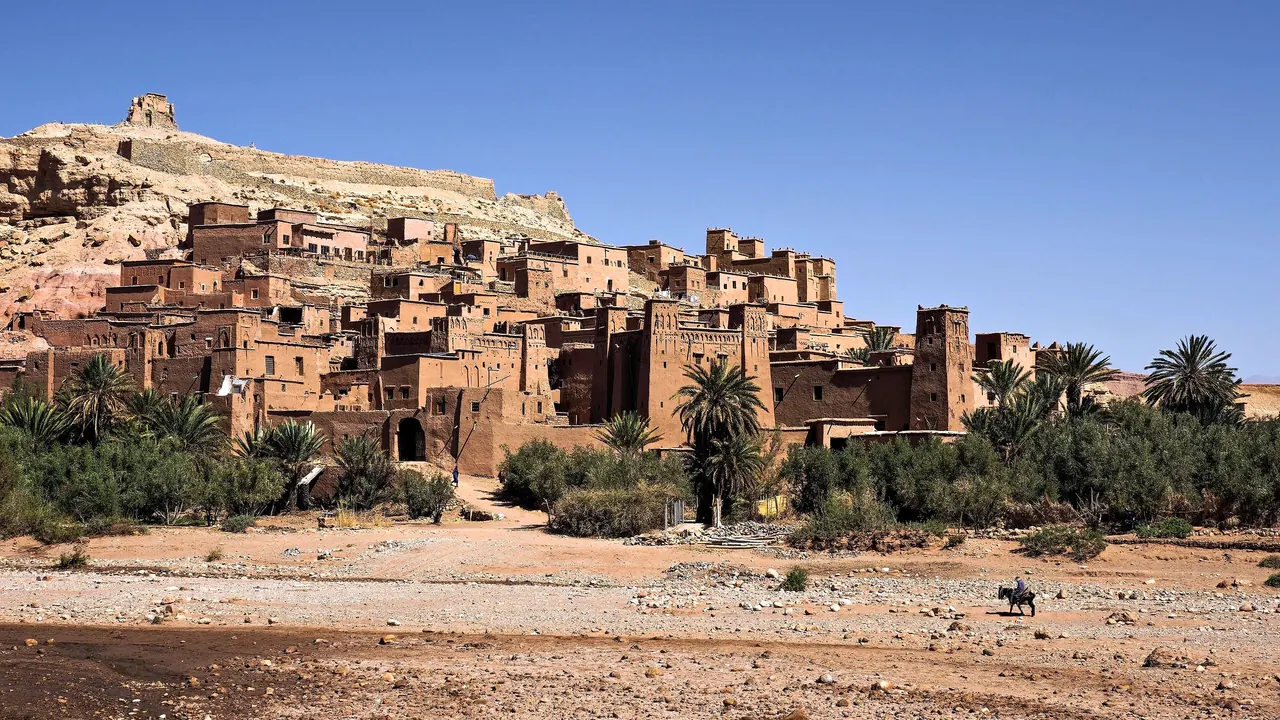
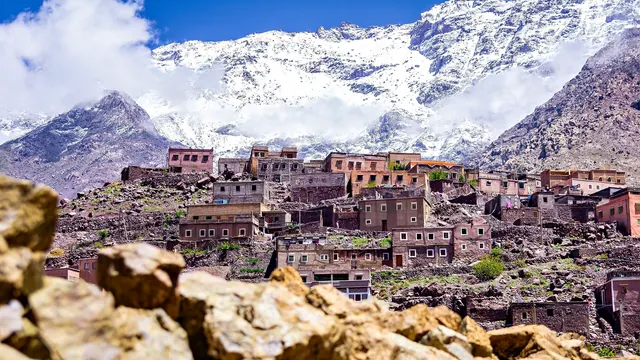
The fortified earthen village of Aït Benhaddou
- Culture & sights85
- Nature & outdoors85
- Affordability78
Photo: Petar Milošević, CC BY-SA 4.0, cropped
Match
63
Every category weighted equally
- Beach & sun65
- Culture & arts64
- Food & nightlife61
- Family trip64
- Outdoors68
- Relax & unwind67
- Shopping & style64
- On a budget65
Morocco in twelve categories
Our verdict on the country as a whole, scored 0 to 100 against the same fixed benchmark cities as every destination, so a score means the same thing on every page.
Beaches & swimming. Scores 55 out of 100.
Food & drink. Scores 77 out of 100.
Culture & sights. Scores 85 out of 100.
Nightlife. Scores 35 out of 100.
Nature & outdoors. Scores 85 out of 100.
Day trips. Scores 68 out of 100.
Good for families. Scores 40 out of 100.
Getting around. Scores 52 out of 100.
Shopping & style. Scores 76 out of 100.
Affordability. Scores 78 out of 100.
Live music & performing arts. Scores 35 out of 100.
Wellness & relaxation. Scores 73 out of 100.
Morocco category by category
Under each: where in Morocco it is best, and our destinations in Morocco that score highest on it.
Beaches & swimming
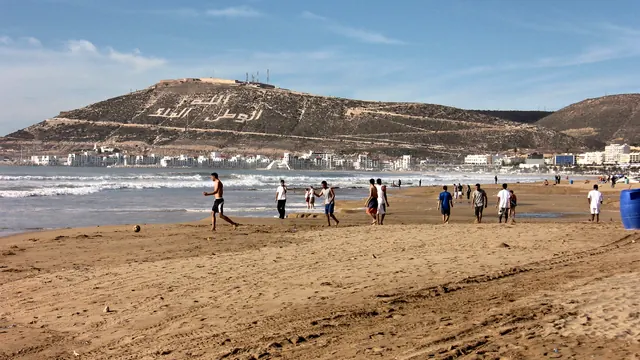
55Morocco has two coasts, and they feel very different. The long Atlantic shore is the one most visitors meet. Agadir has a wide, sheltered crescent of sand built for resort stays, and the bays north of it around Taghazout are better for surfing than lounging. Even in late summer the Atlantic rarely passes about 22°C, and Essaouira's beach is beautiful but so windy that it belongs to kitesurfers more than swimmers.
The Mediterranean coast in the north is warmer and calmer in July and August, with clear coves around Al Hoceima and long family beaches at Saidia and M'diq, mostly filled with Moroccan families on their summer vacation. Neither coast is why most people come, and a beach stay is usually an add-on to the cities and the desert.
Where: Agadir, Al Hoceima, Saidia, Taghazout
Our top destinations in Morocco
Food & drink
77Moroccan cooking is one of the great home cuisines: slow tagines with preserved lemon or prunes, Friday couscous, pigeon pastilla dusted with sugar and cinnamon, harira at dusk, and mint tea poured from height at every pause in the day. It is eaten best in family-run places, riads and street stalls rather than in formal restaurants, and the range beyond Moroccan food is narrow outside Casablanca and Marrakech.
Marrakech's Jemaa el-Fna turns into an open-air grill kitchen each evening, and Fes is known for the most refined old-city cooking, with bakeries and snail stalls inside its medina. Essaouira grills the day's sardines and sea bream at the harbour, and Tangier mixes Spanish touches into its seafood. Alcohol exists in hotels and licensed restaurants but is not part of everyday eating.
Where: Marrakech, Fes, Essaouira, Tangier
Our top destinations in Morocco
Culture & sights
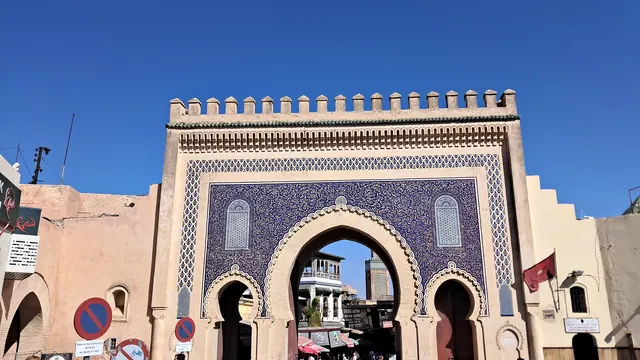
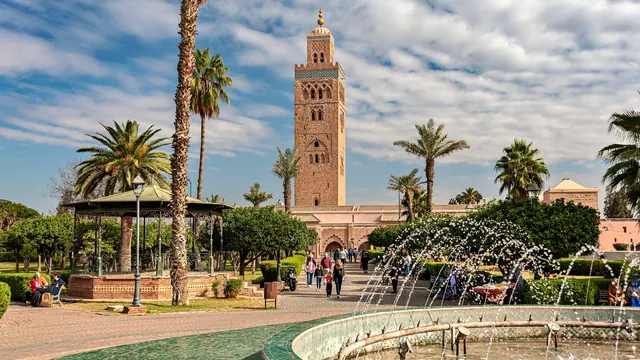
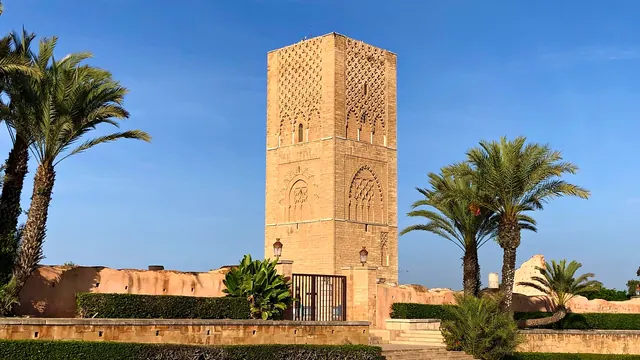
85The heritage here is spread across a whole circuit of old cities. Fes el-Bali is the greatest of them, a car-free medieval medina of tanneries, madrasas such as the Bou Inania and Al-Attarine, and lanes unchanged in layout for centuries. Marrakech adds the Koutoubia, the Bahia Palace, the Saadian Tombs and the Ben Youssef Madrasa, while Meknes and Rabat show the scale of the later sultans' building, with Rabat's Kasbah of the Udayas above the river mouth.
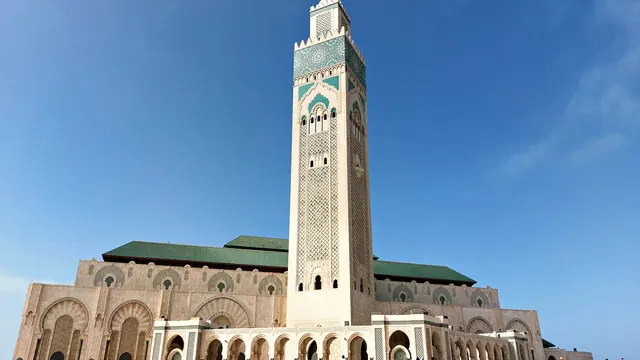
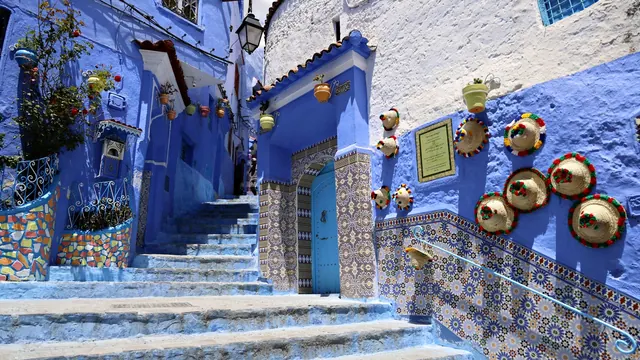
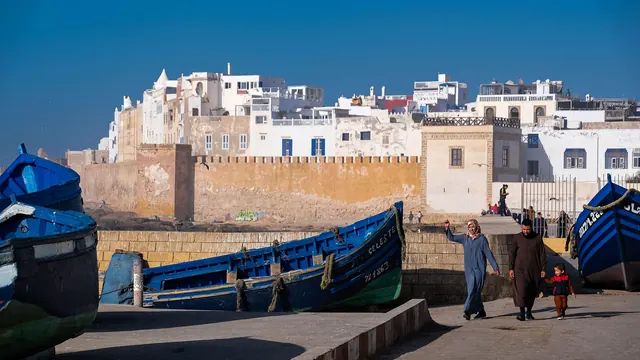
Beyond the cities lie Roman Volubilis with its mosaics, the earthen ksar of Ait Benhaddou and the kasbahs of the Dades valley, blue-washed Chefchaouen and the fortified port of Essaouira. Casablanca's Hassan II Mosque is one of the few mosques non-Muslims may enter. Museums are modest; the sights are the streets and buildings themselves.
Where: Fes, Marrakech, Meknes and Volubilis, Rabat
Our top destinations in Morocco
Nightlife
35Nightlife exists but is contained. In Marrakech it lives in the Hivernage and Gueliz districts, in hotel clubs, rooftop lounges and dinner-show venues rather than in the medina, which goes quiet after the evening crowds leave the main square. Casablanca has the most metropolitan scene, with bars and clubs along the Corniche, and Agadir's seafront caters to resort visitors.
Across most of the country alcohol is served only in licensed places and a night out means a long dinner and tea on a terrace. Travellers who want late nights should plan around one of these few cities.
Where: Marrakech, Casablanca, Agadir
Our top destinations in Morocco
Nature & outdoors
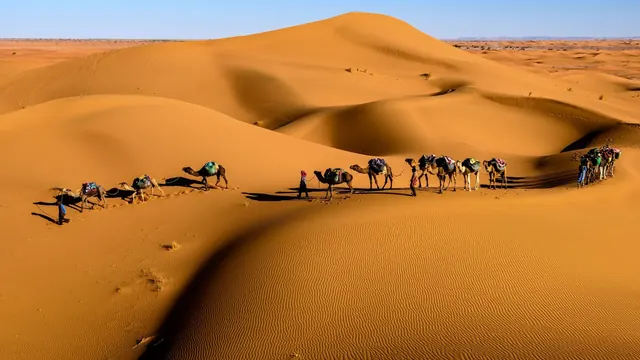
85Morocco's landscapes run from snow-capped mountains to sand sea within a few days' drive. The High Atlas rises just south of Marrakech, with Berber villages in the Imlil and Ourika valleys and the two-day climb of Jebel Toubkal, North Africa's highest peak. Beyond the mountains, the Dades and Todra gorges cut red canyons, and the dunes of Erg Chebbi near Merzouga and the wilder Erg Chigaga are reached by camel or four-wheel drive for a night in a desert camp.
In the north, the green, cedar- and oak-covered Rif mountains around Chefchaouen suit gentle hiking to waterfalls and hill villages, a softer landscape than the Atlas. The Atlantic around Taghazout and Essaouira is a long-established surf and kitesurf coast. Spring and autumn are the seasons for all of it; the desert is fiercely hot in summer and the high passes can close with snow in winter.
Where: High Atlas, Erg Chebbi, Dades and Todra gorges, Rif mountains
Our top destinations in Morocco
Day trips
68The best base for day trips is Fes: the imperial city of Meknes, the Roman ruins of Volubilis and the hill town of Moulay Idriss are all within about an hour and fit comfortably into one day. In the north, Tangier puts the white-walled seaside town of Asilah and the Andalusian-style medina of Tetouan within easy reach, and Rabat and Casablanca are a short train ride apart.
From Marrakech, the classic outings stretch further: Essaouira is close to three hours by road and Ait Benhaddou means crossing the Atlas, so both work better as overnight stops. Most visitors tour the country in a loop rather than returning to one base each night.
Where: Fes, Tangier, Rabat, Marrakech
Our top destinations in Morocco
Good for families
40Moroccans are openly fond of children, and families are welcomed in riads, restaurants and homes. A family trip works best built around Agadir, with its sandy beach, pool hotels and a few resort attractions. Essaouira is the easiest of the old towns with children: its walled medina is small, flat and largely free of motorbikes, with a harbour of fishing boats and gulls and a long beach beside it.
The outing most children remember is a camel ride into the dunes of Erg Chebbi at Merzouga and a night in a desert camp, though it lies a long drive from the main cities. Otherwise there is little made for children: no major theme parks, few museums aimed at them, and big-city medinas that are crowded, uneven and busy with scooters. Long road transfers and summer heat in the interior add to the effort, so families usually do best with fewer stops and a driver.
Where: Agadir, Essaouira, Merzouga and Erg Chebbi
Our top destinations in Morocco
Getting around
52The main cities are well connected. A high-speed line runs from Tangier down to Rabat and Casablanca, and ordinary trains continue to Fes, Meknes and Marrakech in comfort. Long-distance coaches fill most gaps, and shared grand taxis run between towns.
The trouble starts away from the rail line. The desert, the gorges, the Atlas valleys and Chefchaouen are reached by long road journeys, so most visitors hire a driver or join a multi-day tour. Inside the old cities everything is on foot, through medinas whose lanes are easy to get lost in, while the newer districts need petit taxis.
Where: Tangier, Rabat, Casablanca, Fes
Our top destinations in Morocco
Shopping & style
76This is a country for craft shopping. The souks of Marrakech are organised by trade, with alleys of leather slippers, lanterns, carpets and spices, and the medina of Fes is where much of it is made, from the dye pits of the tanneries to brass and tile workshops. Bargaining is expected and part of the experience.
Essaouira is calmer and known for thuya woodwork and argan oil, Chefchaouen for woven blankets, and Safi for its pottery. Berber carpets from the Middle Atlas are the big purchase for many visitors. Fashion and luxury brands are limited to the malls and boulevards of Casablanca and Marrakech's newer districts.
Where: Marrakech, Fes, Essaouira, Chefchaouen
Our top destinations in Morocco
Affordability
78Morocco is cheap for most of what a visitor needs. Street food, market meals, trains, coaches and guesthouse rooms cost little across the country, and simple riads in Fes, Essaouira or Chefchaouen are easy to find at modest prices. The surf villages around Taghazout run on simple surf houses and hostels where a room, meals and board hire come together cheaply.
Marrakech is the exception in places, with design riads, restaurant terraces and spa hotels priced for international visitors. Desert tours, private drivers and alcohol add up, and shoppers should expect to bargain hard in the souks, where first prices are pitched high.
Where: Fes, Chefchaouen, Essaouira, Taghazout
Our top destinations in Morocco
Live music & performing arts
35Morocco's live music is rich but rarely on a stage. Gnawa trance music, Andalusian orchestras and Amazigh song are deep traditions. In Marrakech a visitor meets them in Jemaa el-Fna at dusk, where storytellers, drummers and gnawa musicians gather circles of listeners, and in the dinner venues of the newer districts; in Essaouira gnawa groups play in the medina's small houses and squares.
The formal calendar is built around festivals: Essaouira's gnawa festival, the Fes Festival of World Sacred Music, with concerts in palace courtyards, and large summer concerts in Rabat. Outside these seasons, Rabat and Casablanca have grand theatres with occasional programmes, but there is little regular theatre, opera or concert life to plan a trip around.
Where: Essaouira, Fes, Marrakech, Rabat
Our top destinations in Morocco
Wellness & relaxation
73The hammam is part of ordinary life in Morocco, and every medina has a neighbourhood bathhouse where locals go for steam, black soap and a vigorous scrub with a kessa glove. Visitors can join these or choose the more private hammams and spas found in riads and hotels, above all in Marrakech, where argan oil massages and rose treatments are offered at every level, from simple bathhouses to palatial spas.
Fes has its own old public hammams in the medina and riad spas of a quieter kind. Near Fes, the sulphurous hot springs of Moulay Yacoub have been used for bathing for centuries, with a public pool and a more modern treatment centre. Essaouira's walled town is calm and breezy, with small hammams and argan massages at a slower pace than the big cities.
Where: Marrakech, Fes, Moulay Yacoub, Essaouira
Our top destinations in Morocco
Where to go in Morocco
Most first visits are a loop through the old cities and out to the desert, rather than a stay in one place. Marrakech is the usual start, with the trade-by-trade souks, palaces and madrasas of its medina, the evening grills of Jemaa el-Fna and most of the country's late nights in its newer districts. Fes is the deeper, quieter counterpart for history, food and craft workshops, and the easiest base for day trips to Meknes, Volubilis and Moulay Idriss. Trains link Fes with Rabat, Casablanca and Tangier, so the imperial cities and the north fit comfortably into one trip.
South of Marrakech, the Atlas Mountains suit walkers, from village paths in the Imlil and Ourika valleys to the two-day climb of Jebel Toubkal. Beyond them a road trip runs past Ait Benhaddou and the Dades and Todra gorges to the dunes of Erg Chebbi in the Sahara, where a camel ride and a night in a desert camp is the outing children remember most. It is several days of long drives, best done with a driver in spring or autumn.
On the Atlantic, Essaouira is the gentle choice: a small, flat walled town with harbour-grilled fish, gnawa music and argan massages, good for a quiet stay or for families, though the wind suits kitesurfers more than swimmers. Agadir is the place for a beach resort stay with pools, and the surf villages around Taghazout lie just north. Both are a few hours by road from Marrakech.
In the north, Tangier pairs Spanish-tinged seafood with easy outings to Asilah and Tetouan, and blue-washed Chefchaouen in the green Rif suits gentle hiking, woven blankets and inexpensive riads. Its Mediterranean coves are warmer in high summer. The north and the desert are really separate trips, and joining them takes long days on the road.
When should you go?
Morocco has no single climate. Its months are measured at Marrakech, Fes, Agadir and Sahara; pick one to see it. The figures are measured averages, not a forecast.
Where in Morocco
Marrakech in July
Daytime high, °C
Rainfall in the month, mm
Temperature and rainfall are climate normals, averaged over the years shown. Marrakech: 1991-2020 normals, Marrakech (5.1 km from centre).
Compare Morocco with
Every comparison with a written verdict behind it, and any other country below.
Our destinations in Morocco
Every place in Morocco with its own page: its twelve scores, its texts and its months.
Regions and islands
Cities and towns