Romania
Cluj-Napoca
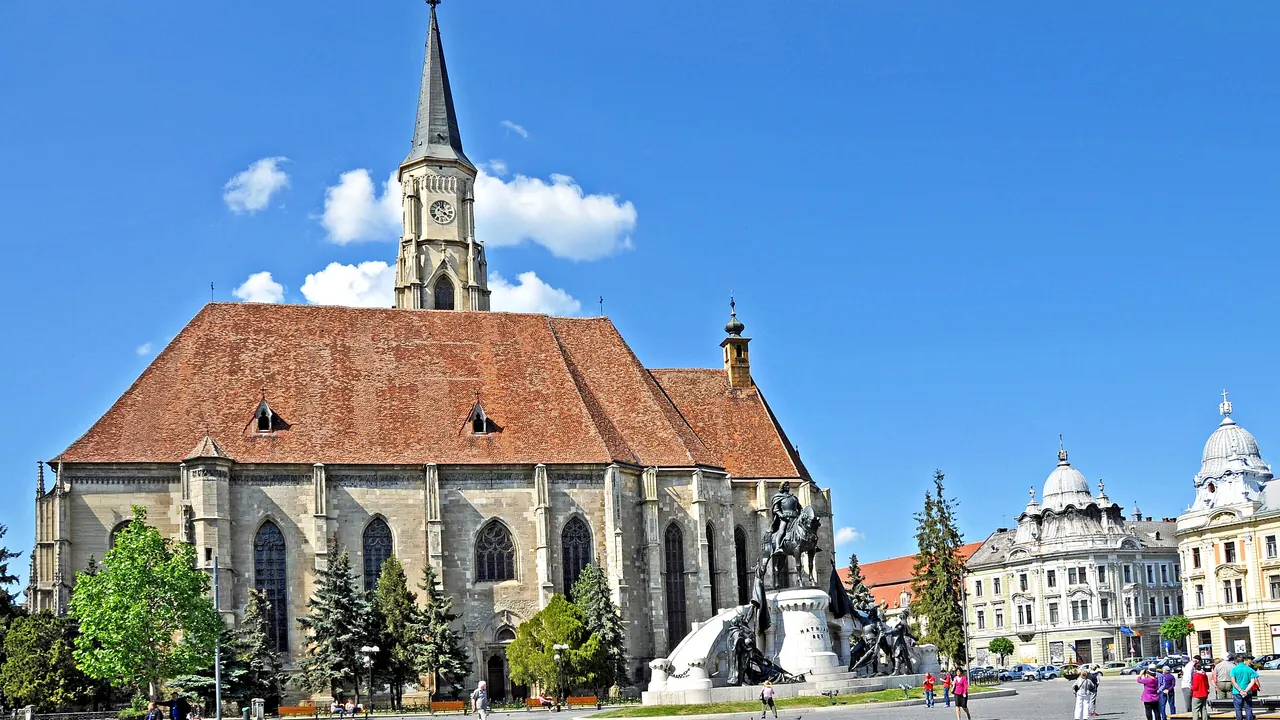
St Michael's Church and the Matthias Corvinus statue on Unirii Square
- Affordable cities71
- Nature & outdoors64
- Getting around60
Photo: Dennis G. Jarvis, CC BY-SA 2.0, cropped
Match
47
Every category weighted equally
- Beach & sun42
- Culture & arts51
- Food & nightlife49
- Family trip46
- Outdoors49
- Relax & unwind43
- Shopping & style47
- On a budget49
Cluj-Napoca in twelve categories
Our verdict on each, scored 0 to 100 against the same fixed benchmark cities, so a score means the same thing on every page.
Beaches & swimming. Scores 7 out of 100.
Food & drink. Scores 48 out of 100.
Culture & sights. Scores 46 out of 100.
Nightlife. Scores 52 out of 100.
Nature & outdoors. Scores 64 out of 100.
Day trips. Scores 55 out of 100.
Good for families. Scores 40 out of 100.
Getting around. Scores 60 out of 100.
Shopping & style. Scores 33 out of 100.
Affordability. Scores 71 out of 100.
Live music & performing arts. Scores 56 out of 100.
Wellness & relaxation. Scores 28 out of 100.
Cluj-Napoca category by category
Beaches & swimming
7Cluj sits in the hills of Transylvania, a long day's travel from the Black Sea, so it has no beach life at all. In hot summers locals swim in the outdoor salt lakes at Turda, about forty minutes south, or at lidos and reservoirs on the edge of the city. These are a pleasant afternoon at best. Nobody who wants the sea should come here for it.
Food & drink
48Eating in Cluj means Transylvanian cooking, where Romanian and Hungarian traditions meet. The dishes are filling: varză à la Cluj, a layered bake of cabbage and minced meat, sour soups called ciorbă, sarmale cabbage rolls with polenta, and cakes such as papanași, fried doughnuts with sour cream and jam. The large student population supports a strong café culture, with plenty of serious specialty coffee in the streets around Piața Unirii and Piața Muzeului.
Markets such as Piața Mihai Viteazul sell farm cheese, smoked meats and seasonal produce, and Transylvanian whites from the Târnave valley turn up on most wine lists. Beyond that the range is limited. A few days of good, hearty meals are easy to find, but there is little international depth or fine dining, and you would not cross a continent just to eat here.
Culture & sights
46The historic centre is compact and handsome. Gothic St Michael's Church and the equestrian statue of Matthias Corvinus stand on Piața Unirii, ringed by baroque and nineteenth-century palaces. The Bánffy Palace holds the national art museum, and the house where King Matthias was born is a few streets away. There are also the domed Orthodox cathedral on Piața Avram Iancu, stretches of the medieval walls including the Tailors' Bastion, and the old Jewish and Hungarian quarters to wander.
The Ethnographic Museum of Transylvania is the highlight, especially its open-air section of wooden houses and churches in the Hoia hills. The Central Cemetery on Hajongard hill is a quiet, atmospheric walk. It is a rewarding day or two of sightseeing, but there is no single sight that makes the trip on its own.
Nightlife
52Cluj has a very large student population, roughly a fifth of the people who live here, and that sets the tone after dark. In the old centre, terraces and cellar bars around Piața Muzeului and the lanes off Strada Iuliu Maniu stay full late into the night. Cheap student bars cluster near the campuses, and a handful of clubs play electronic music in old industrial and courtyard spaces until early morning.
It is livelier than the size of the city suggests, especially from October to June when term is on. The scene is still small, though, and comes down to a few streets. It makes a good weekend of going out, not a nightlife destination in its own right. Summer is quieter in the bars once the students leave.
Nature & outdoors
64Cluj lies in rolling green hills with forest on the edge of town. The Făget woods have walking and mountain-bike trails, and Hoia forest is a short ride from the centre. Turda Gorge, a narrow limestone canyon with a riverside path and climbing routes, is under an hour's drive away and makes a classic half-day hike.
To the west the Apuseni Mountains offer karst plateaus, caves, beech forest and shepherds' villages. They are best explored with a car and an early start. Băișoara, about an hour away, has small ski slopes in winter and hiking in summer. Spring and autumn are the best seasons for walking. Winters are cold and snowy, and the highest drama of the Carpathians lies further off.
Day trips
55The Turda Salt Mine, about forty minutes away, is the outing everyone takes. It is a vast old mine whose chambers drop deep underground, with a lake you can row on at the bottom. Alba Iulia, around an hour and a half south, has a huge star-shaped Habsburg citadel and the cathedral where Romanian kings were crowned. Closer in, Bonțida holds the Bánffy Castle, the baroque country seat of one of Transylvania's great Hungarian noble families, set in its old park. Rimetea is a Hungarian village of whitewashed houses beneath a limestone crag.
Târgu Mureș, with its Art Nouveau Culture Palace, and the old Saxon town of Bistrița, known for the tall spire of its Evangelical church, each fit in a day, at under two hours by car. The best-known Transylvanian towns, Sighișoara and Sibiu, and Corvin Castle at Hunedoara, are closer to three hours away and work better as overnight stops.
Good for families
40Cluj is a safe, manageable city with children, though not one built for them. Central Park has rowing boats on its lake and playgrounds, and the open-air ethnographic museum and the Botanical Garden suit a morning out. The Turda Salt Mine is the big hit, with its underground lake, a small Ferris wheel and play areas deep below ground. The rest of the offer is modest, with a small zoo and the parks and play areas of the big shopping malls. Families usually treat it as a pleasant stop on a wider Transylvanian trip.
Getting around
60Almost everything a visitor wants in Cluj lies within a twenty-minute walk of Piața Unirii, and the centre is flat and easy on foot. Buses, trolleybuses and a tram line cover the wider city, and the airport is a short ride from the centre. Traffic is heavy at rush hour, though, and ride-hailing is the easy way across town at night.
Getting out of the city is harder. Trains through Transylvania are slow, and buses to the smaller places are infrequent. The Apuseni Mountains, Turda Gorge and the villages are far easier with a hired car.
Shopping & style
33Shopping is not a reason to come to Cluj. The pedestrian streets of the old centre have a scattering of independent fashion and design shops, and the city's big shopping malls carry the usual international chains. More rewarding are the things Transylvania makes: embroidered blouses, painted ceramics, wool and wooden crafts, found at folk-art fairs and at the shop of the ethnographic museum. Food from the produce markets makes good gifts too. The Christmas market on Piața Unirii is the busiest shopping time of the year.
Affordability
71Cluj is cheap by most European standards, though it is one of the more expensive cities in Romania. Its large tech and university economy keeps restaurant and apartment prices above the national level. Even so, a central room, a sit-down lunch menu, local beer and a bus ticket all cost well below Western European norms. Opera and theatre seats are a bargain. Prices climb steeply during the big summer festivals, when rooms in the city sell out.
Live music & performing arts
56For a city of its size, Cluj has an unusually full stage life, thanks to its two cultures. The Romanian National Opera and the National Theatre share an ornate Viennese-style building on Piața Avram Iancu. The Hungarian State Opera and Hungarian Theatre perform in their own houses. The Transylvania State Philharmonic gives a regular concert season. Between them there is opera, ballet, plays and classical music most of the year, and tickets are easy to get.
In summer the city hosts some of Eastern Europe's largest music festivals, with electronic and pop acts filling the stadium area and a castle estate nearby, alongside outdoor jazz and film events in the parks. Most plays are in Romanian or Hungarian, so music and dance travel best for visitors.
Wellness & relaxation
28Cluj has no bathing culture of its own. Spa time here means hotel wellness centres and a few day spas. The nearest real tradition is at Turda, where people take the dry, salty air of the old salt mine as a cure for breathing problems and float in the outdoor salt lakes in summer. Away from the student bars, the city moves at an unhurried pace, and the Botanical Garden and the Central Park lake make quiet places to slow down. A restorative trip needs more than that.
When should you go?
Pick a month to see what it is like. The climate figures are measured averages, not a forecast.
Cluj-Napoca in July
Daytime high, °C
Rainfall in the month, mm
The whole year
Shaded against this city’s own year: the deepest cell is its best month for that figure and the palest its weakest.
Temperature and rainfall are climate normals, averaged over the years shown. Cluj-Napoca: 1991-2020 normals, Cluj-Napoca (2.4 km from centre).
Before you go
| Measure | Cluj-Napoca |
|---|---|
| Official language | Romanian |
| Currency | Romanian Leu (RON) |
| Sockets | CF230 V, 50 Hz |
| Driving side | Right |
| Time zone | UTC+2, UTC+3 in summer |
| Emergency number | 112 |
| Elevation | 356 m |
| Main airport | Avram Iancu Cluj International Airport (CLJ)7 km from centre53 non-stop destinations |
| Public holidays this year | 17 days |
By the numbers
| Measure | Cluj-Napoca |
|---|---|
| City population | 286,598 |
| People per km² | 1,640 |
| Museums within 10 km | 6 |
| UNESCO World Heritage sites within 50 km | 0 |
Compare Cluj-Napoca with
Every comparison with a written verdict behind it.