Swiss Alps or Tuscany?
Our verdict in twelve categories, each scored against the same fixed benchmark cities, and the climate month by month, so you can choose for your trip.
Choose Swiss Alps for
- nature and the outdoors
- getting around
- families
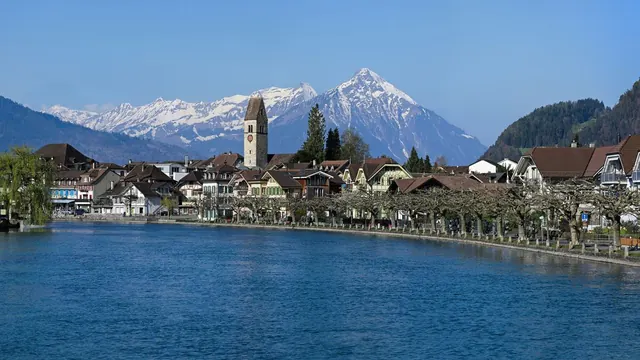
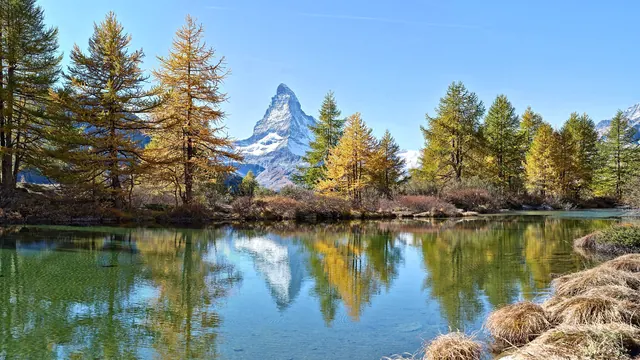
Choose the Swiss Alps if the mountains are the point. The country around the Jungfrau, the Matterhorn and the Engadine is among the finest anywhere. Trains and cable cars put high trails within reach of almost anyone, and the car-free villages and thermal baths suit a quiet, restorative trip. The Alps also work in winter as a ski destination, which Tuscany cannot offer. In return you get very high prices, a narrow cuisine and calm evenings.
Choose Tuscany for
- culture and sights
- beaches
- food and drink
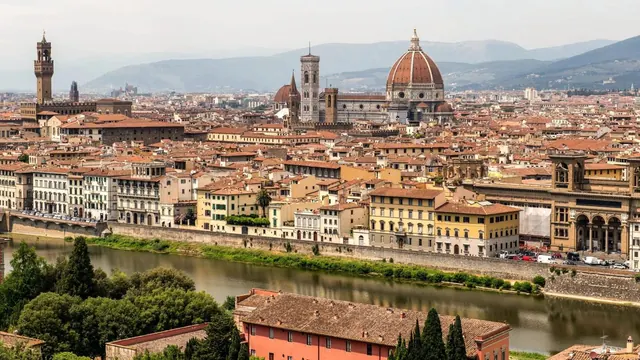
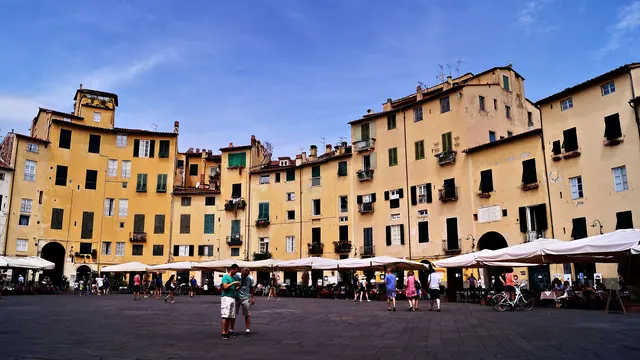
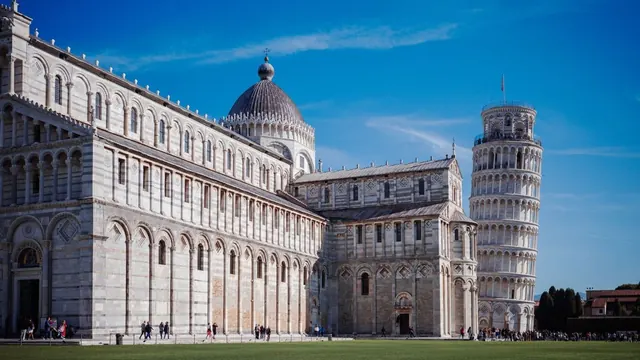
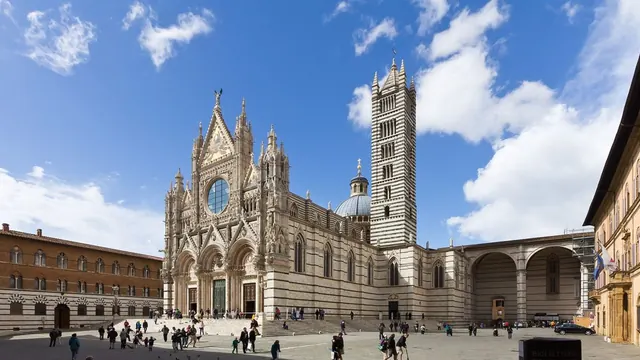
Tuscany is the trip for art, food and old towns. Florence, Siena, Pisa and a string of hill towns hold the Renaissance in a density the Alps cannot come close to. The cooking and wine are among Italy's best, and the coast on Elba and in the Maremma adds proper beach days in summer. Expect to drive once you leave the rail line, and to spend a lot, though less than in Switzerland.
Scoreboard
Twelve categories on one fixed scale from 0 to 100. The shaded stretch is the gap between the two.
Your match
Pick a travel style or drag the sliders, and both match scores follow your weighting.
Wins on nature and the outdoors and getting around with your weighting.
Wins on culture and sights and beaches with your weighting.
What matters to you?
Category by category
What the scores mean for a trip.
Beaches & swimming
Tuscany has a real sea coast and the Alps do not. Elba's sandy bays, the pine-backed beaches of the Maremma and the long rows of beach clubs in Versilia make for a proper summer of swimming from June to late September.
The Alps offer lake bathing instead. There are clean, cool lidos on Lake Thun and Lake Brienz, warmer water on the Ticino lakes, and the lovely Caumasee near Flims. It is a pleasant swim after a hike, not a reason to go.
Food & drink
Tuscany eats far better and with more range. Florence has lampredotto carts, the markets of San Lorenzo and Sant'Ambrogio, and trattorias in Oltrarno. The wine runs from Chianti Classico to Brunello and Bolgheri, and you can taste it at the estates themselves.
The Alps are cheese country, with fondue, raclette and rösti eaten on terraces at the top of the lifts. Valais grows grapes such as Petite Arvine that rarely leave Switzerland. Beyond that, most villages offer little more than a few hotel dining rooms, and there is hardly any street food or market life.
Culture & sights
This is the widest gap between the two. Tuscany is where the Renaissance began. Florence has the Uffizi, the Accademia and Brunelleschi's dome, and beyond it are Siena's Campo, Pisa's cathedral square and hill towns such as San Gimignano and Pienza. There is enough to build a whole trip on sightseeing.
In the Alps the heritage is part of the landscape: the sgraffito houses of the Engadine, the castles of Sion and Bellinzona, the Carolingian frescoes at Müstair and the Albula and Bernina railway lines. These are good sights to fit between walks, not a reason to travel.
Nightlife
Neither is a nightlife destination, and they come alive in opposite seasons. In the Alps, going out means winter après-ski in a few resorts, above all Verbier and Zermatt. The summer hiking villages are asleep by eleven.
Tuscany's evenings are mostly long dinners and a drink in the piazza afterwards. Florence has students on the steps of Santo Spirito all year, and in summer the Versilia beach clubs dance until dawn. Choose the season first, then the place.
Nature & outdoors
The Alps lead here, and on a far larger scale. Lifts carry walkers up beneath the Eiger, Mönch and Jungfrau, the Matterhorn and the Aletsch glacier, and huts link the trails. The Swiss National Park in the Engadine, reached by road and postbus, adds ibex and chamois. In winter the same mountains hold some of the best ski areas anywhere.
Tuscany's landscape is gentler and mostly farmed. The cypress lanes of the Val d'Orcia and the Crete Senesi suit slow cycling and walking from town to town. Its wilder side, in the Apuan Alps and the Maremma park, offers good walking but nothing on the Alpine scale.
Day trips
Tuscany offers more outings than one stay can hold. From Florence or Chianti, Siena, Lucca, Pisa and San Gimignano are all close. Bologna, Assisi and the Cinque Terre lie just beyond the border, though the smaller hill towns are much easier with a car.
From the Bernese Oberland, trains reach Bern, Thun and Lucerne, with Gruyères and the Lavaux vineyards further west. These are pleasant and easy outings, but fewer of them are worth a trip in their own right.
Good for families
The Alps are the slightly easier choice with children. Cable cars, cogwheel trains and lake steamers are an outing in themselves, and summer toboggan runs and adventure playgrounds wait at the top of the lifts. In car-free villages such as Wengen, children can walk about freely.
Tuscany works best split between a farmhouse with a pool and the shallow, lifeguarded beaches of Versilia or Elba, and children are welcome at dinner however late it runs. Florence's galleries and the July heat are harder going for small children.
Getting around
The Alps are far easier without a car. Trains, postbuses, steamers and cable cars run on connected timetables to almost every village. The catch is distance between regions: getting from the Bernese Oberland to the Engadine takes a long day.
In Tuscany you can only manage without a car along the rail line that links Florence, Pisa, Lucca and Viareggio. Chianti, the Val d'Orcia and the Maremma need a car, and in the old towns you park outside the walls and walk in.
Shopping & style
Tuscany is much the better place to shop. Florence has leather workshops around Santa Croce, goldsmiths on the Ponte Vecchio and paper-makers in Oltrarno. Around the region, each town has its own craft, such as alabaster in Volterra and ceramics in Montelupo.
In the Alps, shopping means the luxury boutiques of St Moritz and Gstaad, the watch and mountain-gear shops of Zermatt and Interlaken, and cheese, wine and woodcarving to take home. There is little else.
Affordability
Both are expensive, but the Alps cost far more. Hotels in Zermatt or St Moritz, meals on the mountain and the cable cars themselves are all priced well above European norms. Self-catering and travel passes help only a little.
In Tuscany the big costs are hotels in Florence, villas in Chianti and the beach clubs of Versilia. Trattoria meals and wine from the cellar door are reasonable, though, and Lucca, Arezzo and the Maremma cost noticeably less.
Live music & performing arts
Tuscany has more to see, and across more of the year. Florence has its own opera house and orchestra for the Maggio Musicale, and drama at the Teatro della Pergola. Lucca holds Puccini recitals all year, and his operas are staged by the lake at Torre del Lago every summer.
Music in the Alps comes mostly in summer festivals, notably at Verbier and the Menuhin Festival around Gstaad. At other times there is little beyond brass bands and alphorns, and there is no resident opera or theatre.
Wellness & relaxation
Both are excellent for slowing down, and both have hot springs, so the difference is the setting. In the Alps you bathe in the mountains, at Leukerbad under its cliffs or in the stone bath at Vals, and the car-free villages add clean air and quiet nights.
In Tuscany you bathe in the countryside, from the terraced pools at Saturnia to the medieval bath at Bagno Vignoni. A restful stay there means a farmhouse in the Val d'Orcia with long lunches, not Florence in summer.
When should you go?
Pick your month. The climate figures are measured averages, not a forecast.
Swiss Alps in July
Tuscany in July
Daytime high, °C
Rainfall in the month, mm
Where the figures come from
Swiss Alps has no rain gauge within 25 km of the centre, so its rainfall comes from a gridded climate dataset read at the destination rather than from a gauge further away.
Swiss Alps's sunshine is measured 66 km from the centre, at Sion.
Tuscany has no rain gauge within 25 km of the centre, so its rainfall comes from a gridded climate dataset read at the destination rather than from a gauge further away.
Tuscany's sunshine is measured 71 km from the centre, at Pisa / S. Giusto.
Temperature and rainfall are climate normals, averaged over the years shown. Swiss Alps: 2005-2020 (sunshine 1961-1990, rainfall 1991-2020) normals, Meiringen / Unterbach (19.5 km from centre). Tuscany: 1995-2020 (sunshine 1991-2020, rainfall 1991-2020) normals, Firenze / Peretola (5.6 km from centre).
The Alps are at their best for walking from June to August. Highs in the valleys where most visitors stay reach the low twenties, about 24°C in July, and the high passes are open. September is cooler but still good hiking weather. Summer is also the wettest part of the year, at around 125mm a month from May to August, so expect some grey afternoons. From December to February highs stay a few degrees above freezing, and that is the heart of the ski season. March and April warm up slowly, and late autumn turns cold and grey.
Tuscany runs the other way. July and August reach about 33°C, which suits the beach on Elba or in the Maremma but is tiring in Florence and the hill towns. May, June and September give the best balance for sightseeing, and October is still mild. The rain comes in autumn and peaks in November at about 124mm. Winters are cool but far milder than in the Alps.
Which traveller are you?
On an outdoors trip, the Swiss Alps win easily. Marked trails start from cable-car stations below the Eiger and the Matterhorn, with glaciers close at hand. Winter brings some of the best skiing anywhere. Tuscany's cycling country and Apuan ridges are gentler.
For a culture and arts trip, Tuscany is the obvious choice. Florence alone has the Uffizi, the David and Brunelleschi's dome, Siena and Pisa are close by, and Puccini's operas fill summer evenings at Torre del Lago. The Alps offer painted villages and castles, but no great museums.
On a trip on a tight budget, Tuscany is the easier choice. In the Alps, even a hostel near Interlaken and supermarket picnics still leave the costly lifts and mountain railways to pay for. In Tuscany, a spring or autumn base on the regional rail line spares you car hire and Florence hotel prices.
Before you go
| Measure | Swiss Alps | Tuscany |
|---|---|---|
| Official language | French, German, Italian, Romansh | Italian |
| Currency | Swiss Franc (CHF) | Euro (EUR) |
| Sockets | CJ230 V, 50 Hz | CFL230 V, 50 Hz |
| Driving side | Right | Right |
| Time zone | UTC+1, UTC+2 in summer | UTC+1, UTC+2 in summer |
| Emergency number | 112 | 112 |
| Main airport | Zürich Airport (ZRH)226 non-stop destinations | Florence Airport, Peretola (FLR)46 non-stop destinations |
| Public holidays this year | 10 days | 13 days |
By the numbers
| Measure | Swiss Alps | Tuscany |
|---|---|---|
| Population | - | 3,729,641 |
Where else could you go?
Every comparison below shares a destination with this one, so you can follow Swiss Alps or Tuscany somewhere new.
- French Alpsvs Swiss Alps
- Umbriavs Tuscany
- Lake Comovs Swiss Alps
- Cinque Terrevs Tuscany
- Black Forestvs Swiss Alps
- Lake Gardavs Tuscany