United States
Albuquerque
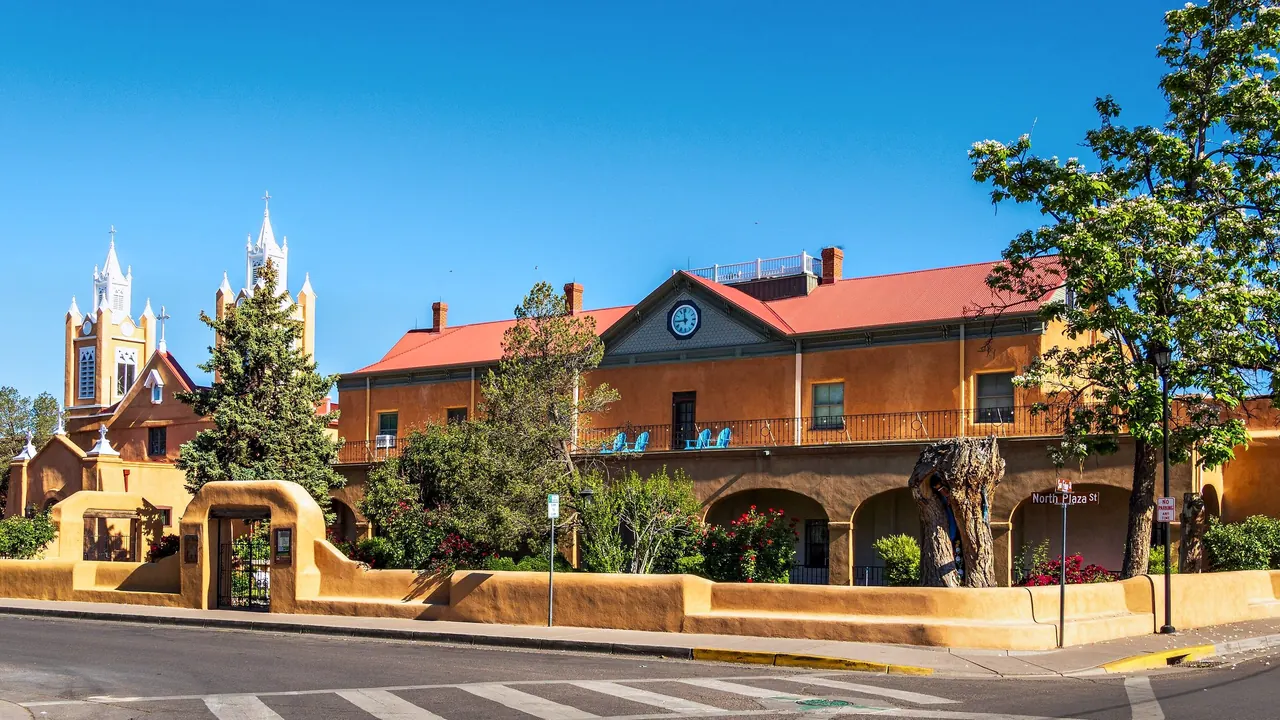
San Felipe de Neri in Old Town
- Nature & outdoors70
- Day trips60
- Families60
Photo: dconvertini, CC BY-SA 2.0, cropped
Match
42
Every category weighted equally
- Beach & sun39
- Culture & arts42
- Food & nightlife40
- Family trip44
- Outdoors48
- Relax & unwind41
- Shopping & style42
- On a budget42
Albuquerque in twelve categories
Our verdict on each, scored 0 to 100 against the same fixed benchmark cities, so a score means the same thing on every page.
Beaches & swimming. Scores 6 out of 100.
Food & drink. Scores 58 out of 100.
Culture & sights. Scores 42 out of 100.
Nightlife. Scores 34 out of 100.
Nature & outdoors. Scores 70 out of 100.
Day trips. Scores 60 out of 100.
Good for families. Scores 60 out of 100.
Getting around. Scores 22 out of 100.
Shopping & style. Scores 42 out of 100.
Affordability. Scores 42 out of 100.
Live music & performing arts. Scores 40 out of 100.
Wellness & relaxation. Scores 32 out of 100.
Albuquerque category by category
Beaches & swimming
6Albuquerque sits on a high desert plateau around 1,600m above sea level, roughly 1,000km from the nearest ocean. The Rio Grande runs through the city, but it is shallow, silty and fast in places, and not used for swimming. Locals cool off in hotel and public pools, or drive out to reservoirs such as Cochiti Lake for a summer afternoon. Anyone who wants sand and sea should plan it as a separate trip.
Food & drink
58The reason to eat here is New Mexican cooking, a regional cuisine built around chile grown in the state. Every menu asks the same question, red or green, and "Christmas" gets you both. Expect carne adovada, blue corn enchiladas, posole, stuffed sopaipillas with honey on the table, and breakfast burritos wrapped to take away. The best of it comes from long-running family places in the South Valley, the North Valley and along old Route 66, rather than from smart dining rooms.
In late summer the smell of chile roasting in rotating drums outside supermarkets and stands fills the city. There is a solid craft brewery culture spread across converted industrial buildings and the Nob Hill and downtown areas. Beyond that the range is narrow: fine dining is limited, and the international choice is that of a mid-sized American city.
Culture & sights
42The historic core is Old Town, a small plaza of adobe buildings around the San Felipe de Neri church, which dates from 1793. Nearby, the Albuquerque Museum covers the city's three centuries, and the Indian Pueblo Cultural Center, run by New Mexico's nineteen Pueblos, gives the best introduction to the region's Native cultures. The National Hispanic Cultural Center in the Barelas neighbourhood is a large campus of art and history.
The city's other stories are told at the National Museum of Nuclear Science and History and along Central Avenue, the old Route 66, where neon motel signs and the Pueblo Deco KiMo Theatre survive. Petroglyph National Monument, on the western edge, preserves thousands of images carved into volcanic rock. It adds up to a rewarding couple of days rather than a dense city of landmarks.
Nightlife
34Going out is concentrated in two places along Central Avenue. Downtown has a strip of bars and a few dance clubs that fill on Friday and Saturday nights and can get rowdy late, while Nob Hill near the university is calmer, with cocktail bars and taprooms. Much of the evening social life happens in brewery taprooms and on patios, which suits the dry, warm nights from spring to autumn. Midweek the city is quiet, and nobody comes here for the nightlife.
Nature & outdoors
70The Sandia Mountains form the city's eastern wall, turning pink at sunset, which is where the name comes from. An aerial tramway climbs from the foothills to the crest at over 3,000m, and from there hiking trails run through pine and fir forest with views across a huge sweep of desert. The foothills trails start at the edge of suburban streets, and the steep La Luz Trail climbs the whole mountain on foot.
Along the Rio Grande, the cottonwood forest known as the bosque has shaded paths for walking, birdwatching and cycling, and cranes winter on the river nearby. West of the river lie volcanic cones and lava escarpments. Further out, the Jemez Mountains and the canyon country are within a couple of hours by car. Summers are hot at low elevations, so spring and autumn are the best seasons, and a car is needed for almost everything.
Day trips
60Santa Fe is the one day out that stands with the best, about an hour north by car or an hour and a half on the commuter train. It is an adobe state capital with a historic plaza, the Palace of the Governors, the galleries of Canyon Road and serious museums of art and Native culture, enough to fill a full day on its own.
Beyond it the options are real but scattered, and all of them need a car. Acoma Pueblo, the Sky City on its mesa top about an hour west, is among the oldest continuously inhabited settlements in North America and is seen on guided tours. Bandelier National Monument has cliff dwellings cut into canyon walls near Los Alamos, the high road towards Taos passes the pilgrimage church at Chimayo, and the old mining villages of Madrid and Cerrillos line the Turquoise Trail. The Salinas Pueblo Missions to the south-east keep the stone shells of 17th-century churches. Taos and its pueblo lie a little beyond two hours and work better as an overnight stay.
Good for families
60Children are well served by the ABQ BioPark, which combines a zoo, an aquarium and a botanic garden along the Rio Grande, and by Explora, a hands-on science centre beside the natural history museum with its dinosaur halls in Old Town's museum district. The tramway up the Sandia Mountains is an adventure in itself, and the nuclear science museum has rockets and aircraft outside.
The great family event is the International Balloon Fiesta each October, when hundreds of hot-air balloons rise together at dawn over the city's north side. Daily life is relaxed and informal, restaurants are welcoming to children and hotels are spacious. The drawbacks are distance, since everything is reached by car, and the strong summer sun at altitude.
Getting around
22Albuquerque is a low-rise city spread across a wide valley, laid out for the car. Old Town is easy on foot, and the bus line along Central Avenue connects it with downtown, the university and Nob Hill, but the mountains, the BioPark's outlying parts, the petroglyphs and nearly every day trip need a car. A commuter rail line runs north to Santa Fe. Most visitors rent a car at the airport, which is close to the centre, and find driving and parking straightforward.
Shopping & style
42The shopping worth seeking out is Native American and Southwestern craft: silver and turquoise jewellery, Pueblo pottery, Navajo weaving and kachina carvings. The shops around Old Town's plaza and the Indian Pueblo Cultural Center are the main places, and buying directly from Native artists or reputable dealers is the way to be sure of authenticity. Dried chile ristras and local foods make easy souvenirs.
Nob Hill has a short stretch of independent boutiques and vintage shops along Central Avenue. Beyond that it is standard American retail in suburban malls, with no luxury or fashion street to speak of.
Affordability
42Albuquerque is one of the less expensive cities in the United States, but a visit here is not a budget trip. Hotels are plentiful and fairly priced for most of the year, though a comfortable mid-range room costs much the same as one in a European capital. Casual New Mexican restaurants serve generous plates, but sales tax and the customary tip add a good share to every bill.
The largest cost is the car rental that almost every visit needs, along with fuel and the occasional parking charge. Old Town, the petroglyphs and the foothills trails cost little or nothing, which helps. During the October Balloon Fiesta rooms are scarce and rates climb sharply, so that week costs far more than the rest of the year.
Live music & performing arts
40Popejoy Hall at the university brings touring Broadway musicals and hosts the city's philharmonic orchestra, and the restored KiMo Theatre downtown stages film, theatre and concerts in a striking Pueblo Deco interior. The city has an unexpected depth in flamenco, with a long-established institute and an annual festival that draws performers from Spain.
At the Indian Pueblo Cultural Center, traditional dances are performed for visitors on weekends, a rare chance to see living Native performance. Live music otherwise means local bands in bars and breweries and touring acts at an outdoor amphitheatre. The region's most celebrated stage, the open-air opera house in the hills above Santa Fe, is an evening drive away in summer.
Wellness & relaxation
32There is no bathing culture in the city itself, and relaxation mostly means a resort or hotel spa, several of them on Pueblo lands just outside town with views of the mountains. The real draw is the hot springs of northern New Mexico: the village of Jemez Springs, about an hour and a quarter away, has mineral pools, and Japanese-style bathhouses and older springs lie around Santa Fe and further north. The city's pace is unhurried, and the dry air, big skies and quiet evenings suit a slower stay, but people come here for the landscape and the food rather than to rest.
When should you go?
Pick a month to see what it is like. The climate figures are measured averages, not a forecast.
Albuquerque in July
Daytime high, °C
Rainfall in the month, mm
The whole year
Shaded against this city’s own year: the deepest cell is its best month for that figure and the palest its weakest.
Temperature and rainfall are climate normals, averaged over the years shown. Albuquerque: 1991-2020 normals, Albuquerque International Airport (7.3 km from centre).
Before you go
| Measure | Albuquerque |
|---|---|
| Currency | US Dollar (USD) |
| Sockets | AB120 V, 60 Hz |
| Driving side | Right |
| Time zone | UTC-7, UTC-6 in summer |
| Emergency number | 911 |
| Elevation | 1,619 m |
| Main airport | Albuquerque International Sunport (ABQ)6 km from centre27 non-stop destinations |
| Public holidays this year | 13 days |
By the numbers
| Measure | Albuquerque |
|---|---|
| City population | 564,559 |
| People per km² | 1,150 |
| Museums within 10 km | 10 |
| UNESCO World Heritage sites within 50 km | 0 |
Compare Albuquerque with
Every comparison with a written verdict behind it.
- Alta, Utah
- Anaheim
- Aspen
- Austin
- Beaver Creek
- Big Bear Lake
- Big Sky
- Boulder
- Breckenridge
- Colorado Springs
- Copper Mountain
- Dallas
- Deer Valley
- Denver
- Durango, Colorado
- Estes Park
- Flagstaff
- Huntington Beach
- Jackson Hole
- Kansas City
- Keystone
- Laguna Beach
- Las Vegas
- Los Angeles
- Mammoth Lakes
- Moab
- Newport Beach
- Page, Arizona
- Palm Desert
- Palm Springs
- Park City
- Phoenix
- Rapid City
- Salt Lake City
- San Antonio
- San Diego
- Santa Barbara
- Santa Fe
- Santa Monica
- Scottsdale
- Sedona
- Snowbird
- Steamboat Springs
- Sun Valley
- Taos
- Telluride
- Tucson
- Vail
- Winter Park, Colorado