Vietnam
Hoi An
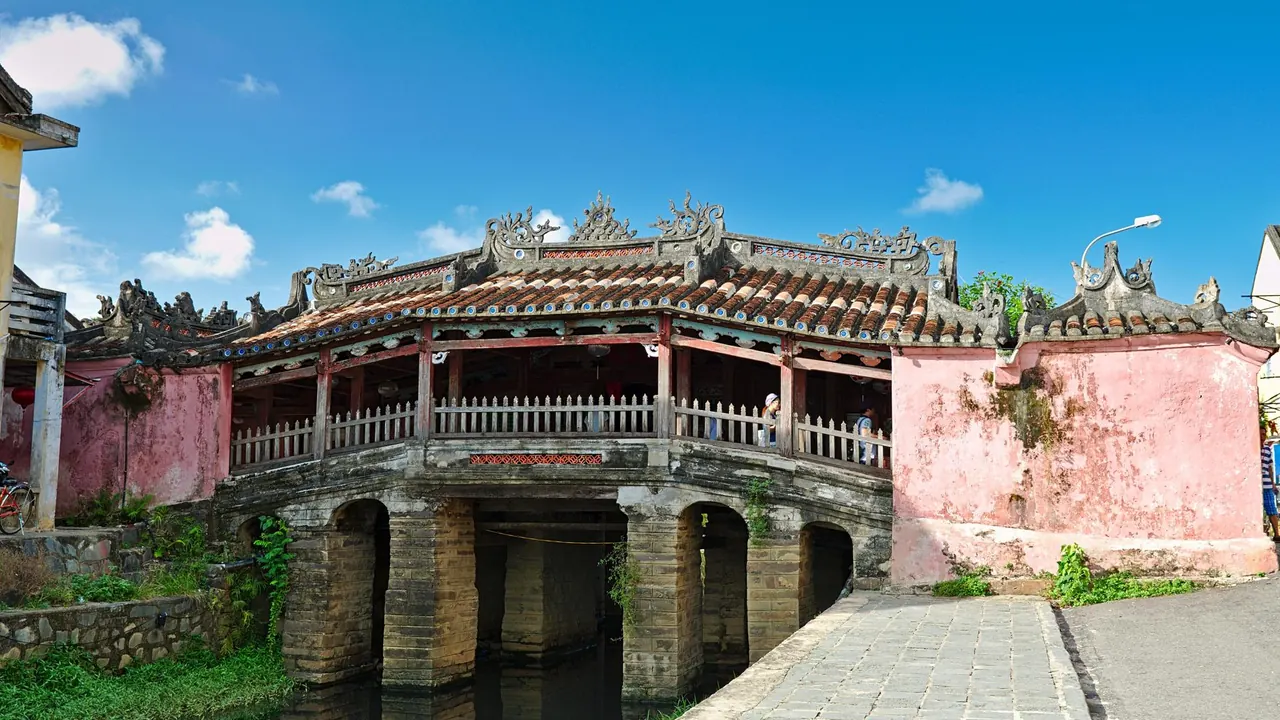
The Japanese Covered Bridge
- Affordable cities88
- Beaches72
- Food & drink68
Photo: François Guerraz, CC BY-SA 3.0, cropped
Match
57
Every category weighted equally
- Beach & sun62
- Culture & arts54
- Food & nightlife53
- Family trip63
- Outdoors61
- Relax & unwind62
- Shopping & style55
- On a budget61
Hoi An in twelve categories
Our verdict on each, scored 0 to 100 against the same fixed benchmark cities, so a score means the same thing on every page.
Beaches & swimming. Scores 72 out of 100.
Food & drink. Scores 68 out of 100.
Culture & sights. Scores 66 out of 100.
Nightlife. Scores 28 out of 100.
Nature & outdoors. Scores 63 out of 100.
Day trips. Scores 50 out of 100.
Good for families. Scores 58 out of 100.
Getting around. Scores 48 out of 100.
Shopping & style. Scores 57 out of 100.
Affordability. Scores 88 out of 100.
Live music & performing arts. Scores 24 out of 100.
Wellness & relaxation. Scores 65 out of 100.
Hoi An category by category
Beaches & swimming
72Hoi An sits a short bicycle ride from a long, straight run of pale sand facing the East Sea. An Bang is the beach most visitors use, about 5km from the old town through rice fields, with deckchairs, seafood shacks and a relaxed, low-rise feel. The coast continues north toward Da Nang as an almost unbroken beach, so quieter stretches are easy to find.
From spring to late summer the water is warm, around 28°C, and usually calm enough for easy swimming. In autumn and early winter the monsoon brings big waves, strong currents and red flags, and the beach becomes something to walk on rather than swim from. Many visitors split their stay between a riverside room in town and a few days by the sea, which works well.
Food & drink
68Hoi An has a cooking of its own that is worth the trip. Cao lau, chewy noodles with pork, greens and crackling said to depend on water from local wells, is found properly only here. White rose dumplings, Hoi An chicken rice, mi Quang and the town's famously stuffed banh mi round out a short but distinctive list, eaten at plastic stools, market counters and family-run shopfronts for very little.
The central market by the river is the place to start the day, with noodle stalls behind the produce. Cooking classes that begin with a market visit or a trip to the Tra Que vegetable village are a local speciality. The weakness is range: the old town's riverfront restaurants repeat the same menus for visitors, and international or fine dining is thin.
Culture & sights
66The old town is the sight. A former trading port on the Thu Bon river, it keeps hundreds of wooden merchant houses, tiled roofs and narrow streets with Chinese, Japanese and Vietnamese influences layered together. The covered Japanese Bridge, the ornate Chinese assembly halls of the Fujian and Cantonese communities, family chapels and restored shophouses whose owners still live upstairs are the main stops.
Several small museums cover ceramics from the trade routes, the Sa Huynh culture and folk life, but none is large. The whole ensemble can be seen in a day or two of slow walking, and it is best early in the morning or after dark, when silk lanterns light the streets and the crowds ease.
Nightlife
28Evenings in Hoi An are about strolling the lantern-lit riverbank, floating a paper candle on the water and lingering over a drink rather than going out. Across the river on An Hoi islet a handful of loud backpacker bars keep going a little later, and An Bang has a few relaxed beach bars. There are no real clubs, and the old town is quiet well before midnight. Those after a big night head to Da Nang.
Nature & outdoors
63The countryside around Hoi An is flat and green: rice paddies, vegetable gardens and water buffalo, best seen by bicycle on quiet lanes out to the beach or the Tra Que gardens. South-east of town the nipa palm waterways of Cam Thanh are explored in round coconut basket boats, and the Thu Bon river invites sunset boat trips.
Offshore, the Cham Islands are a protected marine area with snorkelling and diving over coral, best in the calm months. Further afield, the Marble Mountains, the forested Son Tra peninsula with its langur monkeys, and the switchbacks of the Hai Van Pass give more dramatic scenery within about an hour and a half. The wet, stormy autumn limits much of this.
Day trips
50The one outing of real weight is My Son, a jungle valley of ruined Cham temples built between the 4th and 13th centuries, about an hour inland. Go early, before the heat and the tour groups. Da Nang, about 45 minutes north, makes a second day: the Museum of Cham Sculpture holds the finest collection of Cham art anywhere, and the Marble Mountains on the way have cave shrines and pagodas.
After that the list thins quickly. The Cham Islands have a small fishing village and temple beside their reefs, and Ba Na Hills is a themed hilltop resort reached by cable car, more amusement than heritage. The former imperial capital of Hue is about three hours each way, too far for a comfortable day and better as an overnight stop.
Good for families
58Hoi An is gentle with children by Vietnamese standards. The old town is small and largely walkable, Vietnamese culture is warm toward children, and hands-on activities suit them well: making a silk lantern, spinning in a basket boat, a market-and-cooking class, cycling through rice fields. Resorts between town and the beach have pools and space, and the sandy shore is easy for young swimmers in the calm season.
A large theme park with a safari park sits along the coast south of town, and Da Nang has more. The drawbacks are midday heat, motorbikes in the streets outside the pedestrian core, narrow broken pavements and stormy weather in autumn.
Getting around
48The old town is small and much of it is closed to motor traffic for long stretches of the day, so walking is easy. Bicycles are the local way to go further: many hotels lend them, and the beach, the rice fields and outlying villages are all within an easy, flat ride. There is no useful public transport for visitors, so trips to Da Nang, the airport, My Son or the Marble Mountains mean a taxi, ride-hailing app, private driver or tour. Outside the centre, heavy motorbike traffic and patchy pavements make walking less pleasant.
Shopping & style
57Hoi An is known above all for tailoring. Hundreds of workshops will copy a garment or make a suit, dress or coat to measure in a day or two, with fittings in between, and leather shoes and bags are made the same way. Quality varies a great deal, so allow time for several fittings rather than ordering on the last day.
Silk lanterns in every colour, ceramics, wood carvings and embroidered goods fill the old town, and the riverside night market on An Hoi adds street stalls. There is little beyond this: no luxury shopping or department stores, and many shops sell the same stock.
Affordability
88Hoi An is very cheap for a visitor. Family-run homestays and small hotels with pools cost a fraction of Western prices, street food and market meals are almost nominal, and bicycles are often free. The old town charges an entry fee for its heritage sites, the restaurants facing the river cost more for less, and beachfront resorts can be priced at international levels, but a comfortable stay remains easy on a modest budget.
Live music & performing arts
24Live performance is limited. In the evenings the old town hosts bai choi, a central Vietnamese folk game of sung verses and cards that visitors can join, and a traditional arts performance house stages short shows of folk music and dance. A large outdoor spectacle on an island in the river retells the town's history for visitors. There is no theatre, concert hall or regular live-music scene; for anything more, Da Nang is the nearest option.
Wellness & relaxation
65Hoi An suits slowing down. Days run at the pace of the river and the bicycle, rice fields and palm groves sit just beyond the old town, and many resorts between town and the beach are built for doing very little. Spas and massage rooms line the streets at every level, from simple foot-massage parlours to resort treatment centres, and yoga classes are easy to find.
There is no bathing culture here, no hot springs or bathhouses, so wellness means massage, pools and quiet surroundings. The old town itself gets crowded in the evenings, so staying out among the paddies or by the sea gives the calmer stay.
When should you go?
Pick a month to see what it is like. The climate figures are measured averages, not a forecast.
Hoi An in July
Daytime high, °C
Rainfall in the month, mm
The whole year
Shaded against this city’s own year: the deepest cell is its best month for that figure and the palest its weakest.
Temperature and rainfall are climate normals, averaged over the years shown. Hoi An: 1991-2020 normals, Da Nang (23.5 km from centre).
Before you go
| Measure | Hoi An |
|---|---|
| Official language | Vietnamese |
| Currency | Dong (VND) |
| Sockets | ACFG220 V, 50 Hz |
| Driving side | Right |
| Time zone | UTC+7 |
| Emergency number | Police 113, ambulance 115, fire 114 |
| Elevation | 13 m |
| Main airport | Da Nang International Airport (DAD)23 km from centre47 non-stop destinations |
By the numbers
| Measure | Hoi An |
|---|---|
| City population | 121,716 |
| Museums within 10 km | 5 |
| UNESCO World Heritage sites within 50 km | 2 |
| Swim season, months above 21 °C | 12 months |
Compare Hoi An with
Every comparison with a written verdict behind it.