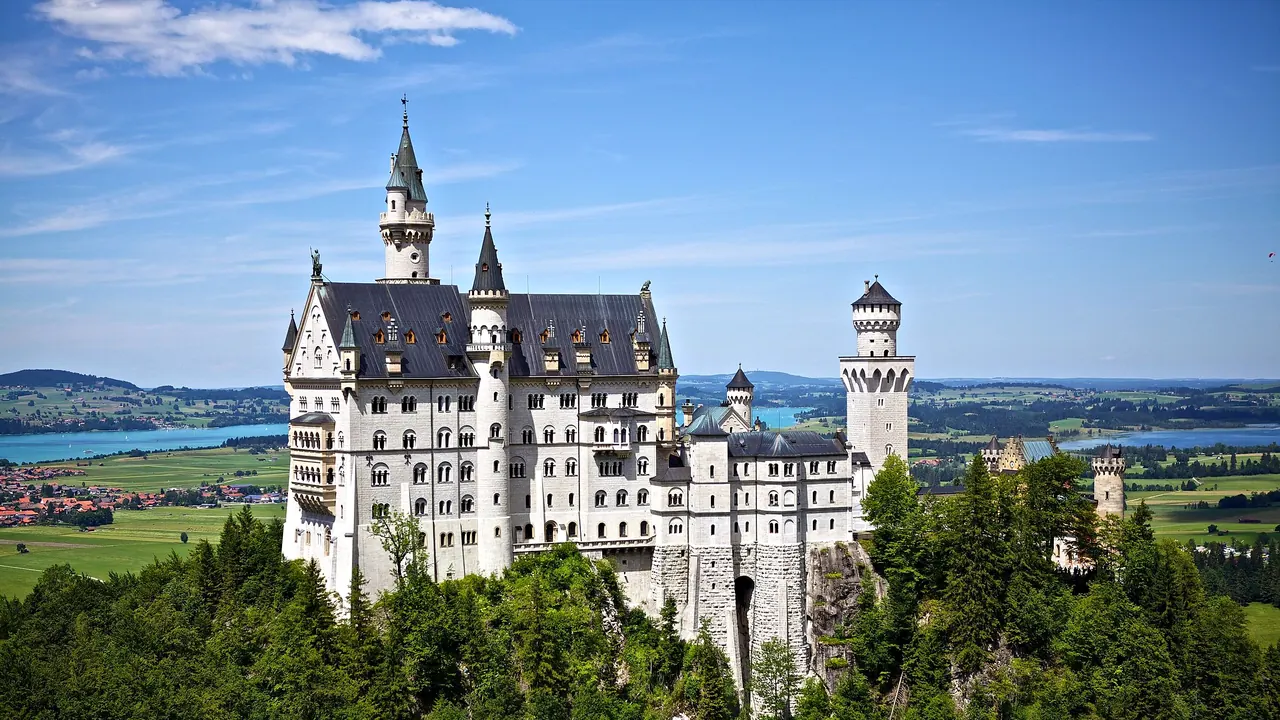
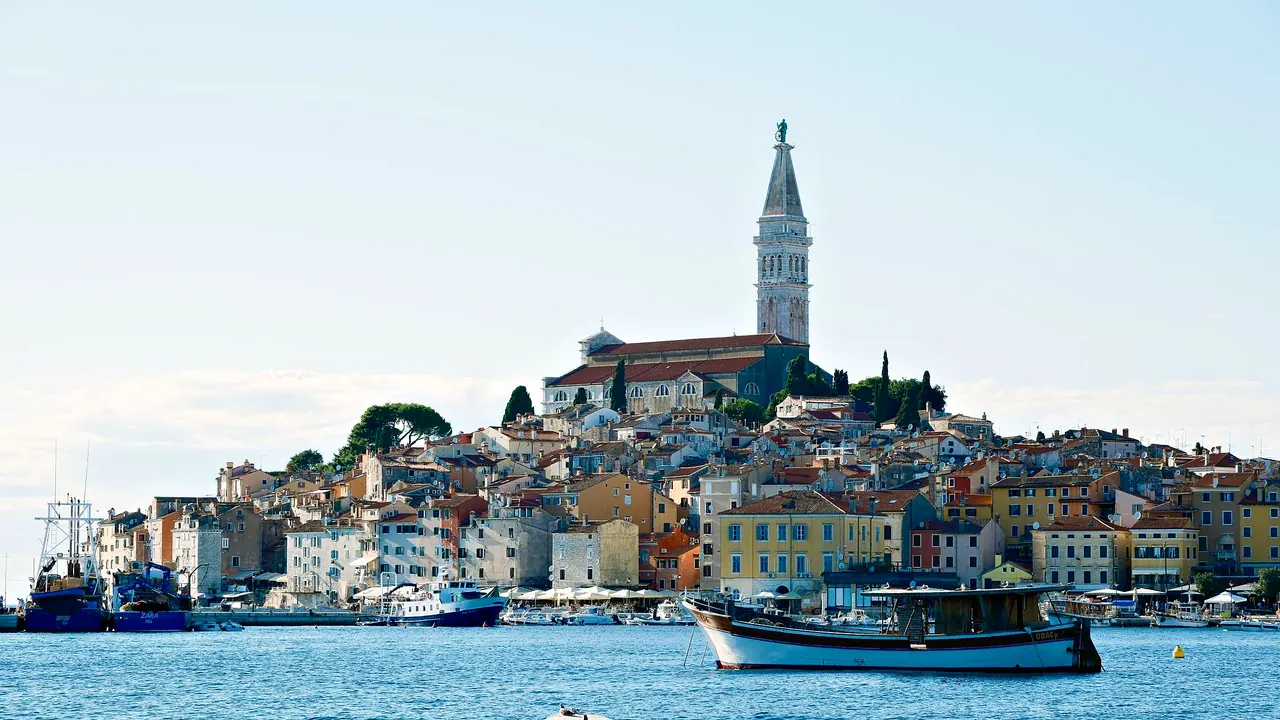
Photos: Bavaria by cameralends, CC0; Istria by Ramon Karolan, Pexels License.
Bavaria or Istria?
Our verdict in twelve categories, each scored against the same fixed benchmark cities, and the climate month by month, so you can choose for your trip.
Choose Bavaria for
- live music and the arts
- wellness
- shopping
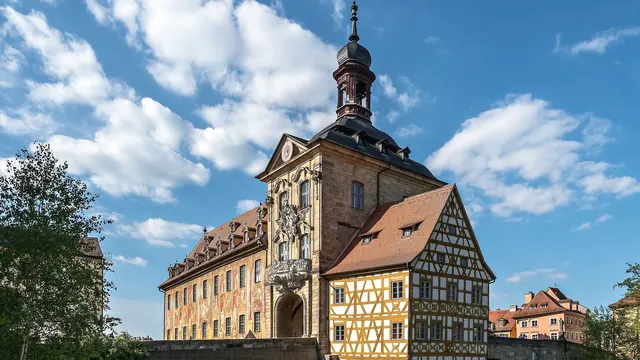
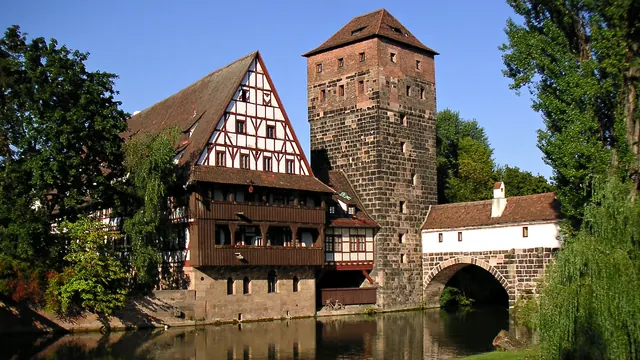
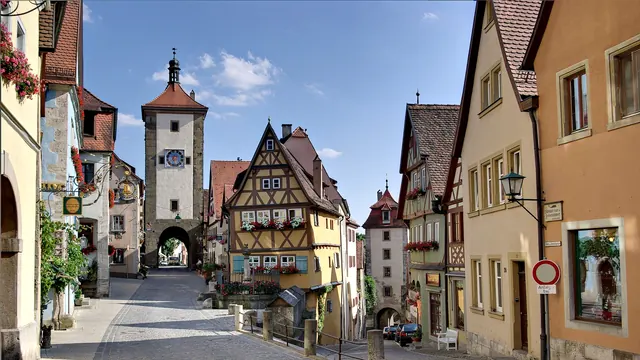
Bavaria suits a traveller who wants plenty to fill every day: Munich's galleries and opera, the medieval old towns of Bamberg and Regensburg, Ludwig II's castles and the Alps along the southern border. It works best if you split the trip between a city base and a mountain or lake base. You can get around well by train, and it is the easier choice with children or for a proper spa stay. Summer brings lake swimming, but not a beach vacation.
Choose Istria for
- beaches
- food and drink
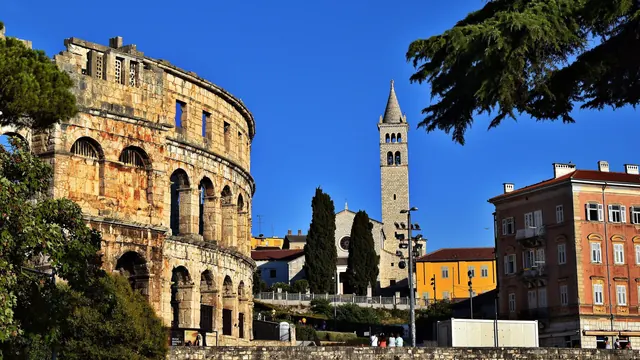
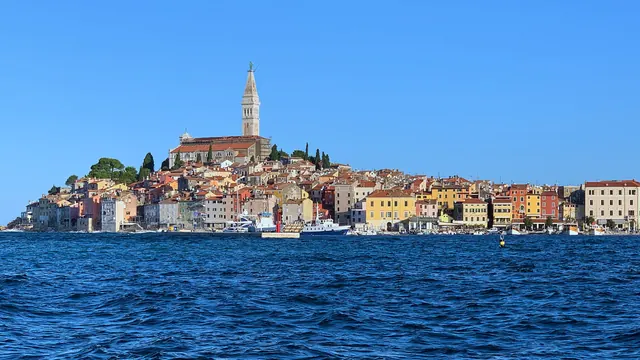
Istria is the pick for a warm Adriatic summer built around the sea and the table. Clear water off the rocky coves of Kamenjak and Rovinj, truffles and Malvazija in the hill towns, and Pula's Roman Arena make for a slower, smaller trip, best done with a car. Expect long dinners rather than late nights, and very little in the way of concerts or shopping.
Scoreboard
Twelve categories on one fixed scale from 0 to 100. The shaded stretch is the gap between the two.
Your match
Pick a travel style or drag the sliders, and both match scores follow your weighting.
Wins on live music and the arts and wellness with your weighting.
Wins on beaches and food and drink with your weighting.
What matters to you?
Category by category
What the scores mean for a trip.
Beaches & swimming
On this one Istria is well ahead. Bavaria's swimming is in lakes: grassy meadows and wooden jetties on the Starnberger See or Chiemsee, and the Isar's gravel banks in Munich. That is pleasant in a warm spell, but the season is short and depends on the weather.
Istria has a real sea, with very clear Adriatic water off rocky coves, pine-covered headlands and concrete bathing platforms, warm enough to swim from June to late September. Sand is scarce, so bring water shoes, and head to the bays near Medulin if you want shallow water for paddling.
Food & drink
Both reward a curious eater, but in different ways. Bavarian food is built around drink: Munich's beer gardens and beer halls, Bamberg's smoked beer and Franconian Silvaner. The cooking is hearty, with roast pork, dumplings and sausages. Munich has good fine dining, but country inns serve much the same menu.
Istria has a slight edge for range and ingredients. Truffles from the forests of the Mirna valley, oysters from the Lim Bay, boškarin beef, first-rate olive oil, and Malvazija and Teran tasted in small cellars make a Mediterranean table that changes from the coast to the hills.
Culture & sights
Bavaria's heritage is deeper and broader. Munich alone has the Old Masters, the Blue Rider painters and the Deutsches Museum. Beyond it are the medieval streets of Bamberg and Regensburg, Tiepolo's ceiling in Würzburg and Neuschwanstein, enough for a week of serious sightseeing across several bases.
Istria has fewer sights, but they are striking: Pula's Roman Arena, still at its full height, the gold mosaics of the Euphrasian Basilica in Poreč and the frescoes at Beram. Its museums are small, and the pleasure is in wandering Rovinj and the walled hill towns rather than in galleries.
Nightlife
Bavaria offers more after dark, and nearly all of it is in Munich. There are cocktail bars in Glockenbachviertel, student bars in Schwabing, a reasonable club scene and beer halls that get loud as the evening goes on, and Oktoberfest takes over each autumn.
In Istria, an evening means a long dinner and drinks on the harbour front in Rovinj or Poreč. Pula is the only town with real bar life all year, and the beach clubs close when summer ends.
Nature & outdoors
Bavaria's outdoors are on a much bigger scale. The Alps along its southern edge bring the Zugspitze, the Königssee in Berchtesgaden National Park, hut-to-hut hiking and via ferratas in summer and proper skiing in winter. Further north is the wild woodland of the Bavarian Forest.
Istria is gentler, with vineyards, olive groves and oak valleys, and the ridge of Učka offers its one serious hike. Its strength is cycling, on the old Parenzana railway line and between the hill towns. There is also kayaking at Kamenjak and boat trips into the Lim Bay, all best in spring and autumn.
Day trips
Both make good bases, but Bavaria offers more variety. From Munich, Nuremberg, Regensburg, Salzburg and the lakes are all an easy train ride away. Franconia works as a second base for Bamberg, the Main wine villages and the Romantic Road towns.
Istria's trips are shorter and closer together. From anywhere in the region you can reach the hill towns, the coastal towns and the boat to Brijuni. Across the border you can reach Piran, Trieste and the Postojna and Škocjan caves in Slovenia. A week covers Istria comfortably, where Bavaria could fill two.
Good for families
Bavaria is the easier place to bring children. There are beer gardens with playgrounds, the hands-on children's section of the Deutsches Museum, zoos in Munich and Nuremberg, Legoland at Günzburg and summer toboggan runs, and the summer temperatures are mild.
Istria works best as a seaside family vacation, with campsites and resort villages around Poreč, Umag and Medulin, water parks and a dinosaur park near Funtana. With small children, the rocky beaches, the midsummer heat and the polished cobbles of the old towns make it harder going.
Getting around
Much of Bavaria can be done without a car. Munich's U-Bahn, S-Bahn and trams cover the city, and on a regional day ticket the trains reach Nuremberg, Garmisch, Berchtesgaden and the lakes. Remoter valleys depend on infrequent buses.
In Istria a car is close to essential. Buses link the main coastal towns, but you need your own transport for the hill towns, the wineries and most beaches, and in summer the coast roads are slow and the car parks fill early.
Shopping & style
Munich makes Bavaria worth a real shopping trip, from the luxury houses on Maximilianstrasse to the department stores near Marienplatz and the independent shops of Glockenbach. Elsewhere, Dirndl tailors, Oberammergau woodcarving and the December Christmas markets add character.
Istria's shopping is almost all food and drink: truffle products in Motovun and Buzet, and olive oil and wine bought from the producer. There are a few galleries in Grožnjan and on Rovinj's Grisia street, and little for anyone after fashion.
Affordability
Neither is a cheap destination, and in both the cost depends on where and when you stay. In Bavaria the expense is concentrated in Munich, especially during Oktoberfest and the big trade fairs. Franconian towns, the Bavarian Forest and Alpine guesthouses are moderate, and regional rail tickets keep travel costs down.
In Istria the expensive part is the coast in summer, where rooms in Rovinj and seafood dishes are priced like other Mediterranean resorts in July and August. Campsites, apartments, farm stays inland and the June or September shoulder months bring costs down.
Live music & performing arts
This is where the two differ most. Munich has the Bavarian State Opera, two orchestras of international rank and the rococo Cuvilliés Theatre. In summer, Bayreuth's Wagner festival and Würzburg's Mozart festival add more across the region.
Live performance in Istria is mostly a summer affair: open-air concerts and the film festival in Pula's Arena, and young musicians playing in the squares of Grožnjan. Outside summer there is little beyond Pula's theatre.
Wellness & relaxation
Bavaria has a long spa tradition, and it is good for a full spa vacation. It has the Bad towns, from the colonnades of Bad Kissingen to the brine baths of Bad Reichenhall and the thermal water of Bad Füssing. There are also Kneipp pools, the sauna complex at Erding and well-equipped hotel spas by the lakes, with German-style nude saunas.
Istria's calm comes more from its pace: farmhouse stays among olive groves, long lunches and evening walks above the sea. The sulphur springs at Istarske Toplice are its one historic spa, and otherwise wellness means the spas in the larger resort hotels on the coast.
When should you go?
Pick your month. The climate figures are measured averages, not a forecast.
Bavaria in July
Istria in July
Daytime high, °C
Rainfall in the month, mm
Where the figures come from
Istria's temperatures are measured 57 km from the centre, at Trieste.
Istria has no rain gauge within 25 km of the centre, so its rainfall comes from a gridded climate dataset read at the destination rather than from a gauge further away.
Temperature and rainfall are climate normals, averaged over the years shown. Bavaria: 1991-2020 normals, München (1.9 km from centre). Istria: 1991-2020 normals, Trieste (56.5 km from centre).
Bavaria is at its best from June to September. Around the main visitor bases, highs reach about 25°C in July and August, warm enough to swim in the lakes south of Munich. But May to August is also the wettest part of the year, with the most rain in June at 121mm, so expect showery days and the odd washed-out week. September is drier and still mild, good weather for walking the old towns and the mountain trails, which are always cooler than the lowlands. Winter is cold and grey. It is worth coming then for the Alpine snow and the Christmas markets, but not for long days on foot.
Istria is warmer than Bavaria in every month and sunnier for most of the year. On the coast, highs reach 29°C in July and August. That is fine for the beach but hard going in the hill towns. The sea is warmest in August, at about 26°C. June and September are the best months to combine swimming with walking. The rain comes in autumn, building to 102mm in November, so Istria is wet when Bavaria is dry and dry when Bavaria is wet, and spring is its drier shoulder season. Winters are mild but often grey.
Which traveller are you?
For a beach and sun trip, Istria is the clear choice. Clear Adriatic water, the wild coves of the Kamenjak cape and the resort shores of Poreč and Rovinj give it a real sea season. Bavaria has only lake swimming in a short, changeable summer.
On a culture and arts trip, Bavaria gives you far more for your days and evenings. Munich's Pinakotheken and Residenz, the old towns of Bamberg and Regensburg, and opera and orchestras most nights outweigh Istria's Roman Arena and quiet hill towns.
For a relaxing and wellness trip, Bavaria's long spa tradition wins. It has the Bad towns, the brine baths of Bad Reichenhall, the thermal complex at Erding and spa hotels by the lakes. Istria offers a slow pace and one historic spring, at Istarske Toplice.
Before you go
| Measure | Bavaria | Istria |
|---|---|---|
| Official language | German | Croatian |
| Currency | Euro (EUR) | Euro (EUR) |
| Sockets | CF230 V, 50 Hz | CF230 V, 50 Hz |
| Driving side | Right | Right |
| Time zone | UTC+1, UTC+2 in summer | UTC+1, UTC+2 in summer |
| Emergency number | 112 | 112 |
| Main airport | Munich Airport (MUC)211 non-stop destinations | Pula Airport (PUY)34 non-stop destinations |
| Public holidays this year | 12 days | 14 days |
By the numbers
| Measure | Bavaria | Istria |
|---|---|---|
| Population | 13,038,724 | - |
| Swim season, months above 21 °C | - | 4 months |
Where else could you go?
Every comparison below shares a destination with this one, so you can follow Bavaria or Istria somewhere new.
- Austrian Alpsvs Bavaria
- Plitvice Lakesvs Istria
- Dolomitesvs Bavaria
- Dolomitesvs Istria
- Krkavs Istria
- Tuscanyvs Istria