Bavaria or Tuscany?
Our verdict in twelve categories, each scored against the same fixed benchmark cities, and the climate month by month, so you can choose for your trip.
Choose Bavaria for
- live music and the arts
- families
- getting around
Bavaria suits travellers who want mountains, lakes and an easy, well-connected trip. The Alps along its southern edge give serious hiking in summer and skiing in winter, Munich offers opera and orchestras of international rank, and trains reach most towns and many mountain bases without a car. It is also the stronger choice with children, and in December its Christmas markets give a winter trip a clear purpose.
Choose Tuscany for
- beaches
- food and drink
- culture and sights
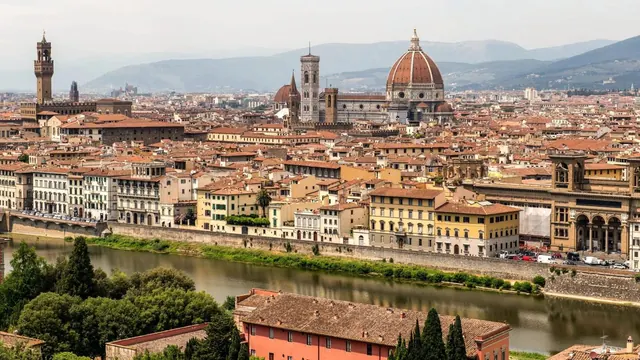
Tuscany is the pick for Renaissance art, wine country and long lunches. Florence holds an extraordinary density of masterpieces in a walkable centre, the hill towns of Chianti and the Val d'Orcia sit among the vineyards, and a real sea coast on Elba and in the Maremma adds swimming that Bavaria cannot match. The trade-off is a car for the countryside and a hot, crowded Florence in midsummer.
Scoreboard
Twelve categories on one fixed scale from 0 to 100. The shaded stretch is the gap between the two.
Your match
Pick a travel style or drag the sliders, and both match scores follow your weighting.
Too close to call, level with your weighting
Wins on live music and the arts and families with your weighting.
Wins on beaches and food and drink with your weighting.
What matters to you?
Category by category
What the scores mean for a trip.
Beaches & swimming
Tuscany has a sea coast and Bavaria does not, which settles it for most beach lovers. Elba has clear water and sandy bays, the Maremma has pine-backed strands and Cala Violina, and Versilia has miles of fine sand lined with beach clubs, with swimming from June to late September. From Florence or the hill towns, though, the coast is a long drive.
Bavaria's version is lake bathing from wooden jetties and grassy meadows on the Starnberger See, Chiemsee and Tegernsee, or a quick dip off the Isar's gravel banks in Munich. That's pleasant on a warm afternoon, but the season is shorter and a cool week can stop it altogether.
Food & drink
Tuscany eats better. Its cooking is plain and built on good ingredients: new olive oil, ribollita, wild boar pappardelle and the Florentine T-bone, with lampredotto carts and the San Lorenzo market in Florence. Wine runs through the whole trip, from Chianti Classico estates to Brunello in Montalcino and Vino Nobile in Montepulciano.
Bavaria's strength is drinking more than cooking. Munich's beer gardens and beer halls, Bamberg's smoked beer and Franconian Silvaner in Würzburg's taverns are reasons to go. The plates of roast pork, dumplings and sausages are hearty but narrow, and outside the cities most inns serve much the same menu.
Culture & sights
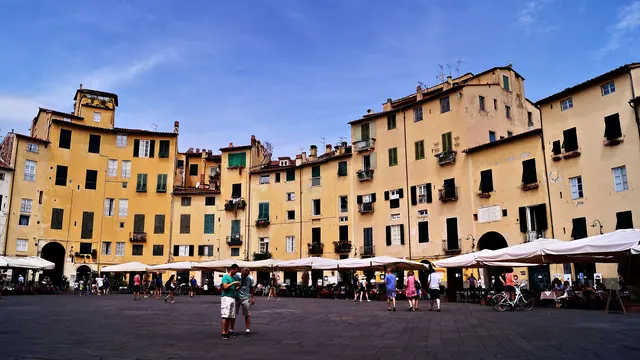
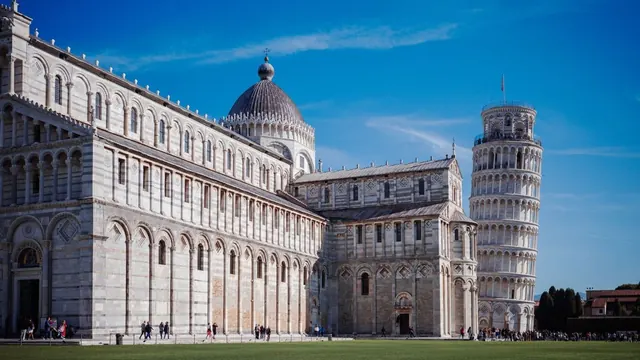
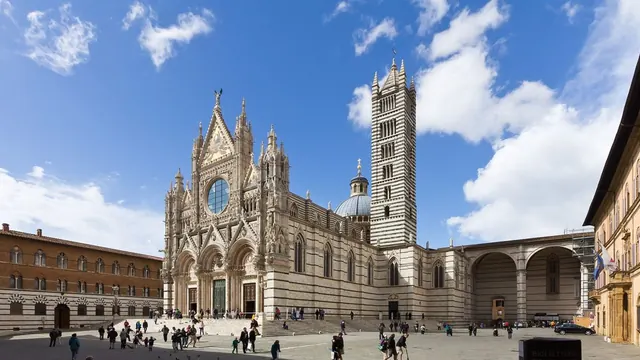
Both are outstanding, but Tuscany goes further. Florence packs Brunelleschi's dome, the Uffizi, the David and the frescoed churches into a centre you can walk, and Siena, Pisa, San Gimignano and Lucca are close by. It is the birthplace of the Renaissance, and the art is concentrated in a way Bavaria cannot match.
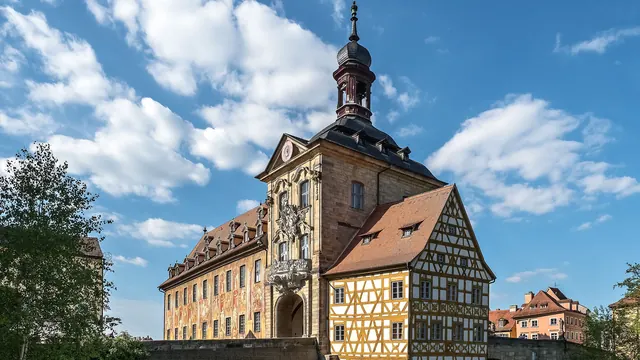
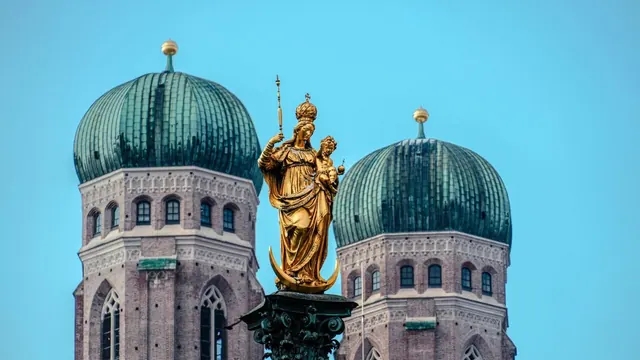
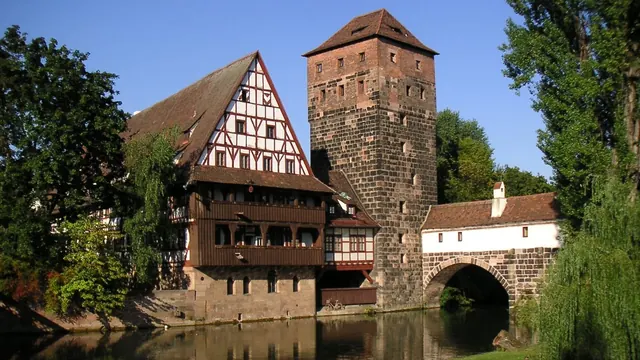
Bavaria's heritage is broader in kind and more spread out. Munich has its Pinakotheks and the Deutsches Museum's science collections, Nuremberg has the Nazi rally grounds, the medieval cores of Bamberg and Regensburg survive intact, and Ludwig II's castles and rococo churches stand in the south. Seeing it well means moving between bases.
Nightlife
Bavaria has more to offer after dinner, almost all of it in Munich: cocktail bars in Glockenbachviertel and Maxvorstadt, a reasonable club scene and beer halls that get loud by evening. Oktoberfest turns the city into one enormous party in late September.
In Tuscany, an evening usually means a long meal and a drink in the piazza. Florence's Santo Spirito steps and Oltrarno wine bars are the liveliest spots, and in summer Versilia's beach clubs dance until dawn. Away from those, the hill towns go quiet early, much like Bavaria's Alpine resorts.
Nature & outdoors
Bavaria has the bigger landscapes. Along its Alpine edge you get the Zugspitze, the Partnach gorge, the fjord-like Königssee in Berchtesgaden national park, hut-to-hut routes and via ferratas, with proper skiing in winter. Further north, the Bavarian Forest and long river cycle paths add gentler country.
Tuscany's countryside is mostly shaped by farming, with cypress lanes, vineyards and the Val d'Orcia's rolling fields, ideal for slow cycling and walking stretches of the Via Francigena. Its wilder corners are the Apuan Alps above Carrara and the Maremma park. It also has the sea, with sailing and diving around Elba, which Bavaria cannot offer.
Day trips
Both are superb bases, and Tuscany edges ahead on sheer density. From Florence or a Chianti farmhouse, Siena, Lucca, Pisa, San Gimignano and Volterra are all close, and the Montalcino, Montepulciano and Pienza wine loop fills another day. Bologna, Umbria and the Cinque Terre lie just beyond the border.
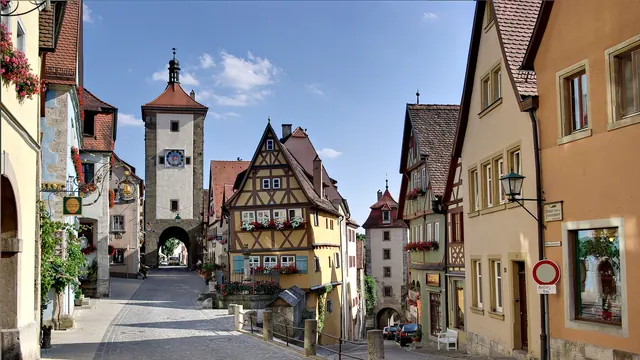
Bavaria's day trips spread out across two hubs. Augsburg, Nuremberg, Regensburg and Salzburg are easy from Munich, and Franconia works as a second region, with Bamberg, the Main wine villages and the Romantic Road towns of Rothenburg and Dinkelsbühl.
Good for families
Bavaria is easier with children. Beer gardens have playgrounds, Munich has the Hellabrunn zoo and the Deutsches Museum's hands-on children's section, and Legoland at Günzburg makes a full day out. In summer, Alpine resorts add toboggan runs and gentle cable-car walks.
Tuscany works best as a farmhouse stay with a pool and animals, combined with the shallow, lifeguarded beaches of Versilia or Elba, and children are welcome at dinner however late it runs. But the great galleries of Florence are hard going for young children, and the July and August heat and queues make the cities tiring.
Getting around
Without a car, Bavaria is much easier. Munich's U-Bahn, S-Bahn and trams cover the city, and regional trains on one day ticket reach Nuremberg, Regensburg, Garmisch, Berchtesgaden and the lakes. The irritations are train delays and summer traffic jams heading into the Alps.
Tuscany works by train only along the line from Florence to Pisa, Lucca, Arezzo and Viareggio. Chianti, the Val d'Orcia and the Maremma really need a car. Old town centres are closed to visitors' cars, so you park outside the walls, and Elba is reached by ferry.
Shopping & style
Tuscany has the better craft shopping, and most of it is in Florence. There is leather around Santa Croce, goldsmiths on the Ponte Vecchio and marbled paper from workshops in Oltrarno. Around the region you can buy alabaster in Volterra, ceramics in Montelupo and marble in Pietrasanta.
Bavaria's shopping is mostly in Munich, with luxury stores on Maximilianstrasse and department stores between Marienplatz and Karlsplatz. Away from the city, the draw is traditional dress, Oberammergau woodcarving and Bavarian Forest glass. Its real asset is December, when the Christmas markets in Nuremberg and Munich are a trip in themselves.
Affordability
Neither is cheap, and they are expensive in the same way: Munich and Florence at the core, cheaper further out. In Bavaria, Bamberg, Würzburg and the Bavarian Forest cost noticeably less. Regional day tickets make car-free travel cheap, and you can bring your own food to beer gardens.
Tuscany's savings lie in Lucca, Arezzo and the Maremma, and in its food and wine, since trattorias and cellar-door bottles are fairly priced. Car hire adds to the bill, though. The peaks also differ: Bavaria is dearest during Oktoberfest and trade fairs, Tuscany in July and August, especially on the Versilia coast.
Live music & performing arts
Bavaria is the clear winner for music. The Bavarian State Opera performs most nights in season, Munich has two orchestras of international rank, and the rococo Cuvilliés Theatre and serious playhouses fill out the programme. In summer, Bayreuth's Wagner festival draws devotees from around the world.
Tuscany's offer is narrower and more seasonal. Florence has the Maggio Musicale and its opera house, Lucca is devoted to Puccini, with his operas staged outdoors at Torre del Lago, and Siena's Accademia Chigiana holds summer concerts. Beyond these, the options thin out to church concerts and village festivals.
Wellness & relaxation
Both are strong on taking the waters, but they do it differently. Bavaria's tradition is the formal spa town: the colonnades of Bad Kissingen, brine inhalation at Bad Reichenhall, Kneipp water cures and the huge sauna complex at Erding, where saunas are nude and mixed in the German way.
Tuscany's springs are mostly open-air pools in the countryside, such as Saturnia's terraced cascades, Bagno Vignoni's medieval bath and the white pools at Bagni San Filippo. A quiet farmhouse stay in the Val d'Orcia does the rest.
When should you go?
Pick your month. The climate figures are measured averages, not a forecast.
Bavaria in July
Tuscany in July
Daytime high, °C
Rainfall in the month, mm
Where the figures come from
Tuscany has no rain gauge within 25 km of the centre, so its rainfall comes from a gridded climate dataset read at the destination rather than from a gauge further away.
Tuscany's sunshine is measured 71 km from the centre, at Pisa / S. Giusto.
Temperature and rainfall are climate normals, averaged over the years shown. Bavaria: 1991-2020 normals, München (1.9 km from centre). Tuscany: 1995-2020 (sunshine 1991-2020, rainfall 1991-2020) normals, Firenze / Peretola (5.6 km from centre).
Bavaria is at its best from June to September. Summer highs reach about 25°C where most visitors stay, warm enough for lake swimming and comfortable for walking old towns all day. The catch is that May to August are also the wettest months, at around 120mm each, so a rainy spell is likely. September is drier and still mild. Winters are cold, about 4°C in January, with little sunshine, which suits snow and Christmas markets better than sightseeing.
Tuscany follows the opposite pattern. Its summers are dry and very sunny, ideal for the beach, but July and August reach about 33°C, too hot for long days on foot in Florence or Siena. May, June and September give the best balance for towns and countryside. The rain arrives in autumn and peaks in November at about 124mm. Winters are milder than Bavaria's but grey and damp.
Which traveller are you?
For a beach and sun trip, choose Tuscany and treat the coast as a base of its own, not an outing from Florence. A week by the sea with a few nights inland works well. In Bavaria, swimming is a bonus on a warm afternoon, never something to plan around.
A family trip with young children is simpler to run in Bavaria. One base near Munich or a lake, with a regional day ticket, keeps journeys short and car-free, and inns welcome children. Tuscany usually means a hire car and long drives in the summer heat.
For an outdoors trip with real mountains, Bavaria is the better choice. Stay in an Alpine village on the southern edge, many of them reachable by train, and go in summer or early autumn, or in winter for the snow. Tuscany suits gentler walking and cycling between farmhouse stays.
Before you go
| Measure | Bavaria | Tuscany |
|---|---|---|
| Official language | German | Italian |
| Currency | Euro (EUR) | Euro (EUR) |
| Sockets | CF230 V, 50 Hz | CFL230 V, 50 Hz |
| Driving side | Right | Right |
| Time zone | UTC+1, UTC+2 in summer | UTC+1, UTC+2 in summer |
| Emergency number | 112 | 112 |
| Main airport | Munich Airport (MUC)211 non-stop destinations | Florence Airport, Peretola (FLR)46 non-stop destinations |
| Public holidays this year | 12 days | 13 days |
By the numbers
| Measure | Bavaria | Tuscany |
|---|---|---|
| Population | 13,038,724 | 3,729,641 |
Where else could you go?
Every comparison below shares a destination with this one, so you can follow Bavaria or Tuscany somewhere new.
- Austrian Alpsvs Bavaria
- Umbriavs Tuscany
- Cinque Terrevs Tuscany
- Dolomitesvs Bavaria
- Lake Gardavs Tuscany
- Black Forestvs Bavaria