French Riviera or Tuscany?
Our verdict in twelve categories, each scored against the same fixed benchmark cities, and the climate month by month, so you can choose for your trip.
Choose French Riviera for
- nightlife
- beaches
- getting around
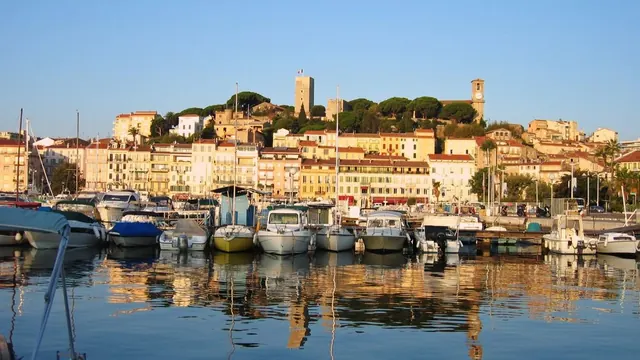
The French Riviera suits a trip built around the sea. You get a long coast of sandy bays, pebble shores and coves, a railway that links the towns, and evenings that run late in Saint-Tropez, Monaco and Juan-les-Pins. It works best for travellers who want swimming by day, a different small town each afternoon, and modern art from Matisse to Picasso along the way.
Choose Tuscany for
- wellness
- day trips
- culture and sights
Choose Tuscany if your idea of a good trip is Renaissance art, wine country and long lunches. Florence, Siena and a string of hill towns give it a depth of sightseeing the Riviera cannot match. Its hot springs and farmhouse stays also make it the better place to slow down. It costs a little less, but outside the Florence to Pisa rail line you will want a car.
Scoreboard
Twelve categories on one fixed scale from 0 to 100. The shaded stretch is the gap between the two.
Your match
Pick a travel style or drag the sliders, and both match scores follow your weighting.
Wins on nightlife and beaches with your weighting.
Wins on wellness and day trips with your weighting.
What matters to you?
Category by category
What the scores mean for a trip.
Beaches & swimming
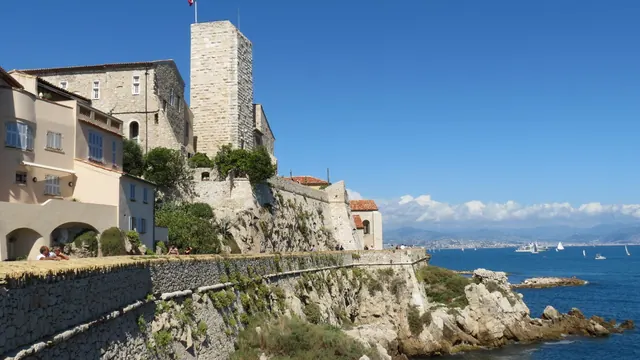
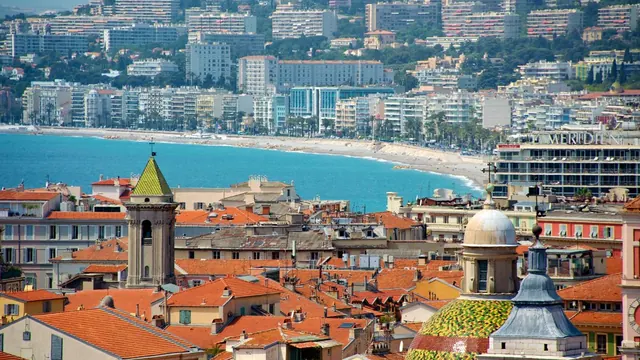
The Riviera has the stronger beach offer, because the sea is never far from wherever you stay. Sand at Cannes, Juan-les-Pins and Pampelonne, pebbles at Nice and Menton, and the red-rock coves of the Esterel give you plenty of choice along one coast.
Tuscany's good beaches are real but scattered: Elba's clear bays, the pine-backed Maremma and the long, ordered lidos of Versilia. From Florence or Chianti, a day at the sea means a long drive. In both regions, much of the sand is taken up by private beach clubs.
Food & drink
Tuscany has the edge, mainly because of its wine country. You can taste Chianti, Brunello and Vino Nobile at the cellars where they are made, and eat simple, ingredient-led dishes such as ribollita, wild boar pappardelle and the Florentine T-bone.
The Riviera's food is more Mediterranean and lighter, centred on Nice's socca, pissaladière and stuffed vegetables. It also has more top-end restaurants between Monaco and Cannes. Its weak spot is the tourist set menus along the seafront.
Culture & sights
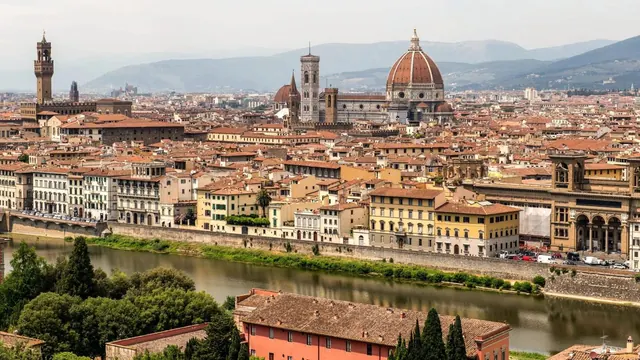
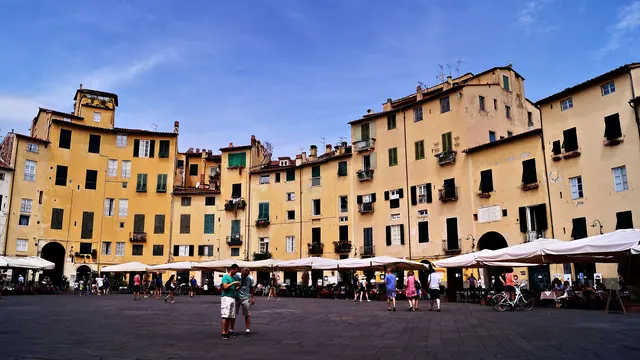
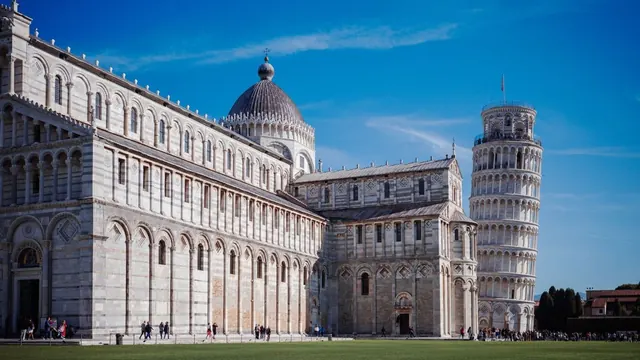
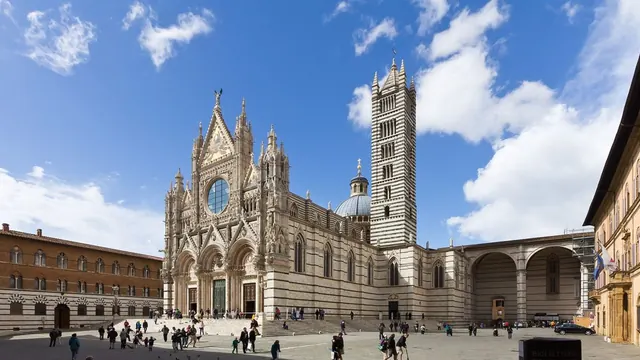
Tuscany is far ahead here. It is the birthplace of the Renaissance, with the Uffizi, the Accademia, Siena's Campo and Pisa's cathedral square, and smaller towns like Pienza, Arezzo and Volterra would be highlights anywhere else.
The Riviera's strength is narrower but distinctive: twentieth-century art made on this coast, seen in the Matisse and Chagall museums in Nice, Picasso in Antibes and the Fondation Maeght. You can add Monaco's palace and Belle Epoque Nice, but it does not have the same depth.
Nightlife
The Riviera is the place for a night out. In summer, Saint-Tropez and Monaco have glamorous beach clubs and table-service clubs, Juan-les-Pins has a late strip of bars, and Nice's old town keeps its bars going all year.
In Tuscany, an evening usually means a long dinner and then a drink in the piazza. Florence's Santo Spirito steps and Versilia's summer dance halls are the exceptions, and the hill towns are quiet by late evening.
Nature & outdoors
The two are about equal for the outdoors, but the landscapes are very different. On the Riviera, the mountains drop straight into the sea: you can walk the cape paths, kayak along the Esterel, or head up to the Mercantour's high trails about one and a half hours inland.
Tuscany's countryside is mostly farmland: cypress lanes, vineyards and the rolling Val d'Orcia, ideal for slow cycling between towns. For wilder scenery, go to the marble ridges of the Apuan Alps and the coastal Maremma park.
Day trips
Tuscany has far more to offer here, with famous towns in every direction: Siena, Lucca, Pisa, San Gimignano and the Montalcino to Pienza wine loop. Bologna, Umbria and the Cinque Terre are also within reach.
The Riviera's outings are shorter and easier, with Monaco, Menton and Eze all a quick train or bus ride from Nice. After a few days, though, many of them start to feel like another pretty village. The Italian Riviera across the border adds some variety.
Good for families
For families the two come out about even, but the trips take a different shape. On the Riviera one seaside base can carry the whole stay. A sandy resort such as Juan-les-Pins or Cannes keeps the swimming easy, and the days away from the water are short trips along the same coast: Monaco's aquarium, Parc Phoenix in Nice, or a boat out to the Lérins islands. The catch is that everyone is packed into the same few towns, so summer brings crowded sand, slow roads and expensive family rooms.
Tuscany works better as two bases, a farmhouse in the hills where children have room to roam and a pool, then a spell by the sea in Versilia, the Maremma or on Elba. That gives more variety, from the Pinocchio park at Collodi to bikes on Lucca's walls, but it also means more time in the car. The galleries and churches the region is famous for are the part young children enjoy least.
Getting around
The Riviera is a bit easier without a car. One coastal railway runs through Cannes, Antibes, Nice, Monaco and Menton, so you can see much of the region from a single base.
Tuscany's railway also serves Florence, Pisa and Lucca well, but Chianti, the Val d'Orcia and the Maremma really need a car. Old town centres are closed to visitors' cars, so expect to park outside the walls and walk in.
Shopping & style
Shopping on the Riviera is mostly resort luxury, in the boutiques along the Croisette and Rue d'Antibes in Cannes, around the Monte-Carlo casino and behind the port in Saint-Tropez. Its crafts are Provençal: perfume from Grasse, bubbled glass from Biot, pottery from Vallauris, and soap, lavender and printed fabric at the markets. On Mondays the Cours Saleya in Nice turns into a flea market.
Tuscany sells what its workshops make. Florence has leather around Santa Croce, goldsmiths on the Ponte Vecchio and marbled paper in Oltrarno, and other towns have their own speciality, such as alabaster in Volterra and marble in Pietrasanta. For designer labels, there is Via de' Tornabuoni and the outlets in the Arno valley.
Affordability
Neither region is cheap in season, but Tuscany costs a little less. Trattoria meals, wine bought at the cellar and cheaper bases such as Lucca, Arezzo or the Maremma help keep costs down. Hiring a car, though, adds a real extra cost.
On the Riviera, rooms in Monaco, Cannes and Saint-Tropez are expensive, and so are private beach sunbeds. Nice is the cheaper base. Trains are the one real bargain, and the coastal paths are free.
Live music & performing arts
On the stage the two are broadly even, but they peak at different times of year. On the Riviera, classical music mostly happens in winter. Monaco's small, gilded opera house hosts the Monte-Carlo Philharmonic and the Ballets de Monte-Carlo, and Nice adds its own opera house in the old town and a symphony orchestra. In summer, jazz takes over, in the pine grove at Juan-les-Pins and on Place Masséna.
Tuscany's strength is opera and chamber music, much of it at festivals. Florence has the Maggio Musicale with its own opera house and the Teatro della Pergola. Puccini's operas are staged outdoors by the lake at Torre del Lago, the Accademia Chigiana holds concerts in Siena's palaces, and Lucca's squares host big summer pop concerts. Away from these seasons, both regions are short of small live venues.
Wellness & relaxation
Tuscany is much the better choice for rest. Its hot springs are a natural feature, and some, such as Saturnia's falls and Bagni San Filippo's pools in the woods, are open to everyone. Bagno Vignoni and Montecatini add spa towns with long histories.
On the Riviera, wellness means thalassotherapy centres and hotel spas on the capes and in Monaco. In midsummer the resorts are loud and busy, so the quieter side of the coast is easiest to enjoy in spring or autumn.
When should you go?
Pick your month. The climate figures are measured averages, not a forecast.
French Riviera in July
Tuscany in July
Daytime high, °C
Rainfall in the month, mm
Where the figures come from
Tuscany has no rain gauge within 25 km of the centre, so its rainfall comes from a gridded climate dataset read at the destination rather than from a gauge further away.
Tuscany's sunshine is measured 71 km from the centre, at Pisa / S. Giusto.
Temperature and rainfall are climate normals, averaged over the years shown. French Riviera: 1991-2020 normals, Nice (9.8 km from centre). Tuscany: 1995-2020 (sunshine 1991-2020, rainfall 1991-2020) normals, Firenze / Peretola (5.6 km from centre).
The two climates differ most in summer. On the Riviera coast, July and August top out around 28°C with very little rain and long sunny days, and the sea is warm enough to swim from June until early October. In Tuscany, where most visitors stay inland, summer days are hotter, often reaching 33°C in August. That makes long afternoons in Florence and the hill towns tiring, so the coast or a pool is the better place to be.
May, June and September are the best months for sightseeing in Tuscany and walking in either region. Both turn wet in autumn, and the Riviera gets the heavier downpours, with about 138mm in November. In winter the Riviera stays a little milder and sunnier, and it is the gentler choice for walks along the seafront from December to February.
Which traveller are you?
On a beach and sun trip, the French Riviera is the clear choice. You can choose sandy swimming at Cannes, Juan-les-Pins or Pampelonne, or clear coves in the Esterel, and the coastal railway lets you stay in one base and reach several shores.
For a culture and arts trip, choose Tuscany. Florence alone has the Uffizi, the David and Brunelleschi's dome within walking distance, and Siena, Pisa, Lucca and San Gimignano add more. The Riviera's modern art museums are fine, but much narrower.
On a relaxing and wellness trip, Tuscany has the advantage. You can bathe in open-air hot springs at Saturnia, Bagno Vignoni and Bagni San Filippo, then return to a quiet farmhouse in the Val d'Orcia. The Riviera's rest mostly means paid thalassotherapy and hotel spas.
Before you go
| Measure | French Riviera | Tuscany |
|---|---|---|
| Official language | French | Italian |
| Currency | Euro (EUR) | Euro (EUR) |
| Sockets | CE230 V, 50 Hz | CFL230 V, 50 Hz |
| Driving side | Right | Right |
| Time zone | UTC+1, UTC+2 in summer | UTC+1, UTC+2 in summer |
| Emergency number | 112 | 112 |
| Main airport | Nice-Côte d'Azur Airport (NCE)130 non-stop destinations | Florence Airport, Peretola (FLR)46 non-stop destinations |
| Public holidays this year | 11 days | 13 days |
By the numbers
| Measure | French Riviera | Tuscany |
|---|---|---|
| Population | - | 3,729,641 |
| Swim season, months above 21 °C | 4 months | - |
Where else could you go?
Every comparison below shares a destination with this one, so you can follow French Riviera or Tuscany somewhere new.
- Umbriavs Tuscany
- Cinque Terrevs Tuscany
- Provencevs French Riviera
- Lake Gardavs Tuscany
- Cinque Terrevs French Riviera
- Corsicavs French Riviera