Japan
Yokohama
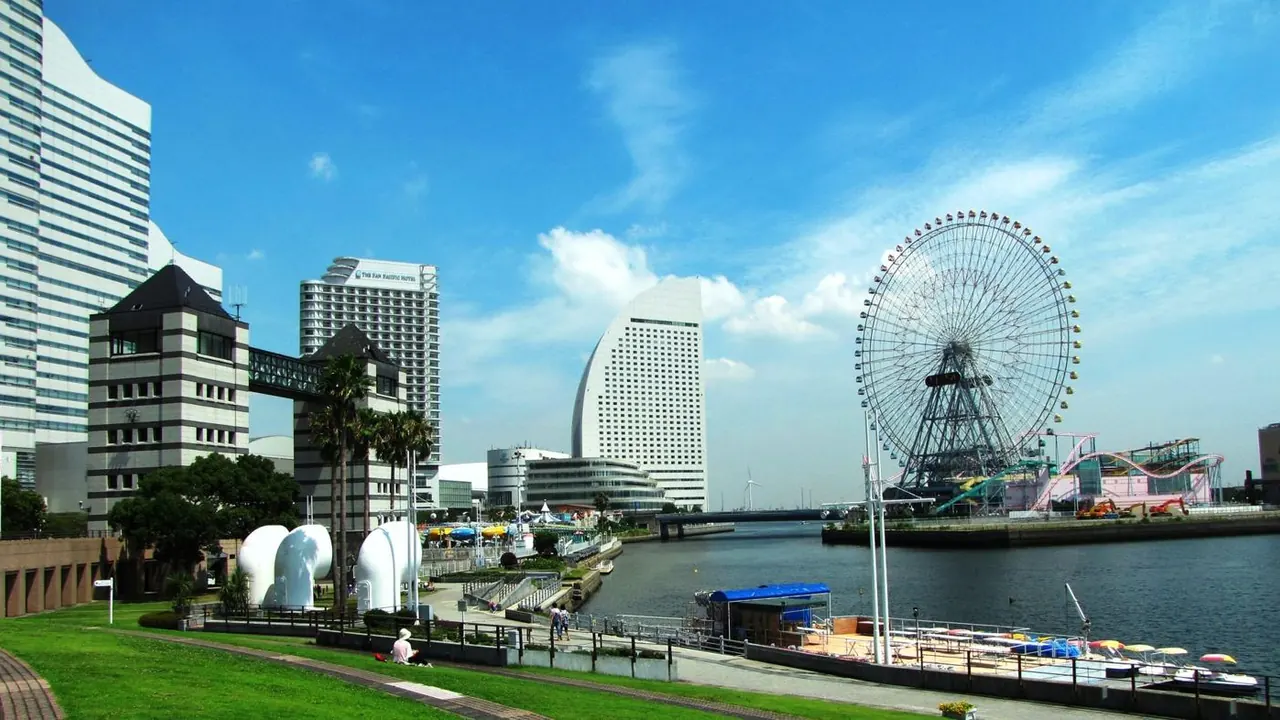
Minato Mirai and the Cosmo Clock
- Getting around87
- Day trips86
- Families86
Photo: Yoshio Kohara, CC BY 3.0, cropped
Match
64
Every category weighted equally
- Beach & sun62
- Culture & arts66
- Food & nightlife62
- Family trip68
- Outdoors68
- Relax & unwind64
- Shopping & style65
- On a budget63
Yokohama in twelve categories
Our verdict on each, scored 0 to 100 against the same fixed benchmark cities, so a score means the same thing on every page.
Beaches & swimming. Scores 46 out of 100.
Food & drink. Scores 72 out of 100.
Culture & sights. Scores 55 out of 100.
Nightlife. Scores 44 out of 100.
Nature & outdoors. Scores 66 out of 100.
Day trips. Scores 86 out of 100.
Good for families. Scores 86 out of 100.
Getting around. Scores 87 out of 100.
Shopping & style. Scores 60 out of 100.
Affordability. Scores 55 out of 100.
Live music & performing arts. Scores 56 out of 100.
Wellness & relaxation. Scores 60 out of 100.
Yokohama category by category
Beaches & swimming
46Yokohama is a port, not a beach city. Its waterfront is quays, promenades and parks rather than sand. The city's own swimming spot is Umi no Koen, a man-made beach by Hakkeijima on the shallow inner bay. Most people take the train south instead, to the Shonan coast at Zushi, Kamakura and Enoshima, or to the Miura Peninsula. These are 30 to 60 minutes away and have broad beaches of grey-brown sand.
In high summer the water reaches about 25°C. The official season is short, though, roughly July and August, and weekends are crowded with beach huts and families. Jellyfish come in late in the season. It makes a good day out in midsummer, but it is not a reason to stay.
Food & drink
72Eating in Yokohama has a port-city flavour. Chinatown is the largest in Japan, with dense streets of steamed-bun stalls, Cantonese restaurants and dim sum halls behind ornate gates. Iekei ramen, a rich pork-and-soy style, comes from here. So does sanma-men, a noodle soup topped with stir-fried vegetables, and the city treats both as its own. Shin-Yokohama has a museum given over entirely to ramen, built as a recreated old street of noodle shops.
The everyday standard is what makes Japan easy, from basement food halls under the department stores at Yokohama Station to the tiny grill bars of Noge. The harbour also has a long brewing history. The serious fine-dining tier is thinner than you might expect for a city this size, because much of it gathers in the capital next door.
Culture & sights
55Yokohama's heritage is unusual for Japan. It was one of the first ports opened to foreign trade in the 1850s, so the sights tell the story of that meeting. On the Yamate Bluff stand Western-style merchant houses, the foreigners' cemetery and a rose garden looking over the harbour. Below are the stone customs buildings of Kannai and the Red Brick Warehouses. The Hikawa Maru, a 1930s ocean liner, is moored off Yamashita Park.
Sankeien is the standout. It is a large landscaped garden where historic temple buildings and teahouses were moved from Kyoto and Kamakura. Minato Mirai adds the Yokohama Museum of Art and a modern skyline. A visitor can see the main sights in two days. None of them alone justifies the trip.
Nightlife
44Going out in Yokohama is mostly about drinking and eating rather than dancing. Noge is the best place for it, a warren of small izakaya, standing bars and counter seats near Sakuragicho Station that fills with office workers after dark. Kannai and the streets around Yokohama Station add pubs, karaoke and hotel bars, and Minato Mirai has bars with views over the lit-up harbour.
The club scene is small and the city winds down earlier than its size suggests. Locals wanting a big night take the train to Tokyo. It suits a long evening of yakitori and beer far better than a night out until dawn.
Nature & outdoors
66The city is densely built, but good walking country starts close by. The wooded ridges around Kamakura carry hiking trails between temples, and the Miura Peninsula has coastal walks and rocky shores. Enoshima has sea cliffs and caves. In clear winter weather Mount Fuji appears on the horizon from these coastal walks.
About an hour or so inland are the Tanzawa mountains, with proper day hikes. Hakone has volcanic valleys, a crater lake and ropeway views. Within the city, Sankeien, Negishi Forest Park and the harbour promenades give some green and sea air. Autumn colour and winter clarity are the best seasons. Summers are hot and humid, and the rainy season in June makes the hills muddy.
Day trips
86Day trips are where Yokohama really works as a base. Tokyo is under half an hour away by train, so the capital's districts and museums can be visited on day after day. Kamakura is about 25 minutes away and is a first-rate trip in its own right. It was the medieval shogunate's capital, with the Great Buddha, Zen temples tucked into wooded valleys and a shrine-lined approach to the sea.
Enoshima, an island shrine reached by a causeway, pairs easily with Kamakura. Hakone is about an hour and a half away, for hot-spring inns, an open-air sculpture museum and old highway sites. Odawara has a rebuilt castle. Kawagoe's merchant-house streets, preserved from the Edo period, are reachable on direct trains.
Good for families
86Yokohama is one of the easiest cities in Japan to bring children to. Minato Mirai has the Cup Noodles Museum, where children design and pack their own instant noodles. It also has a seafront amusement park with a big Ferris wheel and a museum for the character Anpanman, much loved by toddlers. Hakkeijima Sea Paradise combines a large aquarium with rides on an island in the bay. Zoorasia is a spacious modern zoo on the city's western edge.
The Nippon Maru sailing ship and the waterfront parks add simple outings. Tokyo Disneyland is about an hour away. Streets are safe and clean, stations have lifts and nursing rooms, and the harbour is flat for pushchairs. The hot, humid summers are the main thing to plan around.
Getting around
87Getting around is simple. The Minatomirai Line runs underground from Yokohama Station through Minato Mirai to Chinatown and Motomachi. Alongside it are JR lines, two subway lines and private railways, all using the same tap-on IC card. Trains are punctual, signs are in English, and the fast lines to Tokyo, Kamakura and Haneda Airport make the city a convenient base.
The harbour from Minato Mirai through the Red Brick Warehouses and Yamashita Park to Chinatown is a flat, pleasant walk. Water buses also cross the bay. The Yamate Bluff means a steep climb, and Sankeien and the zoo need a bus. A car is never needed.
Shopping & style
60Shopping here is comfortable rather than special. The area around Yokohama Station is a dense cluster of department stores, station malls and underground arcades. Minato Mirai and the Red Brick Warehouses add large waterfront malls and smaller design and gift shops. Motomachi, below the Bluff, is a long, smart shopping street that has dressed the port's well-off families for generations, known for its leather goods and its Western-tinged style.
Chinatown sells Chinese teas, tableware and snacks. The city has little luxury fashion or independent boutique culture of its own, and people who care about that take the train to Tokyo.
Affordability
55Yokohama sits in the middle of the price range for a large city. Plain business hotels around Kannai, Sakuragicho and Shin-Yokohama give compact, spotless rooms at moderate rates. The big harbour-view hotels of Minato Mirai are the expensive end, and rooms of every kind get dearer on summer weekends and when a large concert or convention fills the city.
Everyday eating costs little: ramen counters, set lunches at office-district canteens, Chinatown steamed buns and the food halls under the station department stores. Train fares are low, and many of the main sights cost nothing, among them Yamashita Park, the Western houses on the Bluff and the harbour promenades. Sankeien, the museums and the family attractions charge admission.
Live music & performing arts
56Yokohama has a solid stage of its own, and a deeper one half an hour away. Minato Mirai Hall is a fine concert hall with a large pipe organ, and the Kanagawa Philharmonic plays there. The Kanagawa Arts Theatre and the Kanagawa Prefectural Hall stage opera, dance and drama. Big arenas near the harbour host touring pop and rock acts.
Jazz is part of the city's identity, a legacy of the port and the postwar years. Old jazz cafés in Noge and Kannai still play records and host small live sets, and an autumn jazz festival fills halls and street corners. For Kabuki, the big musicals and the widest choice of programme, most visitors go into Tokyo.
Wellness & relaxation
60Japan's bathing culture reaches Yokohama in everyday form. There are neighbourhood sento and large hot-spring bath complexes, including one on the Minato Mirai waterfront. They have indoor and open-air baths, saunas and lounges where people spend a whole evening. The real onsen experience, in a mountain inn with a view, is in Hakone, about an hour or so away.
In the city itself, the slow places are Sankeien's ponds and teahouses, the rose gardens on the Bluff and evening walks along the harbour. The pace is calmer than the capital's, though it is still a working city.
When should you go?
Pick a month to see what it is like. The climate figures are measured averages, not a forecast.
Yokohama in July
Daytime high, °C
Rainfall in the month, mm
The whole year
Shaded against this city’s own year: the deepest cell is its best month for that figure and the palest its weakest.
Where the figures come from
Yokohama's sunshine is measured 29 km from the centre, at Tokyo.
Temperature and rainfall are climate normals, averaged over the years shown. Yokohama: 1971-2000 (sunshine 1991-2020) normals, Yokohama (1.6 km from centre).
Before you go
| Measure | Yokohama |
|---|---|
| Official language | Japanese |
| Currency | Yen (JPY) |
| Sockets | AB100 V, 50 and 60 Hz depending on the region |
| Driving side | Left |
| Time zone | UTC+9 |
| Emergency number | Police 110, fire 119 |
| Elevation | 24 m |
| Main airport | Tokyo Haneda International Airport (HND)18 km from centre98 non-stop destinations |
| Public holidays this year | 16 days |
By the numbers
| Measure | Yokohama |
|---|---|
| City population | 3,757,630 |
| People per km² | 8,585 |
| Museums within 10 km | 38 |
| UNESCO World Heritage sites within 50 km | 1 |
| Swim season, months above 21 °C | 5 months |
Compare Yokohama with
Every comparison with a written verdict behind it.