Thailand
Pai
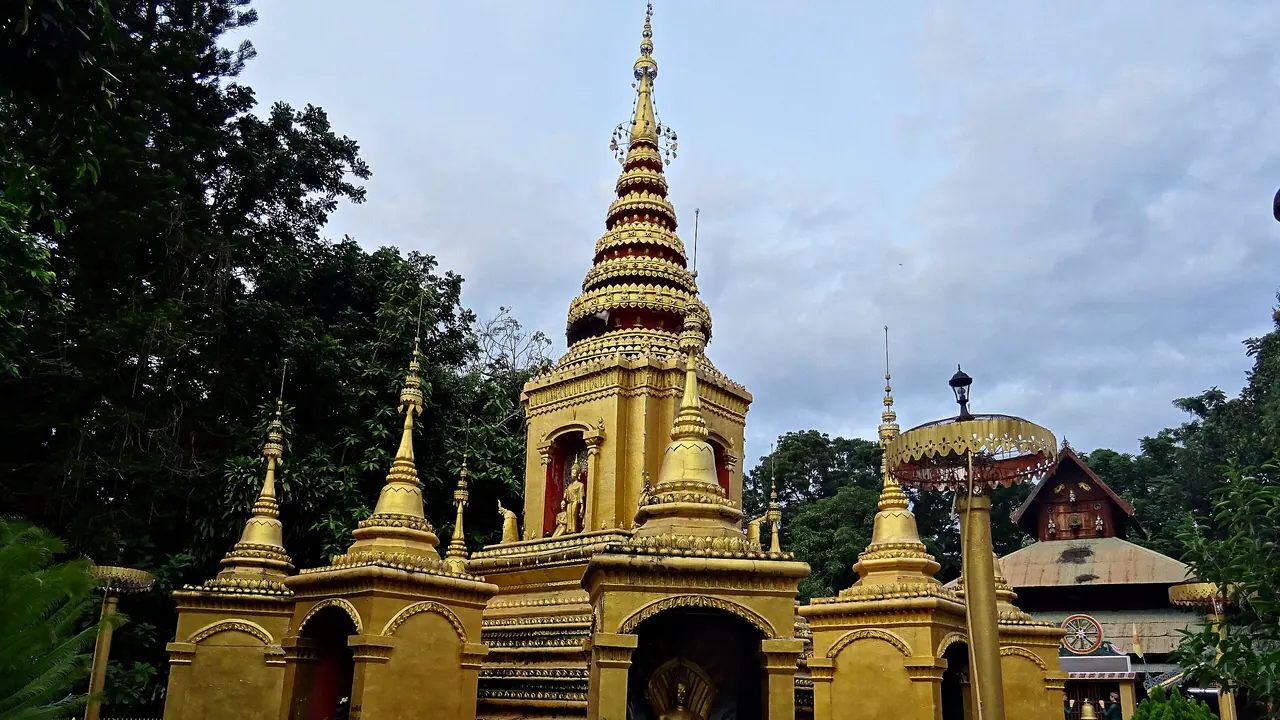
The golden stupa of Wat Klang
- Affordable cities90
- Wellness & relaxation76
- Nature & outdoors70
Photo: Christophe95, CC BY-SA 4.0, cropped
Match
37
Every category weighted equally
- Beach & sun40
- Culture & arts32
- Food & nightlife34
- Family trip37
- Outdoors40
- Relax & unwind42
- Shopping & style33
- On a budget43
Pai in twelve categories
Our verdict on each, scored 0 to 100 against the same fixed benchmark cities, so a score means the same thing on every page.
Beaches & swimming. Scores 7 out of 100.
Food & drink. Scores 35 out of 100.
Culture & sights. Scores 14 out of 100.
Nightlife. Scores 38 out of 100.
Nature & outdoors. Scores 70 out of 100.
Day trips. Scores 12 out of 100.
Good for families. Scores 30 out of 100.
Getting around. Scores 20 out of 100.
Shopping & style. Scores 24 out of 100.
Affordability. Scores 90 out of 100.
Live music & performing arts. Scores 26 out of 100.
Wellness & relaxation. Scores 76 out of 100.
Pai category by category
Beaches & swimming
7Pai sits in a mountain valley far from any coast, and swimming here is modest. In the wet and cool months you can splash in the Pai River or under waterfalls such as Mo Paeng, and many guesthouses have small pools. Floating downriver on an inner tube is a popular afternoon in the hot season. The nearest sea is a long day's travel away, so anyone who wants beach time should plan it for another part of the trip.
Food & drink
35Eating in Pai centres on the walking street, where stalls set up each evening with grilled skewers, khao soi, Shan-style dishes, dumplings and fruit shakes. Around it, small cafés and restaurants serve the travellers who stay for weeks: vegetarian and vegan plates, smoothie bowls, wood-fired pizza and good espresso. The Yunnanese village of Santichon on the edge of town adds Chinese-style noodles and tea.
It is easy, cheap and pleasant, but shallow. Northern Thai cooking is present without much depth, there is no fine dining to speak of, and a lot of the menu is tuned to foreign tastes rather than local ones.
Culture & sights
14Pai is a small market town, and visitors come for the valley rather than for its sights. The main landmark is Wat Phra That Mae Yen, a large white Buddha on a hill east of town, reached by a long stairway with a view over the valley at sunset. There are a few modest Shan-influenced temples in town, the old iron bridge over the river from the Second World War era, and Santichon, a Yunnanese Chinese village with mud-brick houses. That is a pleasant half day or so, and there are no museums of note.
Nightlife
38For a town this small, Pai has a lively evening scene, built around backpackers who stay longer than they planned. Bars along and off the walking street fill after the night market, with reggae bars, open-air drinking spots, bamboo-and-fairy-light gardens and the occasional party further out of town. It is relaxed and sociable rather than polished.
It is also limited. Bars in the centre wind down by around midnight or not long after, there are no proper clubs, and the crowd is mostly young travellers. It suits a gap-year night out, not anyone looking for cocktail bars or serious dance music.
Nature & outdoors
70The landscape is the reason Pai exists as a destination. The town sits in a broad green valley of rice fields ringed by forested hills, and much of what visitors do happens on a scooter out among them. Pai Canyon's narrow eroded ridges are the classic sunset walk, Pam Bok and Mo Paeng waterfalls are a short ride away, and viewpoints such as Yun Lai look over morning mist pooling in the valley.
Further out there are hill-tribe treks, whitewater rafting on the Pai River in the wet season and the great cave of Tham Lod with its river and swiftlets, about an hour west. The cool, clear months from November to February are the best. From March to April the hills disappear in smoke from field burning, and the summer rains make tracks muddy.
Day trips
12Pai is remote, and there are few other places to visit within easy reach. Soppong and the Lahu and Lisu villages around it are about an hour west on the mountain road, but most of what lies nearby is landscape rather than towns. Mae Hong Son and Chiang Mai are both around three hours away on roads with hundreds of bends, which makes them a change of base rather than a day out. Many visitors instead treat Pai as one stop on a longer loop through the northern hills.
Good for families
30Pai can work for a relaxed family stay, but it is not made for children. There are elephant-free farm visits, waterfalls, hot springs, gentle river tubing in the dry season and a night market children enjoy, and Thai people are warm with young visitors. Against that, the road in from Chiang Mai is notorious for making passengers sick, most sights need a scooter or a hired driver, and the town's evening character leans towards young backpackers. Older children who like the outdoors manage best.
Getting around
20The centre of Pai is a few small streets you can walk in minutes. Everything worth seeing beyond it, from the canyon to the waterfalls and hot springs, is spread across the valley, and there is no public transport to reach it. Most visitors rent a scooter, which suits experienced riders but leads to many accidents among beginners on the hill roads. The alternatives are songthaew trucks hired for the trip, taxis or organised tours. Arriving means a minibus up the winding road from Chiang Mai.
Shopping & style
24Shopping in Pai means the walking street in the evening, where stalls sell loose cotton trousers, woven bags, hill-tribe textiles, handmade jewellery, postcards and small art prints. It is fun to browse and much of it is made locally, but the range repeats from stall to stall and there are no brands, design shops or larger stores. Anything more serious waits for Chiang Mai.
Affordability
90Pai is a very cheap place to stay. Simple bungalows and guesthouses cost little, a night-market dinner is a small fraction of Western prices and scooter rental is inexpensive, which is why many travellers stay for weeks. Comfortable resorts with pools exist and cost more, prices in the tourist centre are higher than in ordinary northern Thai towns, and spending in high season around the new year rises with demand. Most sights are free or have only a small entry fee.
Live music & performing arts
26Pai has a small but real live-music habit. Most nights several bars put on acoustic sets, blues, reggae or jazz jams by local and travelling musicians, and the informal open-stage feel is part of the town's charm. There is no theatre, concert hall or traditional performance programme, and the quality varies a lot, so this is music to come across over a drink rather than a reason to visit.
Wellness & relaxation
76Slowing down is what Pai does best. The valley has natural hot springs, the larger Tha Pai springs in a forest park south of town and simpler pools in the hills, where you can soak in warm mineral water in the cool morning air. In town, Thai massage shops are everywhere and inexpensive, and yoga, meditation and detox retreats run on the outskirts, some for a day, some for weeks.
The pace does the rest: hammocks, rice-field views and long afternoons with nothing planned. The spa offer is simple rather than luxurious, and the burning season haze in spring makes it less restful, but in the cool months it is an easy place to unwind.
When should you go?
Pick a month to see what it is like. The climate figures are measured averages, not a forecast.
Pai in July
Daytime high, °C
Rainfall in the month, mm
The whole year
Shaded against this city’s own year: the deepest cell is its best month for that figure and the palest its weakest.
Where the figures come from
Pai's temperatures are measured 64 km from the centre, at Mae Hong Son.
Pai's station stands 242 m below the city centre, so the centre is likely a little cooler than the figures say.
Pai has no rain gauge within 25 km of the centre, so its rainfall comes from a gridded climate dataset read at the city rather than from a gauge further away.
Pai's sunshine is measured 86 km from the centre, at Chiang Mai.
Temperature and rainfall are climate normals, averaged over the years shown. Pai: 1971-2000 (sunshine 1991-2020, rainfall 1991-2020) normals, Mae Hong Son (63.7 km from centre).
Before you go
| Measure | Pai |
|---|---|
| Official language | Thai |
| Currency | Baht (THB) |
| Sockets | ABCF220 V, 50 Hz |
| Driving side | Left |
| Time zone | UTC+7 |
| Emergency number | Police 191, ambulance 1669, fire 199 |
| Elevation | 509 m |
| Main airport | Chiang Mai International Airport (CNX)86 km from centre28 non-stop destinations |
By the numbers
| Measure | Pai |
|---|---|
| City population | 3,598 |
| Museums within 10 km | 0 |
| UNESCO World Heritage sites within 50 km | 0 |
Compare Pai with
Every comparison with a written verdict behind it.
- Ayutthaya
- Bangkok
- Chiang Mai
- Chiang Rai
- Hua Hin
- Kanchanaburi
- Krabi
- Luang Prabang
- Pattaya
- Pokhara
- Sapa
- Vientiane