United States
Durango, Colorado
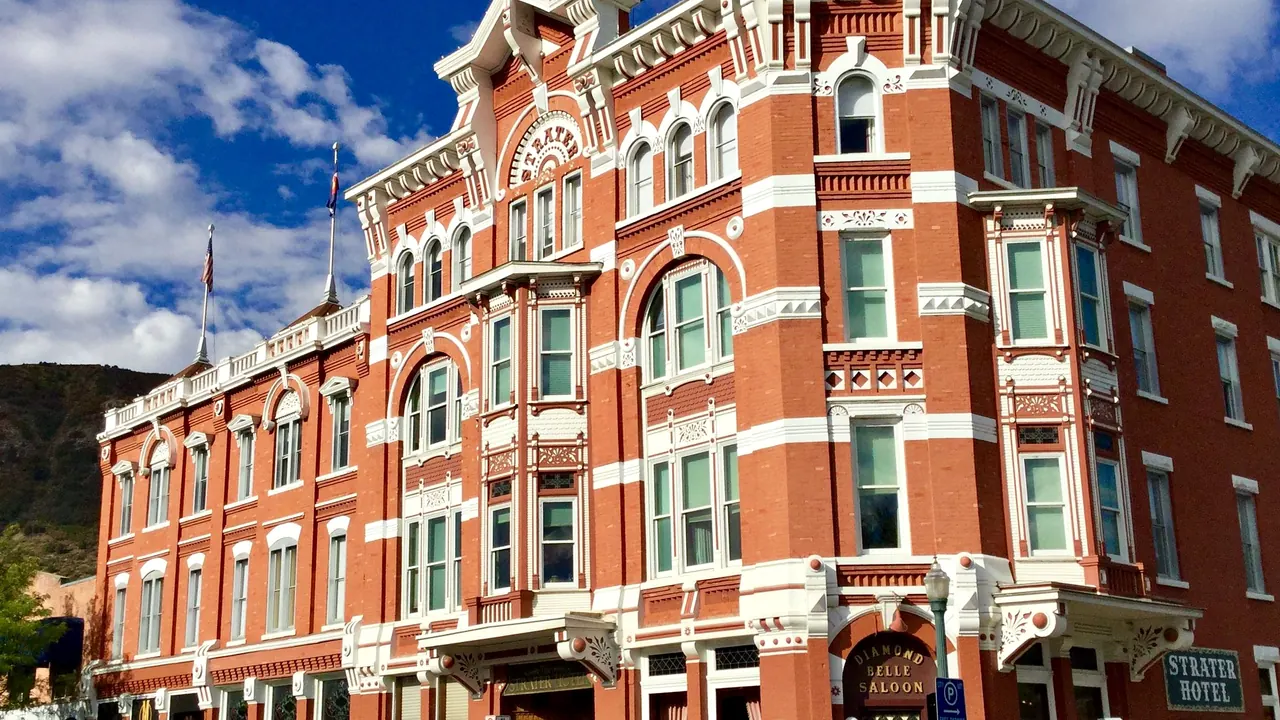
The Strater Hotel on Main Avenue
- Nature & outdoors88
- Day trips64
- Families55
Photo: Adeledstarr, CC BY-SA 4.0, cropped
Match
41
Every category weighted equally
- Beach & sun40
- Culture & arts38
- Food & nightlife34
- Family trip44
- Outdoors50
- Relax & unwind44
- Shopping & style37
- On a budget40
Durango, Colorado in twelve categories
Our verdict on each, scored 0 to 100 against the same fixed benchmark cities, so a score means the same thing on every page.
Beaches & swimming. Scores 10 out of 100.
Food & drink. Scores 40 out of 100.
Culture & sights. Scores 30 out of 100.
Nightlife. Scores 22 out of 100.
Nature & outdoors. Scores 88 out of 100.
Day trips. Scores 64 out of 100.
Good for families. Scores 55 out of 100.
Getting around. Scores 33 out of 100.
Shopping & style. Scores 28 out of 100.
Affordability. Scores 36 out of 100.
Live music & performing arts. Scores 27 out of 100.
Wellness & relaxation. Scores 55 out of 100.
Durango, Colorado category by category
Beaches & swimming
10Durango is high in the mountains of southwest Colorado, a long day's drive from any coast. In summer, people go to the water for a cool dip rather than a beach day. Lake Nighthorse, just outside town, has a small swimming area. Vallecito Lake, further into the hills, has a few sandy edges. On hot afternoons many people float the Animas River through town on inner tubes. The water stays chilly even in July, and the season is short, so swimming here is something you add to a mountain vacation, not a reason to come.
Food & drink
40Eating in Durango is relaxed small-town Western food done with some care. Main Avenue and the streets either side have green-chile Southwestern plates, steakhouses, cafés for breakfast before a hike, and a handful of more ambitious kitchens using Colorado lamb, trout and produce from local farms. Beer is the strongest card. The town has an unusual number of craft breweries for its size, with taprooms full of cyclists and rafters at the end of the day.
The range is still narrow. Cooking from further afield is limited, fine dining is a short list, and the summer farmers' market is pleasant but modest. You will eat well here, though few people pick Durango for its food.
Culture & sights
30Durango was founded by a railway in 1880, and the railway is still its main sight. Steam locomotives leave from the old depot on Main Avenue, and the yard and roundhouse museum let you see them up close. The downtown historic district is a good few blocks of brick and sandstone Victorian buildings, with ornate hotels and saloons from the mining boom.
After that the list is short. There is a small county history museum in an old schoolhouse, and the college on the mesa holds a respected collection of Southwestern and Native American material. An hour or two covers the lot. The great ancestral Puebloan sites are in the country around the town, not in it.
Nightlife
22Evenings in Durango usually mean a brewery taproom, a pint on a patio along Main Avenue, or a drink in an old saloon with a piano player and Victorian wallpaper. Students from the college on the hill keep a few bars busy on weekends. There is very little dancing, though, and almost nothing open late. Most of the town is outdoor people with an early start ahead, so things go quiet well before midnight.
Nature & outdoors
88Durango sits in the Animas River valley at the foot of the San Juan Mountains, one of the highest and most rugged ranges in the Rockies. Singletrack starts from the edge of town, and the area is one of the best-known mountain-biking centres in the country. The Colorado Trail begins just north of town, and the Weminuche Wilderness has jagged peaks above 4,000m and high lakes. Rafters and kayakers run the Animas right through the centre, and the fly-fishing is good.
The season decides the trip. In summer and early autumn there is hiking, riding and paddling, with golden aspens in late September. In winter, a full ski resort about half an hour north has deep snow and nordic trails. Some of Colorado's most dramatic mountain driving lies to the north towards Silverton.
Day trips
64The great day out is Mesa Verde National Park, about an hour west, with an extra hour of mesa-top driving to the cliff dwellings. There, ancestral Puebloan villages are built into the alcoves of canyon walls. A narrow-gauge steam train climbs the Animas canyon to Silverton, an old mining town at 2,800m with false-fronted streets. The train takes most of a day, and the drive is quicker. Ouray, under steep cliffs, is a further hour beyond.
The ruins at Aztec, part of the Chaco UNESCO listing, are under an hour south, and the Chimney Rock pueblo is to the east on the way to the hot-spring town of Pagosa Springs. Almost all of this needs a car.
Good for families
55Durango suits families who like being outdoors. Children love the steam train up the canyon. The river through town is good for gentle rafting and tubing in summer, and the ski resort to the north has beginner slopes in winter and an alpine coaster and ziplines in summer. Mesa Verde's ladders and cliff dwellings make ancient history exciting even for younger visitors.
The town is small, safe and relaxed, with riverside parks and paths. There are no zoos, aquariums or big museums for rainy days, though, and the altitude of about 2,000m can tire young children for the first day or two. The long drives to most places add up.
Getting around
33The historic centre is small and flat. You can walk from the train depot to the top of Main Avenue in a quarter of an hour, and a paved trail along the Animas River links parks and neighbourhoods for walkers and cyclists. A local trolley and bus service covers the main corridor. Outside that, a car is close to essential. Trailheads, the ski area, Mesa Verde and the surrounding towns are spread along mountain highways, and regional public transport is thin. Most visitors arrive by car or rent one at the small regional airport.
Shopping & style
28Shopping means a stroll down Main Avenue. Outdoor shops sell bikes, fishing and climbing kit, and there are art galleries, Western wear and boots, and stores with Navajo and Pueblo silver, turquoise jewellery and rugs. Sweet shops and souvenir stores fill the gaps. It makes a pleasant hour or two, and the turquoise and outdoor gear are worth a look. Beyond that there is little range and no luxury or fashion shopping.
Affordability
36Durango costs less than the famous Colorado ski towns, but it is still a US mountain resort. Rooms are scarce and priced to match in summer and at the peak of the ski season, and eating out comes at full American restaurant prices with a tip on top. The steam train and guided rafting or riding trips add up, and most visitors need a hire car. The best things here, the trails, the river and the views, cost nothing. Spring and late autumn are noticeably cheaper.
Live music & performing arts
27Durango's stage life is small but has some character. A long-running summer festival brings chamber and orchestral music to the mountains. The concert hall at the college on the mesa hosts touring musicians and dance, and the town's community arts centre has a small theatre. Summer brings old-fashioned Western fun: a Victorian-style melodrama where the audience boos the villain, and cowboy music shows served with a chuckwagon supper outside town. Outside summer, though, there is not much to choose from on a given night.
Wellness & relaxation
55Hot springs are Durango's best way to unwind. Mineral pools fed by a natural spring sit a few minutes north of town in the valley, a good place to soak after a ride or a day on the slopes. Pagosa Springs, about an hour east, has terraced pools beside the San Juan River, and Ouray has its own spring-fed pools further north. The town is calm and unhurried, with riverside walks and quiet mornings. Spas are mostly hotel and day-spa massages, and there is no deep bathing tradition behind the springs, but a slow mountain vacation here is easy to arrange.
When should you go?
Pick a month to see what it is like. The climate figures are measured averages, not a forecast.
Durango, Colorado in July
Daytime high, °C
Rainfall in the month, mm
The whole year
Shaded against this city’s own year: the deepest cell is its best month for that figure and the palest its weakest.
Where the figures come from
Durango, Colorado has no weather station within reach, so its figures come from a gridded climate model rather than a measured record, and read a broad area rather than the city itself.
Temperature and rainfall are climate normals, averaged over the years shown. Durango, Colorado: 1991-2020 normals, TerraClimate 4 km grid at the town, no weather station within 90 km.
Before you go
| Measure | Durango, Colorado |
|---|---|
| Currency | US Dollar (USD) |
| Sockets | AB120 V, 60 Hz |
| Driving side | Right |
| Time zone | UTC-7, UTC-6 in summer |
| Emergency number | 911 |
| Elevation | 1,988 m |
| Main airport | Durango La Plata County Airport (DRO)18 km from centre4 non-stop destinations |
| Public holidays this year | 12 days |
By the numbers
| Measure | Durango, Colorado |
|---|---|
| City population | 19,071 |
| People per km² | 739 |
| Museums within 10 km | 2 |
| UNESCO World Heritage sites within 50 km | 1 |
Compare Durango, Colorado with
Every comparison with a written verdict behind it.
- Albuquerque
- Alta, Utah
- Anaheim
- Aspen
- Beaver Creek
- Big Bear Lake
- Big Sky
- Boulder
- Breckenridge
- Colorado Springs
- Copper Mountain
- Dallas
- Deer Valley
- Denver
- Estes Park
- Flagstaff
- Huntington Beach
- Jackson Hole
- Kansas City
- Keystone
- Laguna Beach
- Las Vegas
- Los Angeles
- Mammoth Lakes
- Moab
- Newport Beach
- Page, Arizona
- Palm Desert
- Palm Springs
- Park City
- Phoenix
- Rapid City
- Salt Lake City
- San Diego
- Santa Barbara
- Santa Fe
- Santa Monica
- Scottsdale
- Sedona
- Snowbird
- South Lake Tahoe
- Steamboat Springs
- Sun Valley
- Taos
- Telluride
- Tucson
- Vail
- Winter Park, Colorado