United States
New York
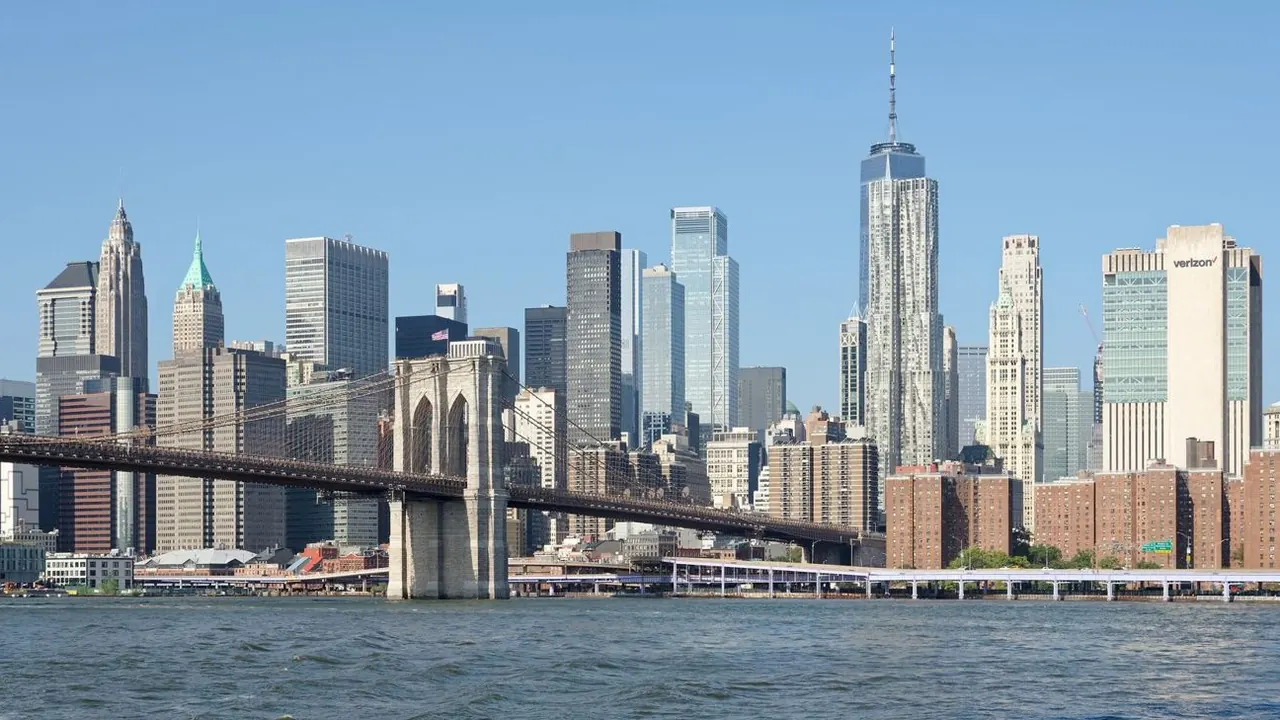
Brooklyn Bridge and Lower Manhattan
- Live music & the arts99
- Nightlife97
- Shopping97
Photo: Jakub Hałun, CC BY 4.0, cropped
Match
71
Every category weighted equally
- Beach & sun63
- Culture & arts78
- Food & nightlife80
- Family trip64
- Outdoors63
- Relax & unwind64
- Shopping & style80
- On a budget65
New York in twelve categories
Our verdict on each, scored 0 to 100 against the same fixed benchmark cities, so a score means the same thing on every page.
Beaches & swimming. Scores 50 out of 100.
Food & drink. Scores 92 out of 100.
Culture & sights. Scores 89 out of 100.
Nightlife. Scores 97 out of 100.
Nature & outdoors. Scores 55 out of 100.
Day trips. Scores 68 out of 100.
Good for families. Scores 70 out of 100.
Getting around. Scores 82 out of 100.
Shopping & style. Scores 97 out of 100.
Affordability. Scores 12 out of 100.
Live music & performing arts. Scores 99 out of 100.
Wellness & relaxation. Scores 42 out of 100.
New York category by category
Beaches & swimming
50The city has real ocean beaches, which surprises many visitors. Coney Island and Brighton Beach sit at the end of the subway lines in south Brooklyn, with a boardwalk, a famous amusement park and a Russian-speaking seafront. The Rockaways in Queens are longer and more open, with a surfing crowd, and Jones Beach and Long Beach on Long Island are about an hour away by train or car.
The Atlantic warms to about 22-24°C by August, so swimming is pleasant from late June to early September and out of the question the rest of the year. Summer weekends get very crowded. For most visitors a beach day is a break from the city, not the reason to come.
Food & drink
92Few cities eat as widely. Almost every cuisine on earth is cooked here by the communities it came from: Cantonese and Fujianese in Manhattan's Chinatown and Flushing, Colombian and Tibetan in Jackson Heights, Polish in Greenpoint, Caribbean in Crown Heights, Italian in Arthur Avenue in the Bronx. Above that sits one of the world's deepest fine-dining scenes, from tasting-menu counters to grand formal rooms.
The city's own classics are cheap and everywhere: thin, foldable pizza by the slice, bagels with lox, pastrami from Jewish delis, halal carts on street corners and late-night diners. Chelsea Market and the food halls are good for grazing, the Union Square Greenmarket shows off regional produce, and the coffee, cocktail and natural-wine scenes are serious. The one weakness is price at the upper end.
Culture & sights
89The museums alone could fill a long stay. The Metropolitan Museum of Art covers five thousand years under one roof, MoMA holds a defining collection of modern art, and Museum Mile adds the Guggenheim, the Neue Galerie and the Frick. The American Museum of Natural History, the Whitney, the Brooklyn Museum and the Cloisters, a medieval collection set above the Hudson, would headline most other cities.
The landmarks are the ones everyone already knows: the Statue of Liberty and Ellis Island, the Brooklyn Bridge, the Empire State and Chrysler buildings, Grand Central Terminal and the 9/11 Memorial. The history on show is mostly nineteenth and twentieth century, read in the brownstones of Brooklyn, the cast-iron fronts of SoHo and the tenements of the Lower East Side, rather than in any ancient core.
Nightlife
97This city really doesn't shut. Bars pour well into the small hours, the late-night trains keep people moving, and somewhere in the five boroughs a crowd is always still out. The range is huge: speakeasy-style cocktail bars and old dive bars in the East Village and Lower East Side, wine bars on the quiet streets of the West Village, rooftop bars with skyline views in Midtown and Long Island City, and gay bars in the Village with a history that goes back to Stonewall.
North Brooklyn is the heart of club culture. Williamsburg and Bushwick have warehouse spaces, industrial lofts and dance-music crowds that go on past dawn at weekends. Manhattan has the bottle-service rooms of the Meatpacking District and late lounges downtown. Pick a neighbourhood and a mood and you will find a night to match.
Nature & outdoors
55Nature here starts with the parks. Central Park and Prospect Park are big designed landscapes with woods, lakes and long loops for running and cycling, and the High Line, Hudson River Park and Brooklyn Bridge Park turn the old waterfronts into long walks. Jamaica Bay, in sight of the airport, is a major spot for migrating birds, and you can kayak on the Hudson in summer.
For real hiking, Metro-North trains run up the Hudson Valley in about ninety minutes to Breakneck Ridge and the Hudson Highlands, which have steep, rocky climbs over the river. The Palisades cliffs are just across the water in New Jersey. Bigger country such as the Catskills needs a car and a long day. Autumn colour in October is the high point.
Day trips
68The best day out is Philadelphia, about an hour and a half by train, with Independence Hall, the Liberty Bell and a walkable colonial old town. Princeton, with its Gothic university campus, is an easy trip on the way, and New Haven, home of Yale, its museums and its own style of pizza, is about two hours up the Connecticut shore.
North along the Hudson, trains and short drives reach the Gilded Age estates at Hyde Park and Tarrytown, the Rockefeller house at Kykuit, the Dia Beacon art museum in a converted factory, and the outdoor sculpture park at Storm King. Long Island has its wine country on the North Fork and the beach villages of the Hamptons, though both make a long day. Boston and Washington are better as overnight trips.
Good for families
70There is plenty made for children. The American Museum of Natural History, with its dinosaur halls and planetarium, is the big one, followed by the Bronx Zoo, one of the largest city zoos anywhere, the aquarium at Coney Island next to the old rides, the aircraft carrier museum on the Hudson and the hands-on Hall of Science in Queens. Central Park has a carousel, a small zoo, boating and dozens of playgrounds, and the Staten Island Ferry is a free harbour cruise that children love.
The hard part is logistics. Many subway stations have only stairs, which is tough with a pushchair, hotel rooms are small, and the crowds and noise in Midtown wear out little ones fast. Staying near a park helps a great deal.
Getting around
82Manhattan is made for walking. The numbered grid north of Houston Street makes it hard to get lost, and many of the main sights in Midtown, the Village and Lower Manhattan are within a long walk of each other. The subway covers four of the five boroughs, runs around the clock and takes contactless cards at the gate, so a visitor never needs a car. Ferries cross the harbour and the East River, and Citi Bike docks are everywhere.
It has its frustrations. Local and express trains share lines, the map takes some getting used to, weekend engineering work reroutes services, and many stations have only stairs and get stifling in summer. Getting to and from the airports is awkward compared with the ease of moving around once you are in the city.
Shopping & style
97This is one of the world's great shopping cities, at every level. Fifth Avenue has the flagship stores, Madison Avenue on the Upper East Side has the quiet luxury houses, and the historic department stores such as Bergdorf Goodman, Saks and Macy's at Herald Square are destinations in themselves. SoHo's cast-iron streets have the fashion and design brands, while Nolita, the West Village and the Lower East Side have small independent boutiques.
Across the river, Williamsburg and Greenpoint are good for vintage, records and young designers. The city is also strong on specialist shopping: secondhand and rare books, sneakers, camera and electronics stores, and flea and makers' markets at weekends. Few places offer as much range in a single trip.
Affordability
12This is one of the most expensive cities in the world to visit. Hotel rooms in Manhattan are small and costly all year, and dearest in autumn and December. Restaurant bills come with sales tax and an expected tip on top, cocktails and theatre tickets are steep, and the major observation decks and museums charge high entry fees.
There are ways to cut costs. Pizza slices, bagels, food carts and the restaurants of Queens and Chinatown are cheap, the subway is a flat fare to anywhere, and the Staten Island Ferry, the parks, the High Line, the bridges and many galleries are free. Staying in Brooklyn, Queens or across the river in New Jersey makes rooms cheaper without making the trip harder.
Live music & performing arts
99For performance, nowhere offers more. Broadway's theatres around Times Square stage the biggest musicals and plays in the English-speaking world, with Off-Broadway and the small downtown stages behind them. Lincoln Center holds the Metropolitan Opera, the New York Philharmonic, New York City Ballet and the Juilliard School, and Carnegie Hall hosts the world's leading orchestras and soloists all season.
Jazz has been at home here for a century, in the basement clubs of Greenwich Village and the rooms of Harlem, and there is music of some kind every night: indie rock and electronic venues in Brooklyn, gospel at Harlem churches on Sunday, comedy clubs, cabaret and modern dance at the Joyce and the Brooklyn Academy of Music. In summer, free concerts and Shakespeare fill the parks.
Wellness & relaxation
42This city is not built for slowing down, but it has a bathing culture of its own that visitors seldom find. The East Village has a Russian and Turkish bathhouse open since the late 1800s, with steam rooms, a hot stone sauna and an ice-cold plunge pool. Brighton Beach has Russian banyas, and big Korean-style jjimjilbang spas with heated rooms and pools are a short trip away in Queens and New Jersey. Manhattan adds luxury hotel spas and modern bathhouses inspired by classical baths.
The rest of the city works against rest: noise, crowds and a fast pace everywhere. For calm, visitors use a long morning in one of the big parks, the gardens of the Cloisters or the Brooklyn Botanic Garden, or a ferry ride across the harbour.
When should you go?
Pick a month to see what it is like. The climate figures are measured averages, not a forecast.
New York in July
Daytime high, °C
Rainfall in the month, mm
The whole year
Shaded against this city’s own year: the deepest cell is its best month for that figure and the palest its weakest.
Temperature and rainfall are climate normals, averaged over the years shown. New York: 1991-2020 normals, LaGuardia Airport (12.9 km from centre).
Before you go
| Measure | New York |
|---|---|
| Currency | US Dollar (USD) |
| Sockets | AB120 V, 60 Hz |
| Driving side | Right |
| Time zone | UTC-5, UTC-4 in summer |
| Emergency number | 911 |
| Elevation | 25 m |
| Main airport | John F. Kennedy International Airport (JFK)21 km from centre189 non-stop destinations |
| Public holidays this year | 13 days |
By the numbers
| Measure | New York |
|---|---|
| City population | 8,804,190 |
| People per km² | 7,256 |
| Museums within 10 km | 157 |
| UNESCO World Heritage sites within 50 km | 2 |
| Swim season, months above 21 °C | 3 months |
Compare New York with
Every comparison with a written verdict behind it.
- Berlin
- Bethany Beach
- Boston
- Charleston
- Chicago
- Dubai
- Gatlinburg
- Hong Kong
- Las Vegas
- London
- Los Angeles
- Mexico City
- Miami
- Myrtle Beach
- Ocean City, Maryland
- Paris
- Philadelphia
- Pigeon Forge
- Rehoboth Beach
- San Francisco
- Savannah
- Seattle
- Shanghai
- Tokyo
- Virginia Beach
- Washington DC
- Wilmington