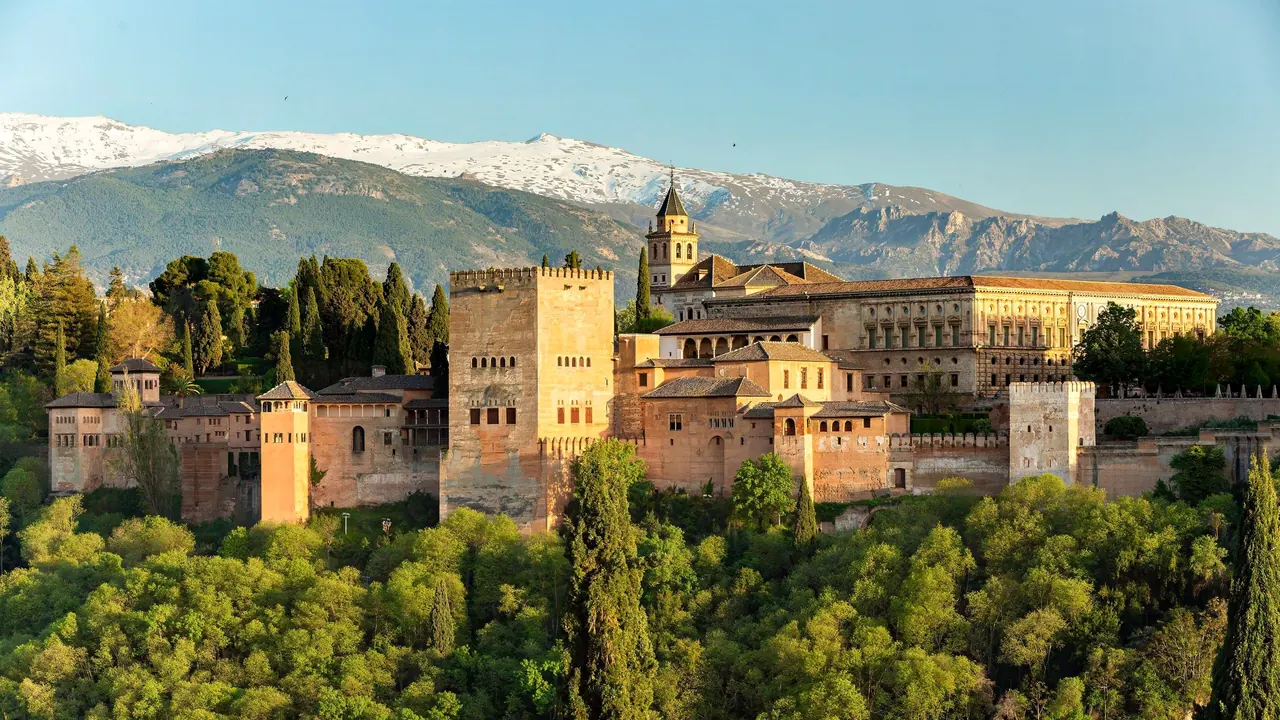
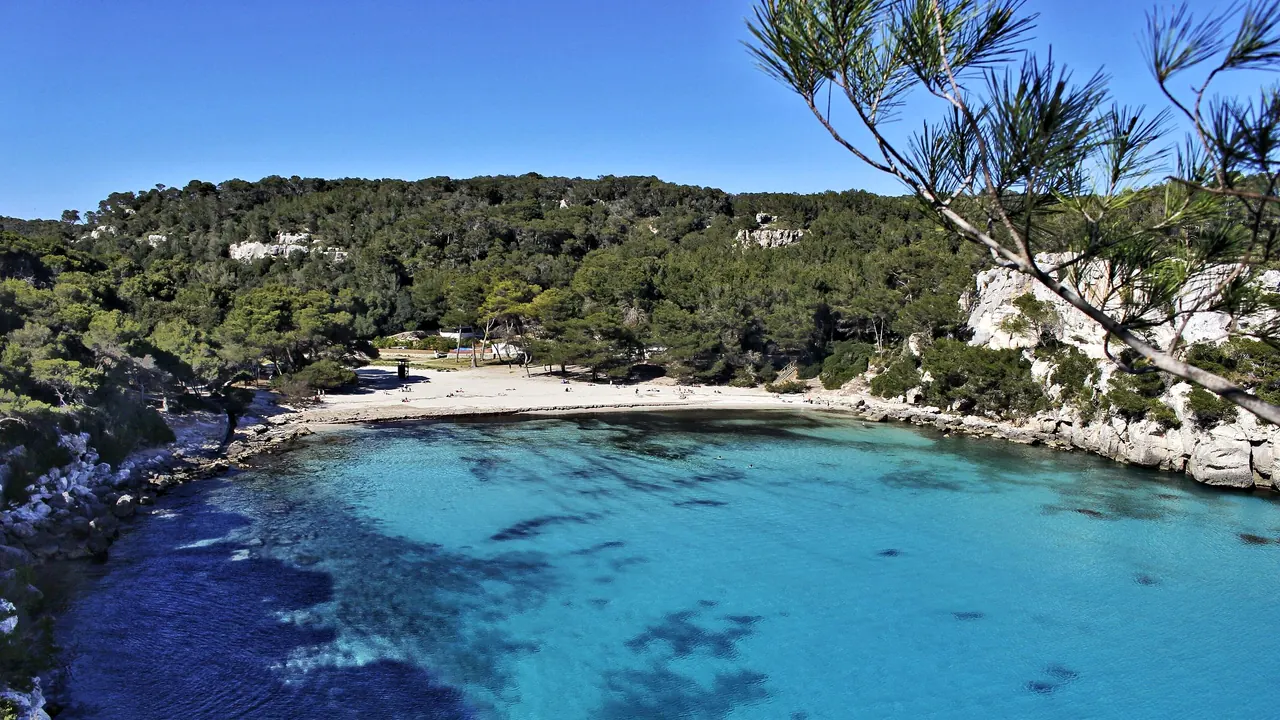
Photos: Andalusia by Diego Delso, CC BY-SA 4.0, cropped; Balearic Islands by Travelinho, CC BY-SA 3.0, cropped.
Andalusia or Balearic Islands?
Our verdict in twelve categories, each scored against the same fixed benchmark cities, and the climate month by month, so you can choose for your trip.
Choose Andalusia for
- live music and the arts
- day trips
- culture and sights
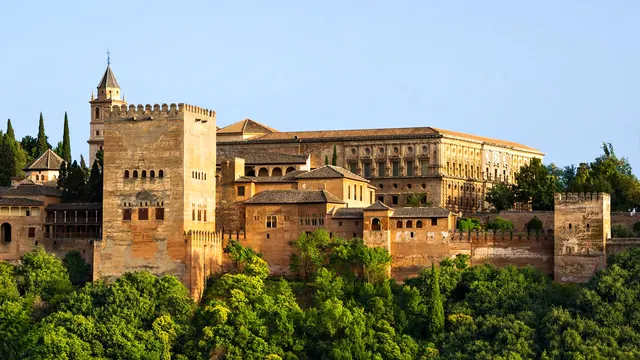
Andalusia suits a traveller who wants to move between cities. The Alhambra, Córdoba's Mezquita and Seville's cathedral and Alcázar are all here, with flamenco and tapas bars in the evenings. It is the cheaper of the two, high-speed trains link its main cities, and every base has a long list of days out. The beaches are good, especially the Atlantic sand, but they are one part of the trip rather than the point of it.
Choose Balearic Islands for
- nightlife
- beaches
- wellness
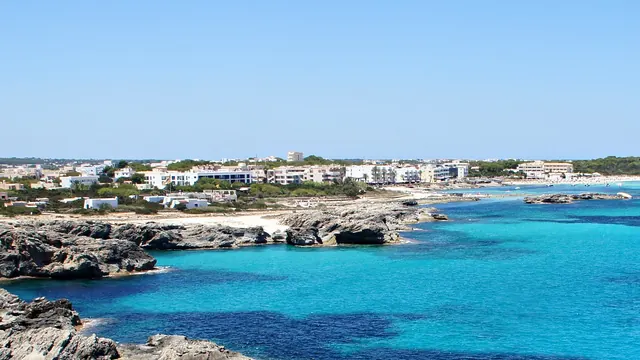
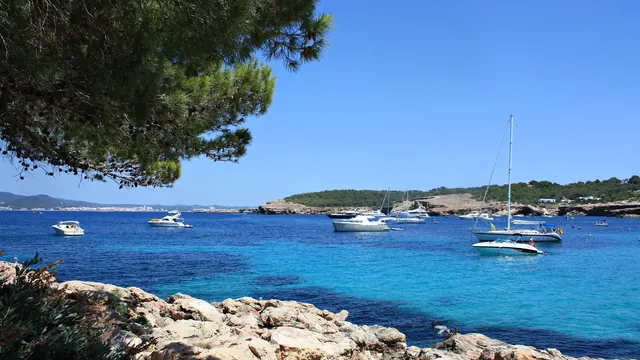
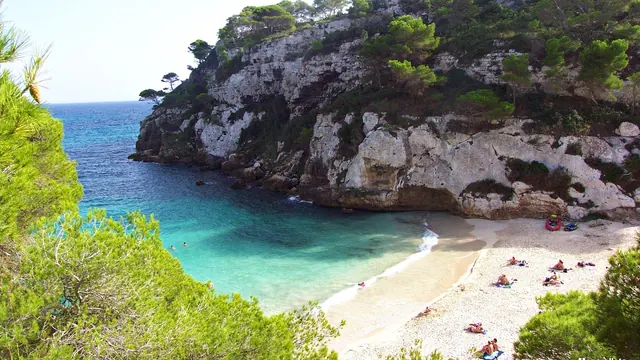
Choose the Balearic Islands for a trip built around the sea. The water is clearer and warmer, and you get Menorca's pine-backed coves, Formentera's pale sandbars and Mallorca's shallow family bays. Ibiza has the stronger club scene of the two, and the Tramuntana gives walkers and cyclists a mountain range above the coast. In return, expect higher summer costs, to pick one island and stay on it, and to find the culture mostly in Palma rather than spread across many towns.
Scoreboard
Twelve categories on one fixed scale from 0 to 100. The shaded stretch is the gap between the two.
Your match
Pick a travel style or drag the sliders, and both match scores follow your weighting.
Wins on live music and the arts and day trips with your weighting.
Wins on nightlife and beaches with your weighting.
What matters to you?
Category by category
What the scores mean for a trip.
Beaches & swimming
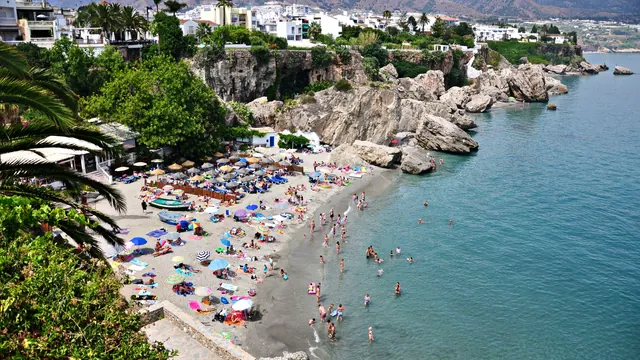
Both regions have real beaches, but the islands have the better water. Balearic seas are clear almost everywhere and a couple of degrees warmer in late summer. Coves like Macarella and Turqueta on Menorca, or the turquoise shallows of Ses Illetes, have no equal on either Andalusian coast.
Andalusia's strength is its Atlantic sand: wide dune beaches at Bolonia and Zahara backed by pine woods, though the water is cooler and the levante wind is the price. The Costa del Sol is convenient rather than beautiful, and Cabo de Gata's volcanic coves come closest to the feel of the islands.
Food & drink
Andalusia is the stronger place to eat and drink, and food shapes the whole day there. You move between tapas counters in Triana, get a free tapa with each drink in Granada, eat fried fish and shellfish on the coast and spend an afternoon in the sherry bodegas of Jerez and Sanlúcar. The cooking stays traditional, but every town has its own dishes, from Córdoba's oxtail to the jamón of Huelva.
The islands have a good country kitchen: sobrasada, tumbet, the breakfast ensaïmada, Menorcan lobster stew and Mallorcan wine. Palma is the place to eat well, with the Mercat de l'Olivar, old-town tapas and some ambitious restaurants. Away from Palma and the inland villages, though, resort menus are dull, so good meals take more effort to find.
Culture & sights
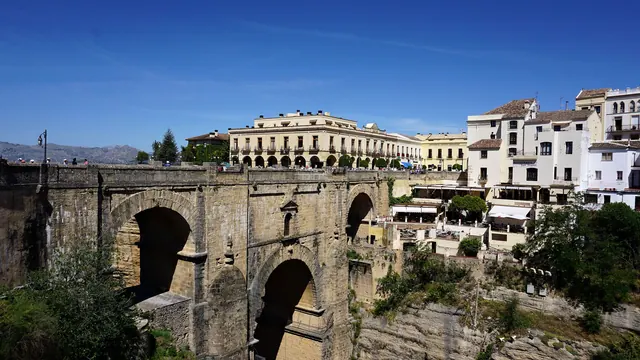
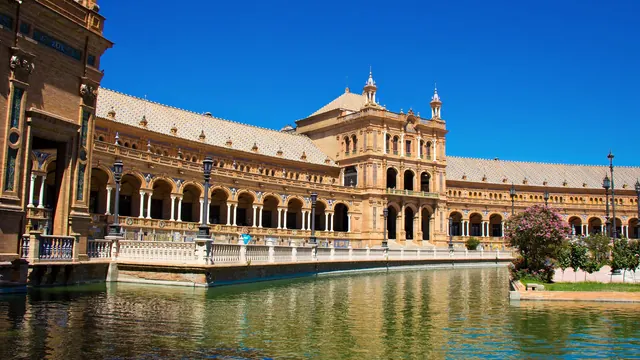
Andalusia has monuments the islands cannot match. The Alhambra, Córdoba's Mezquita and Seville's cathedral and Real Alcázar are three sights of the first rank. Úbeda, Baeza, Ronda and Cádiz carry on from there, and seeing it all properly takes a week spread across several cities.
The islands have one strong cluster in Palma, around La Seu cathedral, the Almudaina palace and the Miró foundation. Add Ibiza's walled Dalt Vila and Menorca's Bronze Age taulas and talayots, which are unusual. A few days covers it all, where Andalusia could fill a whole trip.
Nightlife
For dancing, Ibiza is in a different league. Its superclubs book the best-known DJs from late spring to early October, the sunset bars at Sant Antoni are a ritual, and nights end well after sunrise. Palma adds cocktail bars in Santa Catalina and La Lonja, but outside the season most of the islands go quiet.
Andalusia's nights are about late terraces and moving from bar to bar rather than clubs: the Alameda de Hércules in Seville, the student bars below Granada's Albaicín and Málaga's old town. The cities keep going all year, while the clubs are around Marbella in summer.
Nature & outdoors
Both are strong for the outdoors, in different ways. Andalusia offers scale and variety: the Sierra Nevada at nearly 3,500m with winter skiing, the Caminito del Rey gorge walk, El Torcal's limestone towers, Doñana's wetlands with birds and lynx, and Tarifa's wind for kitesurfing.
In the Balearics the mountains meet the sea. There is Mallorca's Tramuntana for walking the GR221 or road cycling to Formentor, Menorca's coastal Camí de Cavalls, and clear water for snorkelling, diving and sailing. Both are best in spring and autumn.
Day trips
Andalusia's many cities and towns make the difference. From Seville you can reach Itálica and Carmona, from Málaga Ronda and Antequera, and there are the white villages of the Cádiz hills. From Tarifa a ferry even crosses to Tangier. A car opens up most of it.
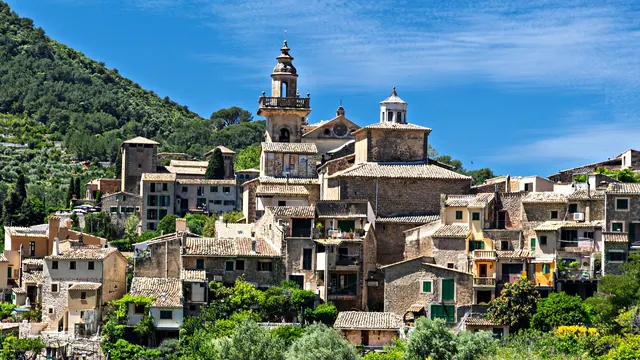
On the islands, day trips stay on the island you choose. Mallorca does well, with the old wooden train to Sóller and the stone villages of Valldemossa and Deià, and Formentera is a short hop from Ibiza. On the smaller islands the list runs out quickly.
Good for families
With children the two are close, and their beach resorts are much alike. Mallorca's shallow northern bays at Alcúdia and Pollença, with kids' clubs and pools, are slightly easier with small children. The Caves of Drach and their underground lake, on the east coast at Porto Cristo, make a separate day out. Menorca offers a quieter stay, and Ibiza's party areas and Magaluf are best avoided.
Andalusia pairs the Costa del Sol's water parks and aquarium with more to learn from, such as Granada's hands-on science museum and the Western film sets near Almería. Its inland cities can pass 40°C in high summer, though, so plan the city part of a family trip for spring or autumn.
Getting around
Andalusia is easier to tour without a car, at least between its main cities. High-speed trains join Seville, Córdoba, Málaga and Granada, and Seville and Málaga have metro and tram lines. You still need a car for the white villages and the Costa de la Luz.
In the Balearics, Palma is walkable and has buses along its bay, but most visitors hire a car to reach coves and mountain villages, and parking at beaches in high summer is hard. Changing islands means a ferry or a flight, which is why most people stay on one.
Shopping & style
Neither is a great shopping destination, and both are best for local crafts. Andalusia has Triana's ceramics, flamenco dresses and fans made for real use, lanterns in Granada's Alcaicería and leather from Ubrique.
The islands answer with leather and shoes from Inca, Menorca's avarca sandals, Manacor pearls and Ibiza's white cotton fashion and hippy markets. Each has a luxury strip: Marbella and Puerto Banús on the mainland, Palma's Passeig des Born on Mallorca.
Affordability
Andalusia is clearly the cheaper trip. Tapas and drinks cost little, Granada and Jaén still give a free tapa with each drink, and inland towns and the Almería coast keep rooms cheap. Prices rise mainly during Seville's spring festivals and on the Costa del Sol in July and August.
The Balearics are expensive in season. Ibiza and Formentera are among the costliest places in the Mediterranean, and car hire and ferries add to the bill. Mallorca's package bays and a spring or autumn visit are the ways to keep costs down.
Live music & performing arts
Flamenco gives Andalusia a lead the islands cannot match. There are nightly shows in Seville's Santa Cruz and Triana, the peñas of Jerez, zambra in the Sacromonte caves of Granada and the Bienal in Seville. Add opera at the Maestranza and summer concerts in the Alhambra's gardens.
The Balearic offer is classical and small: Palma's Teatre Principal and the symphony orchestra in winter, then summer festivals in Pollença's cloister, Deià and Valldemossa. The settings are lovely, but the programme is modest.
Wellness & relaxation
Andalusia's relaxation comes from bathing. There are Moorish-style bathhouses with warm and hot pools in Granada, Córdoba, Seville and Málaga, old thermal towns such as Lanjarón and Alhama de Granada, and the resort spas around Marbella.
The islands have almost no bathing tradition and offer quiet stays instead. You can stay in a farmhouse among almond and olive trees, in a Tramuntana hotel with a spa or at one of northern Ibiza's yoga retreats, while Menorca and Formentera are slow by nature.
When should you go?
Pick your month. The climate figures are measured averages, not a forecast.
Andalusia in July
Balearic Islands in July
Daytime high, °C
Rainfall in the month, mm
Temperature and rainfall are climate normals, averaged over the years shown. Andalusia: 1991-2020 (sunshine 1981-2010, rainfall 1981-2010) normals, Sevilla / San Pablo (8.1 km from centre). Balearic Islands: 1991-2020 normals, Palma De Mallorca / Son San Juan (0.3 km from centre).
The two regions differ most in midsummer. Andalusia's figures are taken inland, where July and August reach 36°C. That is too hot to walk around the cities in the middle of the day, so April, May and October are the months for sightseeing there. Andalusia's rain comes late in the year and heavily, with 122mm in November and wet weather into winter, though even then there is plenty of sun.
The Balearics stay milder in summer at about 31°C, and the sea is warm enough for swimming from June to October, reaching 26°C in August. The islands' rain starts earlier, in September and October, so late September can be less settled there than on the mainland. For walking or cycling in the hills of either region, spring is the safest choice.
Which traveller are you?
On a culture and arts trip, Andalusia is the clear choice. The Alhambra, the Mezquita and Seville's Alcázar make a route of their own between cities, and flamenco in Seville, Jerez and Sacromonte fills the evenings in a way the islands cannot.
For a beach and sun trip, the Balearic Islands win. The sea is clearer and a little warmer, Menorca's south coast has white-sand coves and Formentera has Ses Illetes. Andalusia's finest sand lies on the windier, cooler Atlantic shore.
On a trip on a tight budget, base yourself in Andalusia, in Granada or a small inland town such as Úbeda. Use regional buses and trains, eat the lunchtime set menu, and avoid Seville in spring. On the islands, Mallorca in May or late September is the only cheap option.
Before you go
| Measure | Andalusia | Balearic Islands |
|---|---|---|
| Official language | Spanish | Spanish |
| Currency | Euro (EUR) | Euro (EUR) |
| Sockets | CF230 V, 50 Hz | CF230 V, 50 Hz |
| Driving side | Right | Right |
| Time zone | UTC+1, UTC+2 in summer | UTC+1, UTC+2 in summer |
| Emergency number | 112 | 112 |
| Main airport | Seville Airport (SVQ)96 non-stop destinations | Palma de Mallorca Airport (PMI)201 non-stop destinations |
| Public holidays this year | 12 days | 13 days |
By the numbers
| Measure | Andalusia | Balearic Islands |
|---|---|---|
| Population | 8,619,616 | 1,221,403 |
| People per km² | - | 245 |
| Swim season, months above 21 °C | - | 5 months |
Where else could you go?
Every comparison below shares a destination with this one, so you can follow Andalusia or Balearic Islands somewhere new.
- Algarvevs Andalusia
- Costa Bravavs Balearic Islands
- Costa Blancavs Balearic Islands
- Costa Blancavs Andalusia
- Formenteravs Andalusia
- Ibizavs Andalusia