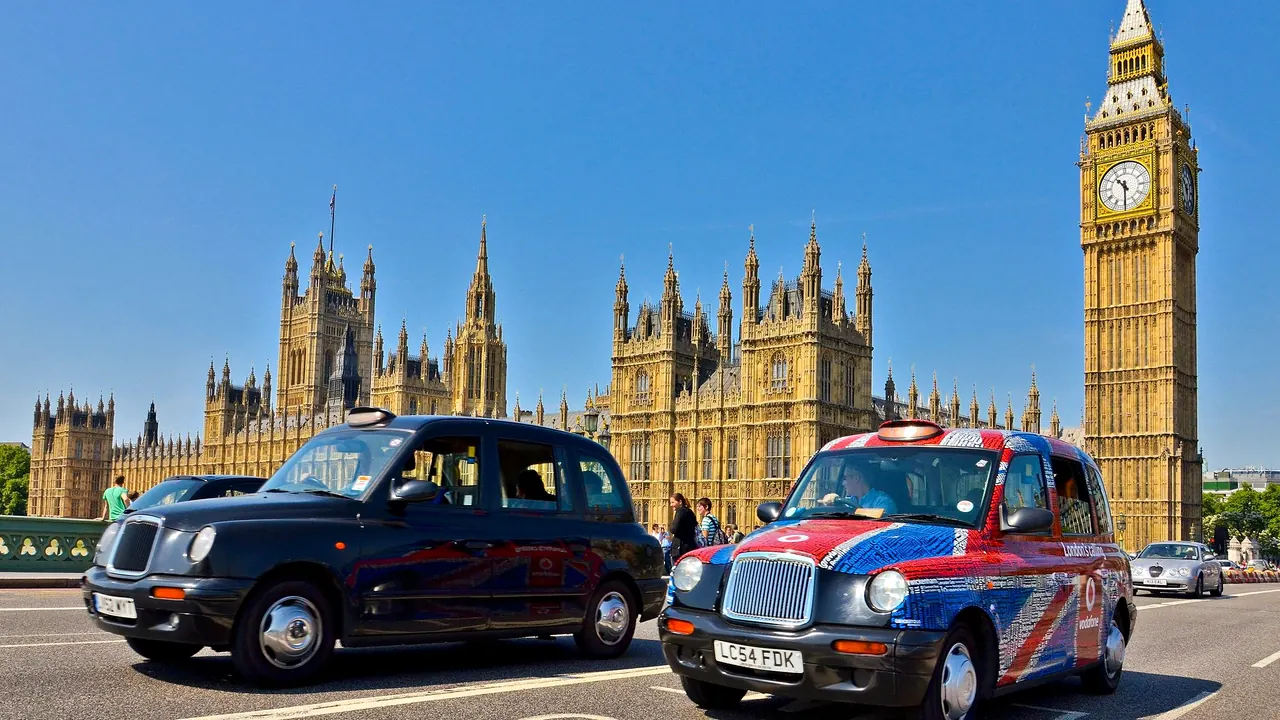
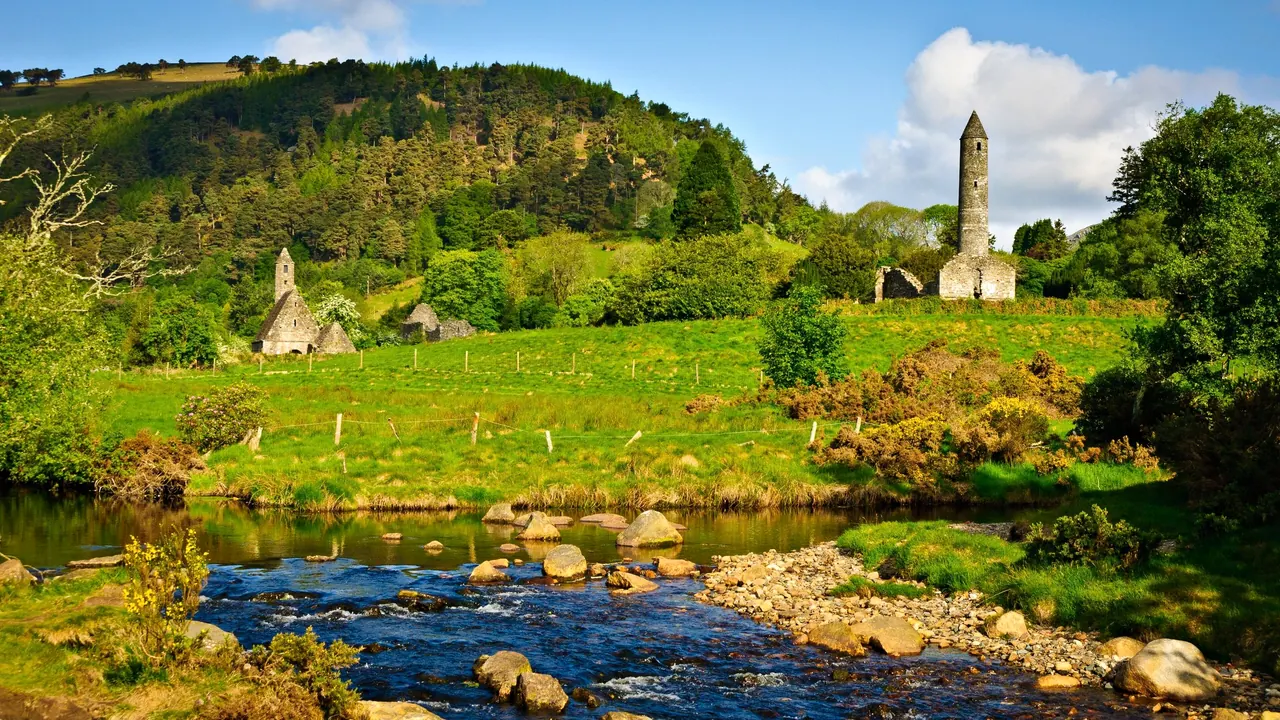
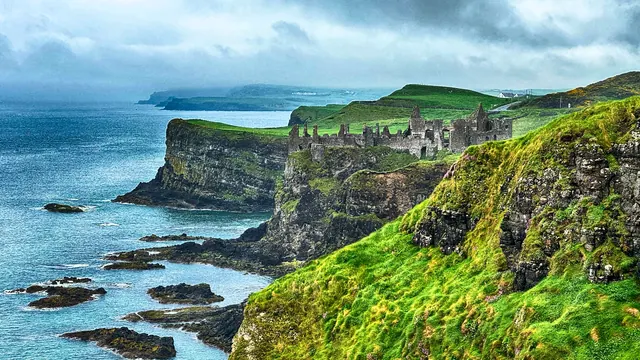
Photos: England by Pedro Lastra, CC0; Ireland by Joe King, CC BY-SA 3.0, cropped.
England or Ireland?
Our verdict in twelve categories, each scored against the same fixed benchmark cities, and the climate month by month, so you can choose for your trip.
Choose England for
- shopping
- live music and the arts
- families
England suits a traveller who wants a lot within easy reach: London's museums and stages, cathedral cities and country houses, and fast trains linking them. It is the stronger choice for culture, theatre, shopping and a family trip. It is also a little kinder to the budget, especially in the north.
Choose Ireland for
- nature and the outdoors
Ireland is for the traveller whose trip is about landscape: the cliffs, peninsulas and bogs of the west coast from Kerry to Donegal, with a fiddle session in a pub at the end of the day. You will need a hire car and a tolerance for rain. In return you get wilder country than England offers and a slower pace.
Scoreboard
Twelve categories on one fixed scale from 0 to 100. The shaded stretch is the gap between the two.
Your match
Pick a travel style or drag the sliders, and both match scores follow your weighting.
Wins on shopping and live music and the arts with your weighting.
Wins on nature and the outdoors with your weighting.
What matters to you?
Category by category
What the scores mean for a trip.
Beaches & swimming
Neither country is a beach destination and both have cold water, but England has the edge. Cornwall has golden coves and Atlantic surf beaches around Newquay and St Ives, and South Devon has sheltered bays. Together they support a proper seaside summer for families, and the sea there is slightly warmer.
Ireland's beaches are often more dramatic and emptier, from Keem Bay on Achill to Inch Strand and the long strands of Donegal. They are for a walk or a quick, brisk dip, though. Irish sea swimming is about year-round plunges at spots like the Forty Foot, not days on the sand.
Where in England: Cornwall, South Devon, North Norfolk coast, Northumberland coast
Where in Ireland: Achill Island, Dingle Peninsula, Donegal, County Wexford
Food & drink
England has more depth, most of it in London. There you find Borough Market, street-food yards, every cuisine and a serious fine-dining tier. Birmingham's baltis and the South Asian kitchens of Manchester and Leicester add a curry culture Ireland cannot match, and country gastropubs do some of the best cooking.
Ireland's strength is its produce: grass-fed beef, farmhouse cheese, Galway Bay oysters, and the food towns of West Cork and Kinsale. Its drink, stout poured in an old pub and whiskey from its distilleries, is arguably the better half of the table. Away from those places, menus in both countries can be ordinary.
Where in England: London, Birmingham, Manchester, Cornwall
Culture & sights
England is the richer culture trip by a wide margin. London's great museums, most of them free, would be enough on their own. Beyond them come York Minster, the Oxford colleges, Roman and Georgian Bath, a chain of cathedrals from Canterbury to Durham, and Stonehenge.
Ireland's heritage is very old in places and full of atmosphere. It includes the passage tombs of Newgrange in the Boyne Valley, the Rock of Cashel and the monastic ruins at Glendalough, and Dublin holds the Book of Kells and the national collections. Ireland's sights are spread thinly, so seeing them takes a road trip. England's sit close together.
Where in England: London, York, Bath, Oxford
Where in Ireland: Dublin, Boyne Valley, Kilkenny, Rock of Cashel
Nightlife
England has the bigger and later night out. Choices include Soho and Shoreditch bars, clubs in Hackney, Manchester's warehouse club culture, Newcastle's Quayside and Bristol's basement clubs.
In Ireland, going out means the pub, and it does that superbly: talk and stout in Dublin's Victorian bars, Galway's Latin Quarter and the small-town pubs of Dingle. It fades after midnight, though, with few clubs outside Dublin.
Where in England: London, Manchester, Newcastle, Bristol
Nature & outdoors
Ireland is the stronger choice for the outdoors. Its west coast runs for hundreds of kilometres of sea cliffs and mountains. Kerry has its peninsulas and Killarney National Park. Further north come the Cliffs of Moher, the limestone Burren, Connemara and the cliffs of Slieve League in Donegal. Boat trips to the Skelligs and the puffin colonies add wildlife.
England is gentler walking country. It has the fells of the Lake District, the drystone valleys of the Dales and the Peak, and the South West Coast Path running past the Jurassic Coast. The footpath walking is excellent but feels tamer, and in both countries you should expect rain.
Where in England: Lake District, Yorkshire Dales, South West Coast Path, Peak District
Where in Ireland: Kerry, Connemara, The Burren, Donegal
Day trips
England is much denser. From London, Oxford, Cambridge, Windsor and Brighton are mostly within about an hour by train. Bath reaches Stonehenge and the Cotswolds, and York reaches Whitby and Durham. Almost any base has a cathedral city or a country house nearby.
Ireland works the same way, with a base and outings from it: Glendalough and Howth from Dublin, the Aran Islands from Galway, and Cobh and Kinsale from Cork. Fewer of these trips can be done by train, though, so a car or an organised coach is often needed.
Where in England: London, Bath, York, Manchester
Good for families
England has much more built for children. There are free London museums with dinosaur and transport collections, theme parks in the Midlands and near Windsor, Chester Zoo and the Eden Project. Add steam railways and the classic seaside summer in Cornwall and Devon.
Ireland is just as safe, friendly and English-speaking. It has Dublin Zoo, Fota Wildlife Park near Cork and pony-and-trap rides in Killarney. It has no big theme-park resort, though, and its beaches suit long days of play less well. Both countries need plans for rainy days.
Where in England: London, Cornwall, Devon, Staffordshire and the Midlands
Getting around
England is the easier country to travel without a car. Fast trains link London with York, Manchester, Bristol and Bath, London has the Underground, and the historic towns are compact. Its rural areas, especially the Lakes and Cornwall, still push most visitors into a hire car.
In Ireland that rural problem covers the places most visitors come for. The scenery of Kerry, Connemara and Donegal has little rail and thin bus service. Expect either to drive on the left along narrow, stone-walled roads or to take day tours from Dublin, Galway or Killarney.
Shopping & style
England wins easily. London is one of the world's great shopping cities, from Bond Street and Savile Row to Liberty and the Portobello Road market. Brighton's Lanes, Bath's independent shops and Manchester add more.
Shopping in Ireland is about crafts rather than fashion: Aran knitwear, Donegal tweed, Waterford crystal and pottery from makers in Kilkenny, Dingle and Galway. Grafton Street in Dublin is the only real shopping district.
Where in England: London, Brighton, Bath, Manchester
Affordability
Both are expensive, but England is easier on the budget. London's free museums, cheap pub meals and the lower prices of Liverpool, Newcastle and Manchester give a careful traveller room to save.
Ireland is dearer across the board, with Dublin hotels among Europe's costliest and car hire hard to avoid. Money goes furthest in the guesthouses and farmhouse B&Bs of Donegal, Connemara and Mayo. A traditional music session costs only what you drink.
Where in England: Liverpool, Newcastle, Yorkshire Dales, Manchester
Where in Ireland: Donegal, Connemara, County Mayo
Live music & performing arts
England is one of the world's great places for the stage. London has the West End, the National Theatre, the Royal Opera House and the Proms. Beyond it are the Royal Shakespeare Company in Stratford, orchestras in Manchester and Birmingham, and summer opera at Glyndebourne.
Ireland's live art is of a different kind and hard to beat on its own terms: the informal traditional session, with fiddles and uilleann pipes in pubs from Doolin and Ennis to Dingle and Galway. Dublin's Abbey and Gate theatres carry the drama tradition, but opera and classical music have a modest presence.
Where in England: London, Manchester, Stratford-upon-Avon, Birmingham
Wellness & relaxation
Neither is a spa destination, and the two are close, but they differ in kind. England has real thermal water at Bath, where a modern spa draws on the same hot springs as the Roman Baths. Harrogate keeps its Victorian Turkish Baths.
Ireland has no hot springs. Its own ritual is the seaweed bath, a hot seawater soak offered in old bathhouses at Enniscrone, Strandhill and Kilkee, often paired with a cold sea swim and a sauna. In both countries the real rest comes from quiet countryside, the Cotswolds and the Lake District in England and Connemara's lakeside houses in Ireland.
Where in England: Bath, Harrogate, Cotswolds, Lake District
Where in Ireland: County Sligo, County Clare, Connemara
When should you go?
Pick your month, and for a country the place in it. The climate figures are measured averages, not a forecast.
Where in England
Where in Ireland
London (England) in July
Dublin (Ireland) in July
Daytime high, °C
Rainfall in the month, mm
Temperature and rainfall are climate normals, averaged over the years shown. London (England): 1992-2020 (sunshine 1991-2020, rainfall 1991-2020) normals, London Weather Centre (1.3 km from centre). Dublin (Ireland): 1991-2020 normals, Dublin Airport (9.3 km from centre).
Both countries are at their best from late May to September, and neither gets hot enough to make walking the streets uncomfortable. England is a little warmer. London reaches about 23°C in July and August, while Dublin tops out nearer 20°C. July and August are the only months for the sea, and even then it is brisk. Cornwall's water peaks at about 17°C, a degree or so warmer than the sea off Kerry and Dublin.
Rain is the bigger difference. Kerry is far wetter than London, Manchester or Cornwall. It gets close to 190mm in December, while Cornwall's wettest month brings about 120mm and London stays much drier than either. In Kerry the sunniest weeks come in May and June rather than high summer, so late spring is the best time for the Irish west. In England, Cornwall and Manchester turn wet from October, while London stays fairly dry all year. Winters in both countries are cool and grey with little sunshine, which suits cities and museums better than the countryside.
Which traveller are you?
On an outdoors trip, Ireland pulls ahead. Kerry's peninsulas and mountains, Connemara's bogs and peaks, the Burren and the Donegal cliffs feel wilder than England's fells. Boat trips to the Skelligs and surfing at Lahinch add to the walking.
On a family trip with children, England is the easier pick, above all with young ones. A cottage in Cornwall or the Yorkshire Dales makes a settled base, with rainy-day outings close by. Ireland suits older children who love being outdoors, with dolphin boats from Dingle and lake trips at Killarney.
More comparisons
Each shares a side with England or Ireland.
Where else could you go?
Set England or Ireland against any other country.