United Kingdom
London
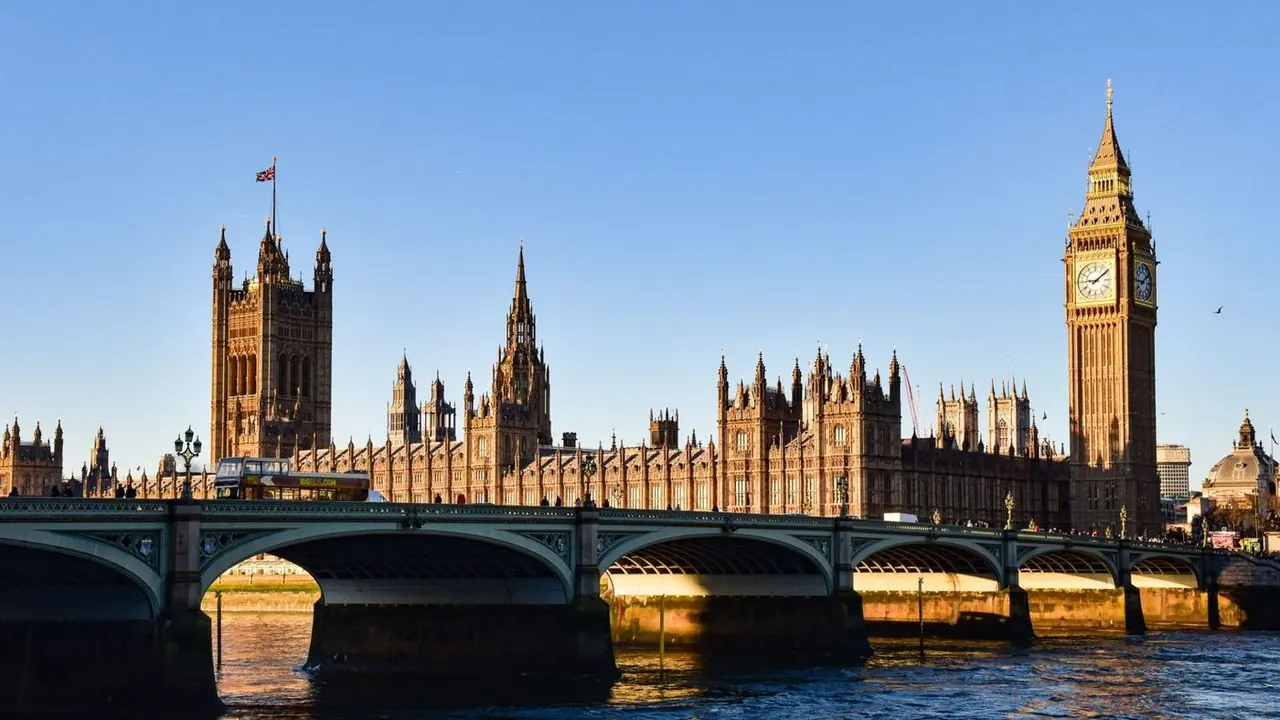
Big Ben and Westminster Bridge
- Live music & the arts98
- Shopping95
- Culture & sights94
Photo: AXP Photography, Pexels License
Match
71
Every category weighted equally
- Beach & sun60
- Culture & arts80
- Food & nightlife78
- Family trip65
- Outdoors66
- Relax & unwind62
- Shopping & style79
- On a budget65
London in twelve categories
Our verdict on each, scored 0 to 100 against the same fixed benchmark cities, so a score means the same thing on every page.
Beaches & swimming. Scores 25 out of 100.
Food & drink. Scores 84 out of 100.
Culture & sights. Scores 94 out of 100.
Nightlife. Scores 88 out of 100.
Nature & outdoors. Scores 57 out of 100.
Day trips. Scores 90 out of 100.
Good for families. Scores 82 out of 100.
Getting around. Scores 85 out of 100.
Shopping & style. Scores 95 out of 100.
Affordability. Scores 15 out of 100.
Live music & performing arts. Scores 98 out of 100.
Wellness & relaxation. Scores 40 out of 100.
London category by category
Beaches & swimming
25London is not a beach city. The nearest seaside is Brighton, about an hour by train, with a long pebble beach, a pier and a seafront promenade. The Channel there reaches about 18°C in late summer, which is bracing rather than warm, and the season is short. Margate and Whitstable on the Kent coast have sandier shores and suit a cool, breezy day out.
The city's own swimming culture is in fresh water. Outdoor lidos such as those at Brockwell Park and Parliament Hill draw crowds on warm days, and the Hampstead Heath ponds have a loyal following of year-round swimmers. Come for those, not for a beach vacation.
Food & drink
84London eats the world rather than its own cuisine. The deepest strengths come from its communities: the curry houses and Bangladeshi cooking of Brick Lane, Cantonese and regional Chinese in Chinatown, Punjabi food in Southall, Turkish grills in Green Lanes and Dalston, and Caribbean and West African cooking south of the river. Above this sits a large fine-dining scene and a strong line in modern British cooking built on seasonal produce, game and offal.
Markets add much of the pleasure. Borough Market under the railway arches at London Bridge is the best known, and weekend food markets fill old yards and arches across the east and south. The traditional pub, the Sunday roast, fish and chips and the afternoon tea of the grand hotels are the local rituals. Craft beer and natural wine have deep roots here. Eating well is easy, but it rarely comes cheap.
Culture & sights
94Few cities hold as many major collections. The British Museum, the National Gallery, the Victoria and Albert Museum, the Natural History Museum, Tate Modern and Tate Britain are each worth a day, and most charge nothing to enter. Behind them come the National Portrait Gallery, the Wallace Collection, Sir John Soane's Museum and dozens of smaller specialist museums.
The landmarks span a thousand years: the Tower of London, Westminster Abbey and the Houses of Parliament, Wren's St Paul's Cathedral and his City churches, Georgian squares in Bloomsbury and Mayfair, and the Victorian grandeur of the South Kensington museums. Greenwich adds the Royal Observatory and the Old Royal Naval College. The city is less uniform than some European capitals, with glass towers rising beside medieval lanes, but the depth means a week barely scratches the surface.
Nightlife
88Going out in London means choosing a district. Soho is the dense, late centre, with cocktail bars, a long-established gay scene and crowds spilling onto the streets. Shoreditch, Hackney and Dalston carry the club and warehouse-party culture of the east. Brixton and Peckham in the south have big venues, rooftop bars and a mixed, local crowd. Thousands of pubs, from Victorian gin palaces to riverside taverns, are the base layer everywhere.
The weekend is long and loud, and a handful of large clubs run until morning. But many pubs still empty around eleven, residential areas go quiet early, and outside the main hubs the city keeps sensible hours. Expect a world-class night out on Friday and Saturday rather than a city that never sleeps.
Nature & outdoors
57For a city of its size London is unusually green. Hyde Park, Regent's Park and St James's Park run through the centre, Hampstead Heath gives open hilltop views over the skyline, and Richmond Park is a huge expanse of ancient oaks and grassland where herds of red and fallow deer roam. Kew's botanic gardens and the Thames Path, which can be walked or cycled out past Hammersmith and Richmond, add more.
Beyond the city the landscape is gentle rather than dramatic. The Chiltern beechwoods, the North Downs around Box Hill and the chalk ridges of the South Downs are an hour or so by train, with good marked footpaths. The white cliffs of the Seven Sisters are a longer day. There are no mountains, and walking weather is mild but often grey and damp.
Day trips
90London sits at the hub of a rail network that makes much of southern England an easy day out. Oxford and Cambridge, with their college quadrangles and libraries, are each about an hour away. Windsor Castle is under an hour. Bath, with its Roman baths and Georgian crescents, takes about an hour and a half by train, and Stonehenge and Salisbury Cathedral make a pairing to the south-west.
To the south and east are Canterbury Cathedral, the seaside at Brighton, the castles of Kent such as Leeds and Dover, and the historic dockyard at Portsmouth. St Albans, Rye, Winchester and the Cotswold villages add quieter options. The list is long enough that a week in London can easily include three or four very different outings without repeating a theme.
Good for families
82London is one of the easier big cities to fill with children's days. The Natural History Museum with its dinosaur halls, the hands-on galleries of the Science Museum and the Young V&A in Bethnal Green cost nothing to enter. Most of the parks are free too, with playgrounds and boating lakes, and the Diana Memorial Playground in Kensington Gardens has a pirate ship at its centre. ZSL London Zoo sits in Regent's Park. The aquarium on the South Bank, the London Eye and the Tower's armour and crown jewels appeal to older children.
Legoland Windsor, the Harry Potter studio tour and the Thorpe Park and Chessington theme parks are within reach outside the city. The difficulty is scale. Distances are long, and many Tube stations have only stairs, which is hard with a buggy. The central attractions get very crowded when schools are out. Buses, with step-free boarding, are often the easier way to get around.
Getting around
85A visitor never needs a car in London. The Underground reaches most places worth going, the Elizabeth line and Overground fill gaps, and red double-decker buses cover everything else, with a top-deck view that makes them a sightseeing option in their own right. One contactless card or phone pays for all of it, and riverboats run along the Thames between Westminster, the City and Greenwich.
The central areas, from Westminster through Covent Garden and Soho to the South Bank, are pleasant to walk, and cycle hire docks sit on most corners. The catch is size: the city is spread out, journeys between outer neighbourhoods take time, many stations involve long corridors and stairs, and the Tube is packed and hot at rush hour.
Shopping & style
95London is one of the great shopping cities. Bond Street and Sloane Street hold the luxury houses, Oxford Street and Regent Street the flagships, and Savile Row and Jermyn Street a living tradition of bespoke tailoring and shirtmaking. The historic department stores are sights in themselves: Harrods in Knightsbridge, Liberty in its mock-Tudor building, Selfridges, and Fortnum & Mason for tea and hampers.
The independent side is just as strong. Marylebone High Street, Covent Garden's Seven Dials, and the vintage and design shops of Shoreditch and Spitalfields suit browsing. Portobello Road's antiques, Camden's alternative stalls, the Sunday flower market on Columbia Road and Greenwich market add weekend character, and the bookshops of Charing Cross Road and the West End are a draw of their own.
Affordability
15London is an expensive place to stay. Central hotel rooms are among the costliest in Europe, small for what they cost, and eating out, pub rounds and theatre seats all add up quickly. Transport fares are high per journey, though daily caps on contactless payment soften this for heavy users.
The great saving is that the national museums and galleries are free, as are the parks, markets and many of the best walks. Staying further out along a good Tube or rail line, eating at markets and South Asian or Turkish cafés, and building days around free collections make a visit more manageable, but it will never feel like a cheap city.
Live music & performing arts
98London is one of the two great theatre cities in the world. The West End fills its Victorian and Edwardian playhouses with long-running musicals, star-led plays and transfers, while the National Theatre on the South Bank, Shakespeare's Globe, the Old Vic, the Royal Court and dozens of fringe stages above pubs give drama real depth. The Royal Opera House in Covent Garden and English National Opera at the Coliseum cover opera and ballet.
Classical music is just as strong. Five major orchestras play at the Barbican, the Royal Festival Hall and Cadogan Hall, the Wigmore Hall is a reference for chamber music, and the BBC Proms fill the Royal Albert Hall every summer. Add jazz cellars in Soho, the grime and rock venues of Camden and Brixton, and arena tours, and there is a serious choice every night of the year.
Wellness & relaxation
40London is not a restorative city, but it has more bathing than people expect. A few public Turkish baths from the Victorian and Edwardian era survive, with steam rooms and plunge pools under tiled vaults, notably in Bayswater and at Ironmonger Row in Islington. The grand hotels of Mayfair and Knightsbridge run full-scale spas, and day spas are easy to find.
Unwinding otherwise means the parks, the quiet of a weekday gallery, or a cold dip at a lido or the Hampstead ponds. The general pace is fast and crowded, and anyone wanting to take the waters properly heads to the thermal spa at Bath, about an hour and a half by train.
When should you go?
Pick a month to see what it is like. The climate figures are measured averages, not a forecast.
London in July
Daytime high, °C
Rainfall in the month, mm
The whole year
Shaded against this city’s own year: the deepest cell is its best month for that figure and the palest its weakest.
Temperature and rainfall are climate normals, averaged over the years shown. London: 1992-2020 (sunshine 1991-2020, rainfall 1991-2020) normals, London Weather Centre (1.3 km from centre).
Before you go
| Measure | London |
|---|---|
| Official language | English |
| Currency | Pound Sterling (GBP) |
| Sockets | G230 V, 50 Hz |
| Driving side | Left |
| Time zone | UTC, UTC+1 in summer |
| Emergency number | 112 or 999 |
| Elevation | 4 m |
| Main airport | London Heathrow Airport (LHR)23 km from centre224 non-stop destinations |
| Public holidays this year | 8 days |
By the numbers
| Measure | London |
|---|---|
| City population | 8,799,728 |
| People per km² | 5,598 |
| Museums within 10 km | 216 |
| UNESCO World Heritage sites within 50 km | 4 |
Compare London with
Every comparison with a written verdict behind it.
- Aberdeen
- Amsterdam
- Antwerp
- Bath
- Belfast
- Berlin
- Bruges
- Brussels
- Cardiff
- Cologne
- Dublin
- Dusseldorf
- Edinburgh
- Frankfurt
- Ghent
- Glasgow
- Inverness
- Liverpool
- Maastricht
- Manchester
- New York
- Paris
- Rome
- Rotterdam
- The Hague
- Tokyo
- Utrecht
- York