United Kingdom
Bath
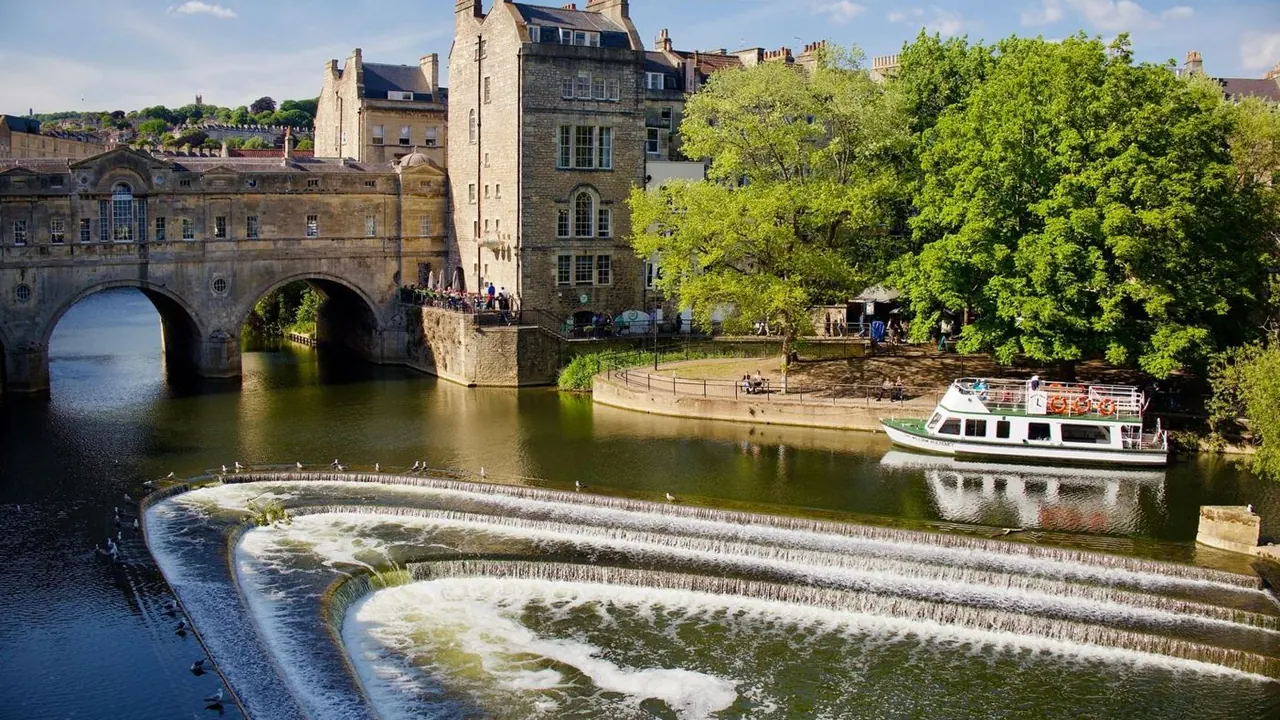
Pulteney Bridge and the weir on the Avon
- Day trips80
- Wellness & relaxation78
- Getting around72
Photo: Lucas Carlini, Pexels License
Match
51
Every category weighted equally
- Beach & sun47
- Culture & arts56
- Food & nightlife49
- Family trip50
- Outdoors54
- Relax & unwind53
- Shopping & style53
- On a budget49
Bath in twelve categories
Our verdict on each, scored 0 to 100 against the same fixed benchmark cities, so a score means the same thing on every page.
Beaches & swimming. Scores 10 out of 100.
Food & drink. Scores 44 out of 100.
Culture & sights. Scores 68 out of 100.
Nightlife. Scores 30 out of 100.
Nature & outdoors. Scores 58 out of 100.
Day trips. Scores 80 out of 100.
Good for families. Scores 50 out of 100.
Getting around. Scores 72 out of 100.
Shopping & style. Scores 54 out of 100.
Affordability. Scores 27 out of 100.
Live music & performing arts. Scores 44 out of 100.
Wellness & relaxation. Scores 78 out of 100.
Bath category by category
Beaches & swimming
10Bath is an inland city in a river valley, and there is no beach life to speak of. The nearest seaside is Weston-super-Mare, about an hour away on the Bristol Channel. The sea there is brown and shallow, the tide goes out a very long way, and in late summer it reaches about 17°C at best. In warm weather locals swim in the Avon at a weir east of the city and at a few river spots upstream. For proper sand and clear water you need the Dorset or Devon coast, which is a full day out of two hours or more each way.
Food & drink
44Bath eats well for a small city. There are plenty of independent restaurants, gastropubs and bakeries in the lanes around the Abbey and up Walcot Street, and the food draws on what grows nearby: West Country cheese, Somerset cider, lamb, and fish brought up from the south coast. Bath has its own baked goods too, the sugar-topped Bath bun, the Bath Oliver biscuit and the brioche-like Sally Lunn bun. The Sally Lunn bun is still served in one of the city's oldest houses.
The farmers' market in the old Green Park railway station is the best place to meet local producers, and the Georgian streets are full of tearooms serving afternoon tea. What Bath lacks is breadth. There is not much cooking from other cuisines, there is almost no street food, and the city empties early in the evening.
Culture & sights
68The whole city is a UNESCO World Heritage Site, and it is easy to see why. Bath is the most complete Georgian townscape in Britain, built in honey-coloured stone that glows in late afternoon light. The Circus, the sweeping curve of the Royal Crescent, Pulteney Bridge with shops built along it, and the Assembly Rooms all lie within a short walk of each other. Below the eighteenth-century city are the Roman Baths, where steaming spring water still fills the great bath, alongside a temple precinct and an excellent museum.
Bath Abbey, with its fan vaulting and angels climbing ladders on the west front, stands right beside the baths. Smaller museums fill out a stay: the Holburne for fine and decorative art, No. 1 Royal Crescent for Georgian domestic life, the Victoria Art Gallery, the Herschel Museum and the American Museum on the city's edge. Jane Austen's connection with the city is celebrated all over town. Two or three days cover it well.
Nightlife
30Evenings in Bath centre on the pub. There are old coaching inns and snug Georgian taverns, real-ale houses along Walcot Street and around Kingsmead, and a few wine and cocktail bars. Two universities fill a small set of clubs and late bars during term, and Friday and Saturday nights draw groups from the surrounding towns. Otherwise the city goes quiet early, and on weeknights most visitors will be back at their hotel soon after dinner. For a big night out, Bristol is about fifteen minutes away by train.
Nature & outdoors
58Bath lies in a bowl of steep green hills, and you can walk straight out of town into countryside. The Bath Skyline loop follows the ridges above the city through woods and meadows. The towpath of the Kennet and Avon Canal runs east through the Limpley Stoke valley, and the Two Tunnels Greenway takes cyclists through old railway tunnels into the Somerset countryside. You can also hire canoes and narrowboats on the canal.
The southern Cotswolds start just north of the city, with dry-stone walls and long-distance footpaths. To the south the Mendip Hills hold Cheddar Gorge and limestone caves, all within an hour. This is soft, rolling English landscape rather than wild country, and it is at its best from late spring to early autumn. Winters are grey and the paths get muddy.
Day trips
80Day trips are one of Bath's great strengths. Bristol, with its harbourside, Brunel's ship and suspension bridge, is about fifteen minutes away by train. Stonehenge and the larger stone circle at Avebury are each about an hour by road. Wells, England's smallest cathedral city, has a magnificent west front and a moated bishop's palace, and Glastonbury with its abbey ruins and Tor is just beyond it. Closer to Bath are the wool towns: Bradford-on-Avon, and the preserved village of Lacock with its abbey.
The southern Cotswolds, including Castle Combe and Tetbury, are under an hour away. Salisbury and its cathedral, the gardens at Stourhead and the stately home at Longleat each make a good day out, and Cardiff is a little over an hour by train. Bristol and Cardiff are easy by train, but many of the villages are much easier by car or on a small-group tour.
Good for families
50Bath is safe and small, and children usually love the Roman Baths, with steam rising off green water and costumed characters on the terraces. Royal Victoria Park has a large playground and open lawns below the Royal Crescent. Boat trips on the river and a children's theatre add a little more. Beyond that, the city is built for adults who enjoy architecture, tea and shops. Its streets climb steeply, which makes pushchairs hard work. Families usually look further afield: Bristol, a short train ride away, has a hands-on science centre, an aquarium and a wildlife park, and the safari park at Longleat is about forty minutes by car.
Getting around
72The heart of Bath is small enough to walk from end to end in about twenty minutes. The Abbey, the Roman Baths, the Circus, the Royal Crescent and the main shopping streets are all close together, and much of the centre is pedestrianised. The railway station sits at the bottom of the town, with direct trains to Bristol and London. A car is a burden in the city itself, as streets are narrow, traffic gets congested and parking is scarce, so most visitors use the park-and-ride sites on the edge. Buses climb the steep hills to the outer viewpoints and the university. Beyond the city, many villages and country sights are poorly served by public transport, so you need a car or a tour to reach them.
Shopping & style
54Shopping is one of the classic ways to spend a day in Bath. Milsom Street and the streets around it hold fashion shops and well-known British brands in Georgian buildings, and the SouthGate district near the station gathers the high-street chains. What sets the city apart is its small independent shops. There are bookshops, jewellers and homeware stores in the narrow lanes around the Abbey, antiques along Bartlett Street, and the old artisan quarter of Walcot Street with furniture makers, galleries and salvage dealers.
The Guildhall Market, a covered hall that has been trading for centuries, sells oddments, books and local food. Little shops line both sides of Pulteney Bridge. There is no real luxury tier or large department-store scene, but browsing here is pleasant and has its own character.
Affordability
27Bath is an expensive place to stay. It is a small city with many visitors, so central hotels and guesthouses are dear, and on summer weekends and around Christmas they are very dear and book up early. The Roman Baths and the thermal spa are expensive. Restaurants charge what you would expect in southern England. The centre is walkable, so you spend little on transport, and pub lunches keep the cost of food down. Staying midweek, or sleeping in Bristol and coming over by train, makes the biggest difference to the bill.
Live music & performing arts
44The Theatre Royal, a Georgian playhouse with a plush gilded auditorium, is the centre of Bath's stage life. It runs a year-round programme of touring drama, plays heading for London's West End, opera, dance and a traditional Christmas pantomime. The theatre also has a small studio for new and international drama and a separate theatre for children. Concerts are held in Bath Abbey and the Assembly Rooms, and the Forum, an Art Deco hall, hosts bands and comedy. The city's calendar includes long-running festivals of literature, music and Mozart. There is no resident orchestra or opera company, and on most nights there is only a small choice of live music.
Wellness & relaxation
78Bath exists because of its hot springs. Water rises from deep underground at about 46°C, and this is the one place in Britain where you can still bathe in natural thermal water. Thermae Bath Spa draws on the springs. Its open-air rooftop pool looks out over the Abbey and the surrounding hills, and it is especially lovely after dark or on a cold winter evening. Across the lane, the small Georgian Cross Bath offers a quieter, more intimate soak. Hotel spas around the city add treatment rooms and pools of their own.
The town suits a slow pace. You can take tea in the Pump Room, walk in the Georgian gardens and the parade gardens by the river, and spend unhurried afternoons in a city made for strolling. The spa can be crowded at weekends, so a midweek visit is calmer.
When should you go?
Pick a month to see what it is like. The climate figures are measured averages, not a forecast.
Bath in July
Daytime high, °C
Rainfall in the month, mm
The whole year
Shaded against this city’s own year: the deepest cell is its best month for that figure and the palest its weakest.
Where the figures come from
Bath's temperatures are measured 29 km from the centre, at Lyneham.
Bath has no rain gauge within 25 km of the centre, so its rainfall comes from a gridded climate dataset read at the city rather than from a gauge further away.
Temperature and rainfall are climate normals, averaged over the years shown. Bath: 1991-2020 normals, Lyneham (29.2 km from centre).
Before you go
| Measure | Bath |
|---|---|
| Official language | English |
| Currency | Pound Sterling (GBP) |
| Sockets | G230 V, 50 Hz |
| Driving side | Left |
| Time zone | UTC, UTC+1 in summer |
| Emergency number | 112 or 999 |
| Elevation | 132 m |
| Main airport | Bristol Airport (BRS)25 km from centre117 non-stop destinations |
| Public holidays this year | 8 days |
By the numbers
| Measure | Bath |
|---|---|
| City population | 94,092 |
| People per km² | 3,245 |
| Museums within 10 km | 17 |
| UNESCO World Heritage sites within 50 km | 2 |
| Swim season, months above 21 °C | None |
Compare Bath with
Every comparison with a written verdict behind it.