Peru
Cusco
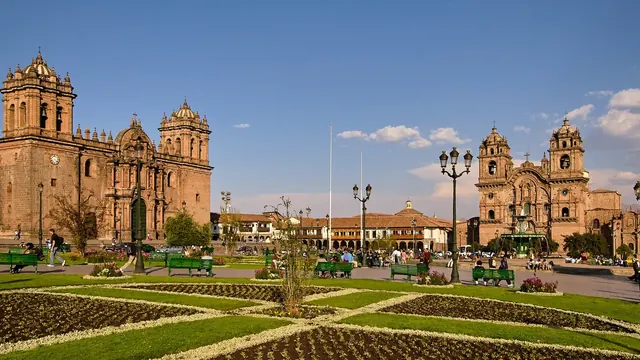
Photo: Pedro Szekely, CC BY-SA 2.0, cropped
Match
49
- Beach & sun45
- Culture & arts55
- Food & nightlife50
- Family trip47
- Outdoors56
- Relax & unwind47
- Shopping & style50
- On a budget52
Cusco in twelve categories
Our verdict on each, scored 0 to 100 against the same fixed benchmark cities, so a score means the same thing on every page.
Beaches & swimming. Scores 3 out of 100.
3Food & drink. Scores 56 out of 100.
56Culture & sights. Scores 81 out of 100.
81Nightlife. Scores 42 out of 100.
42Nature & outdoors. Scores 86 out of 100.
86Day trips. Scores 78 out of 100.
78Good for families. Scores 10 out of 100.
10Getting around. Scores 48 out of 100.
48Shopping & style. Scores 52 out of 100.
52Affordability. Scores 73 out of 100.
73Live music & performing arts. Scores 30 out of 100.
30Wellness & relaxation. Scores 33 out of 100.
33Cusco category by category
Beaches & swimming3
Cusco sits at about 3,400m in the Andes, a long way from any coast, so there is no beach life here. The nights are cold even in the dry season, and the rivers and lagoons in the hills are glacial and not for swimming. If a beach matters to your trip, you will need a flight down to the Pacific coast.
Food & drink56
Eating in Cusco follows the highlands: potatoes and maize in many varieties, quinoa, alpaca, trout from the mountain rivers, and cuy (roast guinea pig) for anyone curious. Hearty soups, chicharrón and the slow-cooked dishes of the local picanterías are the comfort food, with chicha de jora and a sweeter fruit chicha to drink. The San Pedro market is the place to start, with juice stalls, set-lunch counters and a great deal of produce piled high.
Around the Plaza de Armas and in San Blas, upmarket Novoandino restaurants work native ingredients into tasting menus, and the Sacred Valley adds a few high-end tables of its own. Range is the weak point. Away from Peruvian cooking the choice thins quickly, and the streets nearest the square are lined with forgettable menus aimed at tour groups.
Culture & sights81
Cusco was the Inca capital, and you can still see it. Whole streets run between walls of fitted stone with no mortar, such as Hatun Rumiyoc with its famous twelve-angled stone, and the Spanish built their city directly on top. The clearest example is Qorikancha, the Inca sun temple with the Santo Domingo monastery rising from its foundations. The cathedral and the Jesuit church of La Compañía face each other across the Plaza de Armas, and the cathedral is full of Cusco School paintings.
Above the town, the giant zigzag walls of Sacsayhuamán are a steep walk up from the centre, with the smaller sites of Qenqo and Tambomachay further along the same ridge. The museums are worth seeing but not large: the Inka museum, the pre-Columbian art collection and the religious art in the archbishop's palace. San Blas, with its whitewashed lanes and craft workshops, is a pleasant place to finish the day.
Nightlife42
Going out in Cusco means a small cluster of bars and clubs in the streets just off the Plaza de Armas. They fill with backpackers and trekkers, and on weekends some stay open into the early hours. Pisco sours, cheap drinks and hostel pub crawls set the tone, and a few quieter cocktail and craft beer bars sit in San Blas. The scene is lively in a limited way rather than varied, and there is little local nightlife for a visitor to join. Many people drink less than usual anyway, because alcohol hits harder at this altitude and tours to Machu Picchu or the mountains often leave before dawn.
Nature & outdoors86
Cusco is a base for some of the great mountain country of South America. The Sacred Valley of the Urubamba lies below the city, with farmed terraces and the snow peaks of the Cordillera Urubamba above it. Further out, day hikes climb to the turquoise glacial lake of Humantay under Salkantay, and to the striped slopes of Vinicunca, the Rainbow Mountain, at over 5,000m. Both mean leaving in the dark and walking hard in thin air.
The longer treks are why many come: the classic Inca Trail, the Salkantay route and the remote circuit around Ausangate. There is also rafting on the Urubamba and Apurímac, mountain biking down from the high plateau, and condors and vicuñas on the puna. The dry season from May to September brings clear skies and freezing nights. The wet months are greener but cloudier, and trails can be muddy.
Day trips78
The places worth a day out from Cusco are almost all Inca or colonial, and most are in the Sacred Valley, about an hour or so away by road. Pisac has a hilltop citadel above a market town. Ollantaytambo is still lived in on its Inca street grid, below a terraced fortress. Chinchero has a colonial church built on Inca walls and a strong weaving tradition. The circular terraces of Moray and the white salt pans of Maras are usually seen together. To the south-east, the painted church of Andahuaylillas, the stone water channels of Tipón and the pre-Inca ruins of Pikillacta make a quieter day.
Machu Picchu is the destination most people come for, but it is not an easy day out. You need a road transfer, then a train down the gorge to Aguas Calientes, then a bus up to the site. That makes for a very long day, so many visitors stay a night in the valley. The range is narrow. There is no other large town within reach and no wine country, so a visitor who wants variety will find the same themes repeated, however good they are.
Good for families10
Cusco is hard going with young children. At 3,400m altitude sickness is a real risk, and young children cannot always say how they feel. The streets are steep, cobbled and narrow, and the pavements are often barely wide enough to walk on. Nothing in the city is made for children. The main attractions are ruins, churches and long days on the road or the train, plus early starts. Older children who like history and walking can get a lot out of the trip, especially llamas and alpacas in the Sacred Valley. Families with small children often spend more time at the lower altitude of the valley and less in the city itself.
Getting around48
The historic centre is small, and almost everything you want to see in it is a walk from the Plaza de Armas. Those walks are steep, though, and the thin air makes the climbs to San Blas or Sacsayhuamán hard work in the first days. The cobbles and narrow pavements mean watching your step. There is no metro or tram. Taxis are plentiful and cheap for longer hops or the climb back uphill at night. For the Sacred Valley, shared minibuses run from depots on the edge of town, but most visitors use organised tours or a private driver. Machu Picchu is reached by train from stations outside the city.
Shopping & style52
Shopping in Cusco is about Andean textiles. Alpaca and baby alpaca knitwear, woven blankets and ponchos are the reason to bring an empty bag, and the best pieces come from weaving cooperatives that use natural dyes, such as those in Chinchero. San Blas has workshops making ceramics, carved religious images and silverwork. The San Pedro market and the big craft halls sell everything from chullo hats to dried corn. A great deal of what is sold around the Plaza de Armas is the same factory-made stock in shop after shop, and labels that claim alpaca do not always mean it. Apart from crafts, there is little fashion or design shopping.
Affordability73
Day to day, Cusco is cheap. Market lunches and local set menus, taxi rides and simple guesthouses cost little by Western standards, and many of the churches and Inca sites are covered by a combined tourist ticket. The expense is concentrated in a few places. The train and entry for Machu Picchu are costly and hard to avoid, and guided treks such as the Inca Trail are priced for foreigners. The boutique hotels in restored colonial mansions and the restaurants around the main square charge close to international rates. A careful traveller can keep a stay modest, but the big excursions take up a large share of any budget.
Live music & performing arts30
Live performance in Cusco is mostly Andean music and dance. Folkloric shows with costumed regional dances run most evenings in the centre, and many restaurants have panpipe and charango bands playing over dinner. The festival calendar is the real strength. Inti Raymi re-enacts the Inca sun festival at Sacsayhuamán around the June solstice, and Corpus Christi and the Qoyllur Rit'i pilgrimage in the mountains fill the streets and hills with dancers in masks. There is little formal theatre, classical music or a regular club circuit for live bands, so most evenings offer a show staged for visitors or nothing at all.
Wellness & relaxation33
Cusco has no bathing tradition of its own. The hot springs a visitor might use are at Aguas Calientes below Machu Picchu or out at Lares, both well beyond the city. What it does have is massage, sold cheaply on every street around the main square, and a number of hotel spas. Some of them pump oxygen into the rooms to help guests adjust to the altitude. For real rest, many visitors go down to the Sacred Valley, where lodges by the river offer yoga, gardens and quiet. The city itself is not a natural place to unwind. Altitude makes the first days tiring, nights are cold and early tour departures set the rhythm.
When should you go?
Pick a month to see what it is like. The climate figures are measured averages, not a forecast.
| July | Cusco |
|---|---|
| Daytime high | 20 °C |
| Night-time low | 1 °C |
| Rainfall in the month | 5 mm |
| Daylight | 11 hours a day |
The whole year
Shaded against this city’s own year: the deepest cell is its best month for that figure and the palest its weakest.
Where the figures come from
Cusco's station stands 151 m below the city centre, so the centre is likely a little cooler than the figures say.
Temperature and rainfall are climate normals, averaged over the years shown. Cusco: 1991-2020 normals, Cuzco (3.7 km from centre).
Getting there
| Flying from | Cusco |
|---|---|
| LimaLIM | 1 h 20 m €95-160 CUZ · 5 km |
| ArequipaAQP | 1 h 0 m no fares CUZ · 5 km |
| La PazLPB | 1 h 15 m no fares CUZ · 5 km |
| Puerto MaldonadoPEM | 1 h 0 m no fares CUZ · 5 km |
| SantiagoSCL | 3 h 15 m no fares CUZ · 5 km |
| BogotaBOG | 3 h 5 m €424-527 1 stop CUZ · 5 km |
The busiest departure cities for Cusco, with a place kept for each other part of the world. Busiest means arriving passengers where an official count exists, and where none does, the number of non-stop services flown: official route statistics are published by the European reporting countries and by nobody else, so a table ranked on them alone would offer a reader in New York or Tokyo ten European cities. Flying times are estimated from the distance between airports, and every row is a city flown non-stop. Where the typical offer connects anyway, the stops are shown. Under each figure is the airport the flight lands at and how far that is from the centre, because the nearest airport is not always the one a route is flown to. Typical return fares for 2026-10 to 2026-12, cached market data up to 7 days old. The figure is the middle half of the offers found, so a single price means they agreed and a range means they did not; for a typical route that middle half spans about a quarter of the median, and for the least settled routes rather more than the median itself.
Before you go
| Measure | Cusco |
|---|---|
| Official language | Spanish, Aymara, Quechua |
| Currency | Sol (PEN) |
| Sockets | ABC220 V, 60 Hz |
| Driving side | Right |
| Time zone | UTC-5 |
| Emergency number | 111 or 911 |
| Elevation | 3,399 m |
| Main airport | Alejandro Velasco Astete International Airport (CUZ)5 km from centre6 non-stop destinations |
| Public holidays this year | 16 days |
By the numbers
| Measure | Cusco |
|---|---|
| City population | 428,450 |
| Museums within 10 km | 11 |
| UNESCO World Heritage sites within 50 km | 2 |
Compare Cusco with
Every comparison with a written verdict behind it.