Spain
Zaragoza
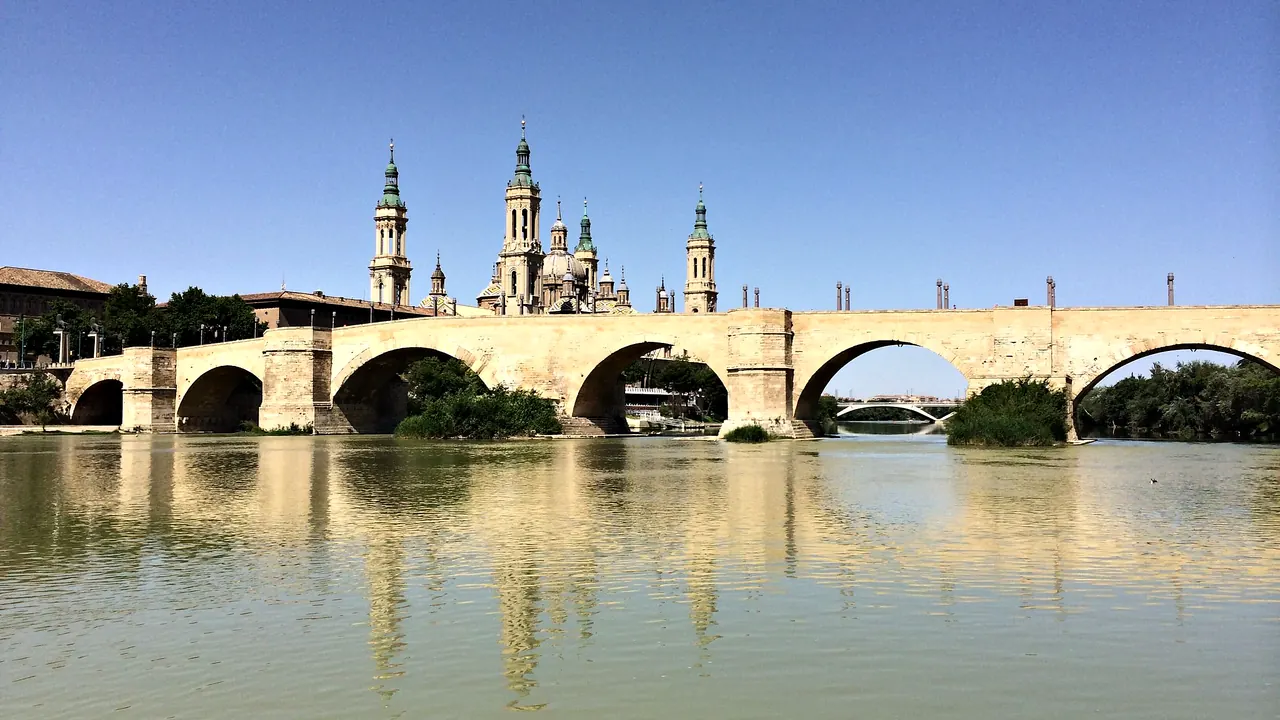
The Puente de Piedra over the Ebro, with the Basilica del Pilar behind
- Day trips76
- Getting around70
- Affordable cities66
Photo: Pablo Alejandro Araujo Granda, CC BY-SA 2.0, cropped
Match
53
Every category weighted equally
- Beach & sun48
- Culture & arts58
- Food & nightlife55
- Family trip54
- Outdoors55
- Relax & unwind49
- Shopping & style55
- On a budget55
Zaragoza in twelve categories
Our verdict on each, scored 0 to 100 against the same fixed benchmark cities, so a score means the same thing on every page.
Beaches & swimming. Scores 5 out of 100.
Food & drink. Scores 60 out of 100.
Culture & sights. Scores 64 out of 100.
Nightlife. Scores 55 out of 100.
Nature & outdoors. Scores 57 out of 100.
Day trips. Scores 76 out of 100.
Good for families. Scores 60 out of 100.
Getting around. Scores 70 out of 100.
Shopping & style. Scores 45 out of 100.
Affordability. Scores 66 out of 100.
Live music & performing arts. Scores 45 out of 100.
Wellness & relaxation. Scores 37 out of 100.
Zaragoza category by category
Beaches & swimming
5Zaragoza is an inland city on the Ebro plain, and the Mediterranean coast is more than 200km away, well beyond a casual outing. The river isn't used for swimming. In the long, hot summers locals cool off in municipal open-air pools and hotel pools. If beach time matters, this is a city to combine with a few days on the coast, not a place to swim from.
Food & drink
60Eating out here means tapas first. The narrow lanes of El Tubo, just off Plaza de España, are packed with bars and small counters, each known for a single speciality: fried croquetas, mushroom skewers, anchovies or slow-cooked tripe. A crawl from bar to bar, with a small glass of wine at each stop, is the classic evening. The cooking is Aragonese and hearty: ternasco lamb, migas, borage with clams, and fruit from the irrigated Ebro valley.
The red wines come from nearby Cariñena, Campo de Borja, Calatayud and Somontano, and they are generous and inexpensive. The modernist Mercado Central is the place to see local produce. Sweet tooths should look for frutas de Aragón and adoquín sweets. Fine dining is limited and international cuisine is thin, so it suits visitors who like traditional cooking rather than variety.
Culture & sights
64Zaragoza's history runs from the Roman city of Caesaraugusta through the Islamic taifa kingdom to the Baroque. The huge Basílica del Pilar dominates the riverfront, with its tiled domes and ceilings painted partly by a young Goya. A few steps away, La Seo cathedral mixes Romanesque, Gothic and Baroque, and its brick-and-tile Mudéjar wall is part of a UNESCO listing. The Aljafería, an eleventh-century Islamic palace later used by the Aragonese kings and the Inquisition, is the standout.
Underground museums show the Roman forum, river port and baths, and the Roman theatre lies open in the old town. The Goya Museum and the Museo de Zaragoza hold good collections. The main sights take two or three days, and away from the old core the city is largely modern.
Nightlife
55Evenings start late with tapas in El Tubo, then move to the bars around Plaza San Felipe, Plaza Santa Marta and the old Casco quarter, where university students fill the streets on Thursdays and weekends. There are cocktail and music bars, plus a handful of clubs that run into the early morning. On ordinary weeknights things are quieter. The city is transformed during the Fiestas del Pilar in October, when the streets stay packed until dawn for a week and a half. A good, friendly night out, but not a reason to travel.
Nature & outdoors
57The city sits on a dry, windswept plain. The cierzo wind blows hard down the Ebro valley, and the surrounding steppe is stark rather than green. In town there is the riverside path along the Ebro, the shaded Parque Grande and the large Parque del Agua by the old Expo site, all good for walking and cycling.
The better landscapes need a car. The Moncayo massif, about an hour away, has beech forests and summit hikes. The red conglomerate towers of the Mallos de Riglos draw climbers. The badlands of the Bardenas Reales look like a western film set, and the Monasterio de Piedra park is all waterfalls and grottoes. The Pyrenees valleys are about two hours north. Spring and autumn are the best seasons, since summer heat on the plain is fierce.
Day trips
76Halfway between Madrid and Barcelona on the high-speed line, Zaragoza puts both capitals within about an hour and a half by train, which is a rare luxury for a city this size. Closer to home, Aragon is full of places worth the drive. Tarazona has a striking Mudéjar cathedral and old Jewish quarter. Loarre is one of the best-preserved Romanesque castles in Europe. The shattered old town of Belchite was left in ruins after the Civil War, and Fuendetodos is Goya's birthplace.
Huesca, Calatayud, Daroca and the cliff-top village of Alquézar are all comfortable outings, and the wine towns of Cariñena and Borja are close by. Teruel's Mudéjar towers and the medieval village of Albarracín are about two hours away and need an early start. Regional outings are much easier with a hired car.
Good for families
60Zaragoza is easy with children. The centre is flat, there are large pedestrian squares, and Spanish families stay out together into the evening. The riverside Expo site holds a large aquarium devoted to the world's great rivers, and the Parque del Agua next to it has paths, playgrounds and space to run. Parque Grande has a small amusement park on its edge, and the Fiestas del Pilar bring giants and big-heads parades and funfairs. There is no beach, July and August are very hot, and the main sights mean more to adults, but it is a calm, manageable city.
Getting around
70Most sights are clustered between the Pilar riverfront, the old Casco and the Aljafería, and the whole area is flat and pleasant to walk. A tram line runs north to south through the centre, and a dense bus network and bike-share stations cover the rest. The Delicias station, for high-speed trains and long-distance buses, is a short ride out. Visitors staying in town don't need a car, though one is useful for exploring rural Aragon.
Shopping & style
45Shopping here is the everyday Spanish kind. The main fashion chains and a classic department store line Paseo de la Independencia and the streets around Plaza de Aragón. Calle Alfonso I, leading towards the Pilar, has older shops and pastry makers. A very large shopping and leisure complex lies on the city's southern edge. For local character, the Mercado Central and the jars of candied fruit, wine and ceramics from nearby Muel make the best souvenirs. Luxury and independent design are thin.
Affordability
66Zaragoza is noticeably cheaper than Spain's big tourist cities. Central hotels are good value for most of the year, tapas and set lunch menus are generous, and the local wines cost little. The centre is walkable and the tram and buses are inexpensive. Sightseeing costs are modest, and the Pilar basilica itself is free to enter. The main exception is the October fiestas, when rooms fill and prices jump.
Live music & performing arts
45Most concerts take place at the Auditorio, a large modern concert hall that hosts touring orchestras, chamber music and jazz through the season. The nineteenth-century Teatro Principal stages plays, dance and touring productions, and smaller theatres and music bars in the old town host concerts and local bands. The distinctive local tradition is the jota, Aragon's leaping folk song and dance, which is at its most visible during the Fiestas del Pilar. The scene is reliable but provincial, so check the programme rather than expect a nightly choice.
Wellness & relaxation
37There is no bathing culture in the city itself. Wellness means hotel spas and an Arab-style bathhouse or two. Aragon does have historic spa towns, and the thermal waters of Alhama de Aragón are a little over an hour away, but that is an excursion, not part of a city stay. What Zaragoza offers instead is an easy provincial pace: long lunches, evening strolls along the Ebro and shady afternoons in Parque Grande. In summer the heat and the cierzo wind can wear you down.
When should you go?
Pick a month to see what it is like. The climate figures are measured averages, not a forecast.
Zaragoza in July
Daytime high, °C
Rainfall in the month, mm
The whole year
Shaded against this city’s own year: the deepest cell is its best month for that figure and the palest its weakest.
Temperature and rainfall are climate normals, averaged over the years shown. Zaragoza: 1991-2020 normals, Zaragoza / Aeropuerto (11.2 km from centre).
Before you go
| Measure | Zaragoza |
|---|---|
| Official language | Spanish |
| Currency | Euro (EUR) |
| Sockets | CF230 V, 50 Hz |
| Driving side | Right |
| Time zone | UTC+1, UTC+2 in summer |
| Emergency number | 112 |
| Elevation | 200 m |
| Main airport | Zaragoza Airport (ZAZ)13 km from centre12 non-stop destinations |
| Public holidays this year | 12 days |
By the numbers
| Measure | Zaragoza |
|---|---|
| City population | 693,091 |
| People per km² | 712 |
| Museums within 10 km | 22 |
| UNESCO World Heritage sites within 50 km | 1 |
Compare Zaragoza with
Every comparison with a written verdict behind it.
- Alicante
- Barcelona
- Biarritz
- Bilbao
- Bordeaux
- Cadiz
- Cordoba
- Granada
- Madrid
- Malaga
- Marbella
- Montpellier
- San Sebastian
- Santiago de Compostela
- Seville
- Toledo
- Toulouse
- Valencia