United States
Mammoth Lakes
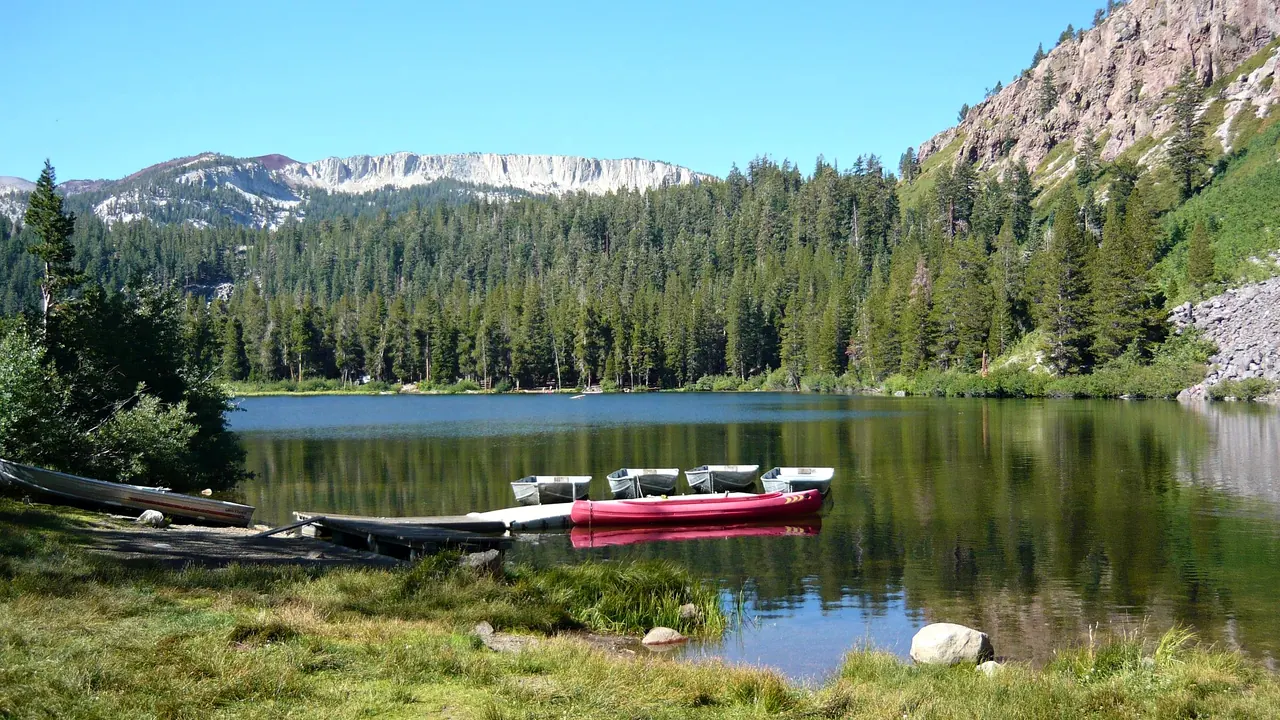
Rowing boats on Twin Lakes below the Mammoth Crest
- Nature & outdoors92
- Families58
- Wellness & relaxation50
Photo: Dr. Al. K. Lisch, CC BY-SA 3.0, cropped
Match
33
Every category weighted equally
- Beach & sun34
- Culture & arts28
- Food & nightlife26
- Family trip38
- Outdoors42
- Relax & unwind37
- Shopping & style29
- On a budget32
Mammoth Lakes in twelve categories
Our verdict on each, scored 0 to 100 against the same fixed benchmark cities, so a score means the same thing on every page.
Beaches & swimming. Scores 14 out of 100.
Food & drink. Scores 30 out of 100.
Culture & sights. Scores 8 out of 100.
Nightlife. Scores 18 out of 100.
Nature & outdoors. Scores 92 out of 100.
Day trips. Scores 34 out of 100.
Good for families. Scores 58 out of 100.
Getting around. Scores 42 out of 100.
Shopping & style. Scores 14 out of 100.
Affordability. Scores 20 out of 100.
Live music & performing arts. Scores 16 out of 100.
Wellness & relaxation. Scores 50 out of 100.
Mammoth Lakes category by category
Beaches & swimming
14Mammoth Lakes is a high mountain town hundreds of kilometres from the sea, so beach life does not exist here. In July and August some visitors do swim in the lakes of the Lakes Basin, with Horseshoe Lake the usual choice for a dip, and the larger, lower reservoir at Crowley Lake warms a little more. The water stays cold even in high summer, the season is short, and most people go to the lakes to paddle, fish or sit on the shore rather than to swim. Hot Creek looks inviting but bathing there is banned because of scalding, unpredictable springs.
Food & drink
30Eating in Mammoth Lakes is ski-town food: hearty breakfasts before the lifts, burgers, pizza and tacos, steakhouses, a few more ambitious dinner kitchens in and around the Village, and local craft beer brewed in town. It is comfortable and filling after a day outside, and the choice is wider than the town's size suggests because it feeds a big winter crowd. What it lacks is a cuisine of its own, markets or much range; many places are busy and pricey in peak weeks and some cut back in the quiet spring and autumn months. Visitors who care most about eating treat meals here as fuel rather than a reason to come.
Culture & sights
8There is very little to see in the town itself. Mammoth Lakes grew up as a mining camp and then a ski resort, and its buildings are mostly modern lodges, condominiums and the pedestrian Village. A small local history museum in an old log cabin tells the mining and settler story, and that is close to the whole list. People come for the mountains, and the region's real heritage sites lie an hour or more away.
Nightlife
18Going out in Mammoth Lakes means après-ski. In winter the Village and the bars near the lifts fill in the late afternoon, and there are a few pubs and brewery taprooms where locals and skiers drink. Long weekends in the ski season can run late. Outside the ski season, and on most ordinary nights, the town is quiet well before midnight because most people are up early for the slopes or the trails. There are no clubs to speak of, and anyone wanting a real night out is in the wrong place.
Nature & outdoors
92This is a town that exists because of its surroundings. Mammoth Mountain rises above it with one of the largest ski areas in North America and a long season that often runs into early summer. When the snow melts, the same mountain becomes a lift-served mountain bike park, and the Lakes Basin just above town opens a string of granite-ringed lakes for hiking, kayaking and fishing. Trails lead into the Ansel Adams and John Muir wildernesses, and the Reds Meadow valley holds Devils Postpile, a wall of basalt columns, and Rainbow Falls.
The wider Eastern Sierra is volcanic, high and dry: Convict Lake under sheer peaks, the steaming pools of Hot Creek, the tufa towers of Mono Lake and the June Lake Loop. In summer and early autumn, Tioga Pass opens the Yosemite high country, with Tuolumne Meadows about an hour away. Autumn brings aspen colour, winter brings cross-country and snowshoe routes. The town sits at about 2,400m, so the air is thin and the sun strong.
Day trips
34The places to visit around Mammoth Lakes are few and far apart, strung along the highway that runs below the Sierra. The best is Bodie, a gold-rush ghost town preserved in a state of arrested decay, a little over an hour north. To the south, Bishop is a likeable small town with a railway museum nearby, and Manzanar, the Second World War Japanese American internment camp, is a sober and well-told historic site about an hour and a quarter away. Lee Vining, on the shore of Mono Lake, and the village of June Lake make shorter outings.
In winter the passes over the Sierra close, and Yosemite Valley is too far for a comfortable day in any season. Most excursions from here are into the mountains rather than to other towns.
Good for families
58For families who like the outdoors, Mammoth Lakes works well. The ski mountain has a large ski school and gentle beginner areas, there is a snow tubing hill for younger children, and in summer the Lakes Basin offers short walks, rowing boats, trout fishing and picnic spots, with the bike park and the gondola ride to the summit for older children. The town is small, safe and relaxed, and condominium stays with kitchens make life easier.
What it lacks is anything for a rainy or snowbound day: there are no museums, zoos or aquariums aimed at children. The altitude can leave some young visitors tired or headachy for the first day or two, and getting between the lakes, trailheads and the town often means driving.
Getting around
42The town is spread out along a few main roads rather than built around a walkable centre, though the pedestrian Village is compact. In winter, free shuttles link lodging areas with the lift bases and a gondola lifts skiers from the Village to the mountain, so a ski vacation can be managed without driving. In summer, a trolley serves the town and the Lakes Basin, and a shuttle is the usual way into the Reds Meadow valley. Beyond that, a car is close to essential: there is no train, the sights of the Eastern Sierra are long drives apart, and winter roads can need snow chains.
Shopping & style
14Shopping is practical. Mammoth Lakes has good ski, snowboard, climbing and fly-fishing shops, rental outlets, a few galleries selling landscape photography and the usual T-shirts and souvenirs around the Village. There are no fashion streets, markets or crafts worth seeking out, and visitors who want to shop wait until they are back in a city.
Affordability
20Mammoth Lakes is an expensive place to stay, especially in winter. Lift tickets at a major American ski resort are among the costliest in the world, and lodging, ski rental and restaurant meals in the peak ski weeks are priced to match. Summer is easier, since hiking, the lakes and scenic drives cost little beyond a park pass, and rooms soften in the shoulder months of spring and autumn. Self-catering in a condominium is the usual way to keep costs down, though groceries and restaurant meals both carry resort-town prices.
Live music & performing arts
16The performing arts here are small but real. A resident community theatre company puts on regular seasons of plays in a small theatre on the college campus at the edge of town, an intimate, local affair that gives the town a stage of its own through the year. Summer adds a long-running jazz festival, a chamber music series and outdoor concerts, often in a meadow or park with the mountains behind, and some bars book local bands at weekends. There is no concert hall, opera or touring programme, so this suits a visitor happy with a modest evening out rather than one planning a trip around performances.
Wellness & relaxation
50The area's volcanic ground produces natural hot springs, and soaking in a primitive pool out in the sagebrush, with the Sierra rising across the valley, is a much-loved local ritual. These are simple, undeveloped pools with no facilities, reached by dirt road, and they can be crowded at sunset. In town, the large hotels and lodges have spas, hot tubs and massage, which suit tired legs after a day on the slopes. Outside the busiest ski weeks the pace is slow, and the clear mountain air, lakeside mornings and quiet evenings make it an easy place to unwind, even if no one would call it a spa resort.
When should you go?
Pick a month to see what it is like. The climate figures are measured averages, not a forecast.
Mammoth Lakes in July
Daytime high, °C
Rainfall in the month, mm
The whole year
Shaded against this city’s own year: the deepest cell is its best month for that figure and the palest its weakest.
Where the figures come from
Mammoth Lakes's station stands 227 m below the city centre, so the centre is likely a little cooler than the figures say.
Mammoth Lakes has no rain gauge within 25 km of the centre, so its rainfall comes from a gridded climate dataset read at the city rather than from a gauge further away.
Temperature and rainfall are climate normals, averaged over the years shown. Mammoth Lakes: 2008-2020 (rainfall 1991-2020) normals, Mammoth / Whitmore Hot Springs (12 km from centre).
Before you go
| Measure | Mammoth Lakes |
|---|---|
| Currency | US Dollar (USD) |
| Sockets | AB120 V, 60 Hz |
| Driving side | Right |
| Time zone | UTC-8, UTC-7 in summer |
| Emergency number | 911 |
| Elevation | 2,402 m |
| Main airport | Reno Tahoe International Airport (RNO)217 km from centre25 non-stop destinations |
| Public holidays this year | 13 days |
By the numbers
| Measure | Mammoth Lakes |
|---|---|
| City population | 7,191 |
| People per km² | 110 |
| Museums within 10 km | 0 |
| UNESCO World Heritage sites within 50 km | 0 |
Compare Mammoth Lakes with
Every comparison with a written verdict behind it.
- Albuquerque
- Alta, Utah
- Anaheim
- Aspen
- Beaver Creek
- Bend
- Big Bear Lake
- Big Sky
- Breckenridge
- Carmel-by-the-Sea
- Copper Mountain
- Deer Valley
- Durango, Colorado
- Estes Park
- Flagstaff
- Huntington Beach
- Jackson Hole
- Keystone
- Laguna Beach
- Las Vegas
- Los Angeles
- Moab
- Monterey
- Napa
- Newport Beach
- Page, Arizona
- Palm Desert
- Palm Springs
- Park City
- Phoenix
- Portland
- Salt Lake City
- San Diego
- San Francisco
- San Jose
- Santa Barbara
- Santa Fe
- Santa Monica
- Scottsdale
- Seattle
- Sedona
- Snowbird
- Sonoma
- South Lake Tahoe
- Steamboat Springs
- Sun Valley
- Taos
- Telluride
- Tucson
- Vail
- Winter Park, Colorado