Cambodia
Siem Reap
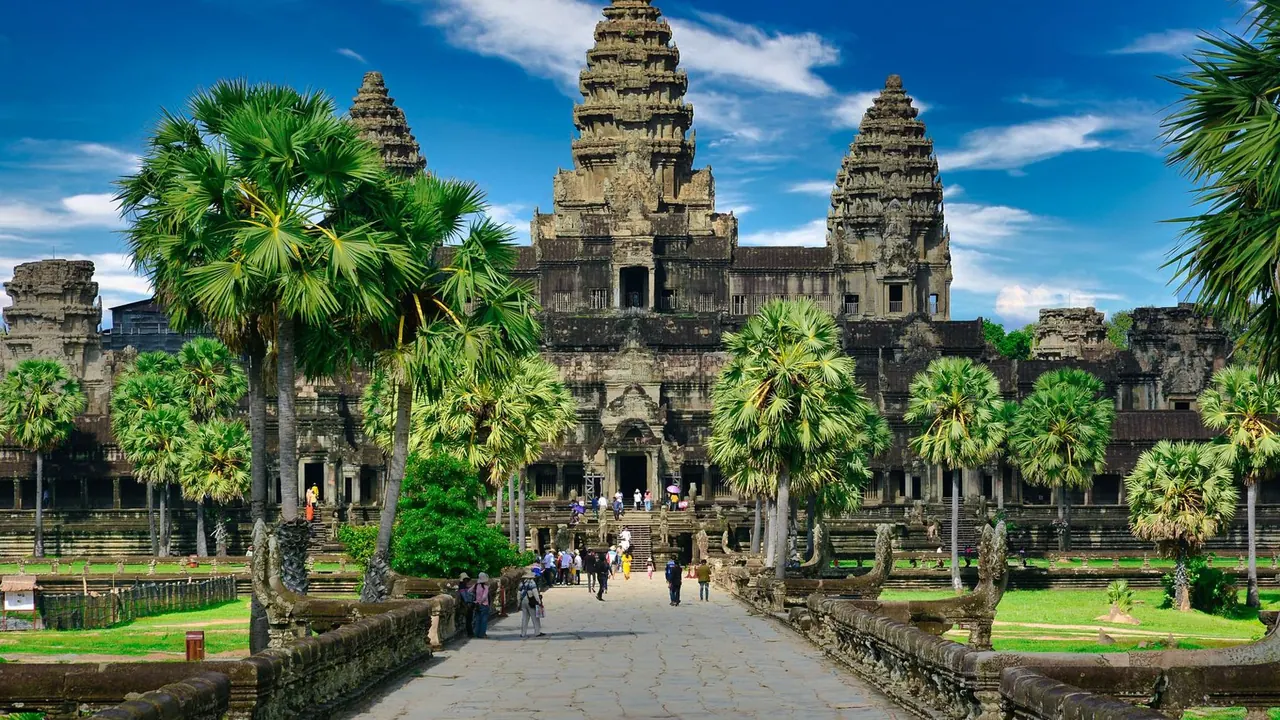
Angkor Wat beyond the palms of the causeway
- Culture & sights88
- Affordable cities88
- Wellness & relaxation60
Photo: allPhoto Bangkok, Pexels License
Match
47
Every category weighted equally
- Beach & sun44
- Culture & arts51
- Food & nightlife46
- Family trip45
- Outdoors47
- Relax & unwind46
- Shopping & style46
- On a budget51
Siem Reap in twelve categories
Our verdict on each, scored 0 to 100 against the same fixed benchmark cities, so a score means the same thing on every page.
Beaches & swimming. Scores 5 out of 100.
Food & drink. Scores 45 out of 100.
Culture & sights. Scores 88 out of 100.
Nightlife. Scores 42 out of 100.
Nature & outdoors. Scores 40 out of 100.
Day trips. Scores 55 out of 100.
Good for families. Scores 35 out of 100.
Getting around. Scores 30 out of 100.
Shopping & style. Scores 38 out of 100.
Affordability. Scores 88 out of 100.
Live music & performing arts. Scores 32 out of 100.
Wellness & relaxation. Scores 60 out of 100.
Siem Reap category by category
Beaches & swimming
5Siem Reap has no beach. The town sits on the plains north of the Tonle Sap, a vast, shallow and muddy lake that is fished and boated on but not swum in, and the Gulf of Thailand coast is most of a day away by road. Swimming here means the hotel pool, which in this heat is a large part of the daily rhythm. Most guesthouses and resorts have one, and an afternoon by the water after a dawn at the temples is how many visitors pace their stay.
Food & drink
45Khmer cooking is the reason to eat well here: fish amok steamed in banana leaf, sour soups with lemongrass and prahok, num banh chok rice noodles in green fish curry sold from morning stalls, and grilled meats with pickles by the roadside in the evening. The markets, especially around the Old Market and further out where locals shop, show the produce, freshwater fish from the lake and piles of herbs.
Alongside the stalls is a small but thoughtful set of restaurants reworking Khmer ingredients in tasting menus, plus many social-enterprise kitchens training young cooks. The centre around Pub Street leans heavily to backpacker menus and pizza, so the better meals are a short tuk-tuk ride into the side streets and across the river.
Culture & sights
88The Angkor Archaeological Park begins a short tuk-tuk ride north of town, and it is one of the great sights of the world. Angkor Wat itself, the largest religious monument anywhere, is only the start: the walled city of Angkor Thom with the smiling stone faces of the Bayon, the terraces of the Elephants and the Leper King, Ta Prohm with silk-cotton trees prising apart its galleries, and dozens of lesser temples spread through the forest. Three days barely covers the main circuits.
The town is modest by comparison: a French colonial quarter around the Old Market, a few working pagodas such as Wat Bo with old murals, and the Angkor National Museum, which gives useful context before the temples. Heat and crowds at sunrise points are part of the experience.
Nightlife
42Going out in Siem Reap centres on Pub Street and the lanes around it, a few blocks of neon-lit bars, cheap draught beer, cocktail buckets and music spilling onto the street, busy every night and open late. It is a backpacker scene, sociable and easy, and many visitors end their temple days there.
Beyond it there are some quieter cocktail and wine bars in the side alleys and along the river, but no real club culture and little local nightlife a visitor would join. Early starts for sunrise at Angkor keep many evenings short anyway.
Nature & outdoors
40The landscape is flat and green: rice paddies, sugar palms and dirt lanes that make easy cycling between villages, best early in the morning. The Tonle Sap lake swells enormously in the wet season and shrinks in the dry, and boat trips reach the flooded forest and the Prek Toal bird sanctuary, home to large colonies of storks, pelicans and cormorants.
Phnom Kulen, the sacred plateau about an hour and a half north, has a waterfall and forest walks, and Kbal Spean has a short jungle trail to riverbed carvings. Otherwise there are no mountains, and heat limits serious outdoor activity for much of the year.
Day trips
55The outlying temples make the best days out. Banteay Srei, about 45 minutes away, has the finest pink sandstone carving of the Angkor period, and Beng Mealea, around an hour and a half east, is a huge temple left largely collapsed and overgrown, which visitors clamber through on walkways. Koh Ker, a former capital with a seven-tiered pyramid, is a longer drive at the edge of a day trip, and the Roluos group shows the earliest Angkor temples.
The other kind of outing is to the stilt and floating villages on the Tonle Sap, such as Kampong Phluk and Kampong Khleang, best seen in the wet season. Towns are lacking: Battambang and Phnom Penh are too far for a comfortable return trip.
Good for families
35Siem Reap works best with older children who like exploring: scrambling through root-tangled ruins at Ta Prohm or Beng Mealea, riding in tuk-tuks and taking boats to the stilt villages has real adventure in it. Cambodians are welcoming to children, and a family room with a pool costs little.
There is very little built for kids, though. The heat is heavy from March to May, temple days involve steep steps and long walks, pavements are patchy and traffic is disorderly, so younger children tire quickly. Plan short mornings at the temples and afternoons at the pool.
Getting around
30There is no public transport to speak of, but it rarely matters. The centre around the Old Market and the river is small enough to walk, and tuk-tuks wait on every corner and can be called by ride-hailing app. For Angkor, most visitors hire a tuk-tuk driver for the day, a car for the outlying temples, or ride a bicycle or e-bike around the flat main circuits.
Pavements are broken or missing in many places, and the heat makes long walks hard, so expect to be driven most of the time.
Shopping & style
38Shopping is about crafts and markets. The Old Market sells silk scarves, kramas, spices and silver alongside souvenirs, and the night markets near the river add T-shirts, paintings and trinkets. More rewarding are the workshops and social enterprises training local artisans in silk weaving, stone and wood carving and lacquerware, where the quality is far higher and you can watch the work.
There are a few design boutiques selling homewares and clothing made in Cambodia, but no fashion, luxury or department-store shopping. Bargaining is expected at the stalls.
Affordability
88Siem Reap is very cheap for a visitor. Guesthouses and small boutique hotels with pools cost a fraction of Western prices, and so do Khmer meals at markets and roadside stalls. Even on a tight budget you can hire a tuk-tuk driver for a whole day at the temples, and a massage or a beer on Pub Street is an easy everyday spend rather than a treat.
The one large outlay is the Angkor pass, which foreigners must buy and which takes a real bite out of a short stay. Restaurants, cafés and boutique hotels aimed at visitors cost noticeably more than the places locals use. Stalls and simple Khmer eateries away from the centre are where the town is cheapest.
Live music & performing arts
32Two things are worth an evening. Classical apsara dance, the court tradition carved on the temple walls, is performed in dinner shows around town; quality varies, so the smaller, more serious performances are better than the buffet halls. The other is a contemporary Cambodian circus under a big top, run by a school for young performers, mixing acrobatics, theatre and live music to tell Khmer stories, and widely admired.
Beyond that there is little: occasional live bands in bars and shadow puppet shows, but no theatre, concert hall or classical music scene.
Wellness & relaxation
60Unwinding is a natural part of a stay here. Massage parlours line the streets around the centre, from simple foot-massage chairs to calm Khmer massage rooms, and many hotels and resorts have proper spas with herbal compresses and treatments using local ingredients. Yoga classes and small retreats are easy to find.
The pace helps: after early temple starts, long hot afternoons are spent in garden hotels by the pool, and the lanes across the river and towards the countryside are quiet. There is no tradition of public bathing, and the strip around Pub Street is noisy at night, so stay a little away from it.
When should you go?
Pick a month to see what it is like. The climate figures are measured averages, not a forecast.
Siem Reap in July
Daytime high, °C
Rainfall in the month, mm
The whole year
Shaded against this city’s own year: the deepest cell is its best month for that figure and the palest its weakest.
Where the figures come from
Siem Reap has no weather station within reach, so its figures come from a gridded climate model rather than a measured record, and read a broad area rather than the city itself.
Temperature and rainfall are climate normals, averaged over the years shown. Siem Reap: 2001-2020 normals, NASA POWER reanalysis grid, no weather station within 90 km.
Before you go
| Measure | Siem Reap |
|---|---|
| Official language | Khmer |
| Currency | Riel (KHR) |
| Sockets | ACG230 V, 50 Hz |
| Driving side | Right |
| Time zone | UTC+7 |
| Emergency number | Police 117, ambulance 119, fire 118 |
| Elevation | 18 m |
| Main airport | Siem Reap-Angkor International Airport (SAI)39 km from centre14 non-stop destinations |
| Public holidays this year | 21 days |
By the numbers
| Measure | Siem Reap |
|---|---|
| City population | 147,866 |
| Museums within 10 km | 6 |
| UNESCO World Heritage sites within 50 km | 1 |
Compare Siem Reap with
Every comparison with a written verdict behind it.