Colombia
Cartagena
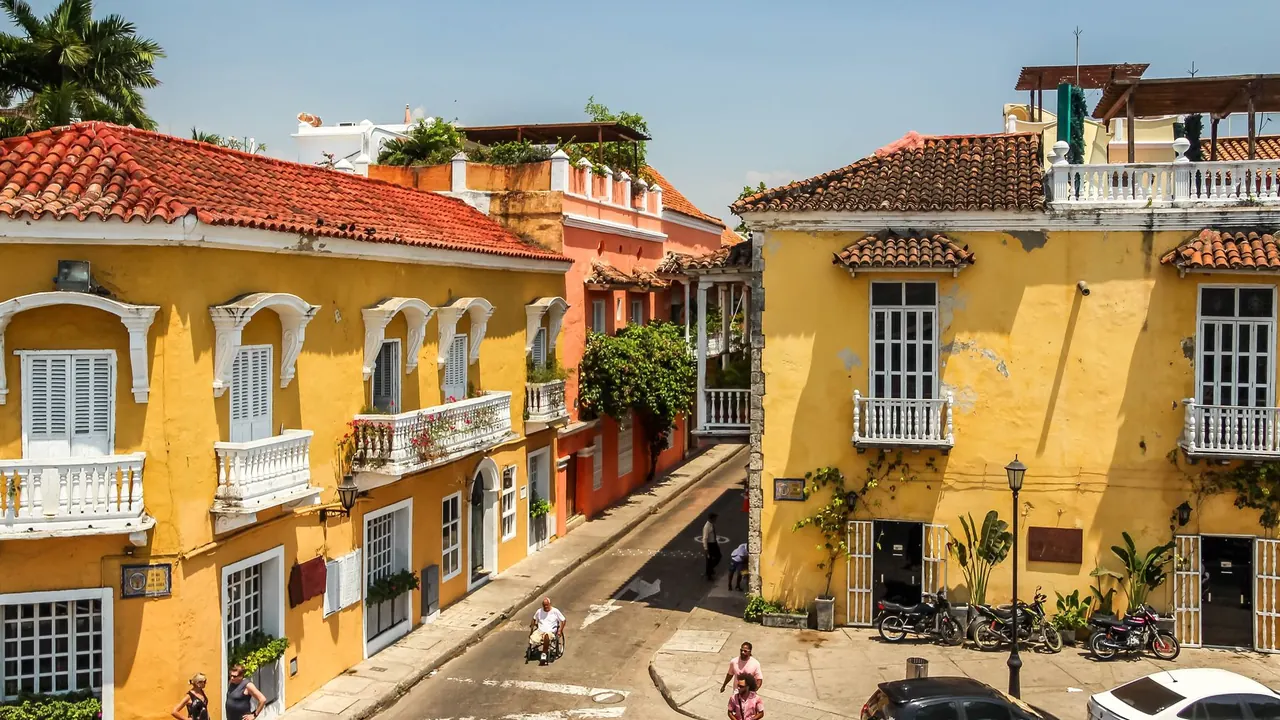
Yellow colonial houses in the walled city
- Beaches70
- Nightlife70
- Culture & sights68
Photo: Dr. Thomas Liptak, CC BY-SA 4.0, cropped
Match
53
Every category weighted equally
- Beach & sun54
- Culture & arts53
- Food & nightlife56
- Family trip52
- Outdoors50
- Relax & unwind52
- Shopping & style53
- On a budget53
Cartagena in twelve categories
Our verdict on each, scored 0 to 100 against the same fixed benchmark cities, so a score means the same thing on every page.
Beaches & swimming. Scores 70 out of 100.
Food & drink. Scores 62 out of 100.
Culture & sights. Scores 68 out of 100.
Nightlife. Scores 70 out of 100.
Nature & outdoors. Scores 46 out of 100.
Day trips. Scores 33 out of 100.
Good for families. Scores 40 out of 100.
Getting around. Scores 54 out of 100.
Shopping & style. Scores 48 out of 100.
Affordability. Scores 60 out of 100.
Live music & performing arts. Scores 40 out of 100.
Wellness & relaxation. Scores 40 out of 100.
Cartagena category by category
Beaches & swimming
70The sea here is warm all year, around 27°C to 29°C, but the beaches right on the city are not the reason to come. Bocagrande and Castillogrande have long strips of darkish sand facing water clouded by river sediment, lined with vendors and hotel towers. They are fine for a quick dip, but they are not postcard Caribbean.
The postcard version is offshore. Boats leave the city for the Rosario Islands and the Baru peninsula, where Playa Blanca and the island coves have pale sand and clear turquoise water, about an hour away or less. Many visitors spend one or two days of their stay this way, or sleep a night on an island. La Boquilla, just north of the airport, is a quieter, rougher strand with fishermen and beach shacks.
Food & drink
62Cartagena eats like a Caribbean port: fried whole fish with coconut rice and patacones, seafood cocktails and ceviche sold from street carts, arepas de huevo fried on the corner, and fresh tropical juices everywhere. Palenquera women in bright dresses carry bowls of cut fruit and coconut sweets through the plazas, and the Portal de los Dulces by the clock tower is lined with stalls of traditional cocadas and tamarind sweets.
Inside the walled city there is a polished tier of restaurants in restored colonial houses, cooking modern Colombian food around local fish and tropical produce, and Getsemaní adds cheaper, more casual places and street-food corners. The range thins out beyond that, and plenty of old-town menus are built for passing tourists, so it pays to eat where locals queue.
Culture & sights
68The walled city is one of the most complete colonial townscapes in the Americas, a UNESCO-listed grid of balconied houses painted ochre, blue and pink, with bougainvillea over the doorways and around 11km of stone ramparts you can walk on at sunset. The Castillo San Felipe de Barajas, a vast Spanish fortress on a hill just outside, is the most impressive military work of its era in the region.
Along the way are the cathedral, the Church of San Pedro Claver, the Clock Tower gate, the Palace of the Inquisition with its museum, and a small Gold Museum. San Diego and Getsemaní extend the historic fabric with plainer, lived-in streets and murals. It is a place for wandering rather than for museum-going: the collections are modest, and two or three days covers the main sights.
Nightlife
70Nights start late and warm. In Getsemaní the Plaza de la Trinidad fills after dark with street food, drummers and people drinking on the steps, and the surrounding streets hold salsa bars where couples dance to the small hours. Inside the walls the mood is more polished, with rooftop cocktail bars looking over the domes, and the area around the Torre del Reloj has clubs playing reggaetón and crossover until late.
Champeta, the local Afro-Caribbean dance music, is the sound of the neighbourhood parties and more local spots. Party boats and chivas, open-sided buses with a band on board, are a Cartagena speciality. The circuit is compact and tourist-heavy, and touts and pushy offers come with it.
Nature & outdoors
46The best of the outdoors here is underwater. The Corales del Rosario national park, a scatter of reefs and small islands offshore, has snorkelling and diving with tropical fish over coral, though the reefs show their exposure to busy boat traffic. Closer in, canoe trips through the mangrove channels at La Boquilla pass herons, crabs and fishermen casting nets, and the steady winds of the dry months bring kitesurfers to the beaches north of the city.
On land the country around the city is flat, hot and largely farmed, with no hills or forest trails worth a special trip. The Totumo mud volcano, a small cone you climb to wallow in warm mud, is the usual inland outing. The Sierra Nevada and Tayrona are much further along the coast.
Day trips
33Easy outings to other places are limited. San Basilio de Palenque, about an hour inland, is a village founded by escaped enslaved Africans that keeps its own language, music and traditions, and it makes a thoughtful half day. Barranquilla, two hours along the coast, is a large working city best known for its carnival rather than its sights.
The islands offshore have small fishing villages, and Baru and Tierra Bomba can be combined with lunch and a walk, but most island trips are really about the water. The colonial river town of Mompox and the Caribbean town of Santa Marta are well worth seeing, but both are too far for a day and work better as overnight stops.
Good for families
40Colombians are warm with children, and the walled city's shaded plazas, horse carriages and ramparts make a pleasant few hours for a family. The island beaches are the main pleasure for children, with calm, warm water at the better spots, and the National Aviary on the Baru peninsula is a good stop on the way to Playa Blanca.
Beyond that there is little made for children: no aquarium or theme park worth the name, and the city's own beaches are crowded with vendors. Steady heat and humidity, uneven pavements and long boat rides make the days tiring for small children. Families do best with a hotel pool and a slow pace.
Getting around
54Most of what a visitor wants sits in a small area. The walled city, San Diego and Getsemaní are all walkable in a few minutes from each other, on narrow streets where cars are few. Bocagrande's hotels are a short taxi ride away, and the Castillo San Felipe is a walk across from Getsemaní.
Beyond that, taxis do the work: they are plentiful and cheap. The Transcaribe bus line is of little use to most visitors. Island trips leave from the boat terminal or the Baru road. The real obstacle is the climate. Midday heat makes long walks hard going, and pavements in the old quarters are narrow and uneven.
Shopping & style
48Shopping here is mostly about Colombian craft and resort style. The vaulted chambers of Las Bóvedas, built into the city walls, hold rows of craft shops selling Wayuu mochila bags, woven sombreros vueltiaos, hammocks and hand-painted ceramics. Jewellers around the Plaza de Bolívar specialise in Colombian emeralds, where it pays to buy carefully.
The walled city also has a cluster of boutiques for Colombian designers, with linen resortwear, swimwear and straw accessories suited to the climate. Beyond that the streets are full of souvenir stands and hawkers, and anything bigger means the malls in Bocagrande.
Affordability
60Cartagena is the most expensive city in Colombia, and how expensive it feels depends on where you stay. Boutique hotels in restored mansions inside the walls and the smarter old-town restaurants charge close to European rates, especially over Christmas, New Year and Easter, when Colombians fill the city too.
Away from that tier it is good value. Guesthouses and hostels in Getsemaní, street food, fresh juices and set lunches in local canteens cost little, taxis are cheap, and island day trips are reasonably priced. Hawkers and some boat operators quote inflated prices to visitors, so agree prices before you go.
Live music & performing arts
40The formal stage here is small. The Teatro Adolfo Mejía, an ornate early 20th-century theatre, hosts concerts and dance, and the city's long-running classical music festival in January brings international performers to churches and colonial courtyards for a week or so. Outside that there is little regular opera, theatre or orchestral life.
What a visitor hears instead is street and club music: salsa bands playing in Getsemaní, champeta sound systems, and cumbia dancers and drummers performing in the plazas of the walled city in the evening. It is lively and very much of the place, but the programme of seated performances is thin.
Wellness & relaxation
40Cartagena has no bathing tradition of its own. Relaxing here mostly means the colonial-house hotels, whose plunge pools, shaded courtyards and small spas give some quiet in the middle of the old town. Massages are offered cheaply on the beaches and in day spas in Bocagrande and the walled city.
The Totumo mud volcano is the local curiosity, a warm mud soak followed by a rinse in the lagoon, more fun than restorative. The town itself is not calm: hawkers, heat, music and traffic fill the days. The most restful version of a stay is a few nights on the islands, where life slows to the rhythm of hammocks and the tide.
When should you go?
Pick a month to see what it is like. The climate figures are measured averages, not a forecast.
Cartagena in July
Daytime high, °C
Rainfall in the month, mm
The whole year
Shaded against this city’s own year: the deepest cell is its best month for that figure and the palest its weakest.
Temperature and rainfall are climate normals, averaged over the years shown. Cartagena: 1991-2020 normals, Cartagena / Rafael Nunez (3.1 km from centre).
Before you go
| Measure | Cartagena |
|---|---|
| Official language | Spanish |
| Currency | Colombian Peso (COP) |
| Sockets | AB110 V, 60 Hz |
| Driving side | Right |
| Time zone | UTC-5 |
| Emergency number | 123 |
| Elevation | 2 m |
| Main airport | Rafael Nuñez International Airport (CTG)2 km from centre26 non-stop destinations |
| Public holidays this year | 19 days |
By the numbers
| Measure | Cartagena |
|---|---|
| City population | 914,552 |
| People per km² | 1,599 |
| Museums within 10 km | 2 |
| UNESCO World Heritage sites within 50 km | 1 |
| Swim season, months above 21 °C | 12 months |
Compare Cartagena with
Every comparison with a written verdict behind it.