Japan
Kobe
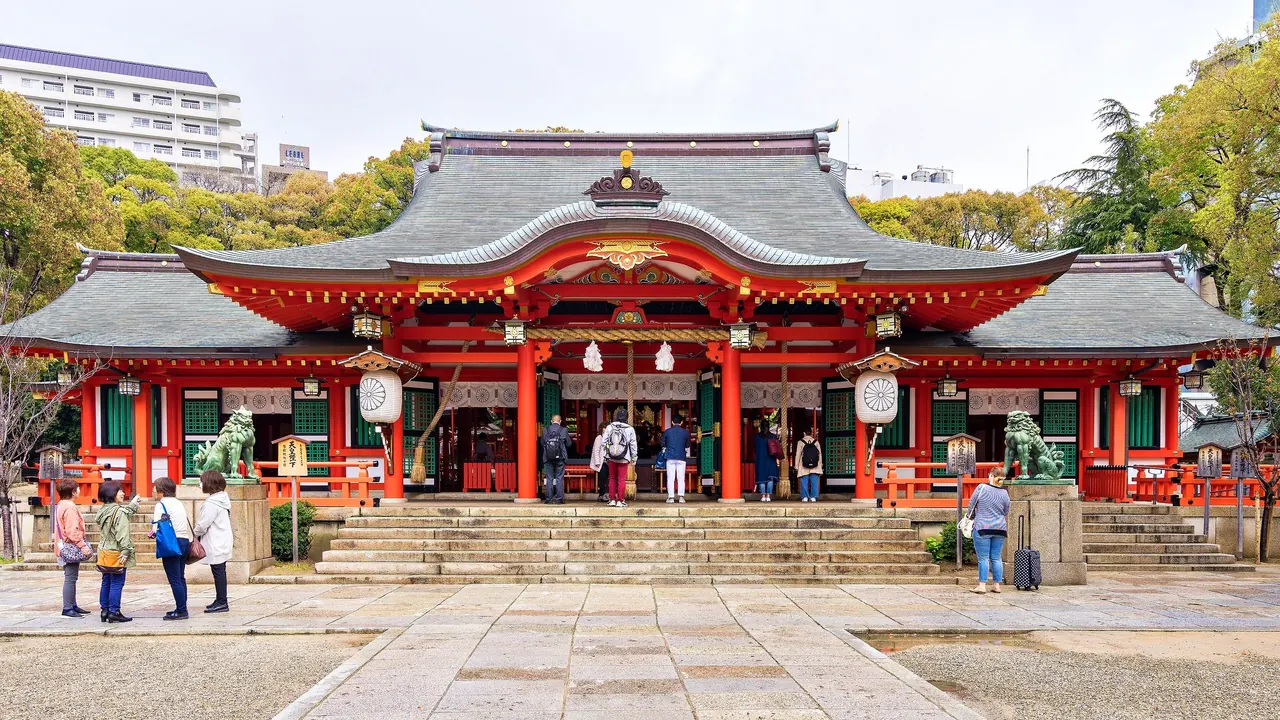
The main hall of the Ikuta Shrine
- Day trips92
- Getting around84
- Wellness & relaxation80
Photo: Wei-Te Wong, CC BY-SA 2.0, cropped
Match
65
Every category weighted equally
- Beach & sun64
- Culture & arts66
- Food & nightlife62
- Family trip69
- Outdoors70
- Relax & unwind68
- Shopping & style65
- On a budget65
Kobe in twelve categories
Our verdict on each, scored 0 to 100 against the same fixed benchmark cities, so a score means the same thing on every page.
Beaches & swimming. Scores 40 out of 100.
Food & drink. Scores 72 out of 100.
Culture & sights. Scores 52 out of 100.
Nightlife. Scores 38 out of 100.
Nature & outdoors. Scores 74 out of 100.
Day trips. Scores 92 out of 100.
Good for families. Scores 78 out of 100.
Getting around. Scores 84 out of 100.
Shopping & style. Scores 58 out of 100.
Affordability. Scores 60 out of 100.
Live music & performing arts. Scores 55 out of 100.
Wellness & relaxation. Scores 80 out of 100.
Kobe category by category
Beaches & swimming
40Kobe faces the sea, but most of its waterfront is port, so beach time means heading west to Suma, a long sandy beach about fifteen minutes from the centre by train. In July and August the water of the Osaka Bay reaches about 26°C, lifeguards are on duty and the sand fills with families, beach huts and students. Outside that short summer season it is a place for a walk, not a swim, and jellyfish arrive late in summer.
For clearer water, Awaji Island across the strait has quieter beaches, best reached by car or bus. A visitor who wants a beach vacation will find Kobe's offer pleasant but secondary to the city.
Food & drink
72Kobe beef is the name everyone knows, and teppanyaki counters across Sannomiya and Kitano serve it grilled in front of you. The city's deeper food identity comes from its port history: it has been a baking and pastry town since foreign merchants settled here, and bakeries, Western-style cake shops and old coffee houses fill Motomachi and Kitano. Nankinmachi, the compact Chinatown, is the place for steamed buns and street snacks.
The Nada district along the eastern shore is one of Japan's great sake-brewing areas, with brewery museums and tasting rooms. Local comfort food includes sobameshi, a fried mix of noodles and rice, and Akashi's eggy octopus dumplings from just along the coast. Izakaya, ramen and standing bars around the stations keep everyday eating good and casual.
Culture & sights
52Kobe's sights tell the story of a treaty port. In Kitano, on the slopes above Sannomiya, the late 19th-century houses of Western merchants, the ijinkan, can be visited, their verandas and weathervanes looking oddly European against the hills. Ikuta Shrine, said to date back nearly 1,800 years, sits in the middle of the shopping district, and the waterfront at Meriken Park keeps the red Port Tower and a preserved section of quay broken by the 1995 earthquake.
The Disaster Reduction and Human Renovation Institution explains that earthquake movingly, the Hyogo Prefectural Museum of Art occupies a striking Tadao Ando building on the bay, and the Kobe City Museum covers the port's foreign trade. It is a pleasant two days of sights rather than a heritage city.
Nightlife
38Going out in Kobe centres on Sannomiya, where the lanes north of the station towards Kitanozaka are stacked with izakaya, small whisky and cocktail bars, and tiny counters seating a handful of regulars. It is a sociable, relaxed scene that suits an evening of eating and drinking more than dancing; there are a few clubs, but the late, loud nights happen in Osaka, twenty minutes away by train, and many locals go there for them. The harbour at Harborland is lit up and pleasant for an evening stroll and a drink with a view.
Nature & outdoors
74Kobe is squeezed into a narrow strip between the sea and the Rokko mountains, and that range is its great outdoor asset. Trails start a short walk from Shin-Kobe station, climbing past the Nunobiki waterfalls to herb gardens and reservoirs, and a ropeway and cable cars climb Mount Maya and Mount Rokko for wide views over the bay, best at night. Serious walkers can follow the long ridge traverse across the range, and the rocky Suma Alps make a shorter, rugged outing at the western end.
Spring blossom and autumn colour are the best seasons; midsummer is hot and sticky for hiking. The Akashi Strait, with its huge suspension bridge, and Awaji Island add coastal scenery and cycling.
Day trips
92Kobe sits on one of the best rail corridors in the world, and that makes it an excellent base. Himeji Castle, the finest original castle in Japan, is under an hour west, and Osaka is about twenty minutes east. Kyoto is about an hour away and Nara a little further, so the great temple cities are easy days out.
The shinkansen from Shin-Kobe stretches the list: Okayama with its garden and the canal town of Kurashiki are about forty minutes away, and Hiroshima with the ferry to Miyajima is a long but manageable day. Closer by, the sake breweries of Nada and Nishinomiya, the theatre town of Takarazuka and Akashi's fish market fill shorter outings.
Good for families
78Kobe is an easy city with children: safe, clean, compact and full of the facilities Japanese families expect, from baby rooms to child menus. Oji Zoo is close to the centre, Suma has a large marine aquarium beside the beach, and Kobe Animal Kingdom on Port Island lets children get close to birds and animals indoors. Harborland's waterfront has a Ferris wheel, a children's character museum and plenty of space to run around.
The cable cars and ropeways up Rokko and Maya are an outing in themselves, with a pasture farm and play areas at the top. Universal Studios Japan in Osaka is about an hour away for a theme-park day. Summer heat is the main thing to plan around.
Getting around
84Kobe is long and thin, wedged between mountains and sea, which makes it simple to understand: several parallel rail lines run east to west, and nearly everything a visitor wants lies within walking distance of Sannomiya and Motomachi. Chinatown, the harbour, the shopping arcades and the Kitano district can all be done on foot, though Kitano means a steady climb.
JR, the private Hankyu and Hanshin lines, a subway and the driverless Port Liner to Port Island and the airport all take the same IC card, and they run with Japanese punctuality. Buses and ropeways reach the mountains. A car is never needed.
Shopping & style
58Kobe has a long reputation in Japan as a stylish city, and its shopping reflects that. Covered arcades run for blocks through Sannomiya and Motomachi, the old Daimaru department store anchors the former foreign settlement with luxury boutiques in the surrounding stone buildings, and Tor Road and the streets around it hold small fashion and homeware shops.
Specialities are pearls, as the city is a historic centre of the pearl trade, plus Western-style cakes and confectionery, sake from Nada and leather shoes from the Nagata district. It is enjoyable rather than deep, and serious shoppers usually add a day in Osaka.
Affordability
60Kobe is a reasonably priced city for a visitor. Business hotels around Sannomiya and Kobe station are compact, clean and modestly priced, and they rarely fill up the way hotels do in the most visited parts of the region. Everyday eating is good value: ramen, set lunches, bakery breakfasts and izakaya plates all cost little for the quality. Short trips on the local trains and subway are inexpensive.
The bill rises with the city's signature dinner, since a proper Kobe beef teppanyaki meal is a splurge. Shinkansen day trips, the cable cars into the mountains and a night in an Arima ryokan also add up quickly.
Live music & performing arts
55Kobe considers itself the birthplace of jazz in Japan, and the music is its strongest live tradition: small jazz clubs and bars with resident pianists and trios are scattered around Sannomiya and Kitano, and the Kobe Jazz Street festival fills Kitano each autumn. For classical music, the Hyogo Performing Arts Center in nearby Nishinomiya has its own orchestra and a busy concert and stage programme.
The all-female Takarazuka Revue, a uniquely Japanese musical theatre, performs in its home town about forty minutes away. Opera, kabuki, bunraku and big touring productions mostly mean a trip to Osaka.
Wellness & relaxation
80Kobe's great asset for rest is Arima Onsen, one of the oldest hot spring towns in Japan. It lies on the far side of Mount Rokko but within the city itself, about half an hour by train or ropeway. Its rust-coloured, iron-rich water, known as kinsen, and the clear carbonated ginsen are famous across the country. Ryokan with private baths and two public bathhouses make it easy to visit for an afternoon or stay a night with a kaiseki dinner.
Back in the city, neighbourhood sento and a few larger spa bathhouses keep up the everyday bathing culture. Sannomiya is busy, but the city slows down quickly away from it. The harbour promenades at Meriken Park and Harborland are good for an unhurried evening walk, and the residential slopes of Kitano and the tea rooms and gardens of the mountain foothills feel quiet and unrushed.
When should you go?
Pick a month to see what it is like. The climate figures are measured averages, not a forecast.
Kobe in July
Daytime high, °C
Rainfall in the month, mm
The whole year
Shaded against this city’s own year: the deepest cell is its best month for that figure and the palest its weakest.
Where the figures come from
Kobe's sunshine is measured 29 km from the centre, at Osaka.
Temperature and rainfall are climate normals, averaged over the years shown. Kobe: 1971-2000 (sunshine 1991-2020, rainfall 1991-2020) normals, Kobe (1.3 km from centre).
Before you go
| Measure | Kobe |
|---|---|
| Official language | Japanese |
| Currency | Yen (JPY) |
| Sockets | AB100 V, 50 and 60 Hz depending on the region |
| Driving side | Left |
| Time zone | UTC+9 |
| Emergency number | Police 110, fire 119 |
| Elevation | 17 m |
| Main airport | Kobe Airport (UKB)7 km from centre15 non-stop destinations |
| Public holidays this year | 16 days |
By the numbers
| Measure | Kobe |
|---|---|
| City population | 1,521,707 |
| People per km² | 2,732 |
| Museums within 10 km | 46 |
| UNESCO World Heritage sites within 50 km | 3 |
| Swim season, months above 21 °C | 5 months |
Compare Kobe with
Every comparison with a written verdict behind it.