Japan
Nagoya
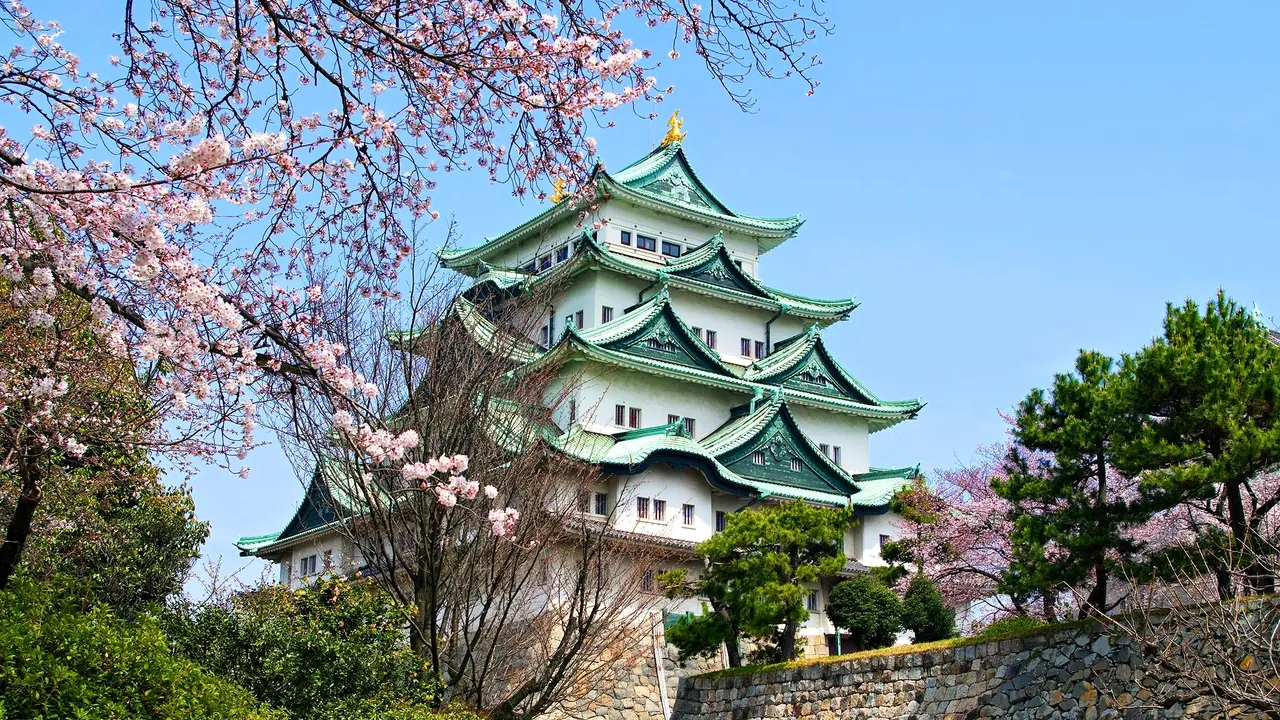
Nagoya Castle above cherry blossom
- Day trips87
- Families85
- Food & drink77
Photo: Hiroaki Kaneko, CC BY-SA 3.0, cropped
Match
63
Every category weighted equally
- Beach & sun61
- Culture & arts65
- Food & nightlife62
- Family trip66
- Outdoors65
- Relax & unwind62
- Shopping & style65
- On a budget62
Nagoya in twelve categories
Our verdict on each, scored 0 to 100 against the same fixed benchmark cities, so a score means the same thing on every page.
Beaches & swimming. Scores 35 out of 100.
Food & drink. Scores 77 out of 100.
Culture & sights. Scores 58 out of 100.
Nightlife. Scores 44 out of 100.
Nature & outdoors. Scores 58 out of 100.
Day trips. Scores 87 out of 100.
Good for families. Scores 85 out of 100.
Getting around. Scores 77 out of 100.
Shopping & style. Scores 63 out of 100.
Affordability. Scores 58 out of 100.
Live music & performing arts. Scores 52 out of 100.
Wellness & relaxation. Scores 62 out of 100.
Nagoya category by category
Beaches & swimming
35Nagoya faces Ise Bay, but the city's own shore is port and industry, with nowhere to swim. The nearest sand is on the Chita Peninsula to the south. Beaches such as Utsumi are about an hour away by train, and small islands such as Shinojima are a short ferry ride beyond.
In July and August the bay reaches about 26°C, and local families pack these beaches at weekends. They are wide and pleasant, but the water is sheltered and not very clear. Outside midsummer they are almost empty. A swim here is a day out from a city trip, not a reason to stay.
Food & drink
77Nagoya has its own regional cooking, known as Nagoya meshi, and it is rich, sweet and built on dark red miso. Hitsumabushi is grilled eel over rice, eaten three ways, the last with broth poured over it. Miso katsu, peppery tebasaki chicken wings, flat kishimen noodles and misonikomi udon simmered in an earthenware pot make up the rest of the local repertoire. Each dish has its own specialist restaurants.
The city also has an unusual café custom called morning service: order a coffee early in the day and toast, an egg and sometimes more come with it. Food halls in the department stores around Sakae and the station are excellent. The covered market streets of Osu add cheap snacks and street food. Sushi and izakaya are of a high standard, though the fine-dining tier is smaller than in Japan's biggest cities.
Culture & sights
58Nagoya was the seat of a powerful branch of the Tokugawa family. Bombing in 1945 destroyed most of the old city, so what remains is a set of separate sights in a modern grid. Nagoya Castle, with its golden roof ornaments, was rebuilt after the war. Its Honmaru Palace has been carefully reconstructed in painted cypress. Atsuta Shrine, one of the most venerated in Japan, sits in a quiet forest in the south of the city.
The Tokugawa Art Museum holds samurai treasures and scrolls from the Tale of Genji. Osu Kannon temple anchors an old shopping quarter. The city's industrial history is its other strength: the Toyota museum in a red-brick textile mill and the railway museum with its maglev and bullet trains reward anyone curious about how modern Japan was built.
Nightlife
44Going out in Nagoya centres on Sakae and the dense blocks of Nishiki next to it. Narrow buildings there hold izakaya, tiny bars of a few seats, karaoke boxes, hostess clubs and a handful of dance clubs that fill on weekend nights. There are cocktail and whisky bars, and some places stay open until morning.
Still, the city has a reputation within Japan as a place where people go home early. Away from Friday and Saturday the scene is mostly salarymen eating and drinking after work. Visitors can have an enjoyable evening, but few plan a trip around nights out here.
Nature & outdoors
58Nagoya sits on the flat, heavily built-up Nobi Plain, so nature within the city means parks such as Higashiyama and the gardens of Tokugawaen and Shirotori. Real landscape takes about an hour or more. In the Suzuka Mountains, Mount Gozaisho has hiking trails and a ropeway with views over Ise Bay. Korankei gorge is famous for its autumn maples.
About two hours north, the Kiso Valley offers the old Nakasendo walking road between forested post towns. The Ise-Shima coast to the south has bays and pearl-farming inlets. Beyond these the Japan Alps begin, but serious mountain trips need more than a day. Spring blossom and autumn colour are the best seasons. Summers are hot and humid.
Day trips
87Nagoya's central position on the shinkansen line is its great strength. Kyoto is about 35 minutes away and Osaka under an hour, so the temples of Kyoto can be a day out from a cheaper base. Ise Jingu, Shinto's holiest shrine complex, is about an hour and a half away by Kintetsu train. Nara can also be reached in roughly two hours.
Closer to home, Inuyama has one of Japan's few original castle keeps, about half an hour away. Hikone has another, easily reached via Maibara. Gifu has its castle and summer cormorant fishing on the Nagara River. Seki has knife-making. Arimatsu has a preserved street of shibori dyers' houses, and Seto and Tokoname are old pottery towns. The Edo-period post towns of Tsumago and Magome are a fuller day out.
Good for families
85For children, Nagoya offers more than its low profile suggests. The Port of Nagoya Public Aquarium is one of the country's largest, with orcas, belugas and dolphins. Higashiyama Zoo and Botanical Gardens is huge. The Science Museum's giant planetarium dome and the railway museum's full-size bullet trains appeal to all ages. Legoland Japan is at the port. Ghibli Park, set in the Expo park in Nagakute, brings the studio's films to life.
Nagashima Spa Land, with its roller coasters and water park, is under an hour away. The city is very safe and clean, the stations have lifts, and family restaurants are everywhere. The one drawback is distance: the main attractions are in different corners of the city, so expect long train rides.
Getting around
77Nagoya was laid out on a grid of very wide avenues after the war, which makes it easy to navigate but less pleasant to walk than older Japanese cities. Sakae, the castle and Osu are walkable from one another. Further sights need the clean, punctual subway, which shares a single IC card with the JR, Meitetsu and Kintetsu railways. A sightseeing loop bus links the central attractions.
Nagoya Station is a major interchange, so regional trips are simple. The aquarium, Legoland and Ghibli Park each take thirty to fifty minutes by train or the Linimo maglev line. A car is never needed.
Shopping & style
63Department stores are the core of shopping in Nagoya. Several large ones stand around Sakae, including one whose origins go back to the early Edo period. The towers above Nagoya Station hold more department stores, with deep food halls in their basements. Luxury and international brands cluster on the avenues between them.
Osu is the city's fun side. Its covered arcades around the Kannon temple mix secondhand clothing, anime and electronics shops, old-fashioned stores and street snacks, and a flea market runs at the temple on set days. Craft lovers can find Arimatsu shibori tie-dye, Seto and Tokoname pottery and fine porcelain from the city's ceramics industry. The independent fashion scene is modest.
Affordability
58Nagoya is a business city, and its many business hotels keep room prices moderate and below those in the main tourist cities nearby. Some visitors use it as a cheaper base for Kyoto for that reason. Set lunches, noodle shops, convenience stores and the free breakfast extras of morning service make it easy to eat well for little.
The local specialities, especially eel, are where meals become expensive. Transit fares are ordinary for Japan. Shinkansen day trips add up quickly, and the theme parks are the biggest single costs.
Live music & performing arts
52Nagoya has a solid programme rather than a famous scene. The Aichi Arts Center hosts opera, ballet and touring orchestras, and the Nagoya Philharmonic gives a regular concert season. The Misono-za stages kabuki, including grand seasons with Tokyo stars. The Nagoya Noh Theater, near the castle, puts on Noh and kyogen. Long-running Japanese-language productions of Western musicals play at a dedicated theatre.
Small live houses around Sakae and Osu host local bands and jazz, and big touring acts play the city's arenas. Little of this is aimed at visitors who don't speak Japanese, so check what is on before planning an evening around it.
Wellness & relaxation
62Japanese bathing culture is part of everyday life here. Neighbourhood sento bathhouses and large super sento with many pools, saunas and open-air tubs are scattered across the city, and they are easy for a visitor to use. The big hot-spring complex at Nagashima is under an hour away. Gero Onsen, one of Japan's classic spa towns, is a scenic train ride of about two hours into the mountains, worth an overnight stay at a ryokan.
In the city, calm comes from the gardens: Tokugawaen and Shirotori, with their ponds and teahouses. Nagoya itself is a working city of wide roads and offices, orderly and quiet rather than restful.
When should you go?
Pick a month to see what it is like. The climate figures are measured averages, not a forecast.
Nagoya in July
Daytime high, °C
Rainfall in the month, mm
The whole year
Shaded against this city’s own year: the deepest cell is its best month for that figure and the palest its weakest.
Temperature and rainfall are climate normals, averaged over the years shown. Nagoya: 1991-2020 normals, Nagoya (5.7 km from centre).
Before you go
| Measure | Nagoya |
|---|---|
| Official language | Japanese |
| Currency | Yen (JPY) |
| Sockets | AB100 V, 50 and 60 Hz depending on the region |
| Driving side | Left |
| Time zone | UTC+9 |
| Emergency number | Police 110, fire 119 |
| Elevation | 25 m |
| Main airport | Chubu Centrair International Airport (NGO)37 km from centre43 non-stop destinations |
| Public holidays this year | 16 days |
By the numbers
| Measure | Nagoya |
|---|---|
| City population | 2,326,844 |
| People per km² | 7,129 |
| Museums within 10 km | 63 |
| UNESCO World Heritage sites within 50 km | 0 |
| Swim season, months above 21 °C | 5 months |
Compare Nagoya with
Every comparison with a written verdict behind it.