Netherlands
Haarlem
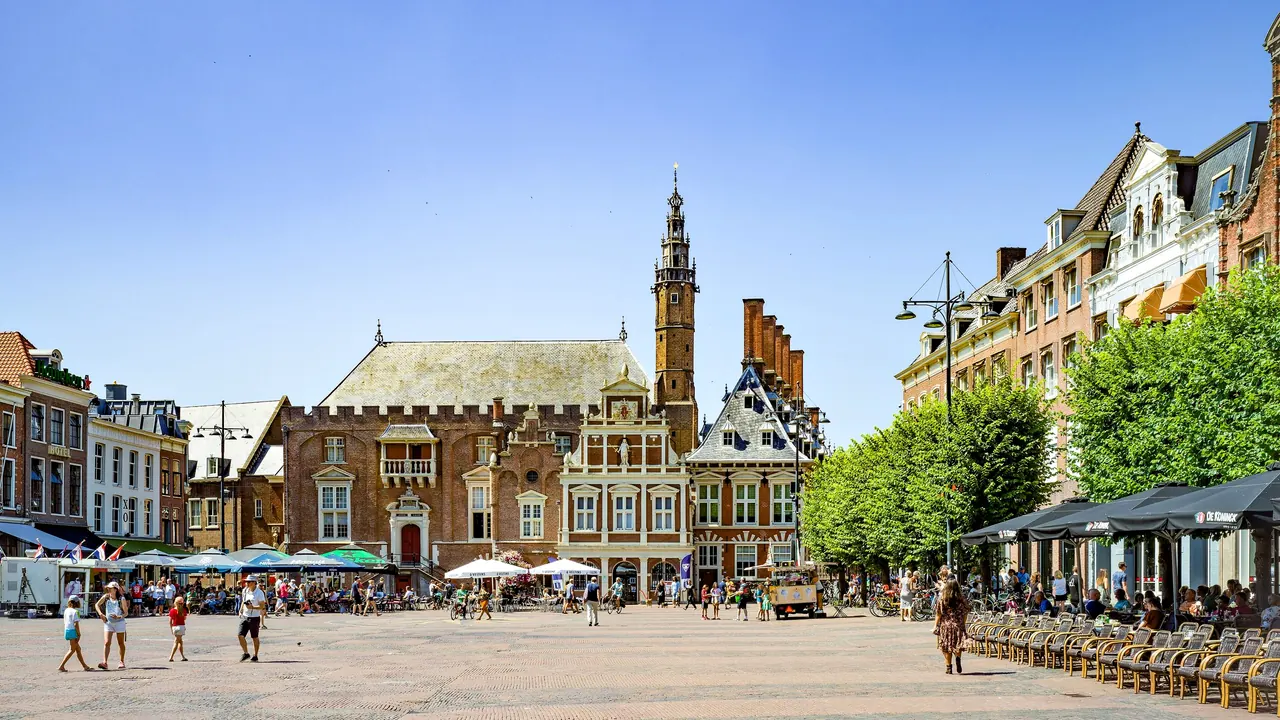
The Grote Markt and the town hall
- Day trips86
- Getting around78
- Culture & sights60
Photo: Moroder, CC BY-SA 4.0, cropped
Match
52
Every category weighted equally
- Beach & sun48
- Culture & arts56
- Food & nightlife50
- Family trip54
- Outdoors56
- Relax & unwind50
- Shopping & style53
- On a budget50
Haarlem in twelve categories
Our verdict on each, scored 0 to 100 against the same fixed benchmark cities, so a score means the same thing on every page.
Beaches & swimming. Scores 32 out of 100.
Food & drink. Scores 45 out of 100.
Culture & sights. Scores 60 out of 100.
Nightlife. Scores 32 out of 100.
Nature & outdoors. Scores 60 out of 100.
Day trips. Scores 86 out of 100.
Good for families. Scores 55 out of 100.
Getting around. Scores 78 out of 100.
Shopping & style. Scores 58 out of 100.
Affordability. Scores 32 out of 100.
Live music & performing arts. Scores 45 out of 100.
Wellness & relaxation. Scores 42 out of 100.
Haarlem category by category
Beaches & swimming
32The coast is very close. Zandvoort's long sandy beach is about ten minutes away by train, and the quieter, dune-backed strand at Bloemendaal aan Zee is an easy bike ride through the dunes. In summer there are pavilions all along the sand, and a warm weekend brings half the region out.
The catch is the North Sea itself. It is grey, often windy and cool, reaching about 17°C to 18°C at its warmest in August, and the swimming season is short. Most visitors spend a beach afternoon walking, sitting out of the wind or taking a quick dip. It makes a pleasant outing, but it is not a reason to plan a swimming vacation here.
Food & drink
45Food in Haarlem is the comfortable, well-made kind you find in a prosperous small Dutch city. You eat it on café terraces around the Grote Markt, in cosy brown cafés and in modern bistros along the side streets. The Saturday market in the main square sells cheese, raw herring and freshly fried kibbeling. The town brewed beer for centuries, and craft brewing is strong, with a good tap culture to show for it.
The offer is short on depth. Dutch cooking is simple, there is no street food scene to speak of, and the top tier of dining is small. Book for weekend evenings, and expect good meals rather than memorable ones.
Culture & sights
60Haarlem's historic centre has survived largely intact: gabled houses, canals, almshouses and the huge Gothic Grote Kerk of St Bavo, whose great Müller organ Mozart played as a boy. The Frans Hals Museum keeps the city's own Golden Age portrait painter at the heart of its collection. Teylers Museum, the oldest museum in the country, still has its 18th-century oval room full of fossils, instruments and old master drawings.
A walk takes in the hofjes, the quiet courtyard almshouses hidden behind plain doors, as well as the Amsterdamse Poort city gate, the windmill De Adriaan on the Spaarne and the Corrie ten Boom House, with its wartime hiding place. You can see all of it in two unhurried days.
Nightlife
32Evenings centre on the bars and brown cafés around the Grote Markt, the Botermarkt and the lanes in between. The terraces fill on summer nights and on weekends. It is sociable and relaxed rather than wild, and most places wind down well before dawn. Clubbing barely features. Anyone after a big night takes the train to Amsterdam, about fifteen minutes away.
Nature & outdoors
60The countryside starts at the western edge of town. Zuid-Kennemerland National Park is a broad belt of dunes, pine and oak woods and small lakes, crossed by marked walking and cycling paths. Highland cattle and wild ponies graze there, and you may spot deer and foxes. To the south, the protected Amsterdam water-supply dunes are known for their tame fallow deer. The coast beyond is good for long beach walks and for kitesurfing on windy days.
In spring, the bulb fields between Haarlem and Leiden turn the flat polders into stripes of colour, and cycling among them is a classic outing. This is gentle, level country. There are no hills to climb, and the weather is often windy and changeable.
Day trips
86Haarlem is one of the best-connected small bases in Europe. Amsterdam is about fifteen minutes away by train, close enough to visit as often as you like and come back to quieter streets. Leiden, with its university and museums, is about twenty minutes south. The Hague, with the Mauritshuis, and Delft are both under an hour, and Utrecht and Rotterdam are not much further.
To the north, Alkmaar's cheese market and the windmills of Zaanse Schans make easy outings. In spring, the Keukenhof gardens are a short bus ride away. Gouda and the Kinderdijk windmills are reachable in a long day. Because the rail network is dense, you rarely need to plan far ahead.
Good for families
55Haarlem is easy with children. The centre is small, flat and mostly free of cars, Dutch culture is relaxed about kids, and families everywhere get around by bike, often with cargo bikes or child seats. Teylers Museum's fossils and old instruments appeal to curious children, and the dunes and beach offer room to run, with playgrounds and visitor centres in the national park.
There is little built specially for children, though: no zoo, aquarium or theme park in town. Families usually add trips to Amsterdam's zoo and science museum, or to the attractions along the coast.
Getting around
78The historic centre is compact and flat, and you can cross it on foot in about twenty minutes. The station is right at its northern edge. Cycling is the natural way to get around. Separate bike paths run into the dunes and to the beach, and bikes are easy to hire.
Trains connect quickly with Amsterdam, Leiden and Zandvoort, and regional buses reach the bulb fields and the coastal villages. One contactless card or bank card works across the system. You do not need a car at all, and parking in the centre is limited.
Shopping & style
58Shopping is one of Haarlem's quiet strengths. The narrow streets south and west of the Grote Markt, including Gierstraat, Kleine Houtstraat and Schagchelstraat, are lined with independent fashion boutiques, interior and design shops, bookshops and delicatessens. The mainstream chains cluster along the Grote Houtstraat. Market days fill the main square with stalls selling flowers, cheese and fabric.
It is a pleasant afternoon of browsing rather than a destination in itself. There is no luxury street to speak of, and no big department store or crafts tradition to seek out.
Affordability
32Haarlem is a costly place to travel, priced like the prosperous northwest of Europe it belongs to. Many visitors to the region choose it as a calmer base, so its hotels are few for the demand and fill early in tulip season and summer, with rooms that tend to be small for what they cost. Guesthouses and short-stay apartments add some choice but rarely bring real savings.
Eating out and drinks cost what they do across the Netherlands. Lunch is the cheaper meal, and the market stalls and bakeries keep a day's spending in check. The compact centre and easy bike hire mean you spend little on getting about town, but train fares for regular outings and museum entry add up over a stay.
Live music & performing arts
45For a small city, Haarlem has a solid year-round programme. The Philharmonie, a 19th-century concert hall, hosts classical and chamber music, and the restored Stadsschouwburg presents theatre, dance and cabaret, mostly in Dutch. A long-established pop venue near the centre stages touring bands and local acts.
The organ is Haarlem's own speciality. St Bavo's great instrument is played in regular concerts, and the international organ festival has drawn players from around the world for generations. For opera or major orchestras, visitors go to Amsterdam.
Wellness & relaxation
42Haarlem's main restorative quality is its pace. After dark the canals and almshouse courtyards are quiet, and lingering on a café terrace is a local habit. The Netherlands has a strong sauna culture. Large day-spa and sauna complexes, often with outdoor pools and gardens, can be reached in the wider region, and the town has smaller saunas and beauty spas of its own.
There are no thermal springs and no historic bathhouse tradition. Most visitors unwind by walking or cycling in the dunes rather than by booking treatments.
When should you go?
Pick a month to see what it is like. The climate figures are measured averages, not a forecast.
Haarlem in July
Daytime high, °C
Rainfall in the month, mm
The whole year
Shaded against this city’s own year: the deepest cell is its best month for that figure and the palest its weakest.
Where the figures come from
Haarlem has no rain gauge within 25 km of the centre, so its rainfall comes from a gridded climate dataset read at the city rather than from a gauge further away.
Haarlem's sunshine is measured 49 km from the centre, at De Bilt.
Temperature and rainfall are climate normals, averaged over the years shown. Haarlem: 1991-2020 normals, Amsterdam Airport Schiphol (12.7 km from centre).
Before you go
| Measure | Haarlem |
|---|---|
| Official language | Dutch |
| Currency | Euro (EUR) |
| Sockets | CF230 V, 50 Hz |
| Driving side | Right |
| Time zone | UTC+1, UTC+2 in summer |
| Emergency number | 112 |
| Elevation | 2 m |
| Main airport | Amsterdam Airport Schiphol (AMS)12 km from centre287 non-stop destinations |
| Public holidays this year | 11 days |
By the numbers
| Measure | Haarlem |
|---|---|
| City population | 162,543 |
| People per km² | 5,064 |
| Museums within 10 km | 28 |
| UNESCO World Heritage sites within 50 km | 5 |
| Swim season, months above 21 °C | None |
Compare Haarlem with
Every comparison with a written verdict behind it.
- Amsterdam
- Antwerp
- Baden-Baden
- Bath
- Brighton
- Bruges
- Brussels
- Cambridge
- Cologne
- Dusseldorf
- Frankfurt
- Ghent
- Hamburg
- Heidelberg
- Lille
- London
- Maastricht
- Manchester
- Oxford
- Paris
- Rotterdam
- Strasbourg
- The Hague
- Utrecht
- York