Thailand
Chiang Mai
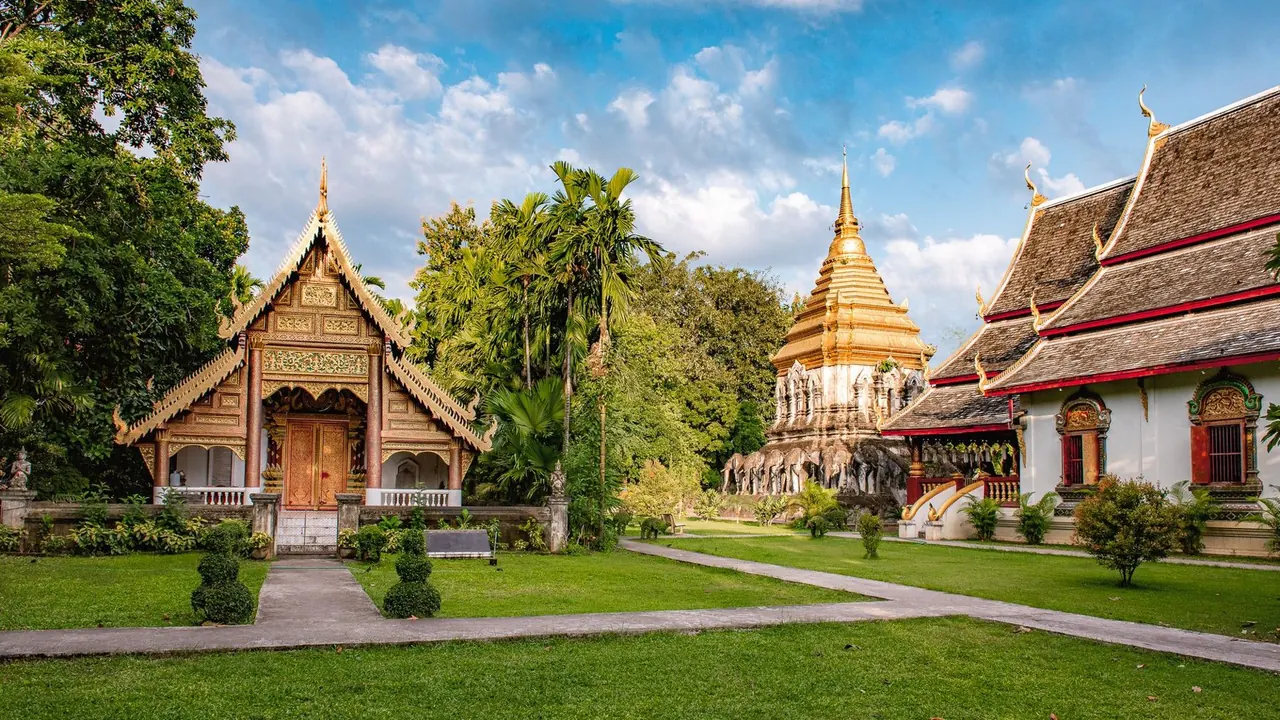
Wat Chiang Man in the old city
- Affordable cities90
- Wellness & relaxation82
- Food & drink78
Photo: Gije Cho, Pexels License
Match
56
Every category weighted equally
- Beach & sun55
- Culture & arts56
- Food & nightlife55
- Family trip56
- Outdoors58
- Relax & unwind59
- Shopping & style57
- On a budget60
Chiang Mai in twelve categories
Our verdict on each, scored 0 to 100 against the same fixed benchmark cities, so a score means the same thing on every page.
Beaches & swimming. Scores 6 out of 100.
Food & drink. Scores 78 out of 100.
Culture & sights. Scores 65 out of 100.
Nightlife. Scores 45 out of 100.
Nature & outdoors. Scores 73 out of 100.
Day trips. Scores 48 out of 100.
Good for families. Scores 55 out of 100.
Getting around. Scores 38 out of 100.
Shopping & style. Scores 62 out of 100.
Affordability. Scores 90 out of 100.
Live music & performing arts. Scores 30 out of 100.
Wellness & relaxation. Scores 82 out of 100.
Chiang Mai category by category
Beaches & swimming
6Chiang Mai sits in a mountain valley in northern Thailand, a long day's travel from the nearest sea, so beaches play no part in a stay here. Locals cool off at Huay Tung Tao reservoir under Doi Suthep, at flooded quarry lakes on the edge of town and in the pools below waterfalls, and many guesthouses and hotels have swimming pools. Travellers who want sand and warm sea usually fly south to the islands before or after their time in the north.
Food & drink
78Northern Thai cooking is the reason to eat here, and it differs from the food of central Thailand: khao soi, the curried noodle soup with crisp noodles on top, grilled sai ua sausage heavy with herbs, nam prik noom chilli dip with pork crackling, and sticky rice eaten by hand. Morning markets such as Warorot and the evening stalls at Chang Phueak Gate and around the old city serve it cheaply, and the weekend walking streets turn into long rows of snacks.
Coffee is grown in the surrounding hills, and the city has an unusually deep café culture, from roasters in Nimmanhaemin to garden cafés out towards the mountains. A small group of ambitious kitchens cooks Lanna ingredients in a modern way, but international range is limited and most visitors eat Thai almost every meal.
Culture & sights
65The square old city, still ringed by its moat and fragments of brick wall, holds dozens of temples within easy walking distance. Wat Chedi Luang's huge ruined chedi, Wat Phra Singh with its classic Lanna wooden halls and murals, and the silver temple of Wat Sri Suphan are the highlights, and smaller monasteries with carved teak gables sit on almost every lane. Above the city, Wat Phra That Doi Suthep looks down from its mountain over the whole valley.
The Lanna Folklife Museum and the city arts and cultural centre explain the northern kingdom's history, but museums are modest and few. This is a place for slow temple walks over two or three days rather than a long list of major sights.
Nightlife
45Evenings are relaxed and sociable rather than wild. Nimmanhaemin has the cocktail bars, craft beer and a young crowd from the nearby university, while the streets around Tha Phae Gate and the old city fill with backpacker bars, rooftop terraces and open-sided drinking spots. Loi Kroh Road near the Night Bazaar is the brasher strip of beer bars.
There are a few clubs, but most places wind down around midnight or soon after, and the city lacks the late, big-room clubbing of the capital. It suits travellers who want a few drinks in good company, not those planning to dance until dawn.
Nature & outdoors
73Green mountains frame the city. Doi Suthep-Pui National Park begins right at the western edge of town, with forest trails, waterfalls and the monk's trail climbing to the temple, and Doi Inthanon, Thailand's highest mountain at about 2,565m, is around an hour and a half away with cloud forest, waterfalls and birdlife. The Mae Taeng and Mae Rim valleys offer rafting, ziplines, jungle treks to hill villages, mountain biking and elephant sanctuaries where the animals are watched rather than ridden.
The cool, dry months from November to February are the best time to be out. From roughly February to April, field burning fills the valley with haze that can make hiking unpleasant, and the rainy season turns the hills lush but muddy.
Day trips
48The best short outing is Lamphun, about half an hour south, an old Mon-era town around the gilded chedi of Wat Phra That Hariphunchai. Lampang, an hour and a half away, is quieter and older-feeling, with horse-drawn carriages, teak mansions and the walled temple of Wat Phra That Lampang Luang outside town. Closer in, the craft villages of Bo Sang and San Kamphaeng and the hill village of Mae Kampong make easy half days.
Chiang Rai's White Temple and the mountain town of Pai are popular but both take around three hours each way, so they work better as overnight stays. Most other excursions head into the hills rather than to towns.
Good for families
55Children are warmly received everywhere, and the city is calmer and smaller than the capital. Elephant sanctuaries, where families feed and walk with the animals, are the highlight for many, alongside the Chiang Mai Zoo on the slopes of Doi Suthep, the Night Safari, quarry swimming parks, ziplines and easy waterfall walks. The weekend walking streets are fun for an evening of snacks and stalls.
The hard part is moving around: pavements are broken or missing, traffic is heavy around the moat, and there are few dedicated attractions after the first few days. Avoid the hazy burning season with young children, when air quality can be poor.
Getting around
38The old city is compact enough to walk, and its quieter lanes are pleasant on foot, though pavements are narrow and often blocked. Beyond the moat there is no metro or tram. Visitors use the red shared pickup trucks called songthaew, which run flexible routes and are flagged down in the street, tuk-tuks, and ride-hailing apps, which make Nimmanhaemin or the airport an easy hop.
Many travellers hire a scooter for the hills, though traffic and rules take some getting used to. For Doi Inthanon and rural trips, a hired driver or a tour is the usual answer.
Shopping & style
62Crafts are the strength. The Sunday Walking Street along Ratchadamnoen in the old city and the Saturday market on Wualai Road, the old silversmiths' street, are long, slow evening markets of textiles, carved wood, ceramics and hill-tribe embroidery, and the Night Bazaar runs every evening. Bo Sang is known for painted paper umbrellas, San Kamphaeng for silk and cotton weaving, and the city's celadon and lacquerware have long traditions.
Nimmanhaemin adds small design shops and studios, and there are large modern malls, but luxury brands and fashion are thin. This is a place to buy handmade things, not labels.
Affordability
90This is one of the easiest places in Asia to travel well on a modest budget. Guesthouses and boutique hotels in old teak buildings are inexpensive, street food and market meals cost very little, and songthaews and ride-hailing keep transport cheap. Temples are free or nearly so, and massages are a daily affordable pleasure.
The costs that add up are organised excursions such as sanctuary visits, trekking and cooking classes, imported wine and spirits, and the better resorts in the hills, which charge international rates.
Live music & performing arts
30The formal performing arts are slight: there is no opera or regular classical season, and theatre is rare. What a visitor finds instead is live music in small bars, with nightly jazz and blues jam sessions near the old city's north gate and acoustic and rock bands in Nimmanhaemin and around Tha Phae Gate. Khantoke dinners pair a northern meal with traditional Lanna dance and music, staged mainly for visitors. Muay Thai fight nights are popular, and festivals like Yi Peng bring processions and performance to the streets.
Wellness & relaxation
82Slowing down comes naturally here. Thai massage is part of daily life, from simple shopfront parlours to garden spas, and the city is the country's best-known place to learn it, with long-established schools teaching visitors. Yoga studios, herbal steam rooms and spas in converted teak houses are common, and resorts in the Mae Rim valley are designed for quiet stays.
Temples such as Wat Umong, with its forest tunnels, and Wat Suan Dok run meditation retreats and talks with monks, and the San Kamphaeng hot springs, under an hour away, have bathing pools fed by natural springs. The pace of the old city lanes, unhurried and green, suits a long stay.
When should you go?
Pick a month to see what it is like. The climate figures are measured averages, not a forecast.
Chiang Mai in July
Daytime high, °C
Rainfall in the month, mm
The whole year
Shaded against this city’s own year: the deepest cell is its best month for that figure and the palest its weakest.
Temperature and rainfall are climate normals, averaged over the years shown. Chiang Mai: 1991-2020 normals, Chiang Mai (0.6 km from centre).
Before you go
| Measure | Chiang Mai |
|---|---|
| Official language | Thai |
| Currency | Baht (THB) |
| Sockets | ABCF220 V, 50 Hz |
| Driving side | Left |
| Time zone | UTC+7 |
| Emergency number | Police 191, ambulance 1669, fire 199 |
| Elevation | 310 m |
| Main airport | Chiang Mai International Airport (CNX)3 km from centre28 non-stop destinations |
By the numbers
| Measure | Chiang Mai |
|---|---|
| City population | 1,198,000 |
| People per km² | 2,958 |
| Museums within 10 km | 6 |
| UNESCO World Heritage sites within 50 km | 0 |
Compare Chiang Mai with
Every comparison with a written verdict behind it.