France
La Plagne
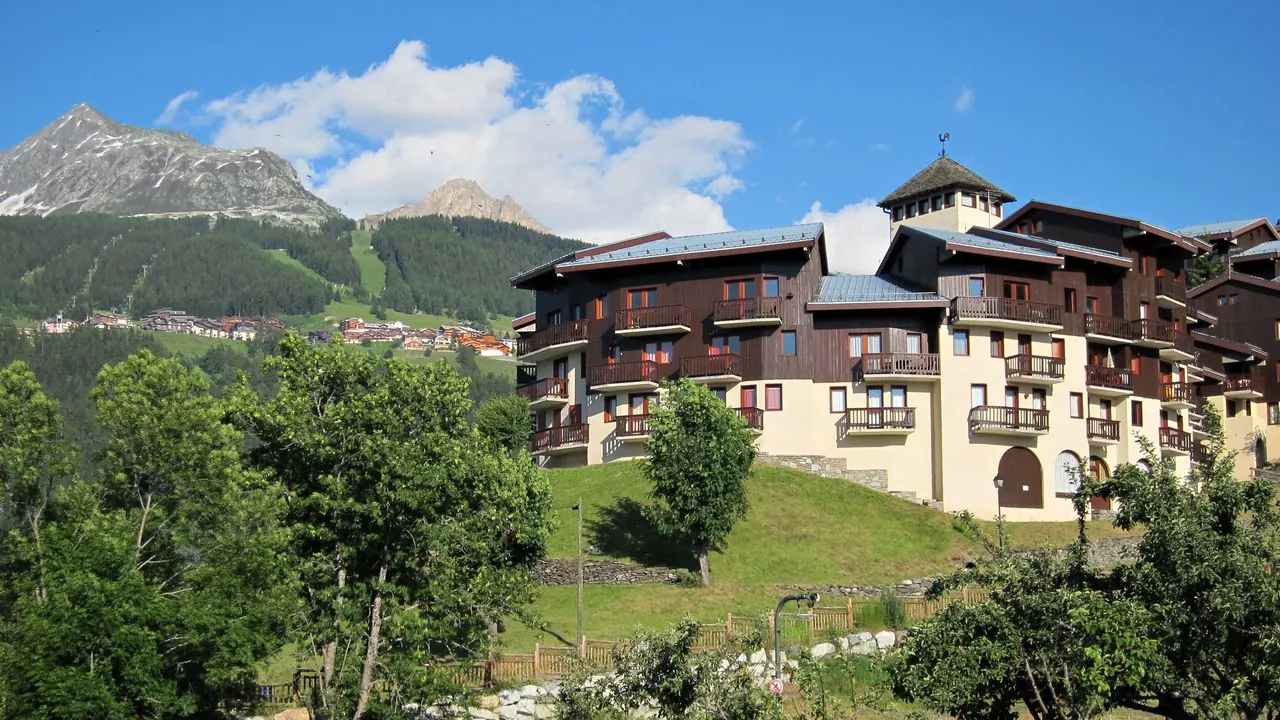
Chalets of Montchavin among green slopes
- Nature & outdoors92
- Families70
- Getting around52
Photo: Henk Monster, CC BY 3.0, cropped
La Plagne lies in French Alps, which has its own page.
Match
34
Every category weighted equally
- Beach & sun34
- Culture & arts29
- Food & nightlife26
- Family trip40
- Outdoors43
- Relax & unwind36
- Shopping & style30
- On a budget32
La Plagne in twelve categories
Our verdict on each, scored 0 to 100 against the same fixed benchmark cities, so a score means the same thing on every page.
Beaches & swimming. Scores 6 out of 100.
Food & drink. Scores 32 out of 100.
Culture & sights. Scores 9 out of 100.
Nightlife. Scores 25 out of 100.
Nature & outdoors. Scores 92 out of 100.
Day trips. Scores 38 out of 100.
Good for families. Scores 70 out of 100.
Getting around. Scores 52 out of 100.
Shopping & style. Scores 12 out of 100.
Affordability. Scores 23 out of 100.
Live music & performing arts. Scores 5 out of 100.
Wellness & relaxation. Scores 40 out of 100.
La Plagne category by category
Beaches & swimming
6La Plagne is a high mountain resort with no sea within reach, and nobody comes here to swim outdoors. In summer there are mountain lakes and the odd valley leisure lake, but the water is cold and they suit a picnic more than a swim. Swimming here mostly means an indoor pool or a heated outdoor one at the resort's leisure centres.
Food & drink
32Eating in La Plagne means Savoyard mountain cooking: fondue, raclette, tartiflette and croziflette, with Beaufort and Reblochon on every menu and charcuterie from the surrounding valleys. The most enjoyable meals tend to be lunches at the wooden-chalet restaurants on the slopes, sitting out on a sunny terrace between runs.
In the villages the choice runs from pizzerias and crêperies to a few more ambitious dining rooms, but the range is narrow and much of it is built for ski-week crowds. Plenty of visitors self-cater in apartments and shop at the resort supermarkets and cheese counters. Out of season most kitchens close.
Culture & sights
9La Plagne was built from scratch in the 1960s for skiing, so there is almost no old heritage here. What it does have is resort architecture: the stepped concrete block of Aime 2000, which looks like a liner run aground on the mountainside, and the high-rise Plagne Centre are period pieces of French mountain planning. The bobsleigh track built for the 1992 Olympics is a landmark of a kind. For churches, Romanesque stone and old Savoyard villages you have to go down into the valley.
Nightlife
25Evenings revolve around après-ski: bars at the foot of the slopes fill up as the lifts close, and Plagne Centre and Belle Plagne have a few pubs and late bars, with a small club or two for those who keep going. It is lively enough in peak winter weeks, but this is mainly a family resort and most people are in bed early for first lifts. In summer and between seasons the villages are very quiet at night.
Nature & outdoors
92La Plagne sits high in the Tarentaise valley and is part of Paradiski, one of the largest linked ski areas anywhere, joined to Les Arcs across the valley by the double-decker Vanoise Express cable car. Its ten villages spread across wide, sunny slopes running from about 1,250m up to the Bellecôte glacier area above 3,000m, with plenty of open intermediate terrain, tree-lined runs down to Montchavin and Champagny, and off-piste for experienced skiers with a guide.
In summer the lifts carry walkers and mountain bikers up to high pastures and lakes, and the protected valley of Champagny-le-Haut leads into the Vanoise National Park, where marmots and ibex are common sights. Paragliding, via ferrata and rafting on the Isère down in the valley round out the season.
Day trips
38Going anywhere means first driving down the mountain road to the valley, and in winter most visitors simply stay up on the slopes. When you do head down, the small town of Aime has a fine Romanesque basilica, and the walled medieval village of Conflans above Albertville is under an hour away. Chambéry, with its château and old centre, is about an hour and a half, and Annecy's canals and lake roughly two hours by car.
In summer the high passes open, bringing the Beaufortain and its cheese villages within easy reach and making the run over the Little St Bernard into Italy's Aosta Valley a long but rewarding day. A car makes all of this far easier.
Good for families
70La Plagne was laid out with families in mind, and it shows. Several villages, Belle Plagne in particular, are largely car-free and set right on the snow, so children can walk out of the door onto gentle slopes. Ski schools run large programmes for small children, there are snow gardens and kids' clubs, and the wide, easy runs suit nervous beginners. A ride down the Olympic bob track in a padded bob-raft is a highlight for older children.
The limits are those of any ski resort: altitude, cold, heavy gear and long ski-school mornings, and little to do for children who do not take to skiing. In summer the activities shift to hiking, pools and outdoor sports.
Getting around
52Inside the resort, getting around is simple once you are there. Most accommodation is ski-in and ski-out, the villages are compact and walkable, free shuttle buses link them, and a small cable car connects Plagne Centre with Aime 2000. In winter the lifts themselves become the transport network.
The catch is the approach. The nearest railway station is in the valley at Aime, from which buses climb the long winding road to the villages, and anything beyond the resort, from supermarkets in the valley to day trips, is much easier with a car. Snow chains are often needed on the way up in winter.
Shopping & style
12Shopping in La Plagne is practical: ski hire and sports shops in every village, outdoor clothing, and small grocery stores. The things worth taking home are Savoyard foods, Beaufort cheese, cured sausages, génépi and local honey, sold at cheese and produce counters. There is nothing in the way of fashion or design shopping.
Affordability
23A winter week here is expensive. Lift passes, equipment hire, ski lessons and lunches on the mountain add up quickly, and groceries and drinks cost more in the resort than down in the valley. The large stock of self-catering apartments helps a great deal, and is how many families keep costs down. Summer stays and the quieter weeks of the ski season are noticeably cheaper.
Live music & performing arts
5There is essentially no performing arts scene here. Resort events, such as torchlight descents, a few open-air concerts in season and live bands at après-ski bars, are as far as it goes. Anyone looking for theatre or classical music has to go to Chambéry or further.
Wellness & relaxation
40Wellness in La Plagne is mainly about a sauna and pool at the end of a ski day. Many hotels and apartment residences have small spas with hot tubs, saunas and treatment rooms, and the resort has aquatic centres where you can soak tired legs. The altitude air and quiet evenings help, but a ski week is a physical vacation, not a restful one.
For real thermal bathing you go down to the Tarentaise valley's spa towns, Brides-les-Bains and La Léchère, about an hour away, where mineral springs have been used since the nineteenth century. Summer, when the villages empty out and the pastures turn green, is the calmer season.
When should you go?
Pick a month to see what it is like. The climate figures are measured averages, not a forecast.
La Plagne in July
Daytime high, °C
Rainfall in the month, mm
The whole year
Shaded against this destination’s own year: the deepest cell is its best month for that figure and the palest its weakest.
Where the figures come from
La Plagne has no weather station within reach, so its figures come from a gridded climate model rather than a measured record, and read a broad area rather than one spot.
Temperature and rainfall are climate normals, averaged over the years shown. La Plagne: 2001-2020 normals, NASA POWER reanalysis grid, no weather station within 90 km.
Before you go
| Measure | La Plagne |
|---|---|
| Official language | French |
| Currency | Euro (EUR) |
| Sockets | CE230 V, 50 Hz |
| Driving side | Right |
| Time zone | UTC+1, UTC+2 in summer |
| Emergency number | 112 |
| Elevation | 1,974 m |
| Main airport | Geneva International Airport (GVA)92 km from centre150 non-stop destinations |
| Public holidays this year | 11 days |
By the numbers
| Measure | La Plagne |
|---|---|
| Museums within 10 km | 2 |
| UNESCO World Heritage sites within 50 km | 0 |
Compare La Plagne with
Every comparison with a written verdict behind it.
- Adelboden
- Alpe d'Huez
- Andermatt
- Arosa
- Avoriaz
- Chamonix
- Châtel
- Courchevel
- Crans-Montana
- Davos
- Engelberg
- Flaine
- Grindelwald
- Gstaad
- Klosters
- La Clusaz
- La Rosière
- Laax
- Le Grand-Bornand
- Lenzerheide
- Les Arcs
- Les Deux Alpes
- Les Gets
- Les Menuires
- Leukerbad
- Megève
- Méribel
- Montgenèvre
- Morzine
- Mürren
- Saas-Fee
- Saint-Gervais-les-Bains
- Samnaun
- Samoëns
- Serre Chevalier
- St. Moritz
- Tignes
- Val Cenis
- Val d'Isère
- Val Thorens
- Verbier
- Wengen
- Zermatt