Mexico
Mexico City
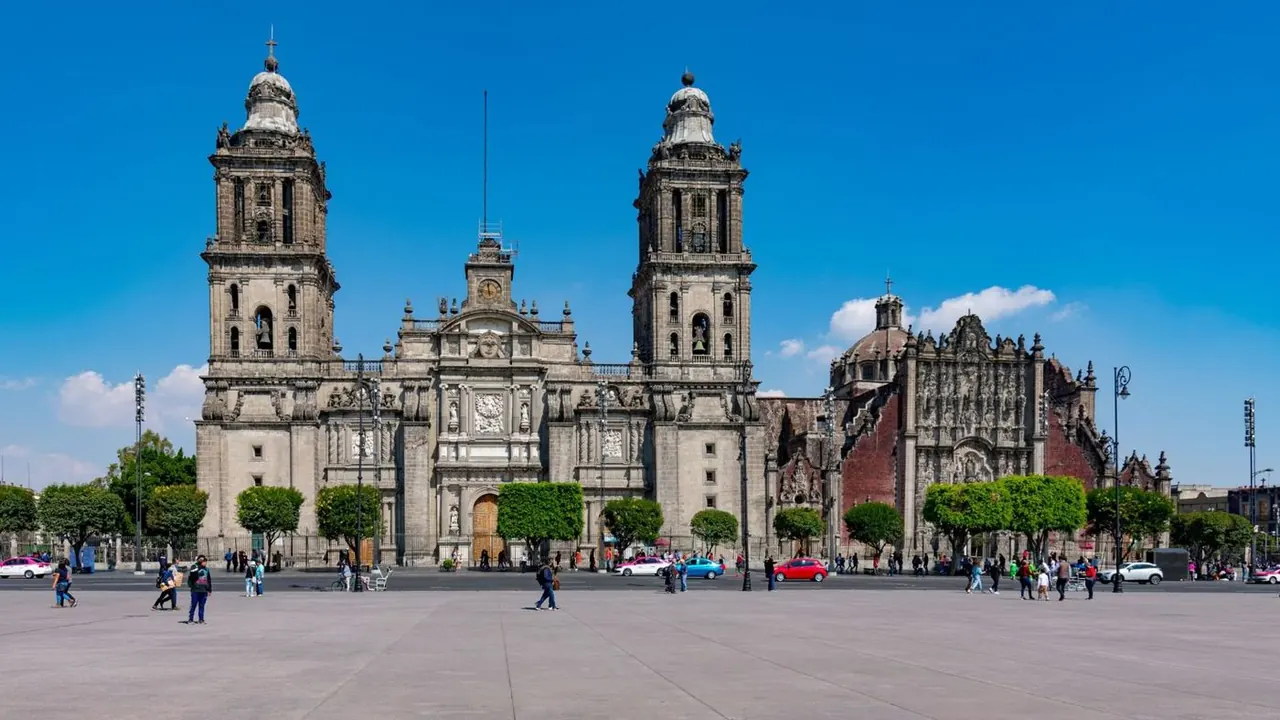
The Metropolitan Cathedral on the Zócalo
- Food & drink90
- Culture & sights88
- Nightlife80
Photo: Oscar Dominguez, Pexels License
Match
63
Every category weighted equally
- Beach & sun56
- Culture & arts71
- Food & nightlife70
- Family trip58
- Outdoors60
- Relax & unwind56
- Shopping & style69
- On a budget65
Mexico City in twelve categories
Our verdict on each, scored 0 to 100 against the same fixed benchmark cities, so a score means the same thing on every page.
Beaches & swimming. Scores 5 out of 100.
Food & drink. Scores 90 out of 100.
Culture & sights. Scores 88 out of 100.
Nightlife. Scores 80 out of 100.
Nature & outdoors. Scores 50 out of 100.
Day trips. Scores 75 out of 100.
Good for families. Scores 58 out of 100.
Getting around. Scores 50 out of 100.
Shopping & style. Scores 76 out of 100.
Affordability. Scores 75 out of 100.
Live music & performing arts. Scores 72 out of 100.
Wellness & relaxation. Scores 40 out of 100.
Mexico City category by category
Beaches & swimming
5Mexico City sits on a high plateau at about 2,240m, and the nearest Pacific beaches at Acapulco are several hours away by road, which makes them a separate trip rather than an outing. Swimming in the city means a hotel pool or a sports centre. Visitors who want sea and sand usually add a few days on the coast before or after their stay.
Food & drink
90Eating is one of the main reasons to come. The street is where it starts: taco stands working late into the night with al pastor carved from the spit, tamales and atole sold from carts at breakfast, quesadillas made with blue corn masa, tlacoyos patted out at market stalls. Neighbourhood markets such as Medellín in Roma, San Juan in the Centro and the huge Jamaica and La Merced give a cheap lunch at a counter and show the full range of chiles, moles, fruit and insects.
Above that, Roma, Condesa and Polanco hold cantinas, seafood counters, bakeries and some of the most respected tasting menus in the Americas, many built on regional ingredients. Mezcal bars, old pulquerías serving the fermented agave drink, and a strong coffee scene grown on Mexican beans complete it. The weak point is that some of the best food is spread across a very large city.
Culture & sights
88The historic centre is one of the largest in the Americas: the Zócalo with the Metropolitan Cathedral and the National Palace, whose stairwell carries Diego Rivera's mural history of Mexico, and right beside them the excavated Aztec Templo Mayor, a reminder that the colonial city was built on top of Tenochtitlan. Streets of baroque churches and tezontle-stone palaces lead to the Palacio de Bellas Artes, with its art nouveau shell and murals inside.
The National Museum of Anthropology in Chapultepec is the essential stop, one of the great archaeological collections anywhere, with the Aztec Sun Stone at its heart. The park also holds Chapultepec Castle and several art museums. Coyoacán has the Frida Kahlo house, San Ángel the Rivera-Kahlo studios, and Xochimilco's canals are a UNESCO site. A week barely covers it.
Nightlife
80Nights start late and run long. Roma and Condesa are the centre of it, with cocktail bars that draw drinkers from abroad, mezcalerías, rooftop terraces and small dance floors spread through tree-lined streets, so a night out is often a walk between several places. Old cantinas in the Centro, some with swinging doors and free snacks with each round, give a more traditional evening, and Polanco has the dressier lounges and clubs.
For dancing there are electronic clubs that go on until morning, salsa and cumbia halls where locals of every age dance properly, and a large LGBTQ scene in the Zona Rosa. Weekends are the busy nights. Most people take a ride-hailing car home rather than walking long distances late.
Nature & outdoors
50Inside the city, green space means Chapultepec, a large wooded park with lakes, and the canals and wetlands of Xochimilco, where you can take a boat through the chinampa farm plots. On the southern and western edges the pine forests of Desierto de los Leones and the slopes of Ajusco offer real hiking at altitude.
The big landscapes are further out. The Paso de Cortés between the volcanoes Iztaccíhuatl and Popocatépetl and the crater lakes of Nevado de Toluca are about two hours away, and in winter the monarch butterfly reserves are a long day. The catch is the city itself: getting out through traffic eats much of the day, and air quality can be poor in the dry season.
Day trips
75The obvious first outing is Teotihuacan, about an hour north-east, where the Pyramids of the Sun and Moon line the Avenue of the Dead in one of the largest ancient cities of the Americas. Puebla, about two hours east, has a tiled colonial centre, ornate churches and its own cooking, and neighbouring Cholula a vast pyramid topped by a church.
To the south, Cuernavaca is a warmer, greener colonial town, Tepoztlán a market village under a cliff-top temple, and Taxco, a little further, a silver town of white houses on a steep hillside. The Xochicalco ruins and Toluca's market add more. Traffic leaving the city makes early starts worthwhile, and many visitors use organised tours or long-distance buses.
Good for families
58There is more for children than many expect. Chapultepec park holds the zoo, boating lakes and the Papalote children's museum with its hands-on science, and there is a large aquarium in Polanco and a theme park with roller coasters on the southern edge. A trajinera boat in Xochimilco, with food and mariachis drifting past, goes down well with all ages, as do lucha libre wrestling and the pyramids outside the city. Mexican culture is warm towards children and restaurants welcome them.
The difficulty is the city's size. Long rides in traffic, crowded metro trains at rush hour, uneven pavements and the altitude, which tires some visitors for the first day or two, make it a place to plan by neighbourhood.
Getting around
50The areas visitors use most are pleasant on foot: the Centro Histórico, the leafy streets of Roma and Condesa, Polanco and old Coyoacán. Between them runs a large, cheap metro, with its colour-coded lines and pictograms for each station, plus the Metrobús lanes and a public bike-share system in the central districts.
The city is enormous, though, and distances between sights are long. Metro trains are packed at rush hour, pickpockets work them, and some carriages are reserved for women and children at busy times. Road traffic is heavy for much of the day. Most visitors mix walking and the metro with ride-hailing cars, which are widely used and the usual way home at night. A car is not needed and is more trouble than help.
Shopping & style
76Shopping here is strongest at the traditional end. La Ciudadela and the craft markets of the Centro gather textiles, Oaxacan pottery, alebrijes, silver and lacquerwork from across Mexico, San Ángel's Saturday bazaar sells art and design in a colonial plaza, and the Sunday flea market at La Lagunilla is a long browse through antiques and oddities. Even the Sonora market, with its herbs, piñatas and folk-magic stalls, is worth a look.
For fashion, Avenida Presidente Masaryk in Polanco carries the international luxury houses, and the long-established department stores El Palacio de Hierro and Liverpool have grand branches. Roma and Condesa fill in with Mexican designers, concept stores and bookshops.
Affordability
75Day-to-day costs are low by international standards. Street tacos and market lunches are cheap, a metro ride costs very little, and many museums charge modest entry or are free on certain days. Ride-hailing across the city is affordable too.
The popular districts are a different picture. Boutique hotels and well-reviewed restaurants in Roma, Condesa and Polanco charge prices closer to those of a European capital, and cocktail bars there are not cheap. A visitor who eats where locals eat and stays in the Centro or a less fashionable neighbourhood will spend much less than one who stays within the three most sought-after areas.
Live music & performing arts
72The Palacio de Bellas Artes is the centre of formal performance, home to the national opera and symphony seasons and to the Ballet Folklórico de México, whose regional dances and costumes are the most accessible show for a visitor who speaks no Spanish. The university's orchestra plays at Sala Nezahualcóyotl in a striking modernist hall, and the large Auditorio Nacional hosts major concerts.
There is a big theatre scene, from musicals to independent stages, though nearly all of it is in Spanish. Mariachis play for hire every night in Plaza Garibaldi, jazz and son clubs dot Roma and Coyoacán, and lucha libre at Arena México is a loud, theatrical night out that many visitors count among their best.
Wellness & relaxation
40This is not a restful city. Noise, traffic and crowds set the pace, and the altitude asks visitors to take it easy for the first day or two in any case. What it has is the temazcal, a pre-Hispanic steam bath ritual offered in some wellness centres and spas, and a range of good hotel and day spas in Polanco, Roma and Condesa.
The quieter moments come from the city's leafy side: shaded plazas in Coyoacán, the park benches of Condesa and long mornings in a café. For a real retreat, most people head south to the warmer towns around Cuernavaca and Tepoztlán, where spas and temazcales are part of the local trade.
When should you go?
Pick a month to see what it is like. The climate figures are measured averages, not a forecast.
Mexico City in July
Daytime high, °C
Rainfall in the month, mm
The whole year
Shaded against this city’s own year: the deepest cell is its best month for that figure and the palest its weakest.
Temperature and rainfall are climate normals, averaged over the years shown. Mexico City: 1991-2020 normals, Mexico Central, D. F. (7.9 km from centre).
Before you go
| Measure | Mexico City |
|---|---|
| Official language | Spanish, Nahuatl, Yucatec Maya |
| Currency | Mexican Peso (MXN) |
| Sockets | AB127 V, 60 Hz |
| Driving side | Right |
| Time zone | UTC-6 |
| Emergency number | 911 |
| Elevation | 2,240 m |
| Main airport | Mexico City Benito Juárez International Airport (MEX)7 km from centre109 non-stop destinations |
| Public holidays this year | 9 days |
By the numbers
| Measure | Mexico City |
|---|---|
| City population | 9,209,944 |
| People per km² | 6,202 |
| Museums within 10 km | 108 |
| UNESCO World Heritage sites within 50 km | 6 |
Compare Mexico City with
Every comparison with a written verdict behind it.