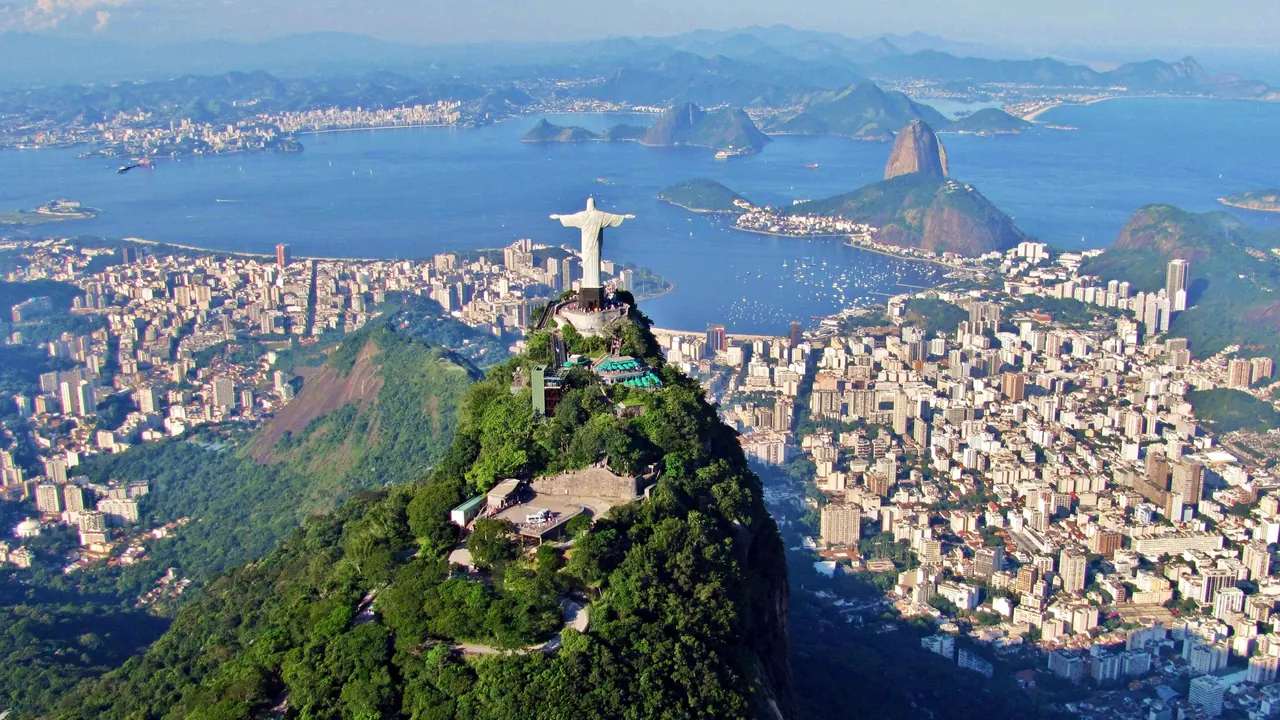
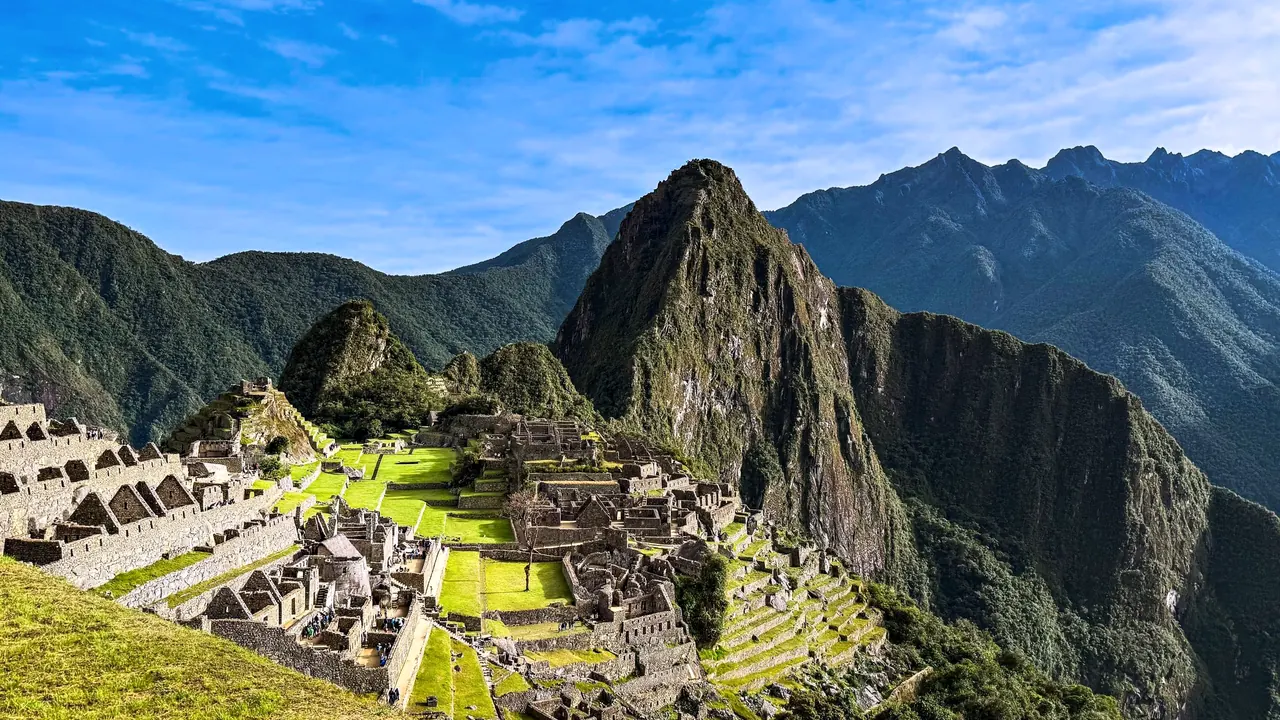
Photos: Brazil by Rafael Rabello de Barros, CC BY-SA 3.0, cropped; Peru by WANG Jared, Pexels License.
Brazil or Peru?
Our verdict in twelve categories, each scored against the same fixed benchmark cities, and the climate month by month, so you can choose for your trip.
Choose Brazil for
- beaches
- nightlife
- live music and the arts
Brazil suits a trip built around warm sea, music and late nights. Its coast gives you reef pools in the Northeast, city beaches in Rio and dune-backed bays further north, and in the evenings there are samba in Lapa, bars in São Paulo and street parties in Salvador. It also works better with young children, because most of the trip can stay at sea level near calm water.
Choose Peru for
- culture and sights
- day trips
- food and drink
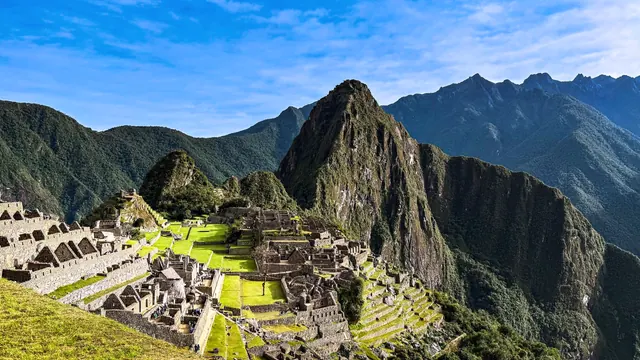
Peru is the better pick for people who want to see things and walk a long way. Machu Picchu, Cusco's Inca stonework and the trekking routes of the Andes are the reason to go, and Lima's cooking alone justifies a few days in the capital. It is a tougher trip because of the altitude and the long journeys, but it pays back more in history, landscape and food than in beach time.
Scoreboard
Twelve categories on one fixed scale from 0 to 100. The shaded stretch is the gap between the two.
Your match
Pick a travel style or drag the sliders, and both match scores follow your weighting.
Wins on beaches and nightlife with your weighting.
Wins on culture and sights and day trips with your weighting.
What matters to you?
Category by category
What the scores mean for a trip.
Beaches & swimming
This is where the two countries differ most. Brazil has thousands of kilometres of warm Atlantic coast. There are reef-sheltered pools at Porto de Galinhas and Maragogi, red cliffs and dolphins at Pipa, Ipanema and Copacabana inside Rio, and very clear water at Fernando de Noronha. You could spend the whole trip on the sand.
Peru's Pacific is cold for most of its length, and the coast near Lima is surf, grey sand and desert cliff. The warm exception is the far north around Mancora and Punta Sal, a pleasant surf-and-hammock strip a flight away from the Andes. Go there to rest between other places, not as the reason for the trip.
Where in Brazil: Porto de Galinhas, Rio de Janeiro, Pipa, Fernando de Noronha
Where in Peru: Mancora, Punta Sal, Zorritos, Punta Hermosa
Food & drink
Peru is the stronger place to travel for food. Lima is a destination in its own right, with lunchtime ceviche, Nikkei and chifa cooking, and a fine-dining tier built on ingredients from the coast, the Andes and the jungle. Arequipa's long picantería lunches and the duck and goat dishes around Chiclayo carry it beyond the capital.
Brazil eats well too, but the high points are spread out. São Paulo has its immigrant kitchens and the Mercado Municipal, Salvador cooks with dendê oil and coconut, and Belém sells Amazonian produce at Ver-o-Peso. Rio is more about the boteco and its Saturday feijoada than about the cooking itself.
Culture & sights
Peru has the greater sights. Machu Picchu is one of the world's great sights, and Cusco itself is built on Inca walls, with Sacsayhuaman above the town and the Sacred Valley's terraces nearby. Add Arequipa's Santa Catalina convent and Trujillo's adobe city of Chan Chan, and the history goes far deeper than the colonial era.
Brazil's heritage is newer and mostly Portuguese. Its best places are the Pelourinho in Salvador, the gold-rush town of Ouro Preto and Aleijadinho's prophets at Congonhas, with São Paulo's museums and Niemeyer's Brasília as the modern chapter. It is rewarding, but it has no ancient monuments.
Where in Brazil: Salvador, Ouro Preto, Rio de Janeiro, São Paulo
Nightlife
Brazil is the place for nights out. São Paulo's clubs on Rua Augusta and bars in Vila Madalena run until dawn, Rio's crowds fill Lapa under the arches, and Salvador and Recife take the party outdoors. Carnival turns all of these cities into street parties that last for days.
Peru's nightlife is mostly in Lima. There are bars in old houses in Barranco and cocktail bars and clubs in Miraflores. Cusco has a backpacker bar scene, but altitude and early trek starts mean most visitors go to bed early, and the Andean towns are quiet by late evening.
Where in Brazil: São Paulo, Rio de Janeiro, Salvador, Belo Horizonte
Nature & outdoors
Both are outstanding, but Peru has more variety in a smaller space. It offers high-pass treks to Machu Picchu, the glacial lakes of the Cordillera Blanca, condors over the Colca Canyon, Lake Titicaca on the altiplano and the rainforest at Tambopata and Manu, plus the seabird islands off Paracas.
Brazil is better for wildlife and water. The Pantanal is the place for jaguars and giant otters, Iguaçu's falls drop into a gorge in the rainforest, and Lençóis Maranhenses has lagoons between white dunes. Peru is the choice for walkers. Brazil suits people who would rather watch from a boat or a lodge.
Where in Brazil: Pantanal, Amazon (Manaus, Belém), Iguaçu Falls, Lençóis Maranhenses
Where in Peru: Cusco and the Sacred Valley, Cordillera Blanca, Tambopata and Manu, Colca Canyon
Day trips
Peru's regional bases have more within reach. From Cusco you can fill several days in the Sacred Valley, with Pisac, Ollantaytambo, Moray and the salt pans of Maras. Puno has boats to the Uros reed islands, and Trujillo has Chan Chan and Huanchaco close together.
Brazil's best base for day trips is Belo Horizonte, a couple of hours from Ouro Preto and Congonhas and closer to Inhotim. Petrópolis is an easy trip from Rio, and Olinda is next door to Recife. Beyond these, the distances are large, and many places that look close are better as a stop on the way somewhere else.
Where in Brazil: Belo Horizonte, Rio de Janeiro, Salvador, Recife
Good for families
Brazil works for children of any age, toddlers included, because a family can pick one stretch of coast and stay there. The calm bay beaches around Florianópolis suit the southern summer, the cable car up Sugarloaf fills a good half day in Rio, and pousadas and resorts are used to children. The effort is in the domestic flights between regions and the strong midday heat in the north. One base with short outings works better than a tour.\n\nPeru is better for school-age children who like an adventure.
Its lower-lying options keep children busy rather than giving them a rest: canoe trips and night walks from a Tambopata lodge, boats out to the sea lions and penguins of Paracas, sandboarding on the dunes at Huacachina and the lit fountains of Lima's Parque de la Reserva. In the Sacred Valley, horse rides, the salt pans of Maras and the train to Machu Picchu hold children's interest, though the days there need a gentle pace.
Where in Brazil: Porto de Galinhas, Florianópolis, Fortaleza, Rio de Janeiro
Where in Peru: Tambopata, Paracas, Lima, Sacred Valley
Getting around
Both are hard work, and in both you have to plan the trip around domestic flights. In Brazil, Rio's metro covers the beach districts and the centre, so it is the easiest city to manage without a car. Elsewhere, the best places sit at the end of long road transfers, and some need a four-wheel drive or a boat.
In Peru the difficulty is mostly the roads. Andean coach routes are long and winding, and road safety varies. Once you arrive, Cusco and Arequipa are compact enough to walk, and the tourist trains to Machu Picchu and Puno take care of two of the classic legs. Lima is the awkward part, a sprawling city where taxis do most of the work.
Where in Brazil: São Paulo, Rio de Janeiro
Where in Peru: Cusco, Arequipa, Sacred Valley
Shopping & style
There is not much between them, but they sell different things. Brazil has the only real fashion shopping of the two, in São Paulo's Jardins and along Rua Oscar Freire, plus beachwear in Ipanema. Gemstones and soapstone from Minas Gerais and Bahian lace and drums from Salvador are the things to bring home.
Peru is almost all about craft, above all alpaca knitwear and handwoven textiles from the Sacred Valley cooperatives, the San Blas shops in Cusco and Lima's Indian markets. The quality varies from stall to stall, so take time to choose.
Where in Brazil: São Paulo, Rio de Janeiro, Minas Gerais, Salvador
Where in Peru: Cusco, Sacred Valley, Lima, Arequipa
Affordability
Peru goes a little further for most of a trip. Market set lunches, colectivos and old-house hotels in Arequipa, Puno and Trujillo cost little, and the big costs are a few set pieces: the Machu Picchu train and entry, the Inca Trail operators and the Amazon lodges.
Brazil is moderately priced. Kilo restaurants, botecos and guesthouses in Minas Gerais and Salvador keep daily costs down. Its long distances add up, though, because most itineraries need domestic flights, and Noronha, the Pantanal lodges and Rio at Carnival are expensive.
Where in Brazil: Minas Gerais, Salvador, Fortaleza
Live music & performing arts
Brazil has far more live music. Lapa's samba houses play late through the week, samba rodas fill squares across Rio, and you can watch samba school rehearsals before Carnival. São Paulo adds a serious orchestra in the Sala São Paulo, and Salvador's drumming groups rehearse in the open.
Peru's highlights are the peñas of Barranco, where Afro-Peruvian music and marinera dancing draw the audience in, and festivals such as Inti Raymi in Cusco and the Candelaria in Puno. The rest of the year, Cusco's restaurant dance shows are the main thing on offer.
Where in Brazil: Rio de Janeiro, São Paulo, Salvador, Recife and Olinda
Wellness & relaxation
Neither country is a spa destination, and the two offer rest in different settings. Brazil has proper thermal resorts at Caldas Novas and old bathhouse towns such as Poços de Caldas, though most visitors simply slow down in a hammock in Trancoso and the other Bahia beach villages.
Peru's rest comes after effort. Its hot springs, such as La Calera after the Colca Canyon or Cocalmayo near Santa Teresa, are simple, scenic pools. The yoga and retreat lodges around Urubamba in the Sacred Valley are the calmest place to stay, but the thin air keeps the rest of the country demanding.
Where in Brazil: Caldas Novas, Poços de Caldas, São Lourenço, Trancoso
Where in Peru: Sacred Valley, Colca Canyon, Cajamarca
When should you go?
Pick your month, and for a country the place in it. The climate figures are measured averages, not a forecast.
Where in Brazil
Where in Peru
Rio de Janeiro (Brazil) in July
Cusco (Peru) in July
Daytime high, °C
Rainfall in the month, mm
Where the figures come from
Rio de Janeiro (Brazil) has no weather station within reach, so its figures come from a gridded climate model rather than a measured record, and read a broad area rather than one spot.
Cusco (Peru)'s station stands 151 m below the city centre, so the centre is likely a little cooler than the figures say.
Temperature and rainfall are climate normals, averaged over the years shown. Rio de Janeiro (Brazil): 2001-2020 normals, NASA POWER reanalysis grid, no weather station within 90 km. Cusco (Peru): 1991-2020 normals, Cuzco (3.7 km from centre).
The season in Brazil depends on which coast you choose. In Salvador and the Northeast the sea is warm enough to swim all year, between 25°C and 28°C. April to July are the wet months there, so September to March is the better stretch. In Rio and São Paulo it works the other way round. Their summer, from December to March, is hot and stormy, and Rio gets over 230mm of rain in December. June to August is drier and comfortable for walking around the city, though the sea is cooler then. Florianópolis is only a beach destination in the southern summer. Around Manaus, the Amazon is driest from July to September, but also at its hottest.
In Peru the Andes set the calendar. Cusco is dry and clear from May to September, which is the season for treks and Machu Picchu. January brings around 160mm of rain and muddy trails. It hardly ever rains in Lima, but the city sits under grey cloud from June to October, with only about 21 hours of sunshine in July. January to April are its sunny months, and the sea is a little warmer then, though still cool. The two calendars fit together well: Peru's mountains in the southern winter, then Brazil's Northeast from September.
Which traveller are you?
For a beach and sun trip, choose Brazil without hesitation. Porto de Galinhas, Pipa, Rio and Fernando de Noronha have warm, clear water. Most of Peru's coast is chilled by the Humboldt Current, and only the far north around Mancora is warm enough to swim.
On a family trip with young children, Brazil is the easier choice. The reef pools at Porto de Galinhas are shallow, and there are water parks, theme parks and aquariums. Peru's classic circuit climbs above 3,000m, where small children can get unwell, and it has few attractions built for them.
More comparisons
Each shares a side with Brazil or Peru.

Where else could you go?
Set Brazil or Peru against any other country.